
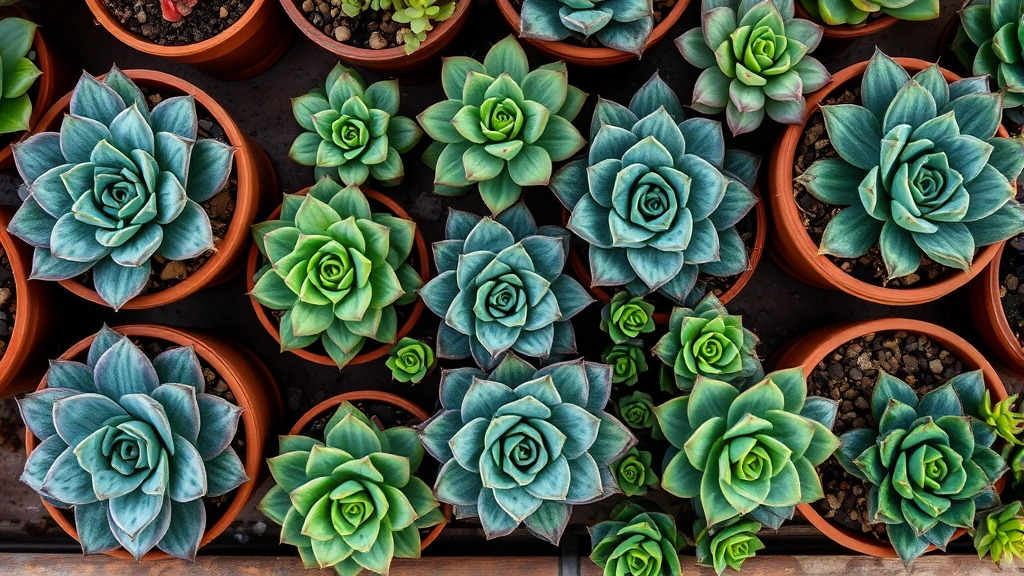
Learning how to water succulents is honestly the most important skill you’ll develop as a plant parent, because getting it wrong kills more succulents than anything else. These desert dwellers are tough as nails, but they’re also drama queens about moisture—too much and they rot, too little and they shrivel. The good news? Once you nail the watering rhythm, you’ve basically unlocked the secret to keeping these beauties alive and thriving.
Table of Contents
Understand Succulent Basics
Before you even think about watering, you need to understand what makes succulents different from regular houseplants. These plants evolved in arid environments—think deserts, rocky hillsides, and drought-prone regions. They’ve adapted by storing water in their leaves, stems, and roots, which means they’re basically walking water tanks. This adaptation is their superpower and your biggest challenge as a caretaker.
Succulents like echeveria, jade plants, aloe, and sedums have thick, fleshy tissues designed to hold moisture for extended periods. When you overwater them, you’re essentially drowning them because their roots can’t process that much water, and the excess moisture creates the perfect environment for rot. It’s counterintuitive compared to caring for most houseplants, which is why so many people struggle with succulent care from day one.
Soil and Drainage Foundation
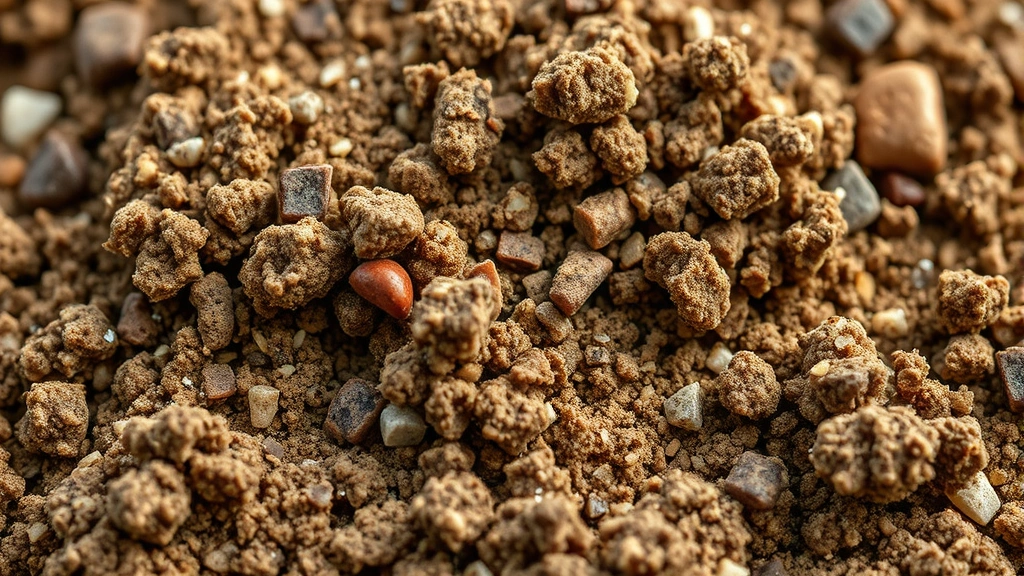
Here’s the truth: you can’t separate watering from soil quality when it comes to succulents. Regular potting soil holds too much moisture and will cause root rot faster than you can say “oops.” You need gritty, well-draining soil that lets water pass through quickly.

Mix your own blend using one part regular potting soil, one part perlite or pumice, and one part coarse sand. Some folks skip the potting soil entirely and go with a 50/50 perlite-to-sand ratio, which works great if you’re willing to fertilize more often. The goal is soil that drains so fast that water doesn’t sit around your roots. When you water, it should flow right through the pot and out the drainage holes in seconds.

Drainage holes aren’t optional—they’re mandatory. Every single pot your succulents live in needs at least one drainage hole. No exceptions. If you love a pot without drainage, use it as a decorative cache pot and nestle a draining pot inside it. Your succulents will thank you by not developing root rot.

Watering Frequency Guide
This is where the rubber meets the road with how to water succulents properly. The standard rule is the “soak and dry” method: water thoroughly until it drains from the bottom, then don’t water again until the soil is completely dry. For most succulents during the growing season (spring and summer), that means watering every two to three weeks. In fall and winter, you might stretch it to once a month or even longer.

But here’s the catch—every environment is different. A succulent in a humid, cool climate needs less water than one in a hot, dry climate. A small pot dries faster than a large one. A terracotta pot breathes and dries faster than plastic. You need to check your soil regularly and develop a feel for when it’s truly dry.

The finger test is your best friend: stick your finger about an inch into the soil. If it feels moist, don’t water. If it feels completely dry and pulls away from the pot sides, it’s time to water. This simple check prevents about 90% of succulent watering disasters.
Seasonal Adjustments Matter
Succulents have different water needs throughout the year, and ignoring this is a rookie mistake. During spring and summer when they’re actively growing, they need more frequent watering—but still following the soak and dry method. This is when you might water every two weeks or so.
Come fall, growth slows down, and winter is basically dormancy for many succulents. Reduce watering significantly—maybe once a month or even less. Some varieties can go weeks without water during winter. If your succulents are in a cool location (below 50°F), they need almost no water at all. Cold, wet roots are a recipe for disaster.
If you keep your succulents indoors with consistent heating, the seasonal shift isn’t as dramatic, but you should still reduce watering in winter. The shorter days and lower light mean less water is needed. Pay attention to growth patterns rather than following a rigid schedule.

Signs of Overwatering and Underwatering
Overwatering is the silent killer of succulents, and you need to spot the signs early. The first warning is mushy, translucent leaves—they’ll look almost glassy and feel soft when you touch them. This is root rot starting its work. The plant might also develop a foul smell from the soil as bacteria colonize the rotting roots. If you catch it early, you can sometimes save the plant by repotting it into dry soil and cutting back on water, but prevention is always easier than cure.

Other overwatering signs include leaves that fall off at the slightest touch, blackened or dark spots on the base of the plant, and soil that stays wet for days after watering. If the soil is still moist more than three days after you water, you’ve got a drainage problem that needs fixing immediately.

Underwatering is actually less common and less dangerous, but it happens. Underwatered succulents develop thin, wrinkled leaves that lose their plumpness. The plant might look shriveled or dull, and growth stops completely. The good news is that underwatered succulents usually bounce back quickly once you water them properly. One good soaking and they’ll perk up within days.
Container Selection and Technique
The pot you choose affects how often you need to water more than you’d think. Terracotta is the gold standard for succulents because it’s porous and lets soil dry out faster. Ceramic and plastic pots hold moisture longer, so if you use them, you’ll water less frequently. Glazed ceramic is better than unglazed because it reduces moisture loss.
Size matters too. A succulent in a pot that’s too large will have too much soil, which holds too much moisture. Use a pot that’s only slightly larger than the plant’s root ball—usually just an inch or two bigger in diameter. When you repot, don’t immediately water; wait three to five days to let any damaged roots heal and reduce rot risk.

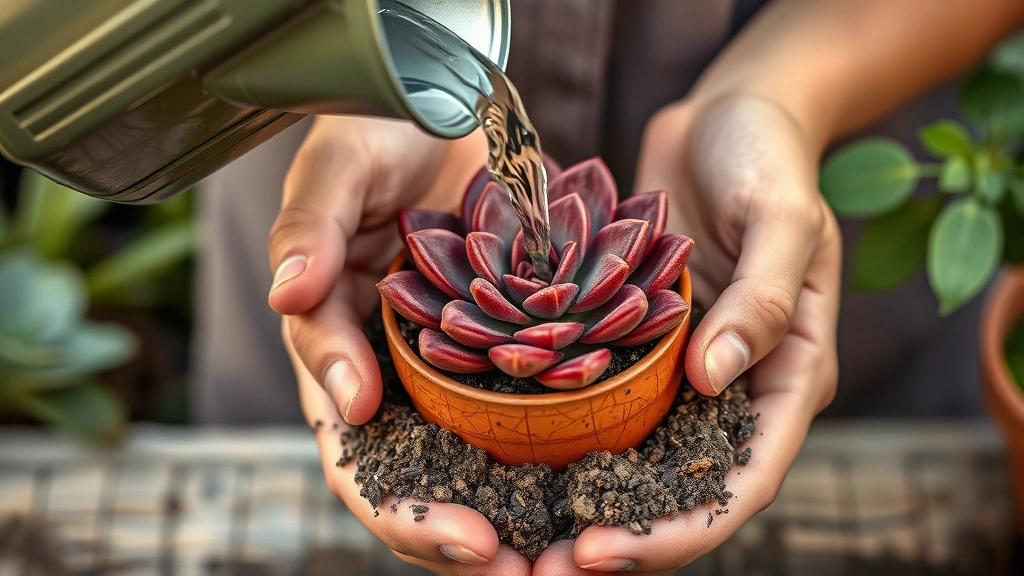
When you do water, use the soak method: water slowly until it comes out the drainage holes, then stop. Some people bottom-water succulents by setting the pot in a tray of water for 10-15 minutes, letting the soil absorb moisture from below. This works great and reduces the risk of getting water on the leaves, which can cause spotting or rot.

Common Watering Mistakes
The biggest mistake people make is watering on a schedule instead of checking the soil. “I water my succulents every Sunday” is a fast track to dead succulents. Your plant doesn’t care what day it is; it cares whether the soil is dry. Ignore the calendar and trust the finger test.

Another killer is watering a little bit frequently. This keeps the soil constantly moist, which is exactly what succulents hate. It’s better to water thoroughly and infrequently than to sprinkle a bit every few days. The soak and dry method works because it mimics the succulent’s natural environment—long dry periods followed by occasional rainfall.

Using the wrong soil is also huge. If you’re using regular potting soil or garden soil, you’re fighting an uphill battle. Invest in proper cactus and succulent soil, or make your own mix. It’s cheap insurance against root rot. Related to this, people often use pots without drainage holes or let water sit in saucers underneath pots. Both of these create standing water that roots can’t escape from.

Watering from above and getting water on the leaves is another common problem. While a little splash won’t kill most succulents, water sitting in the rosette of a plant like echeveria or sempervivum can cause rot. If you do splash the leaves, let them dry quickly by improving air circulation or watering in the morning so the sun can dry them out.

Indoor vs. Outdoor Succulents
Indoor and outdoor succulents have different watering needs because their environments are so different. Outdoor succulents get natural rainfall, wind, and strong sunlight, all of which affect water needs. If you live somewhere that gets regular rain, your outdoor succulents might not need supplemental watering at all except during droughts.
Indoor succulents in controlled environments are easier to manage because conditions are consistent. No wind to dry things out, no surprise rainstorms, no intense sun beating down. They typically need less frequent watering than outdoor plants. The tradeoff is that indoor air is often drier, especially with heating in winter, so you might need to adjust your watering schedule.
Light levels matter for both. Succulents in bright light photosynthesize more actively and grow faster, which means they use more water. Succulents in low light grow slowly and need less water. If you’ve got a succulent in a dim corner, you’ll be watering it far less frequently than one in a sunny window.
For reference, if you’re managing a garden and need to understand water retention in other contexts, you might find it helpful to understand proper watering techniques for vegetables, though succulents follow completely different rules. The principles of drainage and soil preparation apply across gardening, even if the specifics differ dramatically.
Frequently Asked Questions
How often should I water my succulents?
During the growing season (spring and summer), water every two to three weeks using the soak and dry method. In fall and winter, reduce to once a month or less. Always check that the soil is completely dry before watering. The exact frequency depends on your climate, pot size, soil type, and light conditions, so use the finger test rather than following a rigid schedule.
Can I use regular potting soil for succulents?
No, regular potting soil holds too much moisture and will cause root rot. Use a gritty, well-draining cactus and succulent mix, or make your own by combining one part potting soil, one part perlite, and one part coarse sand. The goal is soil that drains quickly and doesn’t stay moist.
What happens if I overwater my succulents?
Overwatering causes root rot, the most common killer of succulents. Signs include mushy translucent leaves, a foul smell from the soil, and leaves that fall off easily. If caught early, you can sometimes save the plant by repotting it into dry soil immediately. Prevention through proper watering technique is much easier than trying to save a rotting plant.
Do succulents need water in winter?
Yes, but much less. Most succulents are dormant in winter and need minimal water—sometimes just once a month or even less. If your succulents are in a cool location below 50°F, they might not need any water at all. Always check the soil and only water if it’s completely dry.
Should I mist my succulents?
No, misting is a bad idea for succulents. They don’t like moisture on their leaves, and misting keeps the foliage damp, which encourages rot and fungal issues. Stick with the soak and dry method of watering the soil, not the plant itself.
What type of pot is best for succulents?
Terracotta pots are ideal because they’re porous and let soil dry out quickly. If you prefer ceramic or plastic, that’s fine—just water less frequently because these materials don’t breathe like terracotta. Always make sure the pot has at least one drainage hole. If you love a pot without drainage, use it as a decorative cache pot over a draining pot.
How do I know if my succulent needs water?
Stick your finger about an inch into the soil. If it feels moist, don’t water. If it feels completely dry, it’s time to water. You can also look at the leaves—plump, firm leaves indicate adequate water, while thin, wrinkled leaves suggest underwatering. Trust the soil test over visual inspection for the most reliable results.
Wrapping It Up
Mastering how to water succulents comes down to understanding that these plants are fundamentally different from other houseplants. They store water, they hate wet roots, and they thrive on neglect compared to traditional plants. The soak and dry method, combined with well-draining soil and proper drainage holes, is basically all you need to keep succulents happy for years.
Stop overthinking it and start paying attention to your soil instead of a watering schedule. Check before you water, use your finger as a moisture meter, and resist the urge to baby your succulents with constant watering. They’re tougher than they look, and once you dial in the watering rhythm for your specific environment, you’ll wonder why you ever struggled with these plants in the first place. The key is consistency, proper soil, and patience.


