
Nothing’s worse than cutting into a pineapple at home only to find it’s mealy, mushy, or—worse—still rock-hard and tasteless. You spent good money on that fruit. Learning how to tell if pineapple is ripe is honestly one of the easiest skills you can pick up, and it’ll save you from disappointing breakfast bowls and ruined dessert plans. The good news? You don’t need special tools or magic tricks. Your eyes, nose, and hands are all you need.
Here’s the real talk: most people squeeze the pineapple and call it a day. That’s a start, but there’s way more to the story. A truly ripe pineapple has several telltale signs, and knowing all of them means you’ll almost never pick a dud again. Let’s walk through the methods that actually work.
The Squeeze Test: Your First Line of Defense
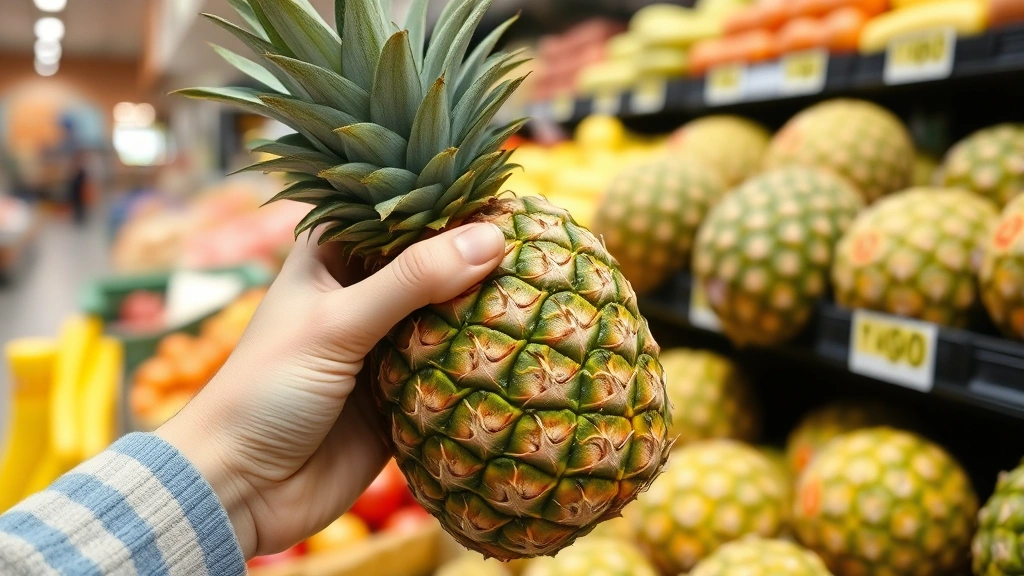
The squeeze test is the MVP of pineapple selection. Here’s how it works: hold the pineapple gently in your palm and apply light to medium pressure with your fingers. A ripe pineapple should yield slightly—think of it like a ripe avocado, not a tennis ball. If it’s rock-hard and doesn’t give at all, it’s not ready. If it’s mushy or your finger leaves an indent, you’ve got an overripe one on your hands.
The key word here is gentle. You’re not trying to crush the thing. Just enough pressure to feel the fruit beneath the skin. A perfectly ripe pineapple will have a little give, usually around the middle or lower third of the fruit, but it shouldn’t feel spongy anywhere.
Now, here’s where most people mess up: they only squeeze one spot. Pineapples ripen unevenly, so test a few different areas—the bottom, the side, near the crown. If most of the fruit feels firm with just a touch of give, you’re golden. If you find soft spots in random places, that’s a sign of internal rot or damage, and you should pass on that one.
Think of the squeeze test like checking a door handle to see if it’s locked—a quick, confident gesture tells you everything you need to know.
Color and Appearance: What to Look For
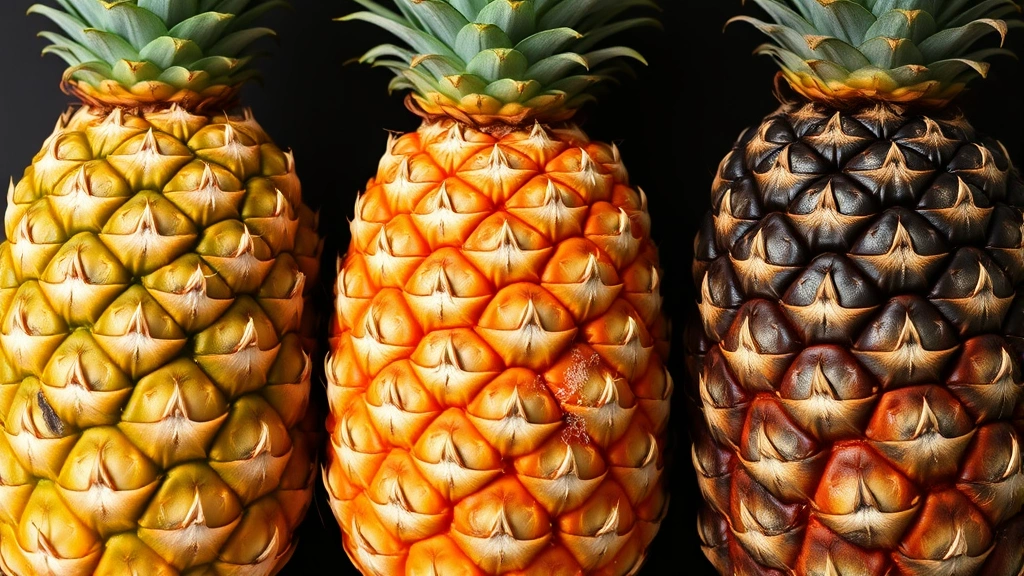
Color matters, but it’s not the whole story. A ripe pineapple should have a golden-yellow hue, especially near the base. However, some varieties stay greenish even when fully ripe, so don’t rely on color alone. The Sugarloaf pineapple variety, for example, can be pale yellow or almost white when ripe, so knowing what type you’re buying helps.
Look at the overall appearance. The skin should look plump and full, with no soft or dark spots (unless they’re just minor blemishes). Avoid pineapples with large bruised areas, deep indentations, or signs of mold. A few small brown spots are usually fine—they’re just oxidation—but anything that looks like rot is a dealbreaker.
The texture of the skin should feel slightly waxy and firm. Run your hand over it. If it feels papery or dull, that’s a sign of age and dehydration. A healthy ripe pineapple has a bit of sheen to it, which indicates good moisture content inside.
Also check the base (the bottom of the fruit). This is where ripeness is most visible. A golden or reddish-brown base is a strong indicator of ripeness. If the base is still very green or pale, the fruit likely needs more time.
The Smell Test: Your Nose Knows
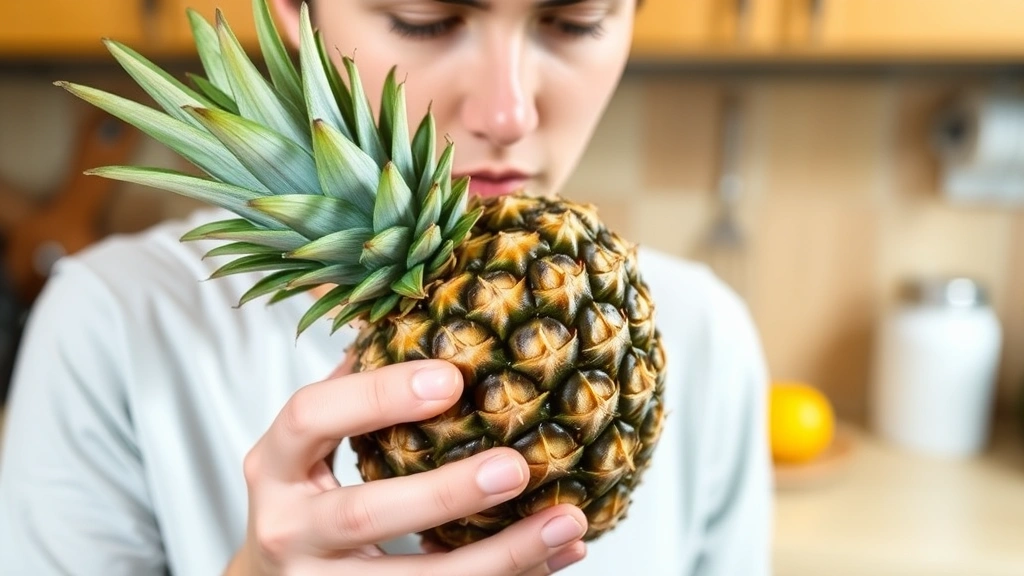
Here’s a trick that separates the pros from the amateurs: smell the pineapple. Seriously. A ripe pineapple should have a sweet, fragrant smell—kind of like a tropical fruit punch. Bring it to your nose and take a gentle sniff near the crown (the leafy top) or at the base.
If it smells sweet and aromatic, you’re looking at a ripe fruit. If it has little to no smell, it’s probably not ready yet. If it smells fermented, sour, or off in any way, the fruit has started to rot internally, and you should skip it.
The smell test is especially useful if you’re torn between two pineapples. The one with the stronger, sweeter aroma is almost always the better choice. Your nose is picking up on the volatile compounds that develop as the fruit ripens and sugars concentrate.
Pro Tip: If you find a pineapple that smells amazing but feels a bit firm, buy it anyway. It’ll continue to ripen at home over a day or two, and the smell tells you it’s already on its way.
Leaf Indicators: A Sneaky Secret
Most people ignore the crown (the leafy top), but it’s actually a goldmine of information. Here’s what to look for:
- Green and vibrant: The pineapple is still ripening. It’s not quite ready.
- Yellowing leaves: This is a sign of ripeness. As the fruit matures, the leaves start to yellow from the inside out.
- Browning or wilting leaves: The fruit is getting old. It might still be okay, but it’s past peak ripeness.
- Easy to pull out: Here’s a trick—gently tug on one of the center leaves. If it comes out easily, the pineapple is ripe. If it’s stuck tight, the fruit needs more time.
The leaf-pulling test is surprisingly reliable. When a pineapple is truly ripe, the leaves loosen up because the fruit is at peak maturity. It’s not a foolproof method on its own, but combined with the other tests, it’s a great confirmation.
Weight and Density: The Heft Factor
Pick up the pineapple and feel its weight. For its size, a ripe pineapple should feel surprisingly heavy. This is because it’s packed with juice and sugars. A light, hollow-feeling pineapple is likely underripe or has been sitting around too long and has lost moisture.
Compare two pineapples of similar size. The heavier one is almost always the better choice. This density indicates good juice content, which means better flavor and texture when you eat it.
Think of it like this: you’re looking for substance. A pineapple that feels light and airy is probably dry inside. A dense, weighty pineapple is full of the good stuff.
Avoiding Overripe Pineapples: Know the Line
Here’s the thing about pineapples—they ripen quickly, and there’s a narrow window between perfect and overripe. An overripe pineapple will have these signs:
- Mushy texture when squeezed (feels like a sponge)
- Dark brown or black soft spots on the skin
- Fermented or vinegary smell
- Liquid leaking from the base or sides
- Wilted, brown crown leaves
- Very light weight (indicates moisture loss)
If you see any of these, put it back. Overripe pineapples are mealy, bland, and sometimes have an unpleasant fermented taste. They’re not worth the disappointment.
That said, if you buy a pineapple that’s slightly underripe and want to speed up the process, you can ripen it at home. More on that in a moment.
Storage and Ripening: Speed Up the Process
So you’ve picked a pineapple that’s close but not quite there yet. Good news—you can ripen it at home. Here’s how:
- Room temperature: Place the pineapple on your counter, stem-side down. It’ll continue to ripen over 1-3 days, depending on how close it was to begin with.
- Paper bag method: If you want to speed things up, wrap it loosely in a paper bag. This traps ethylene gas (the ripening hormone) and accelerates the process. Check it daily.
- Avoid direct sunlight: Keep it out of hot, direct sun, which can damage the fruit.
- Don’t refrigerate yet: Cold slows ripening. Only put it in the fridge once it’s fully ripe, and it’ll keep for 3-5 days.
Once your pineapple is ripe, you can store it in the refrigerator to extend its life. The cold won’t stop it from being delicious—it just slows down further ripening and decay. Proper produce storage extends shelf life significantly, and pineapples are no exception.
If you’ve already cut into your pineapple and want to store the rest, keep it in an airtight container in the fridge. It’ll last about 3-5 days. You can also freeze pineapple chunks for smoothies or desserts—they’ll keep for up to 6 months.
Safety Note: Never eat pineapple that shows signs of mold or has a rotten smell. Mold toxins can make you sick, and it’s not worth the risk. When in doubt, throw it out.
One more thing: pineapples don’t ripen after they’re cut. Unlike bananas or avocados, once you slice into it, the ripening process stops. So make sure it’s fully ripe before you cut it open. This is why the selection process at the store is so important.
Frequently Asked Questions
Can you ripen a pineapple in the refrigerator?
– No, refrigeration slows down ripening. Keep your pineapple at room temperature until it’s fully ripe, then move it to the fridge to extend its shelf life. The cold won’t prevent it from being delicious, but it won’t help it ripen faster.
How long does it take for a pineapple to ripen at home?
– It depends on how underripe it was to begin with. A nearly-ripe pineapple might need just 1-2 days on the counter. One that’s more underripe could take 3-5 days. Using the paper bag method can cut this time in half.
What does a ripe pineapple smell like?
– A ripe pineapple smells sweet and tropical, similar to pineapple juice or a fruity punch. If it has no smell or smells fermented and sour, it’s either not ripe yet or it’s starting to rot.
Is it okay to eat a pineapple that’s slightly underripe?
– Yes, but it won’t be as sweet or juicy. Underripe pineapples are firmer and less flavorful. If you prefer a crunchier texture, an underripe pineapple works fine. But for maximum sweetness and juice, wait until it’s fully ripe.
Why is my pineapple mushy inside but firm on the outside?
– This usually means the fruit has internal rot or damage. It might have been dropped, bruised during shipping, or is simply overripe. The inside breaks down faster than the outside shows signs of damage. If you notice this after cutting, don’t eat it.
Can you tell if a pineapple is ripe by its color alone?
– Color is helpful but not reliable on its own. Some varieties stay greenish even when fully ripe. Always combine color observation with the squeeze test, smell test, and leaf check for the most accurate assessment.
How do you know if a pineapple has gone bad?
– Signs of a bad pineapple include dark soft spots, fermented or vinegary smell, mushy texture, liquid leaking from the base, wilted brown leaves, and an unusually light weight. If you see any of these, don’t eat it.
Should you buy pineapples with brown spots?
– Minor brown spots (usually just oxidation) are fine. But large dark bruises, deep soft indentations, or areas that look like rot are red flags. Use your judgment—small blemishes don’t affect the fruit inside, but large damaged areas often do.


