
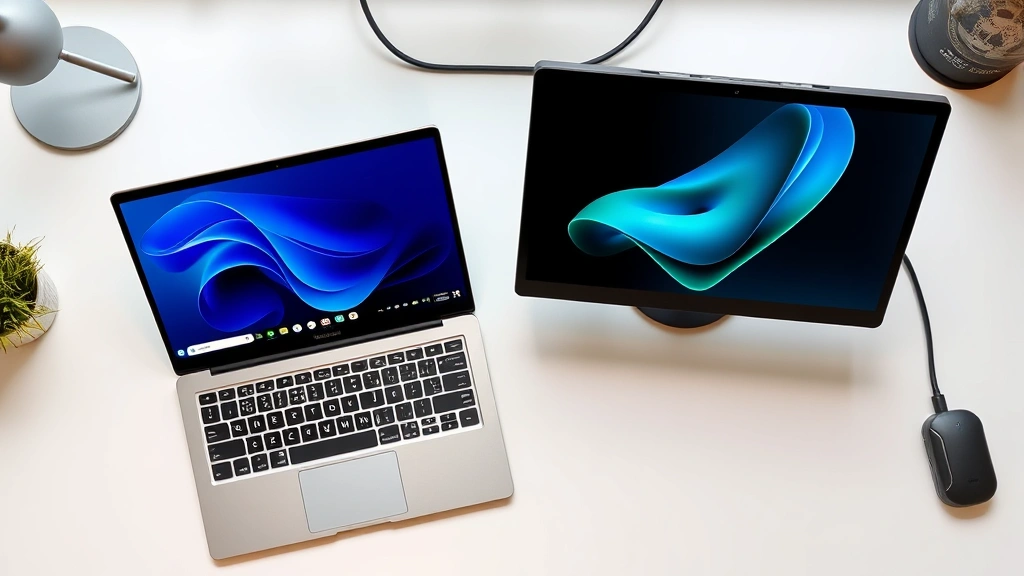
Here’s the real talk: not all Chromebooks come with touchscreen capability built in, and it’s honestly frustrating when you’re used to swiping and tapping on other devices. The good news? You can absolutely figure out how to make a chromebook touchscreen—and it’s way simpler than you might think. Whether you’re looking to upgrade an older model or just want to unlock touch functionality on your current machine, we’ve got you covered with practical, no-nonsense steps.
The barrier to entry isn’t technical wizardry or expensive hardware. You’ve got a few solid options depending on your setup, your budget, and how much you’re willing to tinker. Some involve external hardware, others involve enabling features already hiding in your system. Let’s dig into what actually works.
Check if Your Chromebook Already Supports Touch
Before you buy anything or start plugging stuff in, let’s figure out where you actually stand. Some Chromebooks ship with built-in touchscreen capabilities that are either disabled by default or just not enabled yet. Here’s how to check:
- Click the clock in the bottom-right corner of your screen
- Select the gear icon to open Settings
- Go to Device → Touchpad and mouse
- Look for any touchscreen-related options or toggles
- If you see a touchscreen section, try enabling it
If nothing happens after enabling, your Chromebook’s touchscreen hardware might be disabled at the BIOS level. Some manufacturers allow you to enable it through the developer mode, but that’s a more advanced route. For most users, if there’s no touchscreen option in settings, your device simply didn’t ship with touch hardware.
Another quick check: look up your exact Chromebook model online. Most manufacturers list whether touch is included in the specs. A quick search like “[Your Model] touchscreen specs” usually gives you the answer in seconds. This saves you from chasing a solution that doesn’t exist for your hardware.
Use an External USB Touchscreen Monitor
This is the most straightforward way to add touchscreen capability to any Chromebook, regardless of age or model. USB touchscreen monitors are plug-and-play—no drivers, no software installation, no headaches. Your Chromebook recognizes them immediately.
Here’s what you need to know about USB touchscreen monitors:
- Plug-and-play compatibility: Most USB touchscreen displays work instantly with ChromeOS without any additional setup
- Size range: They come in 7-inch portable models all the way up to 27-inch desktop displays
- Price: Budget around $150-$400 for quality models; portable USB touchscreens run $100-$250
- Power requirements: Some need external power, others draw power directly from USB
The setup process is genuinely simple:
- Unbox the touchscreen monitor
- Connect the USB cable to your Chromebook
- Connect power (if required) to a wall outlet
- That’s it—your Chromebook should recognize the display immediately
For portable work, USB touchscreen monitors are game-changers. You get touch capability without being tethered to a desk setup. They’re especially useful if you travel frequently or work from different locations. The downside? They add another device to your bag, and you’re managing an extra cable.
Popular brands worth researching include ASUS, ViewSonic, and XP-Pen. Check reviews on Family Handyman’s tech section or similar trusted sources before dropping money. Real user feedback matters here—some monitors have reported lag or calibration issues that aren’t obvious in the spec sheet.
Connect via HDMI Touchscreen Display
If your Chromebook has an HDMI port (many do), you can connect an HDMI touchscreen monitor. This is slightly different from USB touchscreen monitors because the display signal and touch input travel through different cables.
Here’s the typical setup:
- Connect the HDMI cable from your Chromebook to the monitor’s HDMI input
- Connect the monitor’s USB cable to your Chromebook (this handles the touch input)
- Connect power to the monitor
- Your Chromebook should recognize both the display and touch input automatically
The advantage of HDMI touchscreens is that you often get better display quality and more size options compared to USB-only models. The disadvantage is that you’re managing two cables instead of one, which makes portability less elegant.
Pro Tip: If your Chromebook doesn’t have an HDMI port but has USB-C, check whether it supports video output. Many newer Chromebooks do, and you can use a USB-C to HDMI adapter with a touchscreen monitor. Just verify the adapter supports both video and power delivery.
HDMI touchscreen monitors range from $200 to $600+ depending on size and quality. They’re better suited for stationary setups where you’re not moving the display around constantly.
Enable Touch Settings in ChromeOS
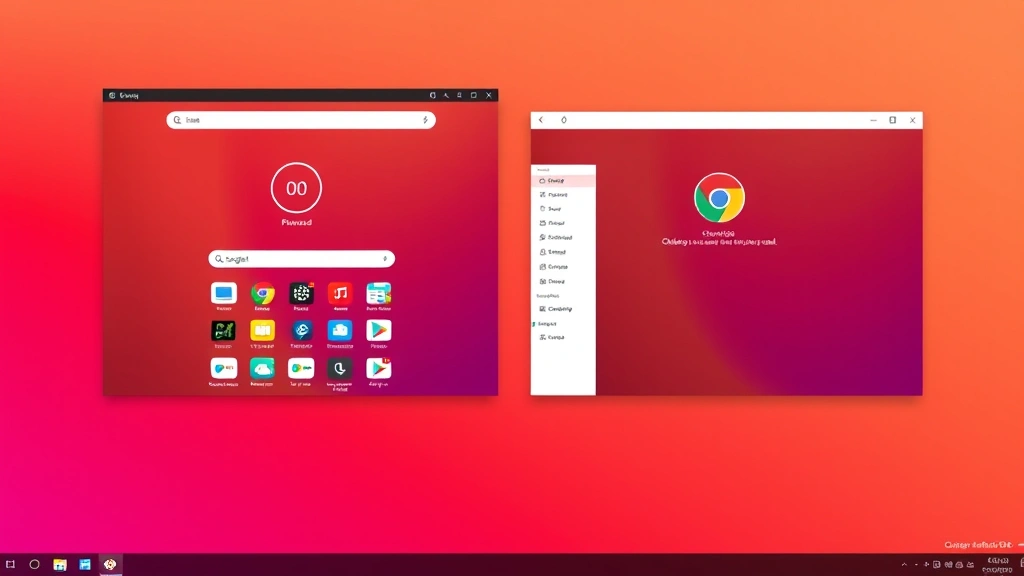
Once you’ve connected your external touchscreen, you might need to tweak a few settings to get the best experience. ChromeOS doesn’t require much configuration, but these adjustments can help:
Adjust Touchpad Sensitivity (if using an external touchpad alongside touch):
- Open Settings → Device → Touchpad and mouse
- Adjust the pointer speed slider to your preference
- Toggle “Enable tap-to-click” if you want tapping to register as clicks
Calibrate Your Touchscreen (if it’s not responding accurately):
- Open Settings → Device → Touchpad and mouse
- Look for “Calibrate touchscreen” or similar option
- Follow the on-screen prompts to tap specific points on your display
- This ensures your touch input matches where your finger actually is
If you’re experiencing lag or unresponsiveness, try these troubleshooting steps:
- Restart your Chromebook—seriously, this fixes 70% of weird behavior
- Update ChromeOS to the latest version (Settings → About ChromeOS → Check for updates)
- Disconnect other USB devices temporarily to see if there’s a conflict
- Check that your monitor’s USB cable is securely connected
One thing worth noting: if you’re also using a mouse or trackpad alongside your touchscreen, ChromeOS handles both inputs simultaneously without issues. You don’t have to choose one or the other.
For more detailed guidance on customizing your Chromebook’s input settings, you can reference This Old House’s tech guides, which occasionally cover device setup best practices. Additionally, Google’s official Chromebook support documentation is always your most reliable source for ChromeOS-specific features.
Troubleshooting Common Touch Issues
Let’s address the problems that actually happen in the real world, not just the theoretical stuff.
Touchscreen Not Recognized at All
If you plug in your USB or HDMI touchscreen and ChromeOS doesn’t acknowledge it:
- Try a different USB port on your Chromebook—some ports have power delivery issues
- Use a powered USB hub instead of connecting directly; some touchscreens draw more power than a single port provides
- Restart your Chromebook completely (not just sleep mode)
- Check the monitor’s manual for any switches or buttons that enable USB input
Touch Input is Laggy or Delayed
This is annoying but usually fixable:
- Close unnecessary browser tabs and applications—ChromeOS is lightweight, but too many Chrome tabs will bog down any system
- Check your internet connection; poor WiFi can sometimes cause input lag
- Move your Chromebook and monitor away from sources of electromagnetic interference (microwaves, wireless routers, etc.)
- Update your monitor’s firmware if the manufacturer provides updates
Touch Works on Some Apps But Not Others
This is typically a web app compatibility issue, not a hardware problem. Some older web applications weren’t designed for touch input. You can:
- Try using the app in a different browser (though ChromeOS primarily uses Chrome)
- Check if the app has a dedicated mobile or touch-friendly version
- Use keyboard shortcuts as a workaround
Calibration is Off—Touch Doesn’t Match Where You Tap
This usually means the touchscreen needs recalibration. Go back to Settings → Device → Touchpad and mouse and run the calibration process again. Make sure you’re tapping dead center on each calibration point, not off to the side.
Will Touch Affect Your Chromebook’s Performance?
Short answer: not meaningfully. External touchscreens don’t drain your Chromebook’s processing power or significantly impact battery life when using a portable display.
Here’s the technical reality:
- CPU impact: Minimal. Touch input is handled by the monitor’s processor, not your Chromebook’s CPU
- Battery drain: A USB touchscreen monitor draws power from the USB port, which does use some battery. Expect 5-10% reduction in battery life if you’re using a portable USB touchscreen unplugged. HDMI touchscreens with separate power supplies have zero impact on your battery
- RAM usage: Negligible. ChromeOS doesn’t allocate significant memory for touch input handling
- Storage impact: None. No drivers or software installations required
The real performance consideration is your internet connection. If you’re using web applications that are heavy on animations or real-time updates, a slow connection will cause lag—but that’s not a touch-specific problem. It’s a general Chromebook limitation.
One thing to keep in mind: if you’re using a portable USB touchscreen unplugged, you’re essentially running two batteries (your Chromebook and the monitor’s internal battery). This means you’ll need to charge both devices. It’s not a dealbreaker, just something to factor into your workflow.
Alternative Touch Solutions Worth Considering
Before you commit to buying hardware, here are some alternatives that might fit your situation better:
Use a Touchscreen Tablet as a Secondary Device
If you already own an iPad, Android tablet, or other touchscreen device, you might not need to add touch to your Chromebook at all. You could use the tablet for touch-heavy tasks and keep your Chromebook for productivity work. This is cheaper than buying a touchscreen monitor and gives you flexibility.
Switch to a Touchscreen Chromebook
If you’re considering a new device anyway, buying a Chromebook with built-in touchscreen is often cheaper than retrofitting an older model. Touchscreen Chromebooks range from $300-$800 depending on specs. Do the math: if your current Chromebook is several years old and you’re looking at a $300+ touchscreen monitor, a new touchscreen Chromebook might be a better investment.
Upgrade Your Input Method Instead
If you’re looking for touch because you want better input control, consider a stylus-compatible Chromebook or a high-quality trackpad instead. Some users find that upgrading their mouse or trackpad solves their input problems without needing a full touchscreen setup. Check out our guide on how to change mouse polling rate for ways to optimize your existing input devices.
Use Remote Desktop to a Touchscreen Device
If you have access to a touchscreen Windows PC or Mac, you could use Chrome Remote Desktop to control it from your Chromebook. This is a workaround solution, not ideal, but it works for specific use cases where you need touch input occasionally.
Frequently Asked Questions
Can I add a touchscreen to any Chromebook?
– Yes, any Chromebook can use an external USB or HDMI touchscreen monitor. The limitation is only if your Chromebook lacks USB ports or HDMI output, which is extremely rare. Even older Chromebooks from 2015+ have at least one USB port.
Will adding a touchscreen void my warranty?
– No. External touchscreen monitors are completely non-invasive. You’re not opening your Chromebook or modifying any internal hardware, so your warranty remains intact.
What’s the difference between a USB touchscreen and an HDMI touchscreen?
– USB touchscreens handle both display and touch input through a single cable. HDMI touchscreens use HDMI for the display signal and USB for touch input. HDMI typically offers better display quality and larger size options, while USB is more portable and simpler to set up.
Do I need to install drivers for a USB touchscreen monitor?
– No. ChromeOS handles USB touchscreen recognition automatically. This is one of the major advantages of using ChromeOS—it “just works” with most hardware without driver installation.
Can I use a touchscreen monitor with other devices besides my Chromebook?
– Absolutely. USB and HDMI touchscreen monitors are universal. You can connect them to Windows PCs, Macs, Linux computers, and most other devices with USB or HDMI ports. This makes them a solid long-term investment.
What’s the best portable USB touchscreen monitor for Chromebooks?
– It depends on your budget and needs, but popular options include the ASUS MB16AC, ViewSonic VG1655, and XP-Pen Artist 12. Read recent reviews on Bob Vila’s tech section to see what current users are saying about reliability and performance.
Will my Chromebook recognize the touchscreen if I use a USB hub?
– Yes, usually. However, use a powered USB hub rather than an unpowered one. Touchscreen monitors draw more power than many USB devices, and an unpowered hub might not deliver enough power, causing the monitor to be recognized but not function properly.
Can I use both a mouse and touchscreen at the same time?
– Yes. ChromeOS handles multiple input devices simultaneously without any issues. You can use a mouse, trackpad, and touchscreen all connected at once.
How do I calibrate my touchscreen if it’s not responding accurately?
– Go to Settings → Device → Touchpad and mouse, then look for a calibration option. Tap the points on the screen when prompted, making sure to tap dead center on each point. If calibration doesn’t fix the issue, try disconnecting and reconnecting the monitor, then restarting your Chromebook.
Is there a performance difference between USB and HDMI touchscreens?
– No meaningful difference. Both handle touch input with minimal latency. The choice between USB and HDMI should be based on your setup needs (portability, desk space, display quality) rather than performance concerns.
What if my Chromebook doesn’t have an HDMI port?
– Use a USB touchscreen monitor instead, or check if your Chromebook has USB-C with video output capability. Many newer Chromebooks support USB-C video output, which you can connect to an HDMI monitor with an adapter.

Can I rotate my touchscreen display to portrait orientation?
– Yes. Go to Settings → Device → Displays and look for rotation options. Not all monitors physically rotate, but some portable models have adjustable stands that allow portrait orientation. Check your monitor’s specifications to see if it supports physical rotation.
Will a touchscreen monitor work with Chromebook in guest mode?
– Yes, absolutely. Guest mode doesn’t restrict hardware functionality. The touchscreen will work the same way whether you’re signed in or using guest mode.


