

Learning how to hump a pillow properly can transform your sleep quality, your posture during rest, and even reduce strain on your spine. Whether you’re dealing with back pain, trying to improve your sleeping position, or just want to maximize comfort, understanding the right technique makes all the difference. This isn’t about fancy equipment or complicated methods—it’s about using a simple pillow strategically to support your body where it needs it most. Let’s break down exactly what works, why it works, and how to do it right from night one.
What Is Pillow Humping & Why It Matters
Pillow humping—or more formally, strategic pillow positioning—is the practice of using a pillow to support your body contours while sleeping or resting. Think of it like custom-molding support exactly where your body needs it. Your spine isn’t straight; it has natural curves at the neck, mid-back, and lower back. When you sleep without proper support, those curves collapse or hyperextend, creating tension and pain.
Real talk: most people sleep wrong because they don’t understand how their body actually rests. You’re not a plank of wood. Your body has gaps and curves, and those gaps are where problems start. A pillow that “humps” or contours to your body fills those gaps, keeps your spine neutral, and lets your muscles actually relax instead of working overtime to compensate.
According to research from sleep science organizations, proper pillow support reduces neck and back pain by up to 40% in some cases. That’s not a small number. That’s the difference between waking up stiff and sore versus waking up ready to go.
The benefits go beyond pain relief:
- Reduced snoring and better breathing alignment
- Less tossing and turning (you stay in position longer)
- Better circulation to your head and neck
- Reduced tension headaches
- Improved sleep quality overall
- Fewer wrinkles from sleeping on your face wrong
Humping a pillow correctly is one of the easiest, cheapest ways to improve your sleep without buying a $3,000 mattress or expensive pillows. You probably already have what you need at home.
Choosing the Right Pillow for the Job
Not all pillows are created equal, and the wrong pillow makes how to hump a pillow technique completely ineffective. You need a pillow that actually cooperates with your body, not fights against it.
Firmness matters. A pillow that’s too soft will compress under your head and neck, defeating the whole purpose. A pillow that’s too firm will create pressure points and won’t conform to your curves. You want something in the medium-to-firm range—think “supportive cloud” rather than “rock” or “marshmallow.”
Here’s what to look for:
- Memory foam pillows: Excellent for humping because they conform to your exact shape and hold that shape all night. They take 30-60 seconds to respond, so you need to give them time to adjust.
- Latex pillows: Responsive, bouncy, and supportive. They don’t hold your shape quite like memory foam, but they’re cooler and more durable.
- Buckwheat pillows: Adjustable fill means you can add or remove filling to get exactly the height and firmness you need. They’re amazing for customization.
- Down or feather pillows: Generally too soft for proper humping support unless they’re densely packed. Avoid these unless you’re just using them as a secondary pillow for knee support.
Height is critical too. Your pillow should fill the gap between your shoulder and your head when you’re lying on your side. Too high and your neck bends upward; too low and it sags down. The goal is a straight line from your ear through your shoulder to your hip.
Pro tip: If you’re between sizes, go slightly firmer and slightly higher rather than softer and lower. You can always add a thin pillow underneath for extra height, but you can’t add support to something that’s already too soft.
The Basic Technique: Step-by-Step
Let’s get into the actual mechanics of how to hump a pillow correctly. This isn’t complicated, but the details matter.
- Start with your pillow placement. Before you even lie down, position your pillow so it’s centered on your bed where your head and neck will rest. Don’t bunch it up or fold it—lay it flat and let it expand if it’s memory foam.
- Lie down slowly. Don’t flop. Slowly lower your head onto the pillow and notice where it contacts your neck and head. You want contact across your entire neck, not just your head.
- Check your alignment. Your ear should sit directly above your shoulder. Look in a mirror if you can (or ask someone) to verify your head isn’t tilting forward or backward. This is the “neutral spine” position.
- Adjust for gaps. If there’s a gap between your neck and the pillow, you need more height. If your head is being pushed upward, you need less height or a softer pillow.
- Find your sweet spot. Move slightly forward or backward on the pillow until you feel complete support. Some people need more support under their neck; others need more under their head. There’s no universal “right” spot—it’s individual.
- Let your shoulders settle. Your shoulders should be on the mattress, not on the pillow. The pillow supports your neck and head only. If your shoulders are on the pillow, it’s too thick or you’re positioned wrong.
- Stay still for 30 seconds. If you’re using memory foam, give it time to conform to your shape. You’ll feel it adjust and settle.
- Make micro-adjustments. Once the pillow has conformed, make small tweaks. Rotate your head slightly if one side feels different from the other. Pillow humping is about finding your exact comfort zone, not forcing your body into a predetermined position.
The whole process should take 2-3 minutes your first night. After that, your body remembers the position and you’ll fall into it naturally.
Side Sleeping & Pillow Positioning
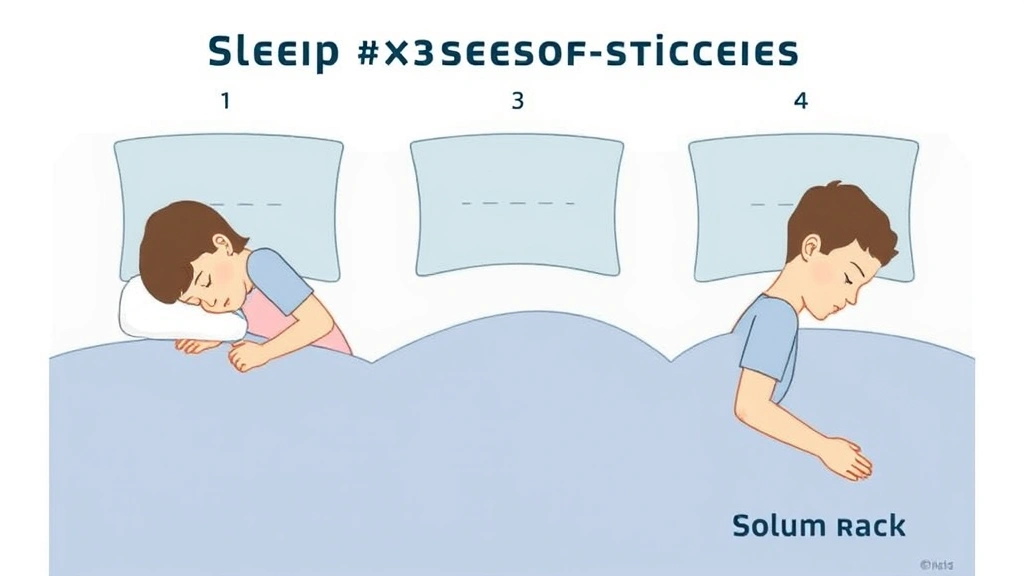
Most people sleep on their side at some point, and side sleeping is actually one of the best positions for spinal health—if you do it right. This is where how to hump a pillow technique really shines.
When you’re on your side, your pillow needs to do two jobs: support your head and neck at the right height, and fill the gap between your shoulder and your ear. That gap is usually 4-6 inches depending on your shoulder width.
The setup:
- Lie on your side with your hips and shoulders stacked (not rolled forward or backward).
- Your pillow should support your head so your spine stays straight from your neck through your tailbone. Imagine a laser beam running along your spine—it should be perfectly straight.
- The pillow should fill that shoulder-to-ear gap completely. If there’s space, gravity will pull your head down and create neck strain.
- Your bottom arm can go under the pillow for extra support, or along your body—whatever feels natural.
- Place a second pillow or body pillow between your knees. This prevents your top leg from pulling your pelvis and lower spine out of alignment. This is huge for back pain.
Here’s a real-world tip: side sleeping is harder on your shoulder over time. Switch sides every night or every other night to balance the load. Your body will naturally want to favor one side, but forcing yourself to switch prevents chronic shoulder issues down the road.
According to Family Handyman’s wellness section, proper side-sleeping support can reduce shoulder pain by up to 35% in chronic cases. That’s significant.
Back Sleeping Support System
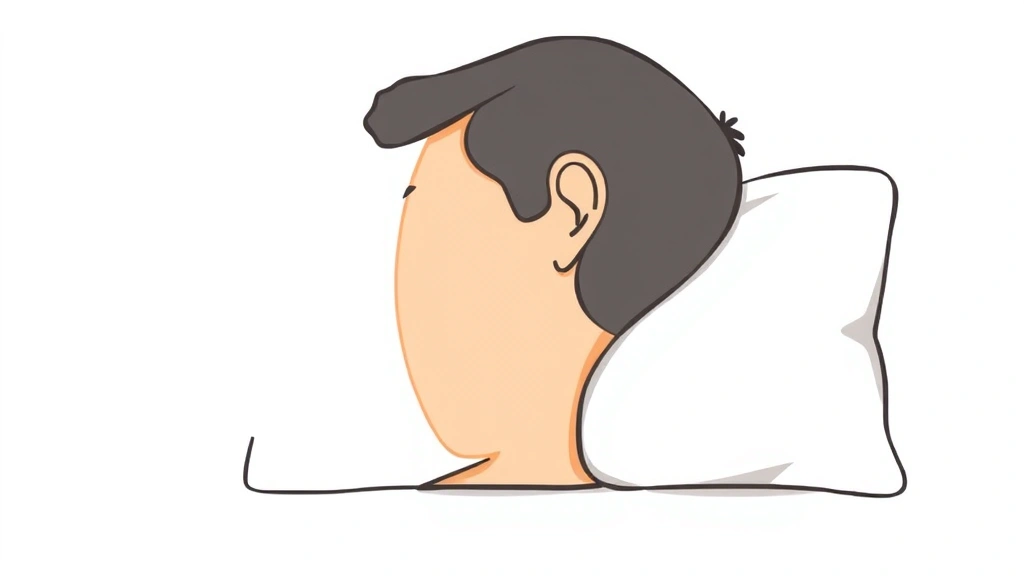
Back sleeping is the gold standard for spinal alignment—your weight is distributed evenly and your spine can relax into its natural curves. But you need the right pillow setup to make it work.
When you’re on your back, your pillow needs to support the natural curve of your cervical spine (your neck). This is different from side sleeping. Your head should sit at about a 15-20 degree angle—slightly elevated from your body, but not dramatically.
The back-sleeping technique:
- Lie flat on your back with your legs straight or slightly bent (bent knees actually reduce lower back strain).
- Your pillow should support your neck’s natural curve. Place your hand under your neck—that’s roughly how much support you need from the pillow.
- Your head should rest on the pillow, not hang off the edge. If your head is hanging, you need a thicker pillow.
- The back of your head and your neck should both contact the pillow. It’s a two-point support system.
- Place a pillow under your knees. This is critical. It maintains the natural curve of your lower back and prevents your spine from hyperextending.
Real talk: back sleeping feels weird at first if you’re used to side sleeping. Your body won’t naturally stay in this position for the first week or two. You might need to consciously stay on your back for the first 30 minutes of sleep, then your body will hold the position. Stick with it.
The knee pillow is non-negotiable for back sleeping. Without it, your lower back arches and creates tension. With it, your entire spine relaxes. This single change fixes lower back pain for a lot of people.
Stomach Sleeping Adjustments
Let’s be honest: stomach sleeping is the worst position for your spine. Your neck is twisted, your lower back is hyperextended, and your shoulders are internally rotated. It’s basically torture for your cervical spine.
But some people can’t sleep any other way. Their body just won’t relax on their side or back. If that’s you, here’s how to minimize damage with proper pillow humping technique:
- Use a very thin pillow or no pillow under your head. Your goal is to keep your neck as neutral as possible. A thick pillow will force your head to rotate even more.
- Place a pillow under your hips and lower abdomen. This reduces the arch in your lower back and prevents hyperextension.
- Turn your head to one side, but try to limit the rotation. Don’t crank your head all the way to the side; keep it at maybe 30-40 degrees.
- Switch which side you turn your head to each night. This balances the strain.
- Consider placing a pillow under your chest for additional support.
Honestly, if stomach sleeping is causing you pain, it’s worth trying to retrain your body to side or back sleep. It takes 2-3 weeks, but the long-term benefit to your spine is enormous. Stomach sleeping is linked to chronic neck pain, headaches, and shoulder issues over time.
Common Mistakes People Make
After years of watching people sleep wrong, here are the biggest mistakes I see:
Mistake #1: Using a pillow that’s too thick. This is the #1 culprit. A pillow that’s too thick forces your head upward and creates a kink in your neck. You wake up with a stiff neck and assume you slept wrong, when really your pillow is just too tall. Test by lying on your side—your head should be level with your spine, not tilted up.
Mistake #2: Stacking multiple pillows. One pillow, positioned correctly, is better than two pillows stacked. Multiple pillows create inconsistent support and your head sinks into the cracks. If you need more height, get a thicker pillow, don’t stack.
Mistake #3: Forgetting the knee pillow. People skip the knee pillow thinking it’s optional. It’s not. Your lower back needs that support, especially if you sleep on your side or back. A missing knee pillow causes lower back pain even if your head pillow is perfect.
Mistake #4: Humping the pillow too aggressively. You’re not trying to mold the pillow into a specific shape. You’re gently positioning it so your body’s natural curves are supported. Let the pillow do the work.
Mistake #5: Not giving it time. Your body is used to sleeping wrong. It takes 5-7 nights for your muscles to adjust to proper alignment. If you switch back to your old pillow after 2 nights because “it feels weird,” you’ll never get the benefits. Commit to at least a week.
Mistake #6: Ignoring pillow age. Pillows break down over time. After 1-2 years, memory foam loses its responsiveness. After 2-3 years, any pillow starts to compress and lose support. If your pillow is older than 18 months and you’re having pain, replace it. It’s not you; it’s the pillow.
According to This Old House’s health section, replacing old pillows is one of the most overlooked sleep improvements people can make. Most people sleep on pillows that are 5+ years old. That’s asking for trouble.
Pillow Maintenance & Care
Your pillow is an investment in your sleep quality. Treat it right and it’ll last 2-3 years. Neglect it and it’ll fall apart in a year.
Washing: Check your pillow’s tag for care instructions. Most memory foam pillows can’t go in the washing machine (the water damages the foam), but the cover usually can. Remove the cover and wash it every 2 weeks in warm water. The pillow itself should be spot-cleaned with mild soap and water if needed.
Buckwheat and latex pillows are more durable. Buckwheat covers can usually be removed and washed; the fill itself just needs air circulation. Latex can sometimes handle a gentle wash, but check the manufacturer’s specs first.
Drying: Never put a pillow in the dryer. Heat damages memory foam and latex. Air dry everything. Hang the cover on a clothesline or lay it flat. For the pillow itself, stand it up in a well-ventilated area and let it dry naturally. This takes 24-48 hours but it’s worth it.
Fluffing: Memory foam pillows don’t need fluffing—that’s the point. They mold to your shape. But latex and buckwheat pillows benefit from a good shake and punch every morning. This redistributes the fill and keeps them from developing permanent dents.
Storage: If you’re storing a pillow long-term, keep it in a breathable cotton bag in a cool, dry place. Plastic bags trap moisture and can cause mold. Never store pillows in a damp basement or attic.
Replacement timeline: Most pillows last 18-24 months with proper care. Memory foam might last up to 3 years if you’re gentle. Budget for a pillow replacement every 2 years. It’s cheaper than dealing with chronic neck pain.
Pro tip: if you’re not sure if your pillow is still good, the “fold test” works. Fold your pillow in half. If it springs back to shape immediately, it’s still got life. If it stays folded or takes a long time to unfold, it’s done. Replace it.
Frequently Asked Questions
How long does it take to see results from proper pillow humping?
– Most people notice improvement within 3-5 nights. Your neck and shoulders will feel less tense when you wake up. However, if you have chronic pain, it can take 2-3 weeks for significant relief as your muscles adjust to proper alignment. Don’t judge the technique after one night—your body needs time to adapt.
Can I use a pillow designed for a different sleep position?
– Not ideally. A side-sleeping pillow is too thick for back sleeping and vice versa. However, if you switch positions during the night (most people do), a medium-height pillow works as a compromise. Better to have one pillow that’s decent for all positions than to constantly switch. That said, if you have a consistent favorite position, get a pillow designed for that position.
What if my pillow gives me a headache?
– This usually means your pillow is too thick or too firm, creating tension in your neck. Try a thinner pillow. If that doesn’t help, the problem might be dehydration or caffeine sensitivity, not the pillow. But start by testing a different pillow height first.
Is it normal for my pillow to feel uncomfortable the first few nights?
– Absolutely. If you’ve been sleeping wrong for years, proper alignment feels weird. Your muscles are used to being tense. Once they relax into the correct position, it’ll feel amazing. Push through the first week.
Can I use a body pillow instead of a regular pillow?
– A body pillow is excellent as a secondary support (between your knees, for example), but it’s not ideal for head and neck support. Body pillows are too long and don’t provide the targeted support your neck needs. Use a regular pillow for your head and a body pillow for your knees and hips.
How do I know if my pillow is the right height?
– Lie on your side and have someone check your alignment. Your ear should be directly above your shoulder, and your spine should form a straight line from your neck to your tailbone. If your head is tilted up or drooping down, adjust the pillow height. You can also use the hand test: place your hand under your neck while standing—that’s roughly the thickness you need.
Should I use a pillow if I sleep on my back?
– Yes, but a thinner one than side sleepers need. Your pillow should support your neck’s natural curve without pushing your head upward. Many back sleepers do well with a pillow that’s 3-4 inches thick. Also add a pillow under your knees—this is crucial for back sleeping.
Can pillow humping fix my sleep apnea?
– Proper pillow support can help with mild sleep apnea by keeping your airway more open, but it’s not a cure. If you have diagnosed sleep apnea, talk to your doctor. Pillow positioning is a supplementary strategy, not a treatment. That said, better neck alignment definitely helps with snoring and mild breathing issues.
Is memory foam better than latex for pillow humping?
– Both work well. Memory foam conforms more precisely to your shape and holds that shape longer. Latex is more responsive and cooler, but doesn’t conform quite as deeply. For strict “humping” technique, memory foam is slightly better. For overall durability and temperature regulation, latex wins. Choose based on your priorities.
What if I have a very thick neck or broad shoulders?
– You’ll need a thicker pillow than average. The goal is still the same—fill the gap between your shoulder and your ear completely. Don’t compromise on height to use a standard pillow. Get a thick pillow (5-6 inches) and adjust from there. Your comfort and alignment matter more than using a “normal” pillow size.


