

Here’s the thing: if you’re coming from Windows, you’re probably hammering your keyboard looking for how to control alt delete on mac and getting frustrated when nothing happens. That keyboard combo doesn’t exist on macOS, and honestly, Apple designed a better solution. Instead of hunting for a task manager buried three menus deep, Mac gives you instant access to force-quit apps and system info with a single keystroke.
This guide walks you through the Mac equivalent—what it does, when you need it, and why it’s actually better than the Windows version.
The Mac Equivalent: Command + Option + Esc
The direct Mac equivalent to Control Alt Delete is Command + Option + Esc (or Cmd + Option + Esc if you prefer the symbol shorthand). Press these three keys together, and the Force Quit Applications window pops up instantly. No menus. No hunting. Just a clean list of every app currently running on your Mac.
Think of it like the Windows task manager, but faster and more straightforward. You get the app name, whether it’s responding, and a big red “Force Quit” button. That’s it. No extra tabs, no system processes you don’t understand, no confusion.
Here’s what happens when you press Command + Option + Esc:
- A window appears showing all open applications
- Find the app that’s frozen or misbehaving
- Click it once to select it (it’ll highlight in blue)
- Click the “Force Quit” button in the bottom right
- The app closes immediately, and you’re back to work
The whole process takes about 5 seconds. Compare that to Windows, where you’re navigating through menus or waiting for the task manager to load.
Now, here’s what makes this better than Control Alt Delete on Windows: Mac apps are designed to close cleanly. When you force-quit an app on macOS, it doesn’t leave behind lingering processes or corrupt system files the way Windows apps sometimes do. Your Mac bounces back faster.
Using Activity Monitor Instead
If you want more detailed information about what’s running on your Mac—CPU usage, memory consumption, disk activity—you’ll want to open Activity Monitor instead. This is the power-user version of force-quit.
To open Activity Monitor:
- Press Command + Space to open Spotlight Search
- Type “Activity Monitor” and press Enter
- The app opens showing all running processes
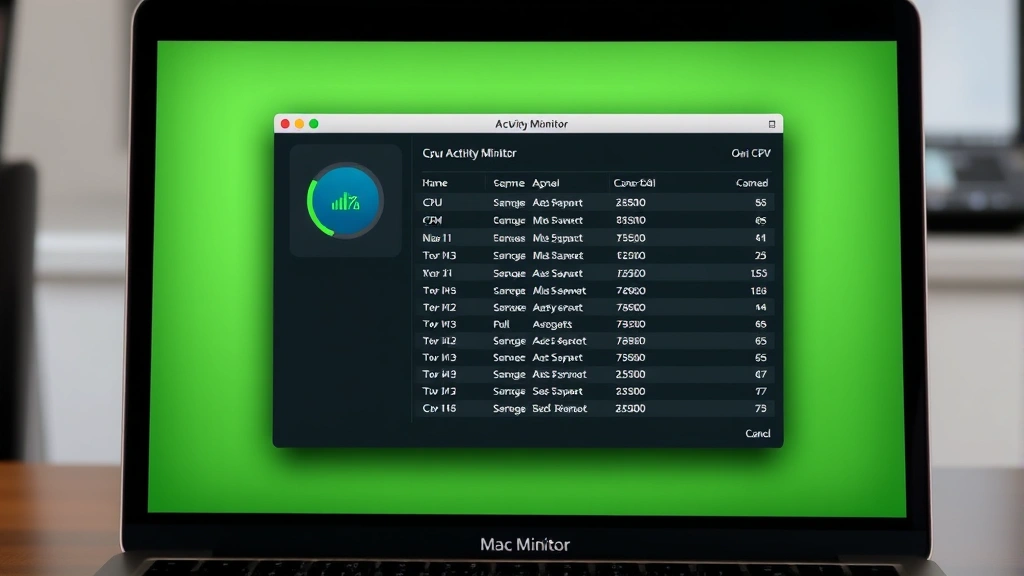
Activity Monitor shows you everything running on your Mac, including background processes. You can sort by CPU, Memory, Disk, Network, or Energy to see what’s actually eating your resources. If an app is using 90% of your CPU, you’ll see it immediately.
To force-quit from Activity Monitor:
- Find the app in the list
- Click it once to select it
- Click the “X” button in the top-left corner (or press Command + Q)
- Choose “Force Quit” when the confirmation appears
This approach is overkill if an app just froze. But if you want to understand what’s actually happening on your Mac—why it’s slow, which apps are memory hogs, whether something’s running in the background—Activity Monitor is invaluable. Apple’s official documentation breaks down each column in detail if you want to dig deeper.
The Force Quit Menu Explained
There’s also a third way to force-quit apps on Mac: the Apple menu. It’s less elegant than Command + Option + Esc, but it works if you forget the shortcut.
Click the Apple menu (top-left corner) → “Force Quit” → select your app → click “Force Quit.”
That’s it. Same result, different path. Most people stick with the keyboard shortcut because it’s faster, but it’s good to know this option exists if you ever need it.
One thing to understand: “Force Quit” on Mac is not the same as “End Task” on Windows. When you force-quit an app on macOS, the system handles it cleanly. The app closes, any temp files it was using get cleaned up, and your Mac moves on. There’s no registry corruption, no zombie processes, no lingering problems.
This is why Macs don’t need to be restarted as often as Windows machines. The operating system is built to handle app crashes and force-quits without degrading over time.
When You Actually Need This
So when should you actually use how to control alt delete on mac functionality? Here are the real-world scenarios:
An app is frozen and won’t respond. You click on it, nothing happens. The spinning beach ball appears and stays there. This is the classic use case. Command + Option + Esc gets you out of it in seconds.
An app is consuming all your CPU and slowing down everything. Your Mac is sluggish, fans are spinning up, battery is draining fast. Open Activity Monitor, sort by CPU, find the culprit, and force-quit it.
An app crashed but didn’t fully close. Sometimes an app will crash but leave a ghost process running. You can’t relaunch it because Mac thinks it’s still open. Force-quit the ghost, then relaunch.
You need to restart your Mac quickly. If you need to force a restart (say, after a major update or if your Mac is completely unresponsive), you can force-quit everything and then restart. Though honestly, if your entire Mac is frozen, you might need to do a hard restart instead—hold the power button for 10 seconds.
For general Mac maintenance and to prevent freezes, check out Macworld’s detailed guide on keeping your Mac responsive.
Real talk: If you’re force-quitting the same app multiple times a week, something’s wrong. Either the app has a memory leak (update it), your Mac is running out of RAM (upgrade or close other apps), or the app is just poorly written. One-off freezes happen to everyone. Chronic freezes mean you need to investigate.
Troubleshooting a Frozen Mac
Sometimes Command + Option + Esc doesn’t work because your entire Mac is frozen, not just one app. Here’s how to handle that:
If one app is frozen but you can still move the mouse: Use Command + Option + Esc to force-quit it. This is the normal scenario.
If your entire Mac is frozen and you can’t do anything: Hold the power button for 10 seconds until your Mac shuts down completely. Wait 30 seconds, then press the power button to turn it back on. This is a hard restart and should be your last resort.
If your Mac is running slowly but not completely frozen: Open Activity Monitor (Command + Space, type “Activity Monitor”), sort by CPU or Memory, and see what’s using resources. Close unnecessary apps or browser tabs.
According to The Verge’s tech troubleshooting resources, most Mac slowdowns come from three things: too many browser tabs open, insufficient RAM, or a full hard drive. Address those, and you’ll rarely need to force-quit anything.
If you’re also dealing with screen recording issues while troubleshooting, you can stop screen recording on Mac with Command + Control + Esc.
Other Useful Mac Keyboard Shortcuts
While we’re talking about keyboard shortcuts, here are a few others that’ll save you time:
- Command + Q: Quit the current app (gracefully, not force-quit)
- Command + Tab: Switch between open apps
- Command + Space: Open Spotlight Search (find apps, files, or answers instantly)
- Command + Control + Power: Force restart your Mac (use only when completely frozen)
- Command + Shift + Delete: Empty the Trash (and permanently delete files)
- Command + Comma: Open preferences/settings for the current app
- Control + Command + D: Look up a word in the dictionary
These shortcuts are muscle memory for Mac power users. Learning them takes maybe a week, and they’ll save you hours every year. Seriously.
Keeping Your Mac Running Smooth
The best way to avoid needing how to control alt delete on mac shortcuts is to keep your Mac running smoothly in the first place. Here’s what actually works:
Close browser tabs you’re not using. Chrome and Safari are massive memory hogs. If you have 50 tabs open, your Mac will slow down. Close them. Seriously. This is the #1 reason Macs feel slow.
Restart your Mac regularly. Once a week is ideal. This clears out memory, closes background processes, and resets everything. It takes 2 minutes and makes a noticeable difference.
Keep your macOS updated. Apple releases security updates and performance improvements regularly. Don’t ignore them. Go to System Preferences → Software Update and install them.
Check your storage. If your Mac’s hard drive is more than 90% full, performance tanks. Go to Apple menu → About This Mac → Storage and see what’s taking up space. Delete old downloads, move files to external drives, or use cloud storage.
Uninstall apps you don’t use. Old apps can run background processes and slow things down. Drag unused apps to the Trash, or use an app like AppCleaner to remove them completely (including their preference files).
Monitor Activity Monitor regularly. Spend 30 seconds a week looking at what’s using CPU and memory. If you see something suspicious, Google it. Sometimes malware or bloatware sneaks in.
For more detailed Mac maintenance strategies, PCMag’s comprehensive Mac optimization guide covers everything from cache clearing to RAM upgrades.
If you’re looking to restart your system entirely, you might also want to know how to restart a laptop if you’re switching between Windows and Mac machines.
Frequently Asked Questions
What is the Mac version of Control Alt Delete?
– The Mac equivalent is Command + Option + Esc, which opens the Force Quit Applications window. This lets you close frozen or unresponsive apps instantly. You can also use the Apple menu → Force Quit option, or open Activity Monitor for more detailed system information.
Why doesn’t Control Alt Delete work on Mac?
– Apple designed macOS differently from Windows. Instead of a task manager accessible through Control Alt Delete, Macs use Command + Option + Esc for force-quit and Activity Monitor for detailed system monitoring. The Mac approach is faster and more intuitive for most users.
How do I force-quit an app on Mac without the keyboard shortcut?
– Click the Apple menu in the top-left corner, select “Force Quit,” choose the app you want to close, and click “Force Quit.” You can also open Activity Monitor (Command + Space, then type “Activity Monitor”), find the app, and click the X button in the top-left corner.
Is it safe to force-quit apps on Mac?
– Yes, force-quitting is safe on macOS. The operating system is designed to handle it cleanly. You won’t corrupt system files or leave behind zombie processes the way you might on Windows. Any unsaved work in that app will be lost, though.
What should I do if my entire Mac is frozen?
– If Command + Option + Esc doesn’t work because your whole Mac is unresponsive, hold the power button for 10 seconds to force a shutdown. Wait 30 seconds, then press the power button to restart. This is a hard restart and should only be used when your Mac is completely frozen.
How much RAM do I need to avoid freezing?
– For basic tasks (browsing, email, documents), 8GB is sufficient. For photo/video editing or running multiple applications, 16GB is better. Check Activity Monitor to see your actual memory usage. If you’re consistently using more than 80% of available RAM, you need more.

Can I prevent apps from freezing?
– Yes. Keep your macOS and apps updated, close unnecessary browser tabs, restart your Mac weekly, and monitor Activity Monitor to catch resource hogs early. If specific apps freeze regularly, uninstall and reinstall them, or check if newer versions are available.
What’s the difference between Force Quit and regular Quit?
– Regular Quit (Command + Q) closes an app gracefully, giving it time to save data and clean up. Force Quit closes it immediately, which means unsaved work is lost. Use Force Quit only when an app is frozen and won’t respond to regular quit commands.


