
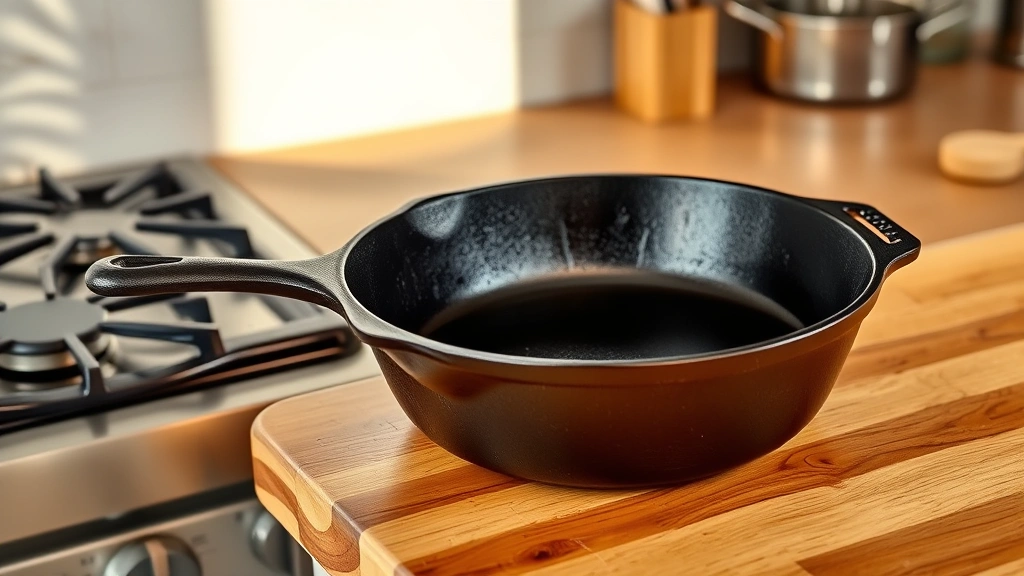
If you’ve got rusty cast iron sitting in your garage or inherited a grimy skillet from your grandmother’s kitchen, don’t toss it. How to clean rusty cast iron is easier than you think, and you’ll be amazed at what’s hiding under all that rust. Cast iron is practically indestructible—the rust is just surface gunk that’s begging to come off. With the right approach, you can bring that pan back to life and have it cooking like a champ again.
Table of Contents
Assess the Rust Damage
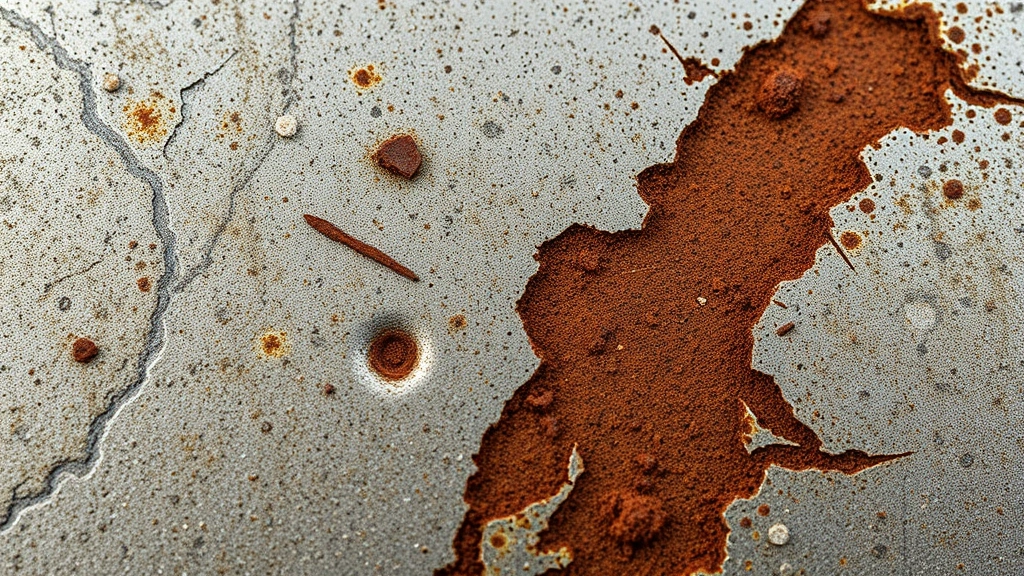
Before you start scrubbing, take a good look at what you’re dealing with. Light surface rust looks orange-brown and flaky—that’s the easy stuff. Heavy rust creates deep pitting that you can see and feel with your fingers. If the rust has eaten through the metal or created holes, you might have a lost cause. But most rusty cast iron falls somewhere in the middle, and that’s totally salvageable.
Run your hand over the surface. Does it feel rough and crusty? That’s surface rust. Can you see the actual metal underneath in spots? Even better. The goal is to remove all the rust without grinding away the seasoning that might still be lurking underneath. Light rust removal takes a weekend; heavy rust might take longer but it’s still doable.
Wire Brush Method Works Fast
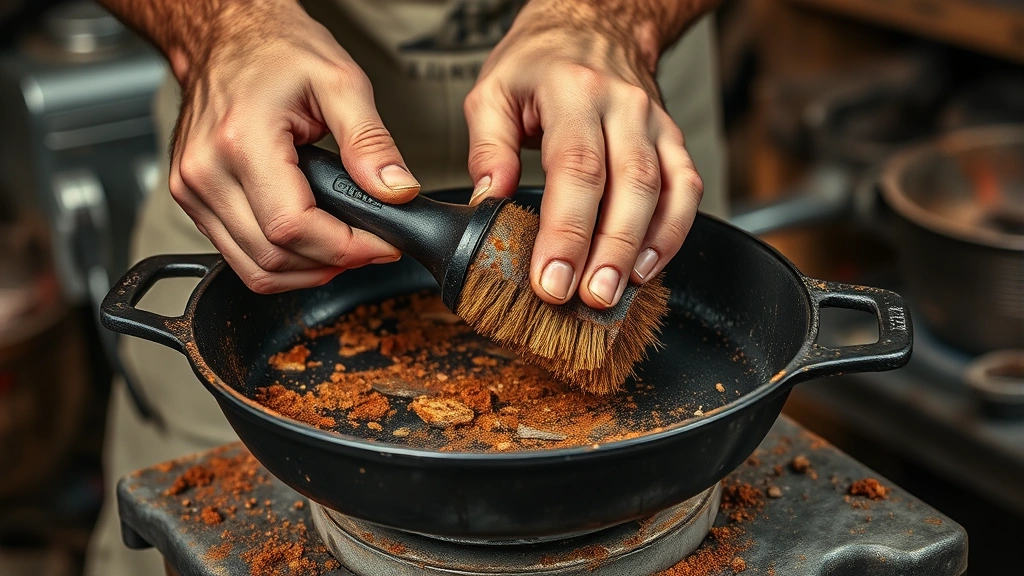
The fastest way to tackle rusty cast iron is with a wire brush. Grab a hand-held wire brush or chuck one into a power drill if you’ve got one. This method works best for light to moderate rust and gives you complete control over the process.
Start with firm, circular motions, applying decent pressure. You’ll see the rust start flaking off almost immediately. Keep going until you hit bare metal—you want that silvery-gray surface showing through. This isn’t a gentle process; cast iron can handle aggressive scrubbing. Work over the entire surface, getting into any textured areas where rust likes to hide.
The downside? Wire brushing doesn’t always get into deep pitting. You might still have rust lurking in the microscopic valleys of the pan. For most kitchen use, though, this is enough. When you’re done, wipe everything down with a damp cloth and dry it completely with a towel. Moisture is rust’s best friend, so don’t skip the drying step.
Vinegar Soak Technique
White vinegar is your secret weapon for stubborn rust. The acetic acid dissolves rust without harming the underlying metal. This method works great for heavily rusted pans and doesn’t require any elbow grease.
Fill a container large enough to hold your cast iron with white vinegar—regular household vinegar works fine. Submerge the pan completely and let it sit. Check it every 4-8 hours. Depending on how heavy the rust is, you might need to soak for 24-48 hours. Yes, it takes time, but you’re barely doing anything.
As the rust dissolves, the vinegar turns dark and cloudy. Change it out when it gets too gunked up. Once the rust starts coming off easily, pull the pan out and scrub it with a wire brush or steel wool. The combination of vinegar softening and mechanical scrubbing removes even stubborn rust. Rinse everything thoroughly and dry immediately—and I mean immediately. Cast iron rusts fast when wet.
Pro tip: Don’t leave cast iron in vinegar indefinitely. After a couple days, the acid can start attacking the metal itself. Get in, soak, scrub, and get out.
Electrolysis for Deep Cleaning
If you’re serious about restoration and want to tackle heavily pitted cast iron, electrolysis is the nuclear option. It’s not as scary as it sounds, though it does require a battery charger and some basic setup.
You’ll need a car battery charger, a piece of steel (like rebar), some washing soda (not baking soda), a plastic container, and water. Mix the washing soda with water, submerge your cast iron, attach the negative charger cable to the pan and positive to the steel, and let it run for 12-24 hours. The electrical current dissolves rust without affecting the metal.
This method is incredible for deep rust and pitting because it reaches places mechanical methods can’t. The rust basically falls off on its own. The downside is setup and waiting time, but if you’ve got a really valuable piece or inherited heirloom, it’s worth it. Check out detailed electrolysis guides online—there are tons of YouTube tutorials showing the exact process.
Seasoning Your Cast Iron
Once your cast iron is clean and rust-free, seasoning is what turns it back into a non-stick cooking machine. Seasoning is just layers of polymerized oil that create a protective, non-stick surface. This is what prevents future rust.
Start with a completely dry pan. Apply a thin layer of high-smoke-point oil—vegetable, canola, or grapeseed oil all work great. Use a paper towel to wipe it on, then immediately wipe it off again. You want it barely-there—more oil doesn’t equal better seasoning. Too much oil gets sticky and gummy.
Place the oiled pan upside down on the middle oven rack with a baking sheet below to catch drips. Heat your oven to 450-500°F for one hour. Turn it off and let the pan cool completely inside. That’s one layer. Repeat this process 3-6 times for a solid seasoning base. Each layer builds on the last, creating that slick, dark patina cast iron is famous for.
After seasoning, use your pan regularly. Cooking with fat and oil is the best maintenance—it keeps building those seasoning layers naturally. Hand wash only (never the dishwasher), dry immediately, and store in a dry place. Your restored cast iron will last another hundred years easy.
Prevention and Maintenance Tips
Once you’ve brought your cast iron back to life, keeping it rust-free is simple. The golden rule: keep it dry. Rust needs moisture, so dry your pan thoroughly after every wash. Even a little dampness left overnight can start the rust cycle again.
Store it in a dry location—not under the sink or in a damp cabinet. Hang it on a wall, keep it in a cupboard with good airflow, or store it in the oven if you don’t use it often. Some folks keep a paper towel or cloth inside the pan to absorb any moisture.
Use your cast iron regularly. Cooking with it is the best maintenance because you’re constantly re-seasoning it with oils and fats. A pan that sits unused is more likely to rust. If you’re storing a pan long-term, wipe it down with a tiny bit of oil before putting it away.
Never soak cast iron in water for extended periods, and avoid acidic foods like tomatoes or wine in poorly seasoned pans—the acid can eat into the seasoning. Once your seasoning is thick and well-established, this matters less, but it’s still good practice.
When Restoration Isn’t Worth It
Sometimes cast iron is too far gone. If the rust has eaten completely through the metal, created large holes, or severely warped the pan, restoration won’t help. You can’t patch holes in cast iron, and warping means food won’t cook evenly.
Heavy pitting that goes deep into the metal might look bad but doesn’t affect cooking. It’s purely cosmetic. If the pan is structurally sound but pitted, restoration is worth doing—you’ll have a fully functional pan even if it’s not museum-quality.
If you’re restoring for sentimental reasons, any salvageable pan is worth the effort. If you’re looking for a practical cooking tool, even a moderately rusted pan will work fine once cleaned and seasoned. Cast iron is forgiving that way.
Frequently Asked Questions
How long does it take to clean rusty cast iron?
Light rust with a wire brush takes 1-2 hours. Vinegar soaking takes 24-48 hours of soak time plus scrubbing. Electrolysis takes 12-24 hours of electrical work. Most people see results in a weekend with vinegar or wire brushing methods.
Can I use a wire wheel on a power drill?
Absolutely. A wire wheel on a drill speeds up the process significantly. Just wear safety glasses—rust particles fly everywhere. Go slower than you think you need to; you’re not in a race.
Will vinegar damage cast iron?
Not if you don’t leave it soaking for weeks. A couple days in vinegar is fine and actually recommended for heavy rust. Just don’t abandon a pan in vinegar for months.
How many seasoning layers do I need?
Three layers is a good start, six is excellent. You can keep adding layers anytime. Cast iron seasoning is cumulative—each time you cook with it, you’re adding microscopic layers.
Can I use olive oil for seasoning?
Olive oil has a low smoke point and gets sticky when heated. Stick with vegetable, canola, grapeseed, or avocado oil for best results.
Why does my cast iron still rust after cleaning?
You’re probably not drying it completely or storing it in a damp place. Moisture is the enemy. Also, if your seasoning is thin, the bare metal underneath can still rust. Build up more seasoning layers.


