
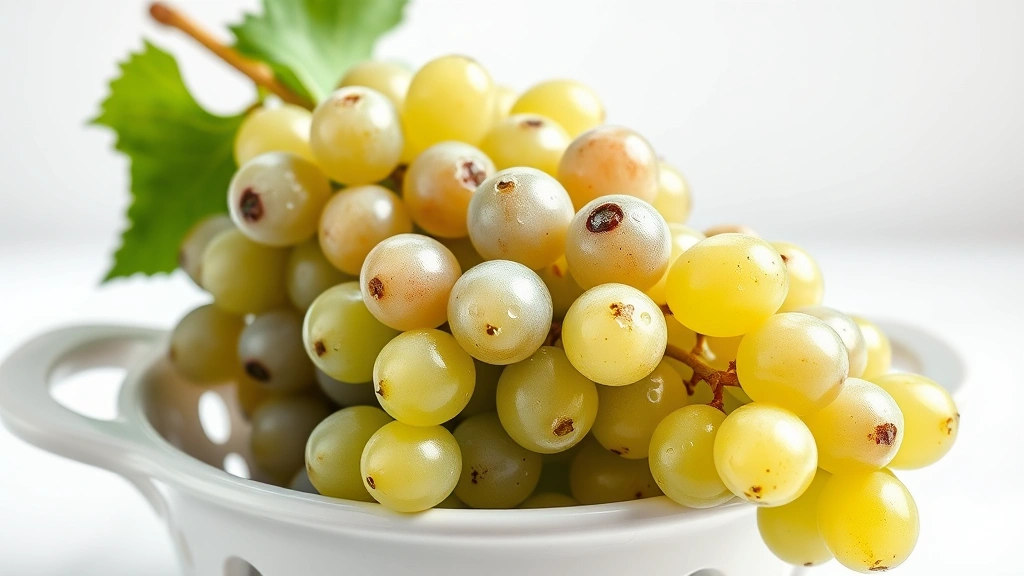
Learning how to clean grapes properly is one of those simple kitchen skills that makes a real difference in food safety and taste. Whether you’re grabbing a quick snack or prepping fruit for healthy vegetarian dinner recipes, removing pesticides, dirt, and bacteria from your grapes takes just a few minutes and keeps your family healthier.
Table of Contents
Why Cleaning Grapes Matters
Grapes sit on the vine, exposed to dirt, dust, and whatever Mother Nature throws at them. But that’s just the start. Most commercial grapes receive pesticide treatments to prevent fungal diseases and insect damage. Even organic grapes can pick up field debris. When you grab a handful straight from the store bag, you’re potentially eating residue that nobody wants on their fruit. Cleaning grapes isn’t paranoid—it’s practical kitchen hygiene. The CDC recommends rinsing all produce under running water before eating, and grapes are no exception. Plus, when you’re making baby puree recipes, you absolutely want that extra layer of cleanliness for your little one.
Simple Water Rinse Method
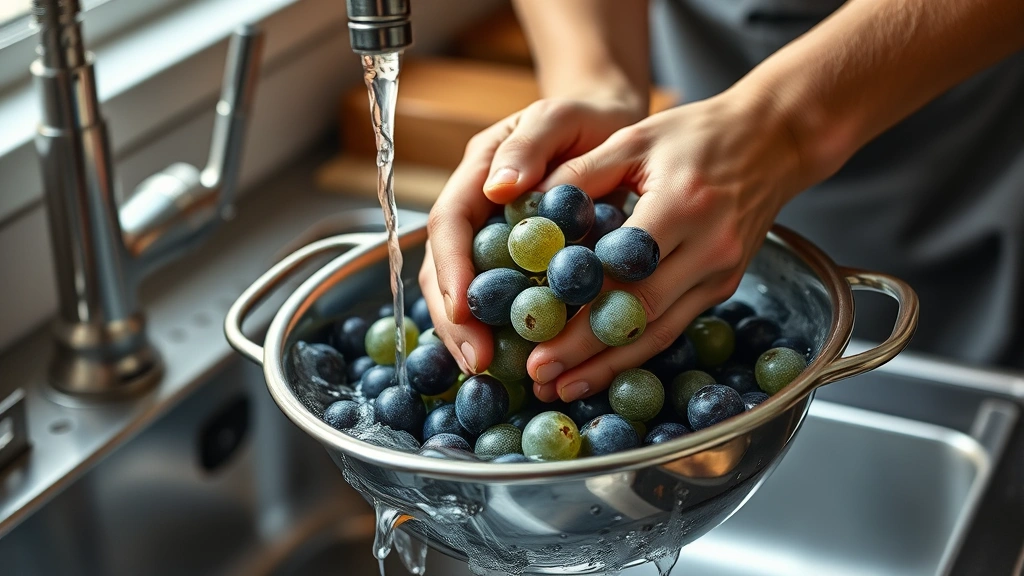
This is the fastest approach, and honestly, it works for most situations. Place your grapes in a colander—that’s your best friend here—and run them under cool, flowing tap water. Use your fingers to gently rub each grape as the water flows. Don’t be aggressive; you’re not trying to scrub them raw. Spend about 30 seconds on a standard bunch. The running water physically removes surface dirt and some pesticide residue. This method is perfect for everyday eating when you’re in a hurry. The key is using a colander so water drains immediately and you’re not leaving grapes sitting in stagnant water. Studies show that plain water removes about 75-80% of surface contaminants, which is solid for quick prep.
Vinegar and Water Soak
When you want to go deeper, the vinegar method is your workhorse. Mix one part white vinegar with three parts water in a bowl—don’t overthink the ratios. A cup of vinegar to three cups of water handles a standard bunch perfectly. Submerge your grapes and let them sit for 5-10 minutes. The acidity in vinegar breaks down some pesticide residues and kills bacteria more effectively than water alone. After soaking, drain through your colander and rinse briefly under running water to remove any vinegar taste. This approach is particularly useful for grapes you’ll be storing, since the vinegar also helps prevent mold growth. The mild acidity won’t damage the grapes—they’re tough little fruits. Many home cooks swear by this method because it feels thorough without being complicated. You can even use apple cider vinegar if you prefer, though white vinegar is cheaper and works identically.
Baking Soda Technique
Baking soda is a mild abrasive that works surprisingly well for produce cleaning. Dissolve one tablespoon of baking soda in a bowl of water, then soak your grapes for 12-15 minutes. The baking soda creates a slightly alkaline environment that helps dissolve certain pesticide residues better than plain water. After soaking, rinse thoroughly under running water while gently rubbing. This method takes a bit longer than vinegar, but research from UC Davis shows it removes pesticides more effectively than vinegar alone—we’re talking 95%+ removal of certain common pesticides. It’s worth the extra time if you’re particularly concerned about chemical residues. The baking soda won’t leave any taste on your grapes if you rinse properly, and it’s incredibly cheap. Keep a box in your kitchen specifically for produce cleaning.
Commercial Produce Wash
If you want to skip the DIY approach, commercial produce washes are legitimate options. Products like Veggie Wash or similar brands are specifically formulated to remove pesticides and bacteria from fruits and vegetables. Follow the bottle instructions—usually you spray or soak, then rinse. These products are more expensive than vinegar or baking soda, but they’re convenient and effective. The tradeoff is cost versus simplicity. They work well if you’re cleaning large quantities or want consistent results. Just make sure you rinse thoroughly afterward, since you don’t want to eat the cleaning product itself. Most are food-safe, but rinsing is still the right move. These are particularly useful if you’re doing bulk prep for black beans and rice recipe meal prep where you’re handling lots of fresh produce.
Salt Water Rinse Method
Salt water is an old-school method that still holds up. Mix one tablespoon of salt into a bowl of water and soak your grapes for 5 minutes. Salt is naturally antimicrobial and helps dislodge dirt and bacteria from the grape surface. After soaking, rinse under running water. This method is gentler than baking soda but more aggressive than plain water. The salt doesn’t leave residue on the grapes if you rinse properly. It’s particularly good for grapes that look visibly dusty or dirty. The downside is that salt can slightly affect the taste if you don’t rinse thoroughly, so don’t skip that final rinse step. This method works well when combined with a gentle rub under running water—the salt particles act as a mild scrub.
Best Drying Techniques
After cleaning, drying matters more than most people realize. Wet grapes spoil faster because moisture promotes mold growth. Pat your grapes dry with a clean paper towel or cloth immediately after rinsing. Don’t use regular kitchen towels—paper towels are more hygienic. For bulk quantities, spread grapes on a clean kitchen towel and let them air dry for 10-15 minutes. You can also use a salad spinner if you have one—it’s actually perfect for grapes and removes water quickly and efficiently. Make sure they’re completely dry before storing. Moisture is the enemy of longevity. If you’re eating them immediately, you can skip the drying step, but for storage, thorough drying is essential. A completely dry grape lasts significantly longer in the fridge than a damp one.
Storage Tips After Cleaning
Clean, dry grapes should go straight into the refrigerator in a breathable container. Don’t seal them in an airtight bag—that traps moisture and accelerates mold growth. A perforated produce bag or open container works better. Grapes keep for 5-7 days when stored properly. Keep them away from strong-smelling foods like onions, since grapes absorb odors. Store them in the crisper drawer if your fridge has one. If you notice any moldy grapes, remove them immediately to prevent spread. Don’t wash grapes until you’re ready to eat them—unwashed grapes last longer because the natural waxy coating protects them. The exception is if you’ve used vinegar or baking soda, which actually extends shelf life. You can also freeze cleaned grapes for later use—they work great in smoothies or as frozen snacks.
Frequently Asked Questions
Do I need to clean grapes before eating them?
Yes. The CDC recommends rinsing all produce under running water before eating. Grapes can harbor dirt, bacteria, and pesticide residues even if they look clean. A quick rinse takes 30 seconds and significantly reduces your exposure to contaminants.
Can I use soap to clean grapes?
No. Never use dish soap or any household cleaning products on food. These aren’t designed for consumption and can leave toxic residues. Stick to water, vinegar, baking soda, salt, or food-safe commercial produce washes only.
What’s the most effective cleaning method?
Baking soda soaking removes the most pesticide residues according to research, but vinegar is nearly as effective and faster. For everyday eating, plain water with gentle rubbing is sufficient. Choose based on your time and concern level.
How long can I store cleaned grapes?
Properly dried and stored cleaned grapes last 5-7 days in the refrigerator. Unwashed grapes actually last longer—up to 2 weeks—because the natural coating protects them. Clean only what you’ll eat within a week.
Are organic grapes cleaner than conventional?
Organic grapes don’t use synthetic pesticides, but they still need cleaning. They can have dirt, bacteria, and organic-approved pesticide residues. Cleaning is important regardless of whether grapes are organic or conventional.
Can I clean grapes in advance?
You can, but they’ll last longer if you wait until just before eating. If you must prep ahead, make sure they’re completely dry before storing. Moisture is the main factor that shortens shelf life.
Wrapping It Up
Knowing how to clean grapes is genuinely one of those skills that takes five minutes to learn and pays dividends in food safety and taste. Whether you go with the simple water rinse for quick snacks or the baking soda method for maximum pesticide removal, you’re making your food safer. Pick whatever method fits your lifestyle—there’s no wrong answer here. The important thing is that you’re rinsing before eating. Your body will thank you, and your grapes will taste fresher and last longer. Keep it simple, stay consistent, and enjoy knowing exactly what’s on your fruit.


