

Learning how to clean dry erase board surfaces properly is one of those simple skills that saves you headaches down the road. Whether you’re dealing with a home office whiteboard, classroom marker board, or that old planning board gathering dust in the garage, a grimy dry erase surface is basically useless. The good news? Getting it back to pristine condition takes about five minutes and supplies you probably already have lying around.
Table of Contents
Why Boards Get Dirty
Before we dive into solutions, let’s understand the problem. Dry erase markers leave behind a waxy residue that accumulates with repeated use. Over time, dust particles embed themselves in this buildup, creating a hazy, discolored surface that resists even vigorous erasing. The marker ink also oxidizes and bonds to the board’s surface, especially if markers sit on the board for extended periods. This ghosting effect—where faint marks remain after erasing—is the telltale sign your board needs serious cleaning.
Temperature fluctuations and humidity also play a role. In humid environments, moisture can trap marker particles, making them stick harder to the surface. Understanding this chemistry helps you choose the right cleaning method for your specific situation.
Method 1: Dry Erase Cleaner Spray
This is the nuclear option for dry erase board maintenance. Commercial dry erase cleaners are specifically formulated to dissolve marker residue without damaging the board’s surface. Brands like Clorox Dry Erase Board Cleaner work because they contain solvents that break down the waxy marker compounds.
Here’s the process:
- Spray the cleaner across the entire board surface in a light, even mist
- Wait 30 seconds for the solvent to penetrate the buildup
- Wipe with a soft microfiber cloth using circular motions
- For stubborn ghosting, spray again and let sit for 60 seconds
- Final wipe with a dry cloth to prevent streaking
The advantage here is speed and effectiveness. A single pass usually eliminates months of accumulated grime. The downside? Cost adds up if you’re cleaning multiple boards regularly. These cleaners typically run $5-8 per bottle and last through maybe 10-15 cleanings depending on board size.
Method 2: Isopropyl Alcohol Solution
If you want the effectiveness of commercial cleaner at a fraction of the cost, isopropyl alcohol is your answer. The 70% solution works better than 90% because the water content helps distribute the alcohol evenly across the surface. This method is particularly effective for ghosting removal.
Application steps:
- Pour 70% isopropyl alcohol into a spray bottle
- Lightly mist the board—don’t oversaturate
- Use a soft cloth or paper towel to wipe in one direction
- Repeat passes as needed for stubborn marks
- Let the board air dry completely before using markers again
One bottle of isopropyl alcohol costs about $3-4 and lasts through dozens of cleanings. It’s also safer than some commercial cleaners if you have kids or pets around. The smell dissipates quickly, and it won’t damage the board’s protective coating when used properly.
Method 3: Quality Whiteboard Eraser
Sometimes the simplest solution works best. The problem is most people use cheap, worn-out erasers that just smear marker around instead of removing it. A quality whiteboard eraser—the felt kind, not the cheap plastic ones—can handle light to moderate buildup effectively.
Pro technique:
- Use firm, deliberate strokes in one direction
- Flip the eraser frequently to use fresh felt
- Work from top to bottom to avoid re-depositing dust
- For ghosting, erase multiple times with fresh eraser sections
- Tap the eraser against a trash can to remove accumulated particles
This method works best when done regularly—daily or every other day—before serious buildup occurs. Once ghosting sets in, an eraser alone won’t cut it. Keep a quality eraser ($2-5) in your workspace and use it immediately after writing. This preventative approach beats scrubbing later.
Method 4: Household Items
If you’re in a pinch and don’t have commercial cleaner or alcohol, your kitchen likely contains effective alternatives. Vinegar and baking soda are surprisingly effective for dry erase board cleaning.
Vinegar method:
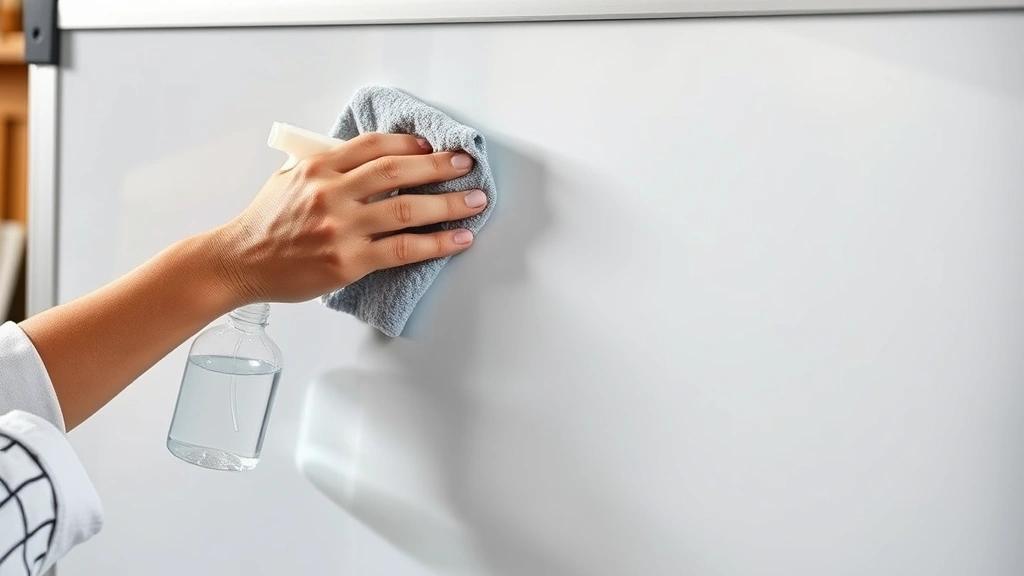
- Mix equal parts white vinegar and water in a spray bottle
- Spray lightly and wipe with a soft cloth
- The acidity cuts through waxy residue effectively
- Follow up with a dry cloth to prevent streaking
Baking soda paste method:
- Mix baking soda with a small amount of water to create a paste
- Apply to heavily soiled areas
- Gently rub with a soft cloth using circular motions
- Rinse with a damp cloth and dry thoroughly
Rubbing alcohol from a first aid kit also works—it’s essentially the same as isopropyl alcohol. Even a damp microfiber cloth with no cleaner can remove light ghosting if you apply enough elbow grease. These methods take longer than commercial solutions but cost virtually nothing.
Method 5: Prevention Strategy
The best cleaning is the one you never have to do. Prevention requires minimal effort but pays massive dividends. Start by establishing a simple routine: erase the board completely at the end of each day or work session using a quality eraser.
Prevention checklist:
- Never leave markers sitting on the board surface—store them cap-up
- Use markers from the same brand when possible (different brands sometimes don’t erase cleanly)
- Avoid cheap, low-quality markers that leave stubborn residue
- Wipe the board with a dry cloth weekly even if you don’t see visible dirt
- Store the board in a climate-controlled space when possible
- Don’t use permanent markers or oil-based markers on dry erase boards
If you’re managing multiple boards—like in a classroom or office—assign someone to do a quick weekly cleaning with isopropyl alcohol. This takes 10 minutes and prevents the need for aggressive scrubbing later. Think of it like maintaining a tool: small regular efforts beat major repairs.
Common Mistakes to Avoid
I’ve seen plenty of people attack their dry erase boards with the wrong approach. Here’s what not to do:
Using permanent markers: Once permanent marker hits a dry erase board, you’re in trouble. Those inks bond permanently to the surface and won’t come off with normal cleaning. If this happens, you need rubbing alcohol and serious scrubbing—or the board might be done for.
Oversaturating with liquid: Excess water or cleaner can seep into the board’s edges and damage the internal structure. Use a light mist, never a soaking wet cloth. The goal is damp, not dripping.
Using abrasive materials: Scouring pads, rough paper towels, or harsh brushes scratch the protective coating on the board’s surface. Once that coating is compromised, the board’s performance degrades permanently. Always use soft microfiber cloths or felt erasers.
Ignoring ventilation: When using isopropyl alcohol or vinegar, work in a well-ventilated space. The fumes aren’t dangerous in small quantities, but they’re unpleasant and unnecessary if you open a window.
Cleaning too aggressively: Dry erase boards aren’t designed for aggressive scrubbing. If you find yourself really bearing down on the board, you’re probably using the wrong cleaning method. Step back and try alcohol or commercial cleaner instead.
Restoring Heavily Damaged Boards
Sometimes you inherit a board that’s been neglected for years. The surface is hazy, ghosting is severe, and normal cleaning doesn’t help. Before you toss it, try this intensive restoration process.
Deep cleaning steps:
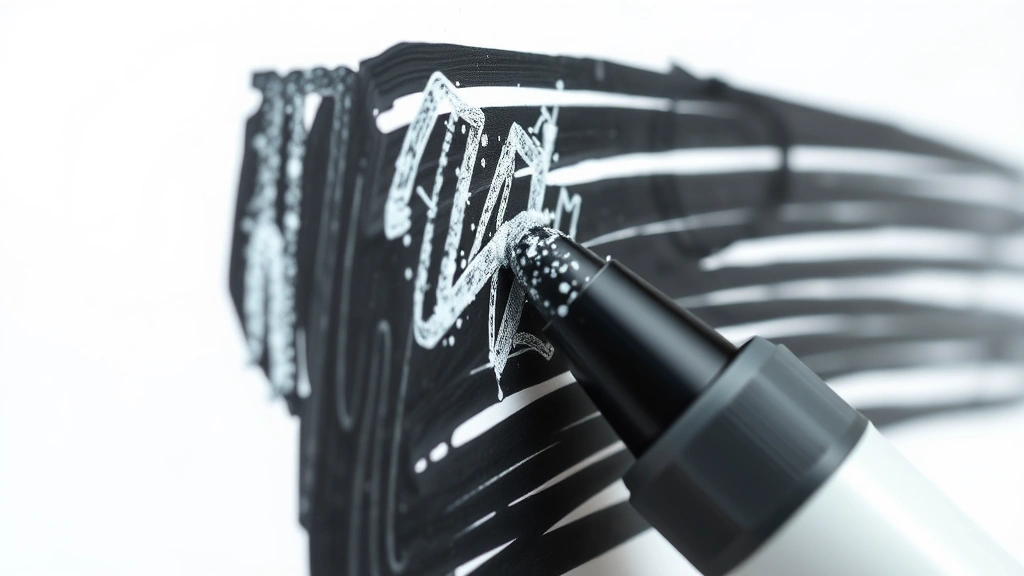
- Start with a quality eraser and really work it—multiple passes in different directions
- Follow up with isopropyl alcohol and let it sit for 2-3 minutes
- Wipe thoroughly with a microfiber cloth
- Repeat the alcohol step 2-3 times if necessary
- For extreme cases, use commercial dry erase cleaner and let it sit longer
- Final step: clean with vinegar solution to remove any remaining residue
This process can take 20-30 minutes but often brings even badly damaged boards back to usable condition. The key is patience—let the solvents do the work rather than relying on elbow grease. If the board still doesn’t improve after this treatment, the protective coating may be permanently damaged and replacement is your only option.
Long-Term Maintenance Schedule
Keep your dry erase board performing like new with this simple schedule:
Daily: Erase completely with a quality eraser at end of use. Takes 30 seconds.
Weekly: Light cleaning with isopropyl alcohol if you notice any ghosting starting. Five minutes.
Monthly: Thorough cleaning with your preferred method. Ten minutes for a standard board.
Quarterly: Deep clean with commercial cleaner or intensive alcohol treatment. Twenty minutes.
This schedule prevents the need for emergency restoration and keeps your board looking professional. If you’re using the board heavily (daily writing), bump the weekly cleaning up to twice weekly. In dry climates where marker residue builds up faster, increase frequency accordingly.
Frequently Asked Questions
Can I use Lysol or bleach on dry erase boards?
No. Bleach and strong disinfectants can damage the board’s protective coating and cause discoloration. Isopropyl alcohol or dedicated dry erase cleaner are safe alternatives. If you need disinfection, use a diluted bleach solution (1 part bleach to 10 parts water), apply briefly, and rinse immediately with distilled water.
Why does my board still ghost after cleaning?
Ghosting that persists after thorough cleaning usually means the marker ink has oxidized and bonded deeply to the surface. Try isopropyl alcohol with extended contact time (let it sit 3-5 minutes) or commercial dry erase cleaner. If it still doesn’t improve, the board’s coating may be permanently compromised.
Is it safe to clean dry erase boards around kids?
Yes, with precautions. Isopropyl alcohol is safer than commercial cleaners for households with children. Use it in a well-ventilated area and let it dry completely before allowing kids near the board. Vinegar and baking soda solutions are the safest options for homes with very young children.
How often should I replace my whiteboard eraser?
A quality eraser lasts 6-12 months with regular use. Replace it when the felt becomes matted, discolored, or stops erasing effectively. Cheap erasers need replacement every 2-3 months. Invest in a good one—it’s worth the $3-5 difference.
Can I use a dry erase board cleaner on other surfaces?
Not recommended. Dry erase cleaners are formulated specifically for the board’s protective coating. Using them on other surfaces like desks, glass, or plastic may cause damage or discoloration. Stick to the intended use.
What’s the best marker brand for easy erasing?
Crayola, Expo, and Staedtler are reliable brands that erase cleanly from most boards. Avoid ultra-cheap dollar store markers—they often contain inks that don’t erase properly. Buy from reputable brands and test a marker on your board before committing to a full set.
Bottom line: Keeping your dry erase board clean doesn’t require special skills or expensive equipment. A quality eraser and regular maintenance prevent 90% of problems. When buildup does occur, isopropyl alcohol or commercial cleaner solves it in minutes. The real secret is consistency—five minutes of weekly maintenance beats an hour of scrubbing later. Pick your preferred method, stick to a schedule, and your board will stay in perfect working condition for years.


