
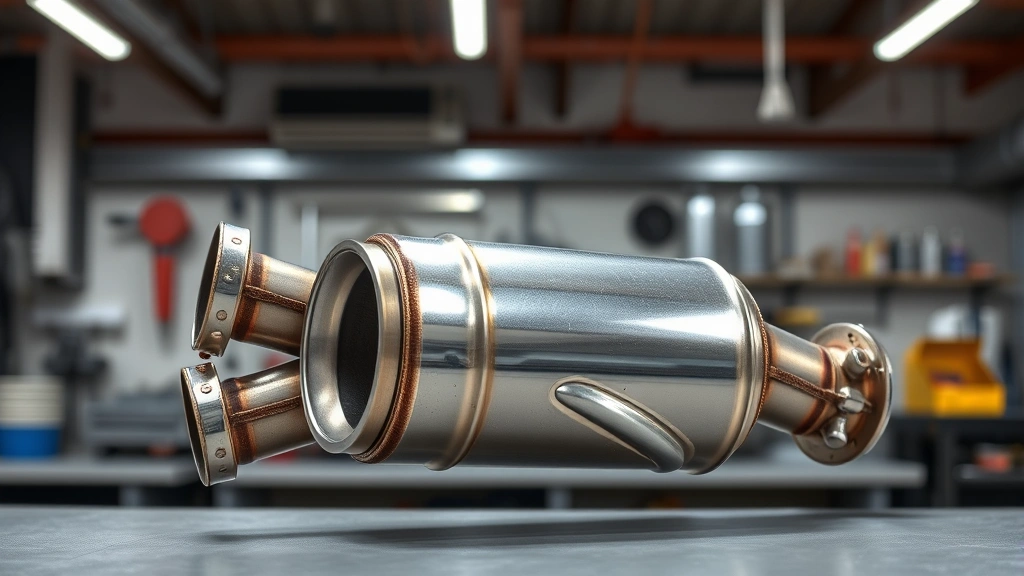
Learning how to clean a catalytic converter can save you hundreds of dollars and keep your engine running smooth. Your catalytic converter works hard every time you drive, converting harmful emissions into less toxic gases. Over time, carbon deposits build up inside, reducing efficiency and triggering that dreaded check engine light. The good news? You don’t always need a costly replacement. Sometimes a thorough cleaning does the trick, and I’m going to walk you through exactly how to do it.
Table of Contents
Understanding Your Catalytic Converter
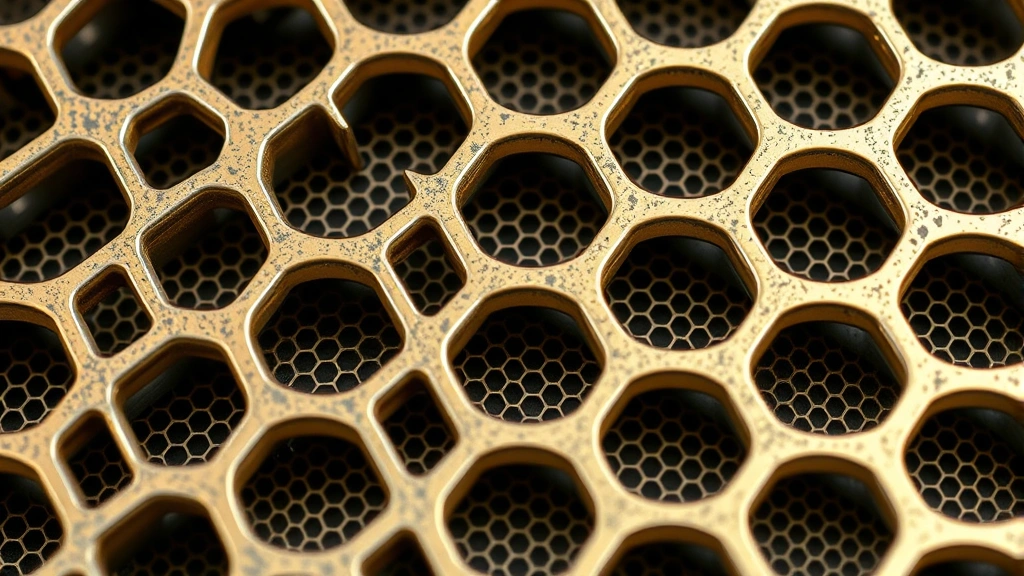
Before you start tearing into your exhaust system, let’s talk about what you’re actually dealing with. Your catalytic converter is a cylindrical component tucked under your vehicle that contains a honeycomb-like structure coated with precious metals like platinum and palladium. These metals act as catalysts, speeding up a chemical reaction that transforms carbon monoxide and hydrocarbons into harmless water vapor and carbon dioxide.
Think of it like the lungs of your car’s exhaust system—it filters out the nasty stuff before it hits the atmosphere. When it’s working right, you barely notice it. When it’s clogged? Your engine performance tanks, fuel economy suffers, and your wallet starts crying. The catalyst material itself doesn’t wear out, but the honeycomb substrate can get coated with carbon buildup that restricts exhaust flow.
Signs Your Converter Needs Cleaning
Not every check engine light means your converter is shot. Watch for these telltale signs that cleaning might solve your problem. Your engine might feel sluggish during acceleration, like it’s struggling to breathe. You might notice a rotten egg smell coming from your exhaust—that’s unburned fuel creating sulfur compounds. Your fuel economy could drop noticeably, meaning you’re filling up more often.
The most obvious sign is a P0420 or P0430 diagnostic code, which specifically points to converter efficiency issues. If your vehicle is relatively new and you’ve been driving it hard or using low-quality fuel, cleaning often works. If your converter is 10+ years old and failing, you might need replacement instead. A mechanic can run a back-pressure test to determine if cleaning is worth attempting.
Tools and Materials You’ll Need
Gather these essentials before you start. You’ll need a socket set, ratchet, and wrench set to remove bolts and fasteners. A jack and jack stands are non-negotiable for safety—never work under a car supported only by a jack. Get a catalytic converter cleaner (we’ll discuss options below), safety glasses, work gloves, and a respirator mask because exhaust components aren’t exactly clean.
You might also want a wire brush for scrubbing, a drain pan for any residual fluids, and a gasket scraper for removing old gasket material. If you’re using the chemical cleaning method, grab some high-quality fuel system cleaner. If you’re removing the converter physically, have a new gasket or high-temperature sealant ready—reusing old gaskets is asking for exhaust leaks.
Removing the Catalytic Converter
This is where things get real. First, disconnect your negative battery terminal—check out our guide on how to remove a car battery if you need a refresher. Let your engine cool completely. Warm catalytic converters will burn you faster than you can say “ouch.”
Lift your vehicle safely using a jack and secure it with jack stands. Never rely solely on a jack. Locate your catalytic converter—it’s bolted between your exhaust manifold and the muffler. You’ll typically find two or three bolts holding it in place. Spray these bolts with penetrating oil and let them sit for 10-15 minutes. Rusty bolts are stubborn, and forcing them will snap them off, creating a whole new headache.
Unbolt the converter carefully. It’s heavier than you’d expect, so support it as you remove the final bolts. Set it on a workbench or sturdy surface. If you’re not removing it, you can still clean it in place using chemical methods, though removal gives you better results.
Best Cleaning Methods
You’ve got two main approaches: chemical cleaning and physical cleaning. Chemical cleaning is less invasive and can work well for light to moderate buildup. You simply add a catalytic converter cleaner to your fuel tank and drive normally. The cleaner flows through your engine and exhaust system, breaking down carbon deposits.
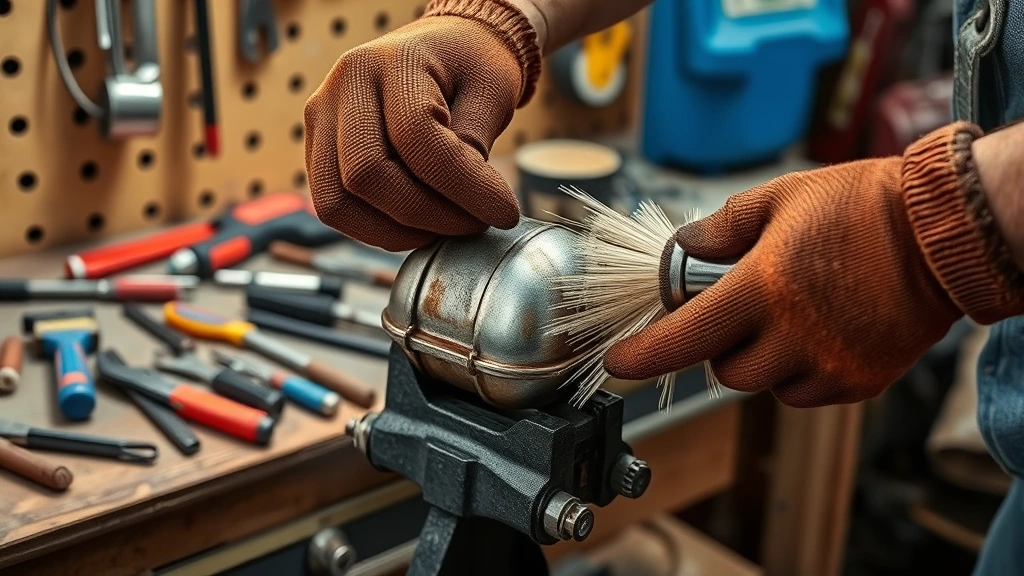
Physical cleaning means actually removing the converter and scrubbing it. This is messier but more thorough. You can use a wire brush to gently scrub the exterior, or you can soak the converter in a degreaser overnight. Some folks use a pressure washer on low setting, but be careful not to damage the honeycomb substrate inside. The goal is removing loose carbon without damaging the precious metal coating.
For stubborn buildup, some mechanics use a specialized ultrasonic cleaning process, but that requires professional equipment. Your best DIY bet is combining chemical treatment with gentle physical scrubbing if you’ve removed the converter.
Using Chemical Cleaners
Chemical cleaners are your friend if you want to avoid removal. Popular options include Redline Fuel System Cleaner, Chevron Techron, and Gumout. These products contain detergents that dissolve carbon buildup as they flow through your engine and converter. They’re relatively inexpensive—usually $15-30 per bottle—and require zero mechanical skill.
Pour the cleaner into your fuel tank when it’s around a quarter full. Drive normally for 50-100 miles, letting the cleaner circulate through your system. Don’t expect instant miracles; it takes time for the deposits to break down and flush out. Some people repeat the process monthly for stubborn cases. For best results, use a quality cleaner from a reputable brand and follow the label instructions exactly.
The advantage of chemical cleaning is that it also cleans your fuel injectors and intake valves, which often accumulate carbon alongside your converter. If your problem is mild, this might be all you need. If you’ve already removed the converter, you can still use a chemical soak while you’re at it.
Reinstalling Your Converter
Once your converter is clean and dry, it’s time to put it back. Install a fresh gasket between the converter and exhaust manifold—this is crucial for preventing exhaust leaks. Align the converter carefully and start the bolts by hand first. This prevents cross-threading, which will ruin your threads and create an expensive problem.
Tighten the bolts in a star pattern if there are three, or alternately if there are two. Don’t over-tighten; you’ll crack the converter or strip the bolts. Snug and firm is the goal. Reconnect your battery and clear any diagnostic codes using an OBD-II scanner. Start your engine and listen for exhaust leaks—you shouldn’t hear any hissing or rattling.
Drive around the block and feel how your engine responds. If cleaning worked, you should notice improved acceleration and smoother idle. Your check engine light might take a few driving cycles to clear, which is normal.
Prevention and Maintenance
Keep your converter happy by maintaining your engine properly. Use quality fuel and change your oil on schedule. A well-tuned engine produces less carbon buildup. If you drive mostly short trips in the city, your converter works harder because it doesn’t reach full operating temperature. Try to take longer drives occasionally to let everything heat up and burn clean.
Avoid running your engine too rich, which dumps excess fuel into the exhaust. Have any misfires fixed immediately—a misfiring cylinder sends raw fuel into your converter, coating it with carbon. Consider using a quality fuel system cleaner every few months as preventive maintenance. It’s cheap insurance compared to a $500-2000 converter replacement.
If you’ve maintained your brake fluid and other fluids properly, you’re already thinking like someone who cares about their vehicle. Apply that same mindset to your fuel system and exhaust.
Frequently Asked Questions
Can I clean a catalytic converter without removing it?
Absolutely. Chemical cleaners work without removal and are your easiest option. Just pour them into your fuel tank and drive normally. You won’t get results as dramatic as physical cleaning, but for light buildup, it often works fine.
How long does catalytic converter cleaning take?
Chemical cleaning takes about 50-100 miles of driving. Physical removal and cleaning might take 2-4 hours depending on how stubborn the bolts are and how thoroughly you clean. Professional shops typically charge 1-2 hours of labor.
Will cleaning fix a P0420 code?
Maybe. If the code is caused by carbon buildup reducing converter efficiency, cleaning often clears it. If the converter is physically damaged or the substrate is deteriorated, cleaning won’t help and you’ll need replacement. A mechanic can help determine which situation you’re in.
How often should I clean my catalytic converter?
If you’re using quality fuel and maintaining your engine well, you might never need to. Some vehicles never have converter issues. If you’ve had problems, using a fuel system cleaner every 3-6 months can help prevent future buildup.
Is it worth cleaning or should I replace it?
Cleaning costs $50-200 if you DIY, or $200-400 at a shop. Replacement runs $500-2000+ depending on your vehicle. If your converter is relatively new and cleaning is an option, it’s worth trying. If it’s ancient and failing, replacement might be the better long-term investment.
Can I damage my converter while cleaning it?
Yes, if you’re rough with it. The honeycomb substrate inside is fragile. Avoid high-pressure washers on high setting, and don’t use harsh chemicals that could damage the precious metal coating. Gentle cleaning is always better than aggressive scrubbing.
What’s the rotten egg smell from my exhaust?
That’s sulfur compounds from unburned fuel reaching your converter. It’s a classic sign of converter problems. Once you clean it and fix any underlying engine issues, the smell should disappear.
Final Thoughts
Learning how to clean a catalytic converter puts you in control of a major repair that most people think requires a mechanic. Whether you choose the easy chemical route or get your hands dirty with physical cleaning, you now have the knowledge to tackle this job. Start with the simplest approach—a quality fuel system cleaner—and see if that solves your problem. If you need to go deeper, you’ve got the steps and safety precautions to do it right.
Remember to work safely, use proper tools, and never skip the jack stands. Your catalytic converter works hard keeping your emissions clean, so treat it with respect. With regular maintenance and preventive care, you might never need to clean it again. And if you do, you’ll know exactly what to do.


