
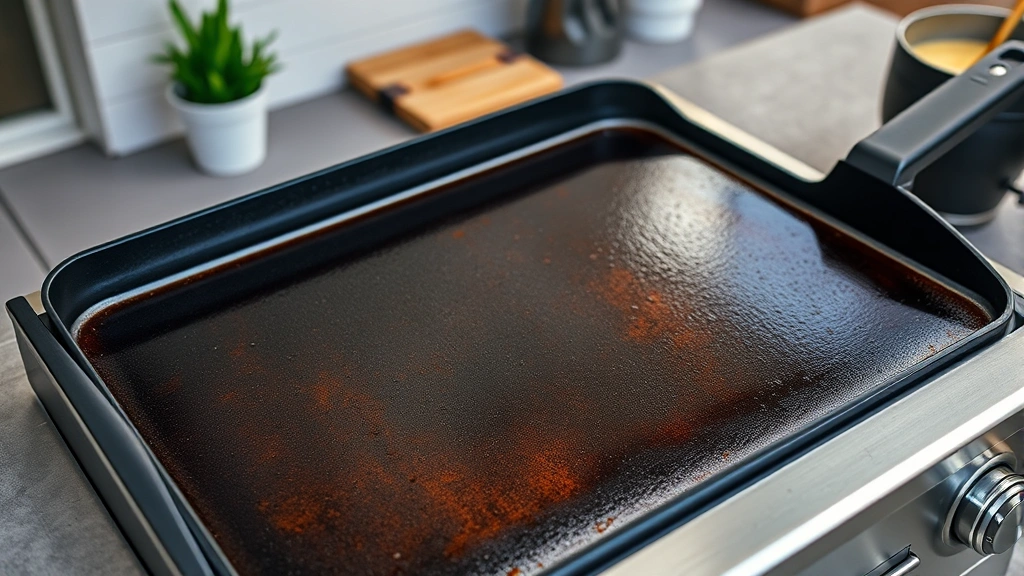
Learning how to clean blackstone griddle properly is the difference between a cooking surface that lasts decades and one that rusts out in a few seasons. I’ve been through plenty of griddles, and trust me, the ones that stick around are the ones that get cleaned right after every cook session.
Table of Contents
Why Griddle Maintenance Matters
Your Blackstone griddle is an investment. Whether you spent $150 or $500, you want it working like a dream for years to come. The steel cooking surface is susceptible to rust if you don’t maintain it properly, and once rust takes hold, you’re fighting an uphill battle. Regular cleaning and seasoning create a protective layer that keeps moisture out and prevents oxidation.
Think of griddle maintenance like brushing your teeth—it’s way easier to prevent problems than fix them later. A quick 10-minute cleaning after each use beats spending hours scrubbing rust off down the road. Plus, a well-maintained griddle cooks more evenly and won’t have sticky spots or uneven heat distribution.
Let It Cool Down First
Here’s where patience pays off. After you finish cooking, don’t immediately start scrubbing. Turn off the heat and let the griddle cool for about 5-10 minutes. You want it warm enough to work with comfortably but cool enough that you won’t burn yourself. This temperature sweet spot is crucial because the residual heat helps loosen stuck-on food and makes cleaning easier.
If you jump in while it’s blazing hot, you’ll struggle with the cleaning tools and risk injury. If you wait until it’s completely cold, the food hardens and becomes stubborn. That medium zone is your golden window. Use this time to gather your cleaning supplies so you’re ready to go the moment it reaches the right temperature.
Scrape the Surface Clean
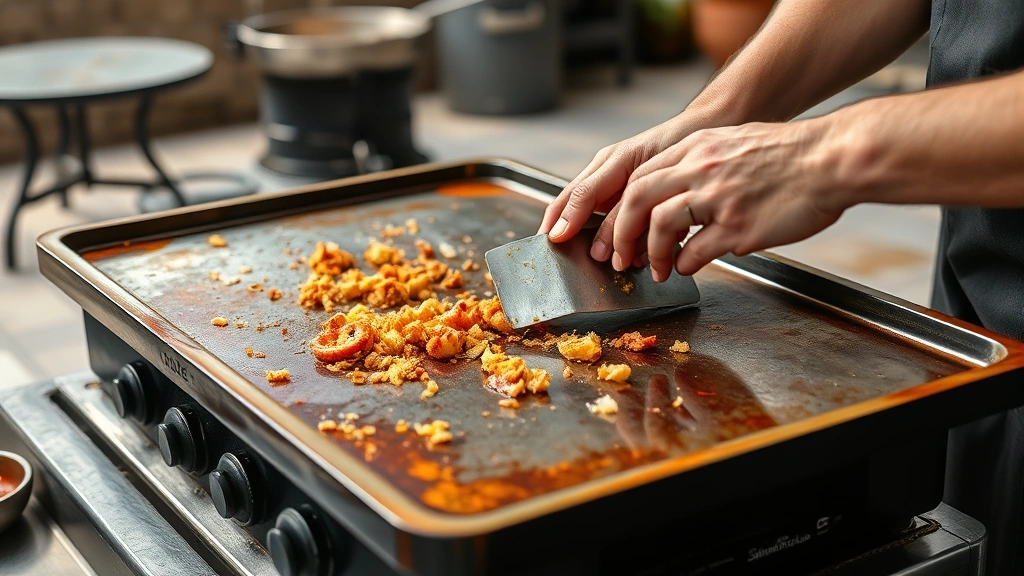
This is the main event. Grab a griddle scraper—the flat metal tool that comes with most Blackstone units—and start pushing food debris toward the grease trap at the front. Use firm, consistent pressure and work in lines across the surface. Don’t be shy; these griddles are built tough and can handle aggressive scraping.
Work from back to front, pushing all the crud toward the grease management system. You’ll see the buildup collect at the front. Some people prefer using a grill brick (a pumice-like block designed for griddles) for this step, which works great if you’ve got stubborn, cooked-on food. The brick is especially useful for cleaning blackstone surfaces that have developed a thick carbon layer.
Once you’ve scraped the main surface, don’t forget the sides and edges. Food particles hide in those corners and can trap moisture. Scrape those areas thoroughly too. The goal is a completely clean, bare metal surface with no food residue remaining.
Apply Oil While Hot
This is the secret sauce that separates griddle owners who know what they’re doing from those who don’t. While the griddle is still warm (not hot), pour a small amount of high-heat cooking oil onto the surface. We’re talking a couple tablespoons maximum. High-smoke-point oils work best—think avocado oil, vegetable oil, or canola oil. Avoid olive oil; it breaks down at high temperatures.
Use your scraper or a paper towel to spread the oil evenly across the entire cooking surface. You want a thin, uniform coat, not a puddle. This oil bonds with the metal and creates a non-stick seasoning layer while simultaneously protecting the steel from moisture and rust. This is the same principle used for cast iron maintenance, and it works beautifully on Blackstone griddles.
Let the oil sit for a minute or two, then wipe away any excess with a clean paper towel. You should be left with a shiny, dark surface that looks almost black. That’s the seasoning doing its job. Over time, with repeated oiling, you build up layers of seasoning that make your griddle practically non-stick.
Deep Cleaning Your Blackstone
Every few months, or whenever you notice buildup that regular cleaning isn’t handling, it’s time for a deep clean. This is different from your daily post-cook routine. Start by heating the griddle to medium-high heat for about 5 minutes to open up the pores of the steel. Then turn it off and let it cool slightly.
Pour a small amount of white vinegar or a commercial griddle cleaner onto the surface. The acid breaks down stubborn residue and helps remove any rust spots before they become problems. Use a grill brick or stiff brush to work the cleaner into the surface, focusing on any discolored areas or spots where food tends to stick.
Scrape everything toward the grease trap, then rinse the surface with water and a cloth. Dry it completely with paper towels—moisture is your enemy here. Once it’s dry, immediately apply oil using the same technique as your daily cleaning. This deep clean restores the griddle’s surface and keeps it in top condition.
Preventing Rust Buildup
Rust is the enemy of griddle longevity. The best defense is consistent oiling and keeping moisture away from the cooking surface. Never leave your griddle outside in the rain without a cover. Even a few hours of moisture exposure can start the rust process. If you store it outside, invest in a quality griddle cover that fits snugly.
Store your griddle in a dry location whenever possible. If you live in a humid climate, consider keeping it in a garage or shed rather than exposed to the elements. Some folks even store their griddles indoors during off-season months, which is the ultimate rust prevention strategy.
If you do spot rust beginning to form, address it immediately. A light coating of rust can be removed with vinegar and a grill brick during your next deep clean. Catching it early prevents it from spreading and eating into the steel. Think of rust prevention like weeding a garden—pull them out when they’re small and you’ll never have a problem.
Storage and Long-Term Care
When you’re not using your griddle for extended periods, proper storage is critical. Clean it thoroughly using the deep clean method, then apply a generous coat of oil to the entire cooking surface. This creates a protective barrier against moisture and oxidation. Wipe away excess oil so it’s not dripping, but leave enough to form a visible coating.
Cover your griddle with a fitted cover or even a tarp if you’re storing it outside. Make sure the cover is secure so wind doesn’t blow it off and expose the griddle to the elements. If storing indoors, you can skip the cover, but still maintain that oiled surface. Check on it occasionally—even if it’s covered, a quick inspection every month ensures no moisture has crept in.
Before firing it up after a long storage period, repeat the deep clean process to remove any dust or debris that may have settled on the surface. Then season it fresh with oil and you’re ready to cook. This approach keeps your griddle in pristine condition year-round, whether you use it daily or seasonally.
Avoid These Common Mistakes
I’ve seen plenty of folks make preventable errors that damage their griddles. The biggest mistake is using soap and water for regular cleaning. Soap strips away the seasoning you’ve worked hard to build up and leaves moisture on the steel that promotes rust. Stick with the oil-and-scrape method for daily cleaning.
Another common error is leaving the griddle exposed to moisture overnight. Even dew can cause problems if the griddle isn’t covered and oiled properly. Some people also make the mistake of using low-heat oils that break down easily, which defeats the purpose of seasoning. Always use oils with high smoke points.
Don’t forget about the grease trap and management system either. Emptying the grease trap regularly prevents buildup and keeps your griddle functioning properly. And never, ever use abrasive scrubbers like steel wool on the cooking surface unless you’re specifically removing rust—they’ll scratch the seasoning and damage the finish. Stick with griddle scrapers and grill bricks designed for the job.
Frequently Asked Questions
Can I use soap and water on my Blackstone griddle?
No, avoid soap and water for regular cleaning. Soap strips away the protective seasoning layer and leaves moisture that causes rust. Use the oil-and-scrape method instead. Save soap and water for occasional deep cleans if absolutely necessary, but always re-season immediately afterward.
What oil should I use for seasoning?
Use oils with high smoke points like avocado oil, vegetable oil, canola oil, or peanut oil. These oils bond with the steel at cooking temperatures and create a durable seasoning layer. Avoid olive oil, butter, or coconut oil—they break down too easily and won’t provide proper protection.
How often should I deep clean my griddle?
Deep clean every 2-3 months for regular users, or whenever you notice stubborn buildup that daily cleaning doesn’t handle. If you use your griddle daily, you might deep clean monthly. The frequency depends on how much you cook and what you’re cooking.
My griddle has rust spots—can I fix it?
Light rust can be removed with white vinegar and a grill brick during a deep clean. For heavier rust, you may need to use steel wool or a wire brush, then re-season thoroughly. Catch rust early—prevention is always easier than cure.
Should I cover my griddle when not in use?
Yes, always cover your griddle when storing it, especially outdoors. A fitted cover protects it from rain, dew, and dust. Even if stored indoors, a cover prevents dust accumulation and maintains the oiled surface longer.
For more cooking tips, check out our guide on how long to grill brats for perfect results every time. You can also learn about how to bake chicken wings in the oven as an alternative cooking method when weather doesn’t cooperate.
Final Thoughts
Cleaning your Blackstone griddle doesn’t have to be complicated or time-consuming. Stick to the simple routine: scrape after cooling, oil while warm, and you’ll have a griddle that performs beautifully for decades. The key is consistency—ten minutes of proper maintenance after each use beats hours of rust removal down the road.
Your griddle will reward you with even cooking, excellent food results, and reliable performance if you treat it right. Make cleaning part of your cooking routine, not an afterthought, and you’ll never regret the investment. Now get out there and cook something amazing on that well-maintained griddle.
For more home maintenance wisdom, explore our comprehensive guides on how to adjust door hinges and how to adjust sprinkler heads to keep your entire property in top shape. Also, check out trusted resources like Family Handyman for additional griddle and outdoor cooking advice.


