How to Clean Battery Corrosion: Easy & Effective Guide
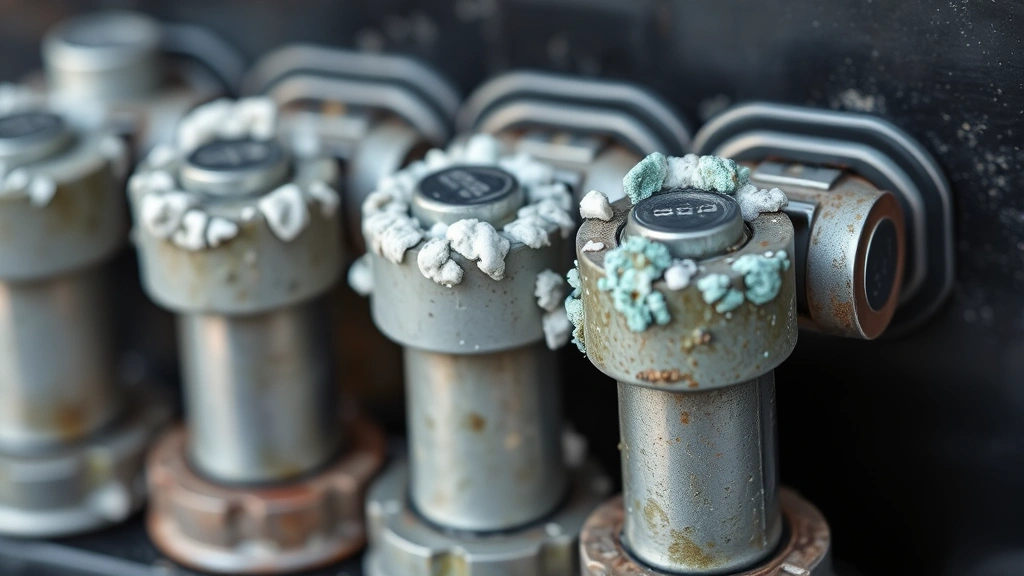
Battery corrosion is one of the most common issues that damage electronics, from remote controls to car batteries. White, blue, or green crusty buildup on battery terminals can prevent proper power flow and render your devices useless. Learning how to clean battery corrosion is a simple skill that saves money and extends device life. This guide walks you through safe, effective methods to remove corrosion and prevent it from returning.
Quick Answer: Use white vinegar or baking soda mixed with water to dissolve corrosion. Apply the solution with a cotton swab or small brush, let it sit for 5-10 minutes, then scrub gently and dry completely. For stubborn deposits, use a pencil eraser or fine-grit sandpaper. Always wear gloves and ensure the device is powered off before cleaning.
Tools & Materials You’ll Need
- White vinegar or lemon juice
- Baking soda
- Distilled water
- Cotton swabs and small brushes
- Rubber gloves (nitrile or latex)
- Paper towels or lint-free cloths
- Pencil eraser (for light corrosion)
- Fine-grit sandpaper (220-400 grit)
- Small container for mixing solutions
- Safety glasses (optional but recommended)
What Causes Battery Corrosion
Battery corrosion occurs when moisture, air, and battery chemicals react together, creating a crusty oxide buildup on the terminals. This typically happens when batteries leak slightly due to age, improper storage, or temperature changes. The corrosion acts as an insulator, blocking the electrical connection between the battery and your device.
Different types of corrosion appear in different colors. Alkaline batteries produce white or blue-green deposits, while lithium batteries may show white or gray residue. Understanding what you’re dealing with helps you choose the right how to clean battery corrosion method. Leaked battery acid is caustic and can damage skin and eyes, making safety gear essential.
Safety Precautions Before Cleaning
Always wear nitrile gloves when handling corroded batteries, as the leaked chemicals can irritate your skin. If corrosion enters your eyes, rinse immediately with water and seek medical attention. Work in a well-ventilated area, preferably outdoors or near an open window, since battery fumes can be harmful when concentrated.
Power off the device completely before beginning any cleaning. Remove the battery from its compartment and inspect the surrounding area for additional corrosion. If the battery itself is severely damaged or leaking, dispose of it properly at a recycling center rather than attempting to clean it. Never touch your face while wearing contaminated gloves.
Cleaning Method 1: Vinegar Solution
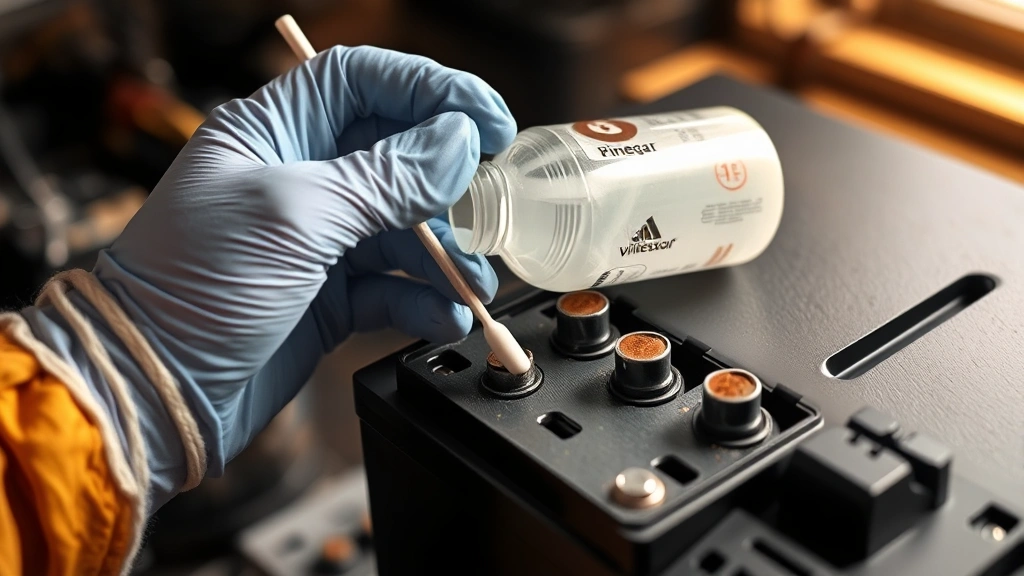
White vinegar is highly effective for how to clean battery corrosion because its acidity dissolves alkaline deposits. Pour undiluted white vinegar into a small container and dip a cotton swab into it. Apply the vinegar directly to the corroded areas, coating all visible deposits thoroughly.
Let the vinegar sit for 5-10 minutes to break down the corrosion. The chemical reaction will cause the buildup to soften and loosen. Use a clean cotton swab or soft-bristled brush to gently scrub the terminals in circular motions. For stubborn spots, repeat the vinegar application and wait another few minutes before scrubbing again.
Once the corrosion is removed, wipe the area with a damp cloth to remove vinegar residue. Use a dry cloth to absorb all moisture, ensuring no liquid remains in the battery compartment. This method works excellently for remote controls, flashlights, and small electronics. According to WikiHow, vinegar is one of the safest and most accessible household solutions for battery maintenance.
Cleaning Method 2: Baking Soda Paste
Baking soda is a gentler alternative for how to clean battery corrosion, making it ideal for delicate electronics. Mix three parts baking soda with one part water to create a thick paste. Apply this paste directly to corroded terminals using a cotton swab or small brush, ensuring complete coverage of affected areas.
The paste neutralizes battery acid without the strong smell of vinegar. Leave it on for 10-15 minutes, allowing time for the chemical reaction to occur. Gently scrub with a soft brush or old toothbrush, working in small circles to avoid damaging the battery compartment or device contacts.
Rinse thoroughly with distilled water on a damp cloth, then dry immediately with a lint-free towel. Baking soda is non-toxic and safe for use around children and pets, making it the preferred method for household items. This approach is particularly useful when cleaning electronics you plan to give to family members. As recommended by The Spruce, baking soda is an excellent natural cleaner for various household maintenance tasks.
Cleaning Method 3: Mechanical Removal
For light corrosion that hasn’t hardened significantly, a pencil eraser can effectively remove deposits without chemicals. Gently rub the eraser over corroded terminals using light pressure. The friction breaks apart the oxide buildup, and the eraser material absorbs the debris.
For heavier corrosion, use fine-grit sandpaper (220-400 grit) to carefully sand the battery terminals. Work gently to avoid removing the protective plating on the contacts. Sand in one direction rather than circular motions to minimize damage. After sanding, wipe away all dust with a damp cloth and dry completely.
This mechanical method works best on car batteries and larger devices where you can access terminals easily. It’s especially useful when combined with chemical cleaning—use vinegar first to soften deposits, then finish with light sanding for a perfectly clean contact surface. Never use coarse sandpaper or aggressive scrubbing, as this can damage the terminals permanently.
Cleaning Battery Terminals in Cars
Car battery corrosion is more serious than household battery issues because it affects vehicle performance and starting reliability. Disconnect the negative terminal first (marked with a minus sign), then the positive terminal. This prevents electrical shock and damage to your vehicle’s electrical system.
Mix baking soda with water to create a solution, or use undiluted white vinegar. Pour the solution directly onto corroded terminals and let it bubble for several minutes. Use a wire brush to scrub away corrosion, working thoroughly until terminals are clean and shiny. Rinse with distilled water and dry completely with clean towels.
Reconnect the positive terminal first, then the negative terminal. Apply a thin layer of petroleum jelly or battery terminal protectant to prevent future corrosion. If corrosion returns frequently, your battery may be failing and need replacement. For detailed guidance, consult Family Handyman, which provides comprehensive automotive maintenance instructions.
Preventing Future Battery Corrosion
The best approach to how to clean battery corrosion is preventing it from happening in the first place. Store batteries in a cool, dry location away from moisture. Keep batteries in their original packaging or a sealed container, which minimizes exposure to humidity and air.
Replace old batteries promptly rather than leaving them in devices indefinitely. Set reminders to check battery-powered devices monthly, especially those used infrequently. Remove batteries from devices you won’t use for extended periods, as stationary batteries are more likely to leak and corrode.
For car batteries, apply a thin layer of dielectric grease or petroleum jelly to terminals after cleaning. This creates a protective barrier against moisture and air. Check your vehicle’s battery every few months, particularly before winter, when cold temperatures increase corrosion risk. If you’ve recently cleaned your iPhone charging port, similar preventive measures apply—keep ports dry and free from debris. See our guide on how to clean iPhone charging port for related maintenance tips.
Store rechargeable batteries with a partial charge rather than fully depleted, as this reduces internal chemical reactions that promote corrosion. Invest in quality batteries from reputable manufacturers, as cheaper batteries are more prone to leaking. Keep moisture-absorbing packets in storage containers to maintain optimal conditions.
If you’re dealing with multiple corroded devices, consider upgrading to modern rechargeable batteries and chargers. This eliminates the corrosion problem entirely while reducing environmental waste. For devices like AirTags that use proprietary batteries, check our how to replace AirTag battery guide for proper maintenance. Similarly, if you use wireless earbuds, our how to reset AirPods Pro article covers battery health and longevity tips.
Regular maintenance extends device lifespan significantly. Create a simple checklist for seasonal battery checks, especially before holidays when gift-giving often involves battery-powered items. This proactive approach saves money and frustration compared to dealing with corroded devices later.
FAQ
Is battery corrosion dangerous?
Battery corrosion itself isn’t immediately dangerous, but the leaked chemicals can irritate skin and eyes. Always wear gloves and avoid touching your face. If corrosion enters your eyes, rinse immediately with water and seek medical attention. Dispose of severely damaged batteries at recycling centers, never in regular trash.
Can I use regular water instead of distilled water?
Tap water contains minerals that can leave residue and cause additional corrosion. Always use distilled water for final rinsing. If distilled water isn’t available, let tap water sit in an open container overnight to allow some minerals to settle, then use the clearer water from the top.
How long does it take to clean battery corrosion?
Light corrosion typically takes 10-15 minutes total. Heavier buildup may require 30-45 minutes, including multiple applications of cleaning solution and waiting periods. Car battery cleaning usually takes 30-60 minutes, depending on corrosion severity and your experience level.
What if corrosion returns immediately after cleaning?
Rapid reappearance suggests your battery is failing and leaking continuously. Replace the battery immediately. If this happens with car batteries, have your charging system tested, as a faulty alternator can overcharge and damage the battery. Apply protective grease after cleaning to slow future corrosion.
Can I use cola or other acidic drinks to clean corrosion?
While cola contains phosphoric acid, it’s less effective than vinegar and leaves sticky residue that attracts dirt. Stick with white vinegar or baking soda, which are specifically formulated for this purpose and leave no harmful residue. These methods are also safer and more cost-effective for regular maintenance.
Should I clean the battery or the device compartment?
Clean both thoroughly. Corrosion deposits transfer to the device’s battery compartment and contacts, preventing proper connection even after battery cleaning. Use the same vinegar or baking soda solution to clean compartment walls and terminal contacts inside the device. This ensures maximum conductivity restoration.
Is it safe to use bleach for battery corrosion?
Never use bleach on battery corrosion. Bleach reacts dangerously with battery chemicals and can create toxic fumes. Stick to vinegar, baking soda, or mechanical methods. These are proven safe and effective for all battery types and device materials.
How often should I check batteries for corrosion?
Check household batteries monthly, especially in frequently used devices. Car batteries should be inspected every three months or before seasonal changes. Devices in humid environments need more frequent checks. Establish a routine maintenance schedule to catch corrosion early before it damages equipment.
For comprehensive cleaning guidance on related devices, consult Consumer Reports for product-specific maintenance recommendations. You might also find our article on how to clean washing machine helpful for understanding preventive maintenance principles applicable to all appliances. Finally, HowStuffWorks offers detailed explanations of battery chemistry and corrosion science if you want deeper technical understanding.