

Learning how to clean bathtub surfaces properly transforms a grimy, soap-scummed mess into a sparkling sanctuary where you actually want to soak. Whether you’re dealing with stubborn stains, mildew, or just everyday buildup, I’ve got a battle-tested approach that works without requiring you to become a chemical engineer or spend hours scrubbing yourself raw.
Table of Contents
Gather Your Cleaning Arsenal
Before you even think about touching that bathtub, assemble everything you’ll need. I’m talking about having your supplies within arm’s reach—nothing kills momentum like hunting for a sponge midway through the job. You’ve got several options depending on your situation and what you’ve got lying around the house.
For basic cleaning, grab a stiff-bristled brush (the kind designed specifically for tubs, not a toothbrush), a non-abrasive sponge, and some microfiber cloths. If you want to go the natural route, white vinegar and baking soda are absolute workhorses. For heavy-duty situations, commercial bathroom cleaners, bleach-based products, or oxygen-based cleaners work faster. Like when you’re cleaning your washing machine, having the right tools makes the difference between a chore and a breeze.
Don’t forget rubber gloves—protect those hands. Grab old towels or rags you don’t mind getting dirty, and if you’re using commercial products, read the labels and have proper ventilation in mind before you start.
Prep and Ventilation Matter
Here’s something folks skip that shouldn’t be skipped: proper ventilation. Open that bathroom window wide. Turn on the exhaust fan if you’ve got one, and keep it running throughout the entire process and for 15-20 minutes after. This isn’t just about comfort—it’s about safety, especially if you’re using bleach or ammonia-based products.
Remove any items from the tub or surrounding area. Bath toys, soap dishes, bath mats—clear it all out. You need unobstructed access to every square inch of the tub surface. If you’ve got a shower caddy, take it down temporarily. This prep work takes two minutes and prevents you from working around obstacles.
Check your tub’s material too. Acrylic, porcelain, fiberglass, and cast iron all have slightly different cleaning needs. Acrylic and fiberglass are more delicate than porcelain or cast iron, so avoid abrasive scrubbers on these surfaces. Just like understanding the material matters when you’re cleaning battery terminals, knowing your tub’s composition prevents damage.
Rinse Away Loose Debris
Start with hot water—the hotter the better, as long as you can handle it. Fill the tub about halfway and let the hot water run for a minute or two. This softens buildup and makes everything that follows easier. Grab your brush and give the entire tub a preliminary scrub with just hot water and no cleaner yet.
You’re not trying to clean it at this stage; you’re loosening hair, dust, and loose soap residue. Pay special attention to corners and the drain area where debris accumulates. This pre-rinse step is like doing a rough pass before the final details—it sets you up for success.
Drain the water completely and wipe down the tub with your cloth to remove any loose particles. A dry tub is easier to work with than a wet one when you’re applying cleaner.
Apply Your Chosen Cleaner
Now we’re cooking. Your cleaner choice depends on what you’re dealing with. For everyday cleaning, a basic bathroom spray cleaner works fine. For natural-minded folks, mix equal parts white vinegar and water in a spray bottle—add a few drops of dish soap if you want extra cleaning power.
For stubborn soap scum and hard water stains, make a paste of baking soda and water. The consistency should be like pancake batter—thick enough to cling to vertical surfaces but spreadable. For serious mildew or heavy stains, a commercial bathroom cleaner with bleach or oxygen-based formulas tackles the job faster.
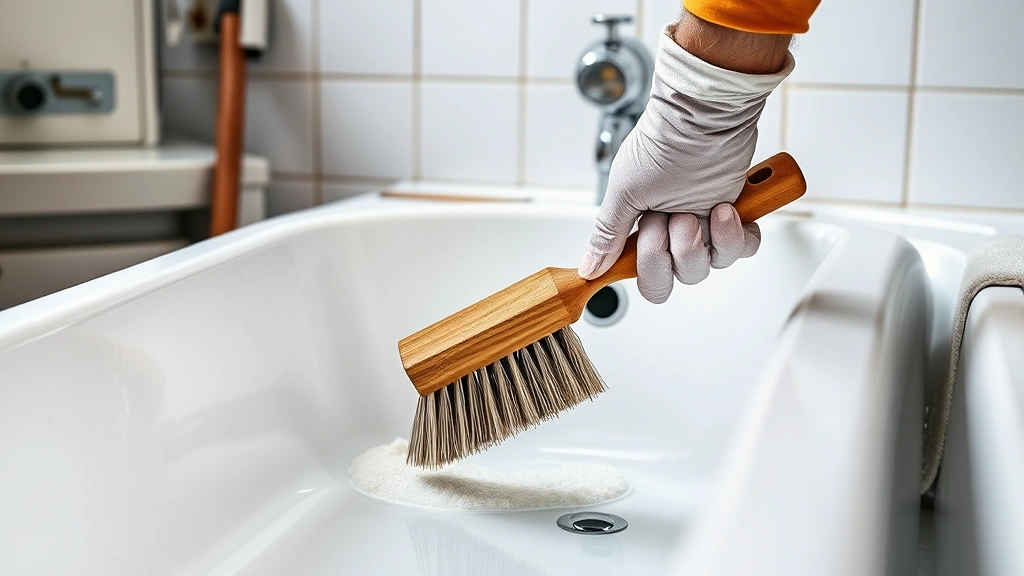
Spray or apply your cleaner generously across the entire tub surface. Let it sit for 5-10 minutes—this dwell time is crucial. The cleaner needs time to break down the buildup chemically rather than relying solely on your elbow grease. Don’t skip this waiting period; it’s where the real work happens.
Scrub with Purpose and Patience
After the cleaner has had time to work, grab your brush and get to scrubbing. Use firm, circular motions rather than random back-and-forth movements. Circular scrubbing is more efficient and feels more controlled. Start at the top rim of the tub and work your way down to the bottom—gravity helps you here.
Don’t just hit the obvious surfaces. Get into the corners, around the drain, and along the edges where the tub meets the wall. These transition areas trap grime like crazy. Pay extra attention to the tub floor where you stand—that’s where soap scum and hard water deposits concentrate.
For acrylic or fiberglass tubs, use a softer brush or sponge to avoid scratching. For porcelain or cast iron, you can be more aggressive. The scrubbing phase usually takes 5-10 minutes depending on how dirty the tub is. Don’t rush it—consistent pressure beats frantic scrubbing.
Tackle Stubborn Stains Separately
Sometimes you’ll encounter stains that don’t respond to general cleaning. Hard water stains, rust marks, or mildew spots need targeted treatment. For hard water stains, white vinegar is your friend. Spray it directly on the stain, let it sit for 15 minutes, then scrub. The acid in vinegar dissolves mineral deposits.
For rust stains, a paste of cream of tartar and lemon juice works magic. Apply it, let it sit for 10 minutes, then scrub gently. For mildew or mold spots, a bleach solution (1 part bleach to 10 parts water) kills it on contact, but let it sit for 5-10 minutes before scrubbing. Always ventilate well when using bleach.
Some stains are permanent and come from the tub material itself—these you can’t remove, but you can minimize their appearance through regular cleaning. The key is addressing stains early before they set in permanently.
Final Rinse and Shine
Once you’ve scrubbed every surface thoroughly, it’s rinse time. Fill the tub with hot water again and use your brush to rinse away all the cleaner residue. You want zero soap, vinegar, or cleaner left behind—residue dulls the shine and can be slippery.
Drain completely and do a second rinse if needed, especially if you used a heavy-duty cleaner. Now grab your microfiber cloth or old towel and dry the entire tub. This is what creates that sparkling finish—a completely dry surface reflects light beautifully.
Don’t skip the drying step. A wet tub looks clean but won’t have that satisfying shine. Plus, drying prevents water spots from forming as the remaining moisture evaporates. Take your time here; it’s the final touch that makes the difference between “clean” and “sparkling.”
Maintenance Between Deep Cleans
Now that your tub is pristine, keeping it that way requires minimal effort. After each use, give the tub a quick rinse with hot water. Wipe it dry with a towel or cloth. This 30-second habit prevents buildup from accumulating and means your next deep clean won’t be nearly as intense.
Once a week, spray the tub with a bathroom cleaner and let it sit while you do something else. Then scrub lightly for two minutes and rinse. This weekly maintenance keeps soap scum and hard water deposits from setting in. Think of it like regularly maintaining your tools and equipment—small efforts prevent big problems.
Keep your bathroom well-ventilated, especially after showers. Run the exhaust fan for at least 20 minutes after bathing to reduce moisture that encourages mildew growth. Fix any leaks promptly, as standing water breeds mold. These preventative steps mean you’ll only need a deep clean every 2-3 weeks instead of weekly.
Frequently Asked Questions
What’s the best cleaner for soap scum?
For soap scum specifically, a paste of baking soda and water works great naturally, or use a commercial bathroom cleaner designed for soap scum removal. Vinegar also breaks down soap scum effectively. Let your chosen cleaner sit for 10-15 minutes before scrubbing—that dwell time is what makes the difference.
Can I use bleach on all bathtub materials?
No. Bleach is safe on porcelain and cast iron but can damage acrylic and fiberglass. Always check your tub’s material first. For acrylic or fiberglass, use oxygen-based cleaners or vinegar-based solutions instead. When in doubt, test your cleaner on a small, hidden area first.
How often should I deep clean my bathtub?
With proper maintenance between deep cleans, you should only need a thorough scrubbing every 2-3 weeks. If you’re doing weekly light cleanings and drying the tub after each use, deep cleans become much easier and less frequent. Heavy-use bathrooms might need weekly deep cleans.
Why does my tub still look dull after cleaning?
Dullness usually means residue is left behind. Make sure you’re rinsing thoroughly after cleaning and drying completely with a cloth. Hard water can also cause a dull film—in that case, a vinegar rinse followed by drying restores shine. Don’t skip the drying step; it’s crucial for that sparkling appearance.
What’s safe to use on acrylic tubs?
Stick with non-abrasive cleaners on acrylic. Baking soda paste, vinegar solutions, and mild bathroom cleaners work well. Avoid bleach, scouring powders, and stiff-bristled brushes. Use soft sponges or cloths instead. Acrylic scratches easily, so gentle is the way to go with these tubs.
How do I prevent mildew in my bathtub?
Ventilation is your primary defense. Run the exhaust fan for 20+ minutes after showers, and keep the bathroom window open when possible. Wipe down the tub after use to remove excess moisture. Weekly light cleaning with a bathroom cleaner also prevents mildew spores from establishing. Fix any leaks or standing water immediately.
Can I use vinegar and baking soda together?
Yes, they work together beautifully. The chemical reaction creates fizzing action that helps lift debris. Sprinkle baking soda on the tub, spray with vinegar, let it fizz for 5-10 minutes, then scrub. This combination is effective, non-toxic, and budget-friendly. It’s particularly good for heavy buildup.
The bottom line: How to clean bathtub effectively boils down to five proven steps: gathering supplies, prepping your space, rinsing loose debris, applying cleaner with proper dwell time, and scrubbing with purpose. Add a final rinse and dry, then maintain regularly with quick weekly cleanings. You don’t need expensive products or hours of labor—just the right approach and consistency. Your bathtub will stay sparkling, and you’ll actually look forward to bath time instead of dreading the cleaning that comes after.
For more cleaning guidance on other household items, check out our guides on cleaning a mouse pad and maintaining various household surfaces. And if you’re planning bathroom upgrades, our article on installing a garbage disposal covers practical bathroom improvements.


