

Learning how to clean a wool rug properly is one of those skills that saves you serious money and keeps your best floor covering looking fresh for decades. I’ve cleaned plenty of wool rugs the wrong way before figuring out what actually works, and trust me—there’s a right way and a very expensive wrong way.
Table of Contents
- Why Wool Needs Special Treatment
- What You’ll Need to Start
- Step 1: Vacuum Thoroughly First
- Step 2: Always Spot Test Everything
- Step 3: Mix the Right Cleaning Solution
- Step 4: Gentle Scrubbing Technique
- Step 5: Proper Drying Method
- Mistakes That Damage Wool Rugs
- Regular Maintenance Between Cleanings
- When to Call the Professionals
- Frequently Asked Questions
Why Wool Needs Special Treatment
Wool is a natural fiber with a protective outer layer called the cuticle. This layer is amazing when it’s intact—it repels dirt and moisture naturally. But here’s the catch: aggressive scrubbing, hot water, or harsh chemicals can damage that cuticle and cause the fibers to mat, pill, or even shrink. That’s why your grandmother’s wool rug survived 40 years while your friend’s didn’t make it past five.
The key difference between cleaning wool and synthetic rugs is that wool demands respect. It’s tougher than it looks in some ways, but more delicate in others. Understanding this balance is what separates a rug that looks great from one that looks worn out.
What You’ll Need to Start
Before you tackle your wool rug, gather these essentials:
- A quality upright or canister vacuum (avoid beater bars if possible)
- White vinegar (your secret weapon)
- Mild dish soap—the plain kind, nothing fancy
- Soft-bristled brush or lamb’s wool brush
- Clean white towels or cotton cloths
- Spray bottle for mixing solutions
- Fans for air circulation
- Optional: wool-specific rug cleaner from a trusted brand
Don’t buy expensive specialty products right away. The basic approach works better than most premium cleaners, and it costs about three dollars total.
Step 1: Vacuum Thoroughly First
This step matters more than most people realize. Vacuuming removes 80% of the dirt before you even touch water to your wool rug. Dirt particles trapped in the fibers will spread around when you wet the rug, turning localized spots into bigger problems.
Use your vacuum on medium suction—not the maximum setting. Go slowly in one direction, then slowly in the perpendicular direction. If your vacuum has a beater bar, try to disable it or use the upholstery setting instead. Wool fibers can get caught and damaged by aggressive beating action.
Pay special attention to high-traffic areas and the edges. These spots accumulate more dirt and need extra passes. If you see dust clouds coming up, keep going until they stop appearing.
Step 2: Always Spot Test Everything
This is non-negotiable. Before applying any cleaning solution to your entire rug, test it on a hidden corner. Mix your solution, apply it to an inconspicuous area, let it sit for five minutes, then blot it away and let it dry completely.
Watch for color bleeding, fiber damage, or any discoloration. Some older wool rugs or those with natural dyes can react unpredictably to even mild solutions. A five-minute test saves you from ruining a rug that cost hundreds or thousands of dollars.
If the test spot looks good, you’re cleared to proceed. If anything looks wrong, stop and consider calling a professional cleaner instead.
Step 3: Mix the Right Cleaning Solution
Here’s the formula that works: one teaspoon of mild dish soap mixed with one cup of warm water. That’s it. This solution is gentle enough for wool but effective enough to lift dirt and stains.
Never use hot water—warm is the maximum. Hot water opens the cuticle and can cause fibers to felt together permanently. Never use vinegar directly on stains; it’s acidic and can damage dyes. Instead, use vinegar as a rinse after cleaning to help neutralize any soap residue.
Pour your solution into a spray bottle. You want to dampen the rug, not soak it. Wool rugs shouldn’t stay wet for extended periods, as moisture can seep into the backing and cause mildew or odors.
Step 4: Gentle Scrubbing Technique
Spray your cleaning solution lightly onto the stained or dirty area. Let it sit for two to three minutes—this gives the soap time to break down dirt without sitting so long that it dries out.
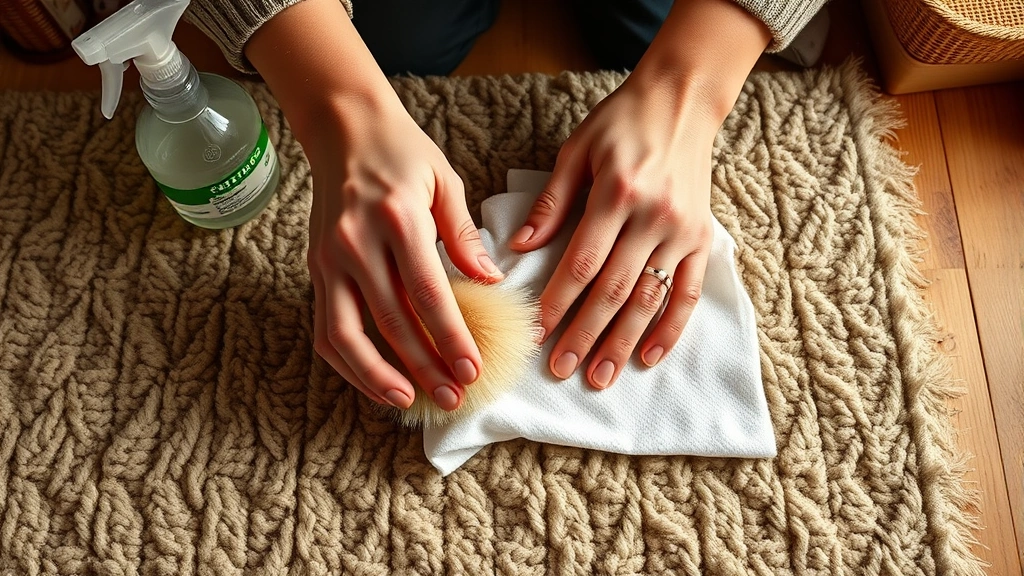
Using a soft-bristled brush or even a clean white cloth, work the solution gently into the fibers using circular motions. The goal is to agitate the dirt loose, not to scrub aggressively. You’re coaxing the dirt out, not beating it out.
Blot with a clean white towel as you go. Press down firmly to absorb the dirty solution, then fold the towel to a clean section and repeat. This blotting action removes both the dirt and the cleaning solution.
For stubborn stains, repeat the spray-wait-blot cycle rather than scrubbing harder. Patience beats force every time with wool.
Step 5: Proper Drying Method
After you’ve cleaned the rug, remove as much moisture as possible by blotting with clean, dry towels. Walk on the towels to help them absorb water—your body weight helps extract moisture without damaging fibers.
Set up fans to circulate air across the rug. Open windows if weather permits. The goal is to dry the rug as quickly as possible without applying direct heat. Never use a hair dryer or heat gun, as direct heat can damage wool fibers and set any remaining stains.
Drying typically takes 4 to 8 hours depending on humidity and air circulation. You’ll know it’s fully dry when the backing feels dry to the touch and the fibers spring back when you brush them with your hand.
Mistakes That Damage Wool Rugs
I’ve made most of these mistakes so you don’t have to. The biggest one is using too much water. People think they need to soak the rug to clean it, but that’s backward. Minimal moisture, applied strategically, works better than flooding the fibers.
Another killer is using bleach or oxygen-based cleaners. These are designed for synthetic fibers and will permanently damage wool. The same goes for vinegar applied directly to stains—it’s too acidic and can bleach natural dyes right out of the fibers.
Aggressive scrubbing is the third major mistake. Wool fibers are surprisingly strong, but they’re also delicate in terms of how they respond to friction. Scrubbing hard doesn’t clean better; it just damages the surface.
Finally, don’t vacuum with a beater bar or brush roll set too aggressively. This pulls fibers and causes pilling and matting over time. The gentler your vacuum approach, the longer your rug lasts.
Regular Maintenance Between Cleanings
Vacuum your wool rug weekly using the gentle method described above. This prevents dirt from accumulating and reduces the need for deep cleaning.
Rotate your rug 90 degrees every three months if possible. This distributes wear evenly and prevents one side from looking faded or matted compared to the rest.
For spills, blot immediately with a clean cloth. Don’t rub—blotting lifts the liquid up and away from the fibers. Once you’ve absorbed the liquid, follow up with the gentle cleaning method if a stain remains.
Keep the rug away from direct sunlight, which fades natural dyes over time. Use window treatments to filter harsh UV light, especially during peak hours.
When to Call the Professionals
Some situations warrant professional cleaning. If your rug has deep-set stains that won’t respond to home cleaning, or if it’s antique or made with delicate natural dyes, a professional wool rug cleaner is worth the investment. They have specialized equipment and knowledge that goes beyond what you can do at home.
Similarly, if your rug has mold or mildew smell, professional cleaning with proper drying equipment is your best bet. These issues require more aggressive treatment than home methods can provide safely.
Professional cleaning typically runs $150 to $400 depending on rug size and condition, but it’s cheap insurance for a rug worth thousands.
Frequently Asked Questions
Can I use a steam cleaner on wool rugs?
No. Steam cleaners apply hot water under pressure, which is exactly what wool fibers hate. The heat can cause felting, and the pressure forces water deep into the backing where it’s hard to dry. Stick with cool or warm water applied gently.
How often should I clean my wool rug?
Vacuum weekly, spot clean as needed, and do a full gentle cleaning once or twice per year depending on foot traffic. High-traffic areas might need more frequent attention.
What’s the best way to remove pet stains from wool?
Blot immediately to remove as much liquid as possible. Then mix equal parts white vinegar and water, apply it to the stain, let it sit for 5 minutes, and blot again. The vinegar neutralizes the odor-causing compounds. Follow up with your standard cleaning solution if discoloration remains.
Can I use baking soda on wool rugs?
Baking soda is safe to use for odor absorption. Sprinkle it lightly over the rug, let it sit for 15 minutes, then vacuum thoroughly. Don’t use it as a cleaning agent—it’s abrasive and can damage fibers if you try to scrub with it.
Why is my wool rug pilling?
Pilling happens when short fibers break loose and ball up on the surface. It’s usually caused by aggressive vacuuming, excessive friction, or low-quality wool. Use a gentle vacuum, avoid dragging furniture across the rug, and consider a de-pilling comb for existing pills.
Is it safe to use wool-specific cleaners?
Yes, if they’re from reputable brands designed specifically for wool. However, the basic dish soap and water method works just as well and costs a fraction of the price. Always test any commercial product on a hidden area first.
Final Thoughts on Wool Rug Care
Learning how to clean a wool rug properly transforms how long your rug lasts and how good it looks. The five-step method I’ve outlined—vacuum, spot test, gentle solution, careful scrubbing, and proper drying—works for 95% of wool rug cleaning situations.
The core principle is simple: less is more. Gentle, patient cleaning beats aggressive scrubbing every time. Your wool rug is an investment, and treating it with respect pays dividends in longevity and appearance.
Start with regular vacuuming and quick spot cleaning for spills. Reserve the full cleaning process for once or twice yearly. This maintenance schedule keeps your rug looking fresh without wearing out the fibers. And remember, when in doubt about a stubborn stain or antique rug, professional cleaners exist for exactly those situations.
For more home maintenance guidance, check out our articles on how to add nice smell to the car, how often to water succulents, and how long does acrylic paint take to dry. Each covers the same philosophy of doing things right the first time.
Your wool rug will thank you with years of beauty and durability.


