
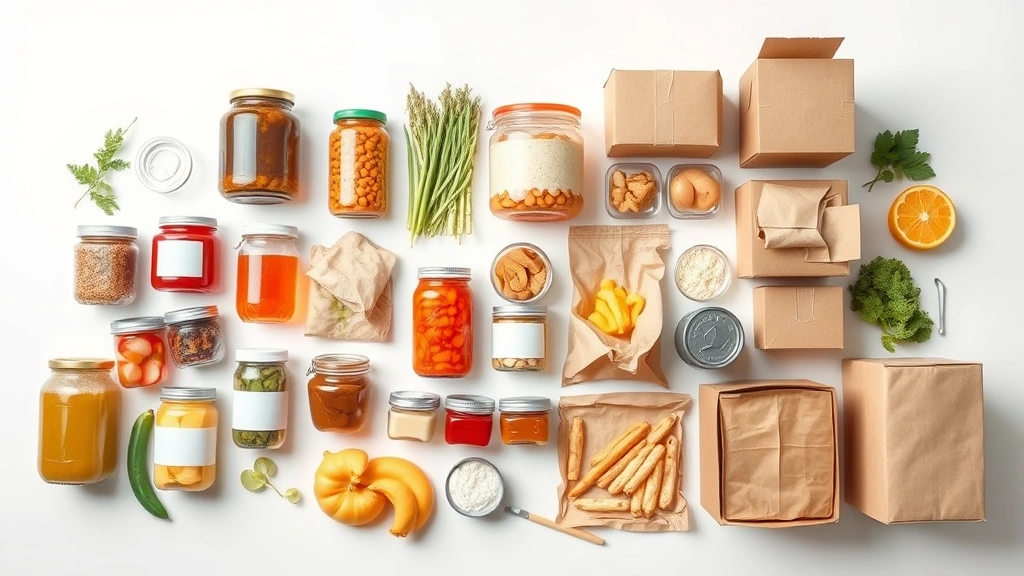
Learning how to choose the right food packaging for your product is one of the most critical decisions you’ll make as a food entrepreneur or home producer. Your packaging isn’t just a container—it’s your product’s first impression, its protector, and often the deciding factor between a sale and a pass. Whether you’re canning homemade peaches, making dog treats, or bottling craft beverages, getting packaging right means the difference between happy customers and spoiled inventory.
Table of Contents
Understand Your Product Needs
Before you even look at a single packaging option, you need to nail down exactly what you’re packaging. Is it wet or dry? Acidic or neutral? Shelf-stable or refrigerated? The nature of your product dictates everything that comes next.
Think about moisture content, acidity level, and storage temperature. If you’re preserving something like canned peaches, you’re dealing with high moisture and moderate acidity. That’s completely different from packaging dog food recipes where you’re managing dry goods and shelf stability. Each scenario demands different protection strategies.
Document your product’s characteristics: weight, volume, density, pH level if applicable, and expected shelf life. This becomes your packaging brief—the foundation for every decision moving forward. Don’t skip this step. I’ve seen too many small producers pick beautiful packaging only to watch their product degrade inside it.
Material Selection Matters
Your material choice is where form meets function. The main players are glass, plastic, metal, and paper-based options. Each brings different strengths and weaknesses to the table.
Glass is the gold standard for premium positioning. It’s inert, doesn’t interact with your product, looks professional, and customers trust it. The downside? It’s heavy, fragile, and expensive. Glass works beautifully for spirits and premium beverages, but it might tank your margins on budget products.
Plastic offers versatility and cost efficiency. HDPE, PET, and PP each have different properties. PET is great for clear visibility and oxygen barrier. HDPE handles oils and acidic products well. The catch is that plastics can leach compounds over time, especially with fatty or acidic contents. You need to match the right plastic resin to your product type.
Metal (aluminum and tinplate) provides excellent barrier properties and shelf appeal. Cans keep light and oxygen out completely. They’re recyclable and lightweight compared to glass. The trade-off is higher equipment costs for sealing and the perception that canned goods are “less premium” than jarred alternatives—though this is rapidly changing.
Paper and cardboard work for dry goods and lighter products. They’re sustainable, cost-effective, and printable. But they’re vulnerable to moisture and grease, so they need internal liners or coatings. Paperboard is excellent for prepared food mixes and dry products when properly sealed.
Shelf Life & Protection Factors
Packaging exists to protect your product from four main enemies: light, oxygen, moisture, and physical damage. How well your packaging handles these determines how long your product stays fresh.
Light exposure degrades vitamins, oils, and colors. If you’re packaging anything sensitive to light—oils, certain beverages, or supplements—you need opaque or dark-colored packaging. Amber glass and dark plastics are your friends here.
Oxygen causes oxidation and rancidity. High-barrier packaging with minimal headspace keeps oxygen out. If shelf life is critical, consider modified atmosphere packaging (MAP) or vacuum sealing. This is especially important for premium specialty food products where shelf appeal matters.
Moisture ingress ruins dry goods and causes mold. Moisture egress dries out products. You need packaging with proper moisture vapor transmission rates (MVTR). For dry goods, low MVTR is essential. For products that need to breathe slightly, higher MVTR works.
Physical protection matters too. Your packaging needs to survive shipping, handling, and retail shelves without crushing, leaking, or breaking. Test this before committing to large orders.
Regulatory Compliance Requirements
This isn’t the fun part, but it’s non-negotiable. Food packaging regulations vary by country, state, and product type. In the US, the FDA sets standards. Different rules apply to acidified foods, low-acid foods, and shelf-stable versus refrigerated products.
If you’re doing anything with heat processing or canning, you need specific container types approved for that process. Pressure-canning requires containers rated for that pressure. Water-bath canning has different requirements. Get this wrong and you’re not just wasting money—you’re creating food safety risks.
Check labeling requirements too. You need space for ingredient lists, allergen warnings, net weight, manufacturer information, and any required health claims. Don’t pick packaging so small that you can’t fit mandatory labeling. I’ve seen producers have to scrap entire production runs because their labels wouldn’t fit.
If you’re selling across state lines, you need to comply with the strictest regulations of any state you’re shipping to. Research before you commit. Organizations like the FDA and your state’s Department of Agriculture have resources. Use them.
Branding & Aesthetics
Your packaging is your brand on the shelf. It’s the first thing customers see, and it needs to communicate quality, value, and what’s inside—all in seconds.
Color psychology matters. Bright colors grab attention for fun, casual products. Earth tones suggest natural or premium positioning. Think about your target customer and what visual language speaks to them. A premium artisanal brand looks completely different from a value-oriented commodity product, even if the contents are similar.
Shape and size create shelf presence. Tall, distinctive bottles stand out. Square containers maximize shelf space efficiency. Unusual shapes are memorable but cost more and can create stacking issues. Balance distinctiveness with practicality.
Transparency matters too. Customers want to see what they’re buying. Clear packaging builds trust. If you’re using opaque packaging, your label design becomes even more critical because it’s carrying all the visual communication burden.
Don’t underestimate the power of good label design. A well-designed label on simple packaging often outsells a mediocre label on premium packaging. Invest in professional design. This is where customers form their first impression of your brand’s professionalism and quality.
Cost & Sustainability Balance
Packaging cost directly impacts your margins. You need to find the sweet spot between protection quality and expense. Buying in bulk reduces per-unit costs dramatically—sometimes by 50% or more compared to small orders. But you need to forecast accurately to avoid being stuck with excess inventory.
Calculate your packaging cost as a percentage of your product price. For premium products, 15-20% of retail price in packaging is acceptable. For value products, it needs to be 5-10%. If your packaging is eating too much margin, you either need cheaper packaging or higher prices.
Sustainability is increasingly important to consumers, but it can’t override function or economics. Recyclable or compostable packaging is great, but only if it actually protects your product. A beautiful sustainable package that lets your product spoil is worthless. Find materials that balance environmental responsibility with real-world performance.
Consider the full lifecycle. Glass is infinitely recyclable but energy-intensive to produce and transport. Plastic recycles less reliably but weighs less for shipping. Paper is renewable but needs coating for many applications. There’s no perfect answer—just trade-offs. Pick the option that aligns with your values and your customers’ expectations.
Supplier & Sourcing Strategy
Finding the right packaging supplier is like finding the right business partner. You need reliability, quality consistency, and reasonable pricing. Start by getting multiple quotes from different suppliers. Prices vary wildly, and you might find better options than you expect.
Ask suppliers for samples before committing to large orders. Test them with your actual product. How does your product look in the container? Does it seal properly? Does it protect adequately? A sample order costs money upfront but saves thousands in mistakes.
Understand minimum order quantities (MOQs). Many suppliers have high minimums—sometimes 5,000 or 10,000 units. For startups, this is a real constraint. Some suppliers offer lower MOQs at higher per-unit costs. That might be worth it early on while you validate your product and market.
Build relationships with suppliers. Good suppliers can advise on material choices, help troubleshoot problems, and sometimes offer flexibility on orders as you grow. They’re invested in your success because your growth is their growth.
Don’t just chase the lowest price. Cheap packaging that arrives damaged or inconsistent will cost you far more in wasted product and customer dissatisfaction. Reliability and quality matter more than saving a penny per unit.
Testing & Validation Process
Before you launch with packaging, run real-world tests. This is non-negotiable. Make a small batch, package it, and monitor it over time. Does your product stay fresh? Does the packaging hold up? Do labels stay attached? Does anything leak?
Test under realistic conditions. If your product will sit on a sunny retail shelf, test it in sunlight. If it’ll be shipped across the country, actually ship some samples and see what arrives. Temperature cycling, humidity changes, and physical jostling all matter.
Get feedback from potential customers. Does the packaging feel premium or cheap? Is it easy to open? Does the label communicate clearly? Does the size feel right? Real user feedback catches issues you’d never think of.
Document everything. Take photos and notes. If something goes wrong later, you need to know exactly what you tested and how. This becomes your quality baseline.
Once you’re satisfied, do one final round with your actual production process. Package using your real equipment and process. Small-batch hand-packaging is different from machine-packaging at scale. Test the actual production method you’ll use.
Frequently Asked Questions
What’s the most cost-effective packaging for small food producers?
Plastic containers with simple labels offer the best cost-to-function ratio for most small producers. HDPE or PET bottles typically run $0.10-$0.30 per unit at moderate volumes. If you’re doing 1,000+ units, you can get decent pricing. For absolute minimums, paperboard boxes with internal liners work for dry goods and cost even less.
How do I know if my packaging protects adequately?
Test it. Package your product and store samples under conditions similar to your actual distribution environment. Monitor for changes in color, texture, smell, or taste over your intended shelf life. If nothing changes, your packaging is working. If degradation occurs, you need better barrier properties or different materials.
Can I use any plastic container for food?
No. Only food-grade plastics rated for food contact should be used. Check the resin code (usually marked inside the recycling triangle). For hot foods or acidic products, verify that the specific plastic is approved for those conditions. Using non-food-grade or inappropriate plastics risks leaching harmful compounds.
What’s the typical lead time for custom packaging?
Standard packaging with simple printing typically takes 4-8 weeks. Custom shapes or complex designs can take 8-12 weeks or longer. Always factor in lead time when planning production. Order before you need it, not when you need it.
Should I invest in custom packaging or use off-the-shelf options?
Start with off-the-shelf. It’s cheaper, faster, and lower risk while you’re validating your product and market. Once you have consistent sales and a solid brand identity, invest in custom packaging. The upfront investment in custom tooling only makes sense at higher volumes.
How important is packaging to customer perception?
Extremely important. Studies show customers judge product quality largely by packaging before ever tasting or using the product. Premium packaging can justify higher prices. Poor packaging makes even excellent products hard to sell. It’s one of your most powerful marketing tools.
Final Thoughts
Choosing the right food packaging isn’t a single decision—it’s a process of understanding your product, knowing your constraints, testing rigorously, and staying flexible as you learn. Start with the fundamentals: know what you’re protecting, understand the regulatory landscape, test thoroughly, and don’t sacrifice protection for aesthetics or cost savings.
Your packaging is an investment in your product’s success and your brand’s reputation. Get it right, and customers will notice. Get it wrong, and no amount of great product will overcome it. Take your time, do your homework, and don’t rush this decision. The packaging you choose today will be on your shelves for years to come.


