

Learning how to check gender of kittens is one of those practical skills that separates cat folks from cat experts. Whether you’re fostering, breeding, or just curious about your new litter, sexing kittens accurately matters—especially when you’re planning care, adoption, or medical decisions. The good news? It’s straightforward once you know what you’re looking for.
Table of Contents
Why Knowing Matters
Before you start flipping kittens over, let’s talk about why this matters. Knowing the sex of your kittens affects everything from naming them to planning spay/neuter surgeries. Male cats (toms) and female cats (queens) have different behavioral patterns as they mature, different health considerations, and different adoption prospects. Plus, if you’re fostering a litter, shelters need accurate information for their records and adoption matching.
The accuracy of kitten sexing is surprisingly important. Misidentified kittens end up with wrong names, unexpected litters, and surprised new owners. Get it right from the start, and you’ll save yourself headaches down the road.
Age Timing is Crucial
Here’s the thing: trying to sex a newborn kitten is nearly impossible. At birth, the differences are so subtle that even experienced breeders struggle. The sweet spot for accurate sexing is between 8 to 12 weeks of age. At this point, the anatomical differences become unmistakable.
If you’re dealing with kittens younger than 4 weeks, honestly, wait. The genital area is underdeveloped, and you risk stressing the kitten and the mother. By 6-8 weeks, you can usually make an educated guess. By 10-12 weeks, it’s almost foolproof. This timing window is when you’ll see the most reliable results for determining gender accurately.
Genital Anatomy Basics
Let’s get anatomical without getting weird about it. Male kittens have two distinct openings in their genital area: the anus above and the genital opening (penis) below. Female kittens also have two openings: the anus above and the vulva below, but here’s the key difference—the female opening is a vertical slit, while the male opening is more rounded.
In males, you might even see a small bump or point where the penis is located. In females, the vulva appears as a tiny vertical line or slit. Think of it this way: males have a colon (:) pattern of two distinct round holes, while females have a semicolon (;) pattern where the lower opening is more of a slit.
Step-by-Step Inspection
Alright, let’s get practical. Here’s how to actually examine a kitten:
Step 1: Get the Right Setup Find a clean, well-lit area. Natural daylight is your friend here. Wash your hands first—you’re handling a baby animal. Have a helper if possible to gently hold the kitten, or do it yourself if you’re comfortable.
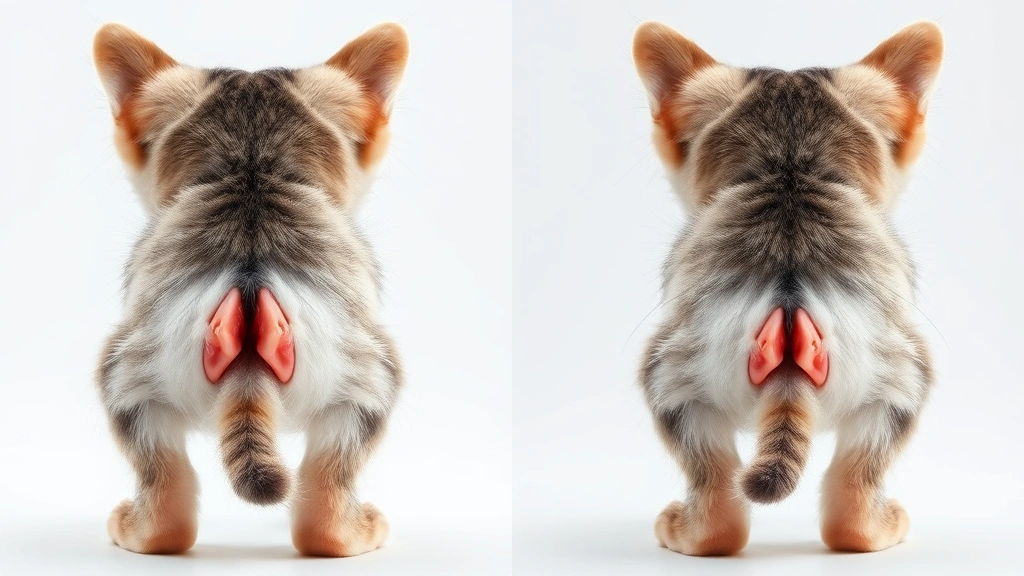
Step 2: Position the Kitten Gently flip the kitten onto its back or hold it rear-end toward you. Some people find it easier to look from behind while the kitten stands naturally. The goal is to get a clear view of the rear end without stressing the little guy.
Step 3: Locate the Openings You’ll see the anus first—it’s the upper opening. Below that is the genital opening. This is where the male-female difference becomes obvious.
Step 4: Look for the Bump In males, gently feel below the anus. You might detect a small rounded bump or see a pointed tip. This is the penis. It’s not always visible, but it’s there.

Step 5: Check the Shape In females, the vulva appears as a simple vertical slit, almost like a comma when viewed from the side. It’s flat, not protruding.
Distance Between Openings
One of the most reliable indicators is the distance between the anus and the genital opening. In male kittens, these two openings are noticeably farther apart. In females, they’re closer together. This distance becomes increasingly obvious as kittens age past 8 weeks.
If you’re comparing two kittens side by side, this spacing becomes your easiest visual clue. The male will show more separation; the female will show them nearly adjacent. This is honestly one of the most foolproof methods once you’ve seen it a few times.
Shape and Appearance Clues
Beyond the basic anatomy, there are subtle shape differences worth noting. Male kittens’ genital areas tend to be more prominent and rounded overall. The skin around the male opening often appears slightly raised or bumpy. Female kittens have a flatter appearance in that region—everything sits more flush with the skin.
Additionally, in males, you might notice the scrotum beginning to develop, especially in older kittens (10+ weeks). It appears as a small sac of skin below the anus. This is an absolute dead giveaway. If you see it, you’ve got a male. Females have no equivalent structure, so this is a one-way confirmation.
Common Mistakes to Avoid
Don’t assume based on color alone. Orange tabbies are usually male, but not always. Calicos are almost always female, but rare males do exist. Color patterns are statistical tendencies, not guarantees.
Don’t rush the process. If you’re uncertain, wait a week or two. The differences become more pronounced as kittens develop. There’s no penalty for waiting until you’re certain.
Don’t be too rough. Kittens are delicate, and excessive handling of the genital area can stress them and even cause minor injury. Be gentle, be quick, and be confident.
Don’t compare only one kitten. Having a reference point—comparing a kitten you think is male to one you think is female—makes the differences crystal clear. If you’re only looking at one kitten, it’s harder to spot the subtle variations.
When in Doubt, Ask Your Vet
Seriously, there’s no shame in asking a veterinarian. They sex kittens constantly and can confirm in seconds. If you’re wrong, you’ll find out at the first vet visit anyway, so you might as well ask during a wellness check. Many vets will do it for free or as part of a standard exam.
This is especially important if you’re making decisions based on sex—like planning breeding, adoption matching, or spay/neuter scheduling. Veterinary confirmation eliminates all doubt and gives you peace of mind.
Frequently Asked Questions
Can you sex newborn kittens?
Technically yes, but practically no. Newborns’ genital anatomy is so underdeveloped that even experts struggle. Wait until 6-8 weeks minimum, preferably 10-12 weeks for certainty.
What if a kitten is in between sizes or looks ambiguous?
Wait another week or two. As kittens develop, the differences become unmistakable. There’s no rush, and patience pays off in accuracy.
Do male kittens always have visible testicles?
Not always in very young kittens. The scrotum develops gradually. Focus on the shape of the genital opening and the distance between openings instead.
Is there a behavioral way to tell male from female kittens?
Not reliably in young kittens. Behavioral differences emerge as they mature, but at 8-12 weeks, anatomy is your only trustworthy indicator.
Can I determine gender by feeling the kitten’s belly?
No. You need visual inspection. Feeling alone won’t give you reliable information. You need to see the actual genital openings.
What if I’ve been calling my kitten the wrong gender?
It happens! Just switch the name and move on. Your kitten doesn’t care what you call them at this age. Update your vet records and adoption paperwork, and you’re good.
Should I check gender before or after feeding?
After is better. A full kitten is less cooperative. Wait at least 30 minutes after feeding when the kitten is calmer and more settled.
Final Thoughts
Checking the gender of kittens is a practical skill that takes minutes to learn but saves headaches later. The key is patience—wait until the kittens are at least 8-10 weeks old, get good lighting, and know what you’re looking for. The distance between openings, the shape of the genital area, and the presence of a scrotum are your best indicators.
If you’re fostering kittens or working with shelters, this knowledge makes you invaluable. If you’re just a curious cat owner, it’s useful information for vet visits and adoption conversations. And if you’re ever uncertain, your veterinarian is just a phone call away. They’ve sexed thousands of kittens and can confirm in seconds.
Want to expand your cat knowledge? Check out our guide on how to clean your washing machine for keeping kitten bedding fresh, or learn how to convert pounds to kilograms if you’re tracking kitten growth internationally. For more practical skills, explore how to replace AirTag battery if you’re microchipping your cats, or check out how to unblock a number on iPhone for managing shelter communications.
For authoritative veterinary information on kitten development, the ASPCA provides comprehensive kitten care resources. The Humane Society offers adoption and kitten sexing guidelines, and your local veterinarian remains the gold standard for health and development questions.


