

Learning how to check alternator performance is one of those skills that’ll save you from getting stranded on the highway at midnight. Your alternator is basically the heart of your car’s electrical system—it charges your battery while the engine runs and powers everything from your headlights to your infotainment system. When it starts failing, you’ll notice weird stuff: dim lights, a dead battery that won’t stay charged, or that little battery warning light glowing on your dashboard like a tiny red accusation. The good news? You don’t need a fancy diagnostic computer or a trip to the dealership to figure out if your alternator is the culprit. I’m going to walk you through five straightforward tests you can do right in your driveway with basic tools.
Table of Contents
Warning Signs Your Alternator’s Dying
Before you grab your multimeter, let’s talk about what a failing alternator actually sounds like in real life. Your battery warning light is the most obvious signal—that’s literally your car telling you the charging system isn’t working. But there’s more. Dim headlights that get dimmer when you’re idling at a red light? Classic alternator behavior. A battery that needs a jump-start every few days even though you’re not leaving lights on? That’s your alternator not recharging the battery while you drive. Some folks report a whining noise from the engine bay, which could be a worn alternator bearing. The stereo might cut out, your power windows might move slower than usual, or you might notice the battery keeps dying overnight. These aren’t always alternator problems—could be a parasitic drain or a bad battery—but they’re definitely worth investigating.
Tools You’ll Actually Need
Here’s what you need to check your alternator properly. A digital multimeter is non-negotiable—grab a basic one from any auto parts store for under $30. You’ll want a helper for some tests, though you can do a couple solo. A flashlight or headlamp makes life easier when you’re working in the engine bay. Have your vehicle’s service manual handy because alternator output specs vary wildly between cars. Some produce 60 amps, others 120 or more. You might need a serpentine belt tool if the belt looks worn, but that’s optional for now. Before starting any testing, make sure you disconnect your car battery if you’re doing anything that involves working around electrical components for extended periods. Safety first, always.
The Battery Voltage Test
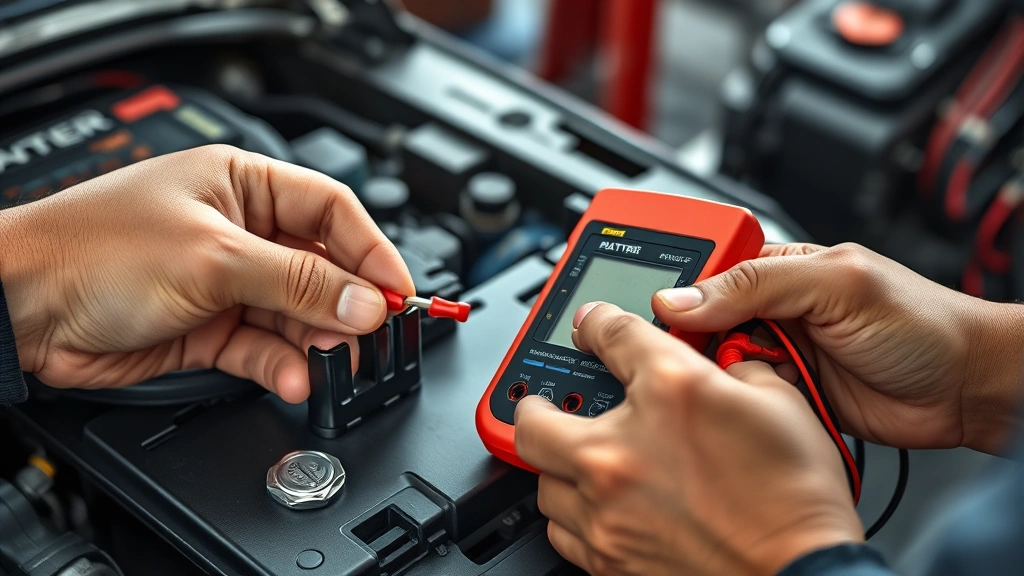
This is your starting point and the easiest test. Set your multimeter to DC volts. Open your hood and locate your battery—it’s usually a rectangular black box with red and black terminals. Touch the red probe to the positive terminal and the black probe to the negative terminal. With the engine off, you should read around 12.4 to 12.7 volts. This tells you if your battery is holding a charge. Now start the engine and take another reading. With the engine running, you should see 13.5 to 14.7 volts. That’s the alternator doing its job, boosting the voltage above the battery’s resting level. If you’re getting 12.5 volts or less while the engine is running, your alternator isn’t charging properly. If you’re seeing over 15.5 volts, you might have a regulator problem that’s overcharging. This single test eliminates half the mystery right there.
The Charging System Test
Now let’s load up the electrical system to see how the alternator responds under pressure. Keep the engine running and turn on your headlights, then the high beams. If your voltage drops below 13 volts with the lights on, that’s a red flag. The alternator should maintain at least 13 volts even with accessories running. Turn on the air conditioning, the rear defogger, and any other power-hungry systems. Watch that multimeter. If voltage drops significantly below 13 volts, your alternator is struggling to keep up. This is why people with weak alternators notice their lights dimming when they rev the engine hard—the alternator can’t produce enough current to handle everything at once. A healthy alternator will hold steady voltage even when you’re asking it to power multiple systems simultaneously.
The Alternator Output Test
This test measures how many amps your alternator is actually producing. You’ll need an inductive ammeter or a clamp meter for this one—they’re about $40 to $60. Clamp the meter around the positive battery cable while the engine is running. Rev the engine to about 2,000 RPM and watch the reading. Your alternator should be producing close to its rated output. If it’s rated for 100 amps and you’re only getting 30 amps at 2,000 RPM, something’s wrong. The alternator might be failing, the serpentine belt could be slipping, or there could be internal electrical issues. If you don’t have an ammeter, many auto parts stores will do this test for free. It’s worth asking—saves you the tool purchase for a one-time check.
The Load Test Method
This is the real-world stress test. With the engine running, turn on everything: headlights on high beam, rear defogger, air conditioning on full blast, and radio cranked up. Have a helper rev the engine to 2,000 RPM while you watch your multimeter on the battery terminals. The voltage should stay above 13 volts. If it drops below 13 volts under this load, your alternator isn’t producing enough current. If the voltage crashes down to 12 volts or below, you’ve got a serious problem. This test shows you how the alternator performs in real-world conditions, not just sitting there idling. It’s the most practical indicator of whether you’re going to have charging issues during actual driving. If your alternator fails this test, you’re probably going to strand yourself on the highway sooner rather than later.
Visual Inspection Matters
Don’t skip this step because you can catch problems before they become catastrophic. Pop your hood and look at the serpentine belt. If it’s cracked, frayed, or shiny and smooth (meaning it’s slipping), that’s your problem right there. A slipping belt can’t transfer enough power to the alternator pulley, so it can’t generate full output. The belt should be replaced if it looks worn—check your manual for the replacement interval. Look at the alternator itself. It’s usually a cylindrical component bolted to the engine with wires connected to it. Check for corrosion on the terminals, loose connections, or damaged wiring. A loose wire connection can prevent the alternator from charging even if it’s working fine. Spin the alternator pulley by hand (engine off, obviously). It should spin freely without grinding or squealing noises. If it’s hard to turn or makes noise, the bearing is probably shot and the alternator needs replacement.
What Those Numbers Actually Mean
Let’s decode what you’re actually looking at. Battery voltage at rest should be 12.4 to 12.7 volts—that’s a healthy battery. When the engine runs, the alternator kicks in and boosts it to 13.5 to 14.7 volts. That’s normal operation. Below 13 volts while running means the alternator isn’t charging. Above 15.5 volts means the voltage regulator is malfunctioning and overcharging, which will kill your battery fast. When you’re checking output amps, compare against your vehicle’s rated output. Most modern cars are 80 to 120 amps. If you’re getting less than 50% of the rated output, the alternator is failing. If you’re getting nothing, it’s completely dead. The load test voltage should stay above 13 volts—that’s the minimum threshold for proper charging. Drop below that and you’re not charging the battery adequately for highway driving.
Next Steps After Testing
If your alternator passes all these tests, congratulations—your problem is elsewhere. Check for parasitic drains or a bad battery. If it fails any test, you have a few options. First, verify the serpentine belt isn’t slipping by checking its condition. A worn cabin air filter won’t affect charging, but a worn serpentine belt absolutely will. If the belt looks good and connections are tight, your alternator is probably failing internally. At that point, you’re looking at replacement. A new alternator runs $300 to $800 depending on your vehicle, plus labor if you’re not doing it yourself. A remanufactured unit is cheaper, around $150 to $400. If you’re mechanically inclined, alternator replacement is usually a DIY job—three bolts, two connectors, and you’re done. Your vehicle’s service manual will walk you through it.
Frequently Asked Questions
Can I drive with a failing alternator?
Technically yes, but only until the battery drains completely. A failing alternator won’t recharge your battery while you drive, so you’re running on stored battery power. Depending on how much juice is in the battery and how much power you’re drawing, you might get 30 minutes to a couple hours. Don’t count on it. Get it fixed before you’re stranded.

How much does alternator replacement cost?
A new alternator runs $300 to $800 installed, depending on your vehicle make and model. Luxury cars and trucks are on the high end. Remanufactured alternators are $150 to $400 plus installation. DIY replacement saves you labor costs if you’re comfortable working on your car.
What causes an alternator to fail?
Age is the biggest factor—most alternators last 80,000 to 150,000 miles. Worn serpentine belts cause slipping, which damages the alternator pulley. Electrical overloads, extreme heat, and moisture can kill them too. Sometimes it’s just bad luck and a manufacturing defect.
Can a bad battery make the alternator look bad?
Absolutely. A dead or dying battery won’t accept a charge, so it looks like the alternator isn’t working. That’s why you test battery voltage first. If the battery is at 12.4 volts or higher at rest and the alternator is producing 13.5+ volts while running, the battery is probably fine.
Is a whining noise always the alternator?
Usually it’s either the alternator bearing or the serpentine belt. A grinding or squealing noise from the alternator itself means the bearing is worn. A squealing noise that changes with engine speed is usually the belt slipping. Either way, something needs attention soon.
Should I replace the serpentine belt when I replace the alternator?
If the belt is old and worn, absolutely. You’re already in there working on the alternator, and a new belt is cheap insurance. If the belt looks good with plenty of tread, you can skip it. Check your manual for the replacement interval—many recommend every 60,000 to 100,000 miles.


