

Learning how to change guitar strings is one of the most essential skills any guitarist can master, whether you’re a bedroom strummer or gigging musician. Fresh strings breathe new life into your instrument, improving tone, tuning stability, and playability. The good news? It’s straightforward once you know the process, and you’ll save money doing it yourself instead of paying a tech every time a string breaks or dulls.
Table of Contents
What You’ll Need
Before you start, gather your supplies. You’ll need a new set of guitar strings matched to your instrument type—acoustic or electric strings aren’t interchangeable. Grab a string winder (a cheap tool that saves your wrists), wire cutters, a tuner, and a soft cloth for cleaning. A neck rest or pillow helps support your guitar comfortably while you work. If you’re serious about maintenance, pick up some fretboard conditioner and a cleaning brush. Most of these items cost under $30 total, and they’ll last for years. Having everything within arm’s reach before you start prevents frustration mid-project.
Remove Old Strings First
Start by loosening the tuning pegs on your headstock. Turn them counterclockwise until the strings go slack—you’ll hear the pitch drop as tension releases. Don’t rush this step; gradual loosening prevents sudden stress on the neck. Once strings are loose, remove the bridge pins (those little plastic or bone pieces holding strings in the bridge on acoustic guitars), or unwind the string posts on electric guitars. Pull out each old string carefully. This is the perfect time to inspect your bridge and nut for damage. Many players use this moment to deep-clean areas normally hidden by strings, so grab that cloth and give your fretboard some attention.
Clean Your Fretboard
With strings off, your fretboard is exposed and vulnerable—but also easy to maintain. Use a soft, slightly damp cloth to wipe away dust, dirt, and old string residue. For stubborn grime, apply a small amount of specialized fretboard conditioner (linseed oil works for rosewood; lemon oil for maple). Work gently along the frets, following the grain. This maintenance step takes five minutes and dramatically extends your fretboard’s life. Avoid soaking the wood or using harsh chemicals; you’re conditioning, not refinishing. A clean fretboard also means you’ll feel every note clearly once your fresh strings are on.
Install Bridge Pins & Strings
For acoustic guitars, start by inserting the bridge pin hole—the thicker end of the string goes into the bridge first. Position the pin so it sits slightly angled, holding the string firmly in place. For electric guitars, simply thread the string through the bridge or bridge post, depending on your model. Pull the string up toward the tuning peg with moderate tension. Don’t yank it; let gravity and the string’s natural curve guide it. Make sure the string sits properly in the nut groove at the headstock end. The string should run straight from nut to bridge without kinking or crossing other strings. Proper seating here prevents tuning issues and premature wear.
Wind the Tuning Pegs
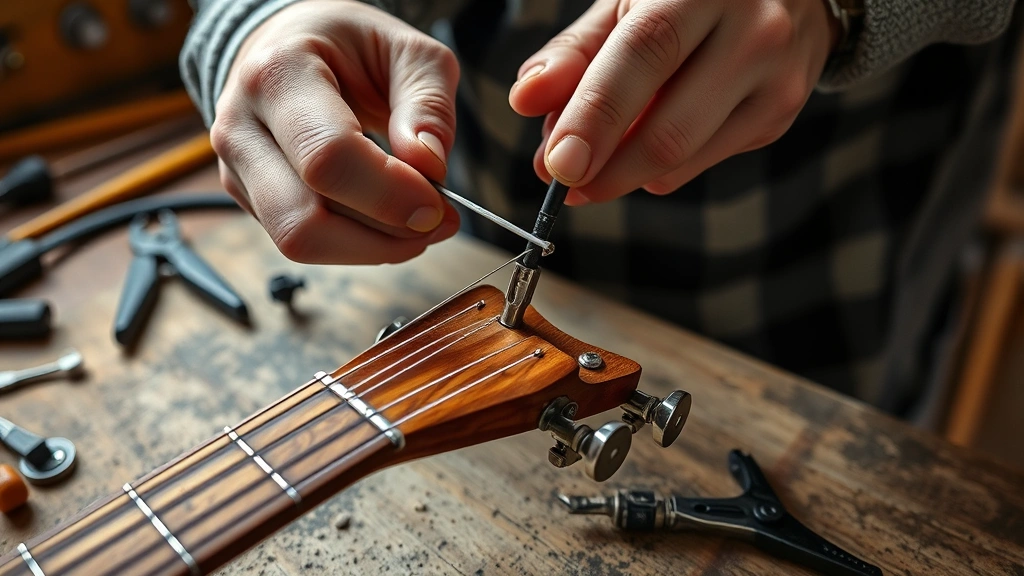
This is where a string winder earns its keep. Thread the string through the tuning peg hole, leaving about two inches of slack. Start winding counterclockwise (or clockwise, depending on which side of the headstock you’re on—check your guitar’s layout). Keep tension on the string with your other hand so it winds neatly without overlapping. Aim for 2-3 wraps around the post for wound strings and 3-4 for plain strings. The goal is neat, parallel wraps that don’t cross over each other. Messy winding reduces sustain and causes tuning instability. If you mess up, unwind and start over—there’s no penalty for redoing it right. Once all strings are wound, you’re ready to tune up and stretch.
Stretch & Tune Your Strings
New strings go flat quickly because they need stretching. Tune to pitch using your tuner, then gently pull each string away from the fretboard—not hard enough to damage anything, just firm pressure. You’ll feel and hear the pitch drop. Retune and repeat this process three or four times until the strings hold pitch better. This step takes patience but prevents constant retuning over the next few days. Fresh strings also take time to fully settle, so don’t be alarmed if tuning drifts slightly for the first 24 hours. Many players prefer to change strings a day or two before an important gig for this reason. Your tuner is your best friend here—use it constantly until everything stabilizes.
Troubleshoot Common Issues
If a string sounds muted or buzzes, check that it’s seated properly in the nut and bridge. Buzzing often means the string is touching a fret—adjust the winding tension slightly and retune. If tuning won’t hold, the string might not be wrapped enough times around the post, or the bridge pin might be loose (acoustic guitars). Rewind if needed. Some players find that one string always goes flat faster than others; this usually indicates uneven winding. If you’re having persistent issues, compare your setup to online videos for your specific guitar model—small differences between acoustic and electric guitars can trip up beginners. Don’t hesitate to ask experienced players or visit a shop if something feels genuinely wrong.
String Care & Maintenance
Your new strings will last longer with basic care. Wipe them down after playing to remove sweat and oils that accelerate corrosion. Wash your hands before playing—this simple habit extends string life dramatically. Store your guitar in a stable environment; extreme temperature and humidity swings stress strings and the instrument itself. Consider investing in a humidifier for acoustic guitars if you live in a dry climate. Most players change strings every 1-3 months depending on playing frequency and style. Heavy players who gig regularly might change monthly; casual players every few months. Listen for dull tone, reduced sustain, or visible discoloration as signs it’s time for fresh strings. Learning how to adjust headlights requires precision, much like the attention to detail needed when setting up your guitar properly.
Frequently Asked Questions
How often should I change my guitar strings?
Most players change strings every 1-3 months. Factors include playing frequency, playing style (aggressive picking wears strings faster), and personal preference for tone brightness. Professional musicians often change before every performance. If you’re just learning, every 2-3 months is reasonable. You’ll develop a feel for when strings sound dead.
Can I change one string at a time?
Yes, absolutely. Many players change individual strings as they break rather than replacing the entire set. However, changing all strings together ensures consistent tone and freshness. If you change strings individually over months, you’ll eventually have a mix of old and new strings with slightly different tonal characteristics. For best results, replace the full set at once.

What’s the difference between acoustic and electric string replacement?
Acoustic guitars use bridge pins to hold strings in place; electric guitars typically thread strings through a bridge or tailpiece. Acoustic strings are also thicker and wound differently. The basic winding process at the tuning pegs is similar, but the bridge end installation differs. Always use strings designed for your guitar type.
Do I need special tools?
A string winder and wire cutters make the job easier, but you can change strings with just your hands and fingernail clippers. A tuner is essential for getting in tune. Everything else is optional but helpful. Total investment for basic tools: under $20.
Why do new strings sound different?
New strings have brighter, clearer tone because the metal hasn’t oxidized yet. They also vibrate more freely without the buildup of dirt, sweat, and oils. This brightness fades over weeks as strings age—it’s natural. Some players like to break in new strings before important performances.
Pro Tip: Many DIY enthusiasts find that mastering guitar maintenance builds confidence for other projects. Similar attention to detail applies when you’re learning how to change a kitchen faucet or tackling how to build a pergola—it’s all about following steps methodically and not rushing. The same patience that gets your strings wound perfectly helps with any hands-on project.
For additional guidance on maintaining your tools and workspace, check out resources from Family Handyman, which covers everything from guitar care to how to clean battery corrosion. This Old House and Bob Vila also offer excellent maintenance guides for musicians and DIYers alike. You can also explore how to connect Brother printer to WiFi to document your projects with photos and notes.


