

Learning how to brine pork chops is one of those kitchen moves that separates dry, disappointing dinner from juicy, flavorful meat that’ll have everyone asking for seconds. I’m not exaggerating—brining is genuinely that effective, and it’s ridiculously simple once you understand what’s happening.
Table of Contents
Why Brine Pork Chops?
Pork chops are notoriously easy to overcook because lean meat lacks fat to keep it moist during cooking. When you brine pork chops, you’re essentially forcing the muscle fibers to absorb and retain water through osmosis. The salt in the brine breaks down proteins, allowing the meat to hold onto moisture that would normally escape during heat exposure.
The result? Meat that stays juicy even if you accidentally cook it a minute too long. You’re also adding seasoning directly into the protein, not just on the surface. That’s the magic right there.
Brine Basics Explained
A brine is simply salt, water, and seasonings. That’s it. The salt is the MVP here—it’s doing the heavy lifting. The typical ratio is about 1/4 cup of salt per quart of water, though you can adjust based on how aggressive you want the flavor. If you’re wondering how many cups to a quart, that’s 4 cups, so you’re looking at roughly 1 tablespoon of salt per cup of water.
Sugar is optional but recommended—it balances the salt and adds a subtle sweetness that complements pork beautifully. Aromatics like garlic, bay leaves, peppercorns, and fresh herbs round out the flavor profile without overpowering the meat itself.
Simple Brine Recipe
Here’s what I use for a basic brine that works every single time:
Ingredients:
- 4 cups water (1 quart)
- 1/4 cup kosher salt
- 2 tablespoons brown sugar
- 4 bay leaves
- 1 tablespoon black peppercorns
- 4 garlic cloves, smashed
- 2 sprigs fresh thyme (or 1 teaspoon dried)
- 1 tablespoon mustard seeds (optional but excellent)
Instructions:
Combine water, salt, and sugar in a pot. Heat just until the salt and sugar dissolve—you don’t need it boiling. Add the bay leaves, peppercorns, garlic, thyme, and mustard seeds. Let it cool completely to room temperature, then refrigerate until it’s cold. This takes about 30 minutes if you’re impatient like me, or you can prep it the night before.
The Brining Process
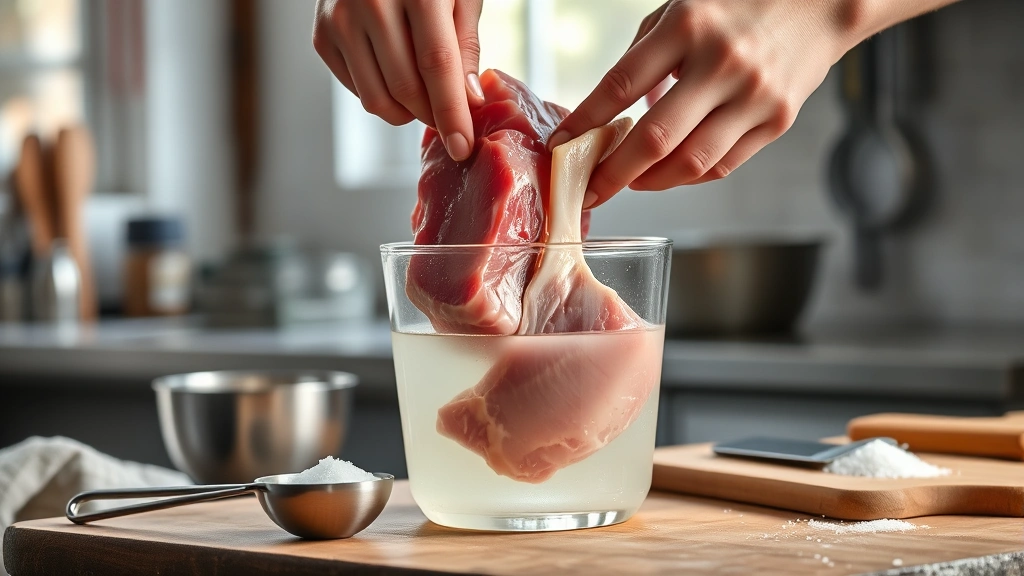
Pat your pork chops dry with paper towels—moisture on the surface can dilute the brine slightly. Place them in a container or large zip-top bag, then pour the cold brine over them until they’re completely submerged. This is important; any exposed meat won’t brine properly.
If you’re using a container, weigh the chops down with a plate or plastic wrap pressed directly on the surface. If you’re using a bag, squeeze out as much air as possible before sealing. This keeps the meat in contact with the brine the entire time.
Refrigerate immediately. Don’t leave it on the counter. The cold temperature prevents bacterial growth and keeps the brine effective.
Timing Guide for Perfect Results
Brining time depends on thickness and how intense you want the flavor:
- Thin chops (1/2 to 3/4 inch): 2-4 hours maximum. Thin meat can become over-brined and mushy if left too long.
- Medium chops (3/4 to 1 inch): 4-8 hours. This is the sweet spot for most home cooks.
- Thick chops (1.5 inches or more): 8-12 hours. Thicker cuts need more time for the salt to penetrate.
- Overnight brining: Up to 16 hours maximum. Beyond that, the meat texture starts degrading.
I typically brine medium-thickness chops for about 6 hours—enough time to get deep flavor without any risk of over-brining. Set a phone reminder so you don’t forget about them in the back of the fridge.
Seasoning Variations
Once you master the basic brine, you can customize it endlessly. Try these combinations:
Asian-Inspired: Add 2 tablespoons soy sauce, 1-inch piece of fresh ginger (sliced), 2 star anise, and a pinch of red pepper flakes to your base brine.
Mediterranean: Swap thyme for oregano, add rosemary, lemon slices, and a few Kalamata olives. This pairs beautifully with Greek seasoning recipe applications after brining.
Smoky BBQ: Add 1 tablespoon smoked paprika, 1 tablespoon liquid smoke, and a bit of brown sugar to the base recipe. Cook these on a griddle for restaurant-quality results.
Spicy Latin: This approach works similarly to preparing fajita marinade recipe flavor profiles—add jalapeño slices, cumin, and a splash of lime juice to your brine base.
Cooking Your Brined Chops
Remove the pork chops from the brine 30 minutes before cooking. Rinse them under cool running water for about 10 seconds—you’re not trying to remove all the seasoning, just the excess surface salt. Pat them completely dry with paper towels.
Here’s the critical part: do not add salt to the cooking surface. The brine has already seasoned the meat. Extra salt will make them too salty.
Cook them however you prefer. Brined chops are more forgiving, so you can grill them, pan-sear them, bake them, or even smoke them without fear of drying out. Medium heat is your friend—it gives the interior time to cook through while developing a nice crust on the outside.
Aim for an internal temperature of 145°F (63°C) for slightly pink, juicy meat. They’ll continue cooking slightly after you remove them from heat, so pull them off at 140-142°F if you like them right at that sweet spot.
Common Brining Mistakes
Using hot brine: This is the biggest error. Hot brine will partially cook the exterior of the meat and create a weird texture. Always cool it completely first.
Over-brining: Yes, this is a real problem. Beyond 16 hours, the meat becomes mushy and loses its firm texture. More time doesn’t equal better flavor.
Not submerging completely: Any part of the chop sticking above the brine line won’t brine properly. You’ll end up with uneven seasoning.
Skipping the rinse: If you skip rinsing after brining, your finished chops will be unpleasantly salty. A quick rinse balances everything perfectly.

Adding salt during cooking: This is tempting but wrong. Wait until after cooking to taste and adjust seasoning if needed.
Storage and Make-Ahead Tips
Brined pork chops keep in the refrigerator for up to 2 days after brining. You can also freeze them in the brine for up to 2 months. Thaw them in the refrigerator overnight, and they’ll continue absorbing brine flavor as they thaw.
Make brine in batches and freeze it in ice cube trays. Pop out a few cubes, thaw them, and you’ve got fresh brine ready to go whenever you want to brine chops on short notice.
If you’re meal prepping, brine your chops in the morning, cook them in the evening, and refrigerate the cooked chops for up to 4 days. They reheat beautifully in a low oven at 300°F.
Frequently Asked Questions
Can you brine pork chops in less than 2 hours?
Technically yes, but you’ll get minimal flavor benefit. The osmosis process needs time to work. If you’re in a serious time crunch, even 1 hour is better than nothing, but 4 hours is really the minimum for noticeable improvement.
What’s the difference between brining and marinating?
Brining uses salt to force moisture into the meat through osmosis. Marinating adds flavor to the surface and shallow layers through acid or enzymes. They work differently, and brining is superior for keeping lean meat juicy.
Can you brine frozen pork chops?
No. Frozen chops won’t absorb the brine properly. Thaw them completely first, then brine.
Is kosher salt necessary, or can I use table salt?
You can use table salt, but reduce the amount by about 25% because table salt is more densely packed than kosher salt. Better yet, just grab kosher salt—it’s cheap and gives you better control.
Do brined pork chops taste salty?
Not if you do it right. The brine seasons the meat evenly, and a quick rinse removes excess surface salt. You get balanced, seasoned meat, not a salt bomb.
Can you brine other cuts of pork?
Absolutely. Pork tenderloin, pork shoulder, and even ground pork benefit from brining. Adjust timing based on thickness—thicker cuts need longer.
Brining pork chops transforms them from a risky dinner proposition into a reliable, delicious meal. Once you nail this technique, you’ll find yourself brining chicken breasts, turkey, and pretty much any lean protein that crosses your cutting board. It’s that effective, and honestly, it’s that easy. Give it a shot this week.


