How to Breed Villagers in Minecraft: Simple & Essential Guide
Ready to build a thriving villager community in Minecraft? Breeding villagers is one of the most rewarding mechanics in the game, allowing you to create bustling trading hubs and expand your population. Whether you’re a new player or returning to the game, understanding how to breed villagers in Minecraft is essential for progressing efficiently through the game and unlocking valuable trades.
Quick Answer: To breed villagers in Minecraft, place two villagers in a confined space with at least 3 beds, ensure they have enough food (bread, carrots, potatoes, or beetroot), and keep them in a well-lit area. When both villagers are in “love mode” (indicated by red hearts), they’ll breed and produce a baby villager within minutes. The process requires patience, proper resources, and correct environmental conditions.
Tools & Materials You’ll Need
- Beds (minimum 3 per breeding pair)
- Food items (bread, carrots, potatoes, or beetroot)
- Building blocks for enclosure
- Doors or trapdoors for containment
- Torches or lanterns for lighting (light level 8+)
- Optional: Hopper and chest for food automation
- Optional: Name tags to identify villagers
Understanding Villager Breeding Basics
Before you start breeding villagers in Minecraft, you need to understand the mechanics behind this system. Villagers are intelligent NPCs that follow specific rules and requirements to reproduce. The breeding system was significantly updated in recent versions, making it more accessible and predictable than ever before.
Every villager has a “willingness” to breed, which increases when they consume food. When two villagers are willing to breed and detect nearby beds, they enter “love mode” and produce offspring. The baby villager inherits a profession based on nearby job site blocks, though babies born from two villagers without professions will remain unemployed until they mature.
Key mechanics to remember: Villagers need to be in the same chunk or nearby chunks to breed. They also require a sufficient number of beds—specifically, there must be at least one more bed than the number of villagers you want to keep. This is crucial because villagers will only breed if they detect available beds for their offspring.
Preparing Your Breeding Space
Creating the right environment is fundamental to successful how to breed villagers in Minecraft operations. Start by building an enclosed space using blocks like wood, stone, or dirt. Your breeding chamber should be at least 5×5 blocks in size to give villagers room to move and interact properly.
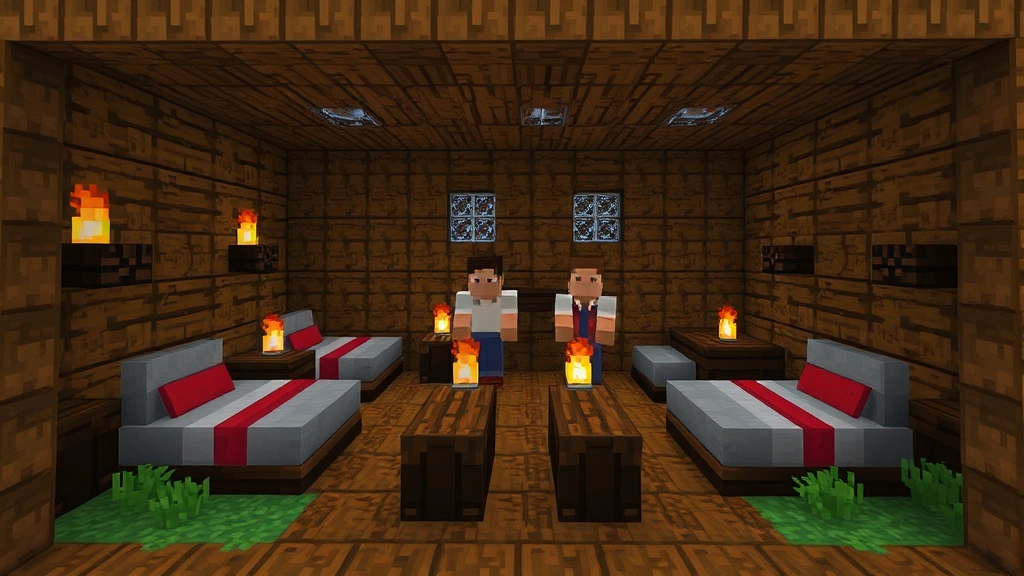
Place beds inside your enclosure—remember, you need at least 3 beds for two villagers (one for each villager plus one for the baby). Position the beds on the ground level, spacing them evenly to ensure villagers can access them easily. Beds don’t need to be fancy; simple wooden beds work perfectly fine.
Ensure your breeding space has proper lighting. Villagers can breed in any light level, but you’ll want at least light level 8 to prevent hostile mobs from spawning nearby. Place torches or lanterns around the perimeter of your breeding chamber. Additionally, make sure the space is secure with walls and a ceiling to prevent villagers from escaping and to keep out unwanted mobs.

Gathering Food & Resources
Food is the most critical resource when learning how to breed villagers in Minecraft. Villagers need to consume food to become willing to breed, and different food types work equally well. The most common food items include:
- Bread: The most efficient option; crafted from 3 wheat
- Carrots: Found in villages or grown on farmland
- Potatoes: Dropped by zombies or harvested from farms
- Beetroot: Found in village farms or grown yourself
Aim to gather at least 20-30 food items per breeding cycle. You can automate food delivery using hoppers and dispensers connected to your breeding chamber, but manual feeding works fine for beginners. Simply throw the food items onto the ground near your villagers, and they’ll pick them up automatically.
Pro tip: Set up a small farm near your breeding chamber to maintain a steady food supply. Wheat, carrots, and potatoes grow quickly with proper watering, making them renewable resources for continuous breeding operations.
Triggering the Breeding Process
Now comes the exciting part—actually triggering villager breeding in Minecraft. Once your space is prepared and you have food ready, place two villagers inside your breeding chamber. You can transport villagers using minecarts, boats, or by leading them with jobs.
Throw food items near the villagers. They’ll consume the food and enter “love mode” when they’re willing to breed. You’ll see red hearts floating above their heads—this is your signal that they’re ready to reproduce. Both villagers need to be in love mode simultaneously for breeding to occur.
Within a few seconds to a few minutes after both villagers enter love mode, a baby villager will spawn. The baby will be smaller than adult villagers and won’t have a profession initially. The parents will return to their normal state, and you can repeat the process to breed more villagers.
Optimizing Your Breeding Setup
For serious how to breed villagers in Minecraft operations, optimization is key. Create a larger breeding facility with multiple breeding chambers, each containing 2-4 villagers. This allows you to breed multiple villagers simultaneously and scale your operation efficiently.
Implement an automated food delivery system using hoppers and dispensers. Connect these to a central storage area where you keep your food supplies. When dispensers drop food into the breeding chamber, villagers pick it up automatically, eliminating the need for manual feeding.
Consider using name tags to identify your villagers and track their professions. This is especially useful when breeding specific villager types for your trading hub. You can also use different colored wool or blocks to organize breeding chambers by profession type.
According to WikiHow’s comprehensive guides, organizing your breeding facility with clear sections helps prevent confusion and increases efficiency. Create separate areas for unemployed villagers, librarians, farmers, and other professions you need.
Troubleshooting Common Issues
If villagers aren’t breeding despite having food and beds, several factors might be at play. First, verify that you have enough beds—this is the most common issue. Count your beds carefully; you need at least one more bed than your total villager count.
Check the lighting in your breeding chamber. While villagers can breed in darkness, it’s easier to monitor the process in well-lit areas. Ensure your light level is at least 8 to prevent mob spawning that might distract villagers.
Confirm that both villagers are actually in the same space and can see each other. Villagers need to be close enough to recognize each other for breeding to work. If they’re separated by walls or too far apart, breeding won’t occur.
Another common issue is improper food distribution. Make sure you’re throwing enough food items for both villagers to consume. Each villager needs to pick up food to become willing; if only one villager eats, breeding won’t happen.
If you’re still having trouble, consider curing zombie villagers as an alternative way to expand your population. This method can sometimes be more efficient than traditional breeding in certain situations.
Advanced Breeding Techniques
Once you’ve mastered basic how to breed villagers in Minecraft, you can implement advanced techniques to maximize efficiency. Create a “breeder” setup where you continuously cycle villagers through breeding chambers. Use redstone mechanisms to automate the entire process, from food delivery to baby collection.
Implement a sorting system that separates baby villagers from adults. Use minecarts or water streams to transport babies to a separate maturation chamber where they can grow into adults. This prevents overcrowding in your main breeding area.
For large-scale operations, create multiple breeding chambers that operate simultaneously. Use a central hopper system to distribute food evenly across all chambers. This approach can yield dozens of villagers in a short time period.
Advanced players often use command blocks to automate villager management entirely. Commands like `/summon villager` with custom data tags allow you to create villagers with specific professions and trades instantly, though traditional breeding remains the survival mode standard.
As reviewed by Instructables’ detailed tutorials, the most successful breeders combine multiple techniques. They use automated food systems, proper spacing, and careful monitoring to achieve consistent results.
FAQ
Q: How many beds do I need to breed villagers in Minecraft?
A: You need at least one more bed than the number of villagers you want to keep. For two villagers producing one baby, you need 3 beds minimum. The beds must be accessible and within the breeding area.
Q: Can villagers breed without beds?
A: No, beds are absolutely essential for villager breeding. Without beds, villagers will never enter love mode, regardless of how much food they consume. Always ensure you have enough beds before attempting to breed.
Q: What’s the fastest food for breeding villagers?
A: All food types (bread, carrots, potatoes, beetroot) work equally fast. Bread is considered most efficient because it stacks to 64 and provides good value in terms of crafting cost. Choose whichever is easiest for you to farm.
Q: How long does it take for baby villagers to grow up?
A: Baby villagers take approximately 20 minutes (one full Minecraft day) to mature into adults. During this time, they won’t participate in trades or professions. Keep them separate from your trading hub until they mature.
Q: Can I breed villagers of different professions?
A: Yes, you can breed any two villagers together regardless of profession. The baby villager won’t have a profession initially and will adopt one based on nearby job site blocks. This is useful for creating specific villager types.
Q: Do villagers need to be the same profession to breed?
A: No, villagers of any profession can breed together. Profession has no impact on breeding mechanics. This flexibility allows you to breed librarians with farmers, farmers with clerics, and so on.
Q: What if my villagers keep escaping?
A: Ensure your breeding chamber has solid walls and a ceiling with no gaps. Villagers can squeeze through single-block gaps, so seal everything completely. Use doors and trapdoors that you can control to prevent escapes.
Q: Can I breed villagers in the Nether or End?
A: Villagers can breed in any dimension, including the Nether and End. However, it’s much easier in the Overworld where you can easily gather food and manage your breeding setup. Stick to the Overworld for beginners.
Q: How do I know if a villager is willing to breed?
A: Look for red hearts floating above the villager’s head. These hearts indicate the villager is in “love mode” and willing to breed. Both villagers must display hearts simultaneously for breeding to occur.
For more detailed information about villager mechanics, check out HowStuffWorks’ gaming guides and Lifehacker’s Minecraft tips for additional strategies and advanced techniques.
Conclusion: Learning how to breed villagers in Minecraft opens up incredible possibilities for your world. With proper preparation, adequate resources, and patience, you can create a thriving villager community that provides valuable trades and endless opportunities. Start small with a simple breeding chamber, master the basics, and gradually expand to more complex automated systems. Whether you’re building a trading hub, collecting rare professions, or simply expanding your population, villager breeding is a skill that will serve you well throughout your Minecraft journey. Happy breeding!