
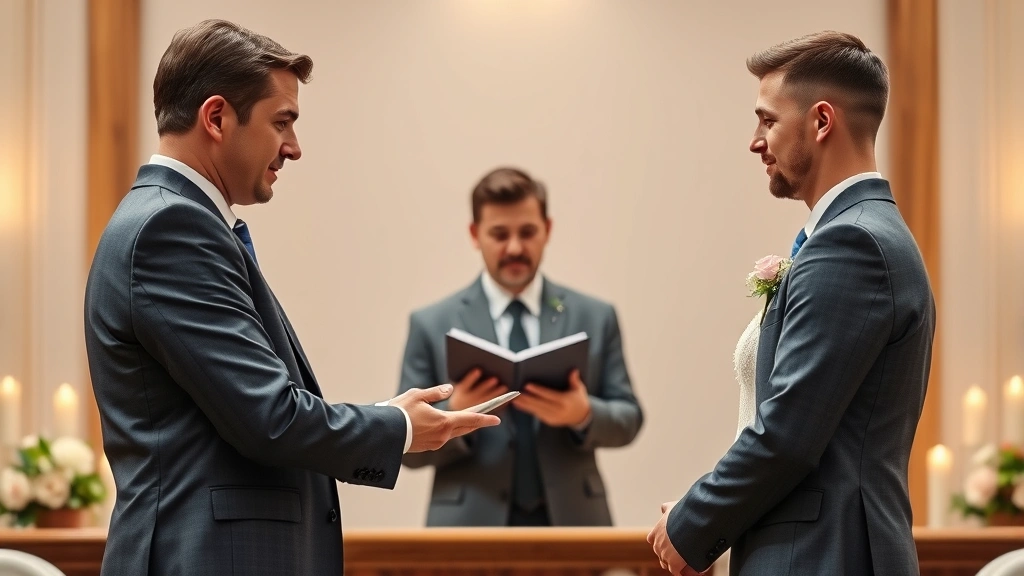
Learning how to become a wedding officiant is more straightforward than you might think, and it opens the door to one of life’s most rewarding roles. Whether you’re a friend looking to officiate your bestie’s ceremony or someone considering this as a meaningful side gig, the path involves understanding legal requirements, getting proper credentials, and developing the skills to deliver a memorable service.
Table of Contents
Understand Your Legal Requirements
Before you officiate your first wedding, you need to understand what the law actually requires. The legal landscape for wedding officiants varies dramatically by state and even by county. Some states have minimal requirements—basically anyone with an internet connection and five minutes can legally perform ceremonies. Others have stricter rules about who can marry people, including mandatory credentials or religious affiliation.
The key thing to know is that your primary job is to make the marriage legally binding. You’re not just delivering nice words; you’re executing a legal contract on behalf of the state. This is why getting the fundamentals right matters before you ever stand in front of a couple and their guests.
Most states recognize three pathways to becoming an officiant: religious ordination (through churches or faith-based organizations), civil authority (like becoming a notary public or judge), or universal ordination (through online ordination services). Each has different requirements and carries different weight depending on where the wedding happens.
Research Your State Laws
This is non-negotiable work. You need to know exactly what your state requires before you commit to anything. Start by visiting your state’s government website and searching for “marriage officiant requirements” or “solemnizing officer.” Look for the specific statute that governs who can perform marriages in your state.
Pay attention to these details: Does your state require ordination? Must you register before each ceremony? Are there residency requirements? Do you need to file paperwork within a certain timeframe after the ceremony? Some states want the signed marriage license back within days; others give you weeks.
Contact your county clerk’s office directly—they’re goldmines of information and usually happy to walk you through the process. They see this question constantly and can tell you exactly what forms you need, what deadlines apply, and whether there are any quirks in your specific county. This conversation often takes 10 minutes and saves you hours of confusion later.
Get Ordained Online or Locally
For most people, online ordination is the fastest route. Organizations like the Universal Life Church, American Marriage Ministries, and dozens of others offer instant or same-day ordination for minimal cost (often free to $50). You fill out a form, sometimes answer a few questions about your beliefs, and boom—you’re ordained.
The catch? Not all states recognize online ordination equally. Some states accept it without question. Others require that your ordination come from a “recognized religious organization” or that you be affiliated with an actual church community. Before you ordain yourself online, verify that your state accepts this type of credential.
If you’re part of a religious community, getting ordained through your actual church or faith organization carries more weight and often requires more meaningful engagement. This might mean taking classes, demonstrating knowledge of your faith’s marriage theology, or getting approved by leadership. It takes longer but gives you deeper credibility and ensures you’re aligned with your tradition’s values.
Register With Your County
After you’re ordained, many states require you to register with your county clerk before you can legally perform ceremonies. This usually involves submitting your ordination credentials, filling out a form, and sometimes paying a small fee. Some counties do this registration per-ceremony (you register each time you’re going to perform a wedding); others let you register once and you’re good for several years.
Contact your county clerk’s office and ask what registration looks like in your area. Get a copy of the registration form and any required documents. Make sure you understand the timeline—some counties need this submitted before the ceremony, others accept it after. Missing this step can invalidate the marriage license, which is a nightmare nobody wants.
Keep copies of everything: your ordination certificate, your county registration, any letters of good standing from religious organizations. You’ll want these on hand when you meet with couples and when you perform ceremonies.
Develop Ceremony Skills
Being legally authorized to marry people is one thing. Actually delivering a ceremony that moves people and reflects the couple’s values is another skill entirely. Start by attending weddings as a guest and really pay attention to how the officiant conducts the ceremony. Notice what lands emotionally, what feels rushed, what creates meaningful pauses.
Read books on ceremony design and public speaking. “The New Toastmasters Guide to Successful Speaking” and “Steal the Show” by Michael Port are excellent for understanding how to command a space and deliver words with impact. Look for resources specifically about wedding ceremony writing—organizations like the Association of Bridal Consultants and various wedding planning sites offer guidance on ceremony structure and pacing.
Consider taking a workshop or course. Some universities and community colleges offer classes on public speaking or ceremonial leadership. Online platforms like Udemy and Coursera have courses on wedding officiant training. These aren’t always required, but they dramatically improve your confidence and competence.
Write Personalized Vows
The difference between a forgettable ceremony and one people talk about for years is personalization. Learn how to interview couples deeply about their story, their values, and what marriage means to them. Ask questions like: How did you meet? What do you love about each other? What challenges have you overcome together? What are your hopes for your marriage?
Use those details to weave a ceremony that feels like it was written specifically for them—because it was. Generic templates have their place, but couples remember officiants who really knew them and reflected that knowledge back in the ceremony.
Practice writing ceremonies. Start with templates as a framework, then customize them heavily. Read your drafts aloud—you want language that flows naturally when spoken, not stiff or overly formal. Time yourself. A typical ceremony runs 15-25 minutes; if you’re at 45 minutes, you need to cut.
Practice Public Speaking
You’re about to speak in front of 50-200 people while they watch two nervous humans make life-changing vows. Your delivery matters. Even if you have great material, shaky delivery undermines it. Practice out loud, repeatedly, in front of mirrors and friends.
Work on pacing—don’t rush through emotional moments. Work on projection—people in the back need to hear you without you sounding like you’re shouting. Work on eye contact—look at the couple, the guests, the officiant’s book, naturally rotating so you’re not staring at one person the whole time.
Record yourself on your phone and listen back. You’ll catch verbal tics (“um,” “like,” “you know”), rushed sections, and places where your tone doesn’t match your words. Do this multiple times before your first real ceremony.
Obtain Liability Insurance
If you’re performing ceremonies for payment, consider getting liability insurance. This protects you if something goes wrong—someone claims the marriage isn’t legal, a guest gets injured during the ceremony, or some other issue arises. It’s inexpensive (often $200-500 annually) and gives you peace of mind.
Some organizations that ordain officiants offer insurance packages. Check with yours. You might also explore small business liability policies through your homeowner’s or renter’s insurance provider, or through professional associations related to wedding services.
Even if you’re only officiating a friend’s wedding for free, having insurance is smart protection. It’s one of those things you hope you never need but are grateful to have if you do.
Market Your Services
If you want to build a side business as a wedding officiant, you need to be findable. Create a simple website showcasing your approach, your experience (even if it’s just a few weddings), and testimonials from couples you’ve worked with. Include clear information about your fees, your availability, and your geographic area.
List yourself on wedding directories like WeddingWire, The Knot, and local wedding planning sites. These platforms let couples search for officiants in their area and read reviews. Encourage couples you work with to leave reviews—social proof is powerful in the wedding industry.
Network with wedding planners, photographers, and venues. These professionals get asked for officiant recommendations constantly and will refer couples your way if you’ve built a good relationship. Attend wedding industry events and bridal expos. A simple booth with business cards and a portfolio of ceremonies can generate real leads.
For friends and family ceremonies, word-of-mouth is your best marketing. When you deliver a beautiful ceremony, people talk about it. That’s how you build a reputation and get future opportunities.
Frequently Asked Questions
How much do wedding officiants charge?
Fees vary widely based on experience, location, and demand. Friend and family ceremonies often happen for free or a small honorarium ($50-200). Professional officiants typically charge $300-1,000+ depending on the market. Destination weddings and high-end events command premium rates. Research what officiants in your area charge and set rates that reflect your experience and the value you provide.
Can I become a wedding officiant without being religious?
Absolutely. Many states don’t require religious affiliation at all. Universal online ordination services are specifically designed for non-religious people who want to officiate. Your state’s requirements will tell you whether religion matters; in most cases, it doesn’t. What matters is that you’re legally authorized and the couple trusts you to deliver their ceremony.
How long does it take to become an officiant?
The legal part can happen in hours—ordination and registration might take a few days to a few weeks depending on your state’s process. Building actual competence as a ceremony leader takes longer. Plan on several months of study, practice, and skill-building before you’re truly ready for your first ceremony. Rushing this part shows, so invest the time upfront.
Do I need to renew my ordination?
This depends on where you got ordained and your state’s requirements. Some online ordination services are valid indefinitely; others require renewal every few years. Check with the organization that ordained you and verify with your county clerk what their requirements are. Set a calendar reminder to handle renewals before they lapse.
What if the couple doesn’t have the same religious beliefs as me?
This is between you and the couple. If you’re ordained through a specific religious tradition, you might have theological boundaries about what ceremonies you can perform. Communicate this clearly upfront. If you’re a universal or secular officiant, you have more flexibility to honor diverse beliefs. Be honest about your comfort level and find couples whose values align with yours.
Can I lose my ability to officiate?
Yes, in some cases. If your ordination is revoked by the organization that granted it, you lose your credential. If you fail to renew your registration or violate your state’s requirements, you could lose authorization. This is rare, but it’s why staying informed about requirements and maintaining your credentials matters. Treat this responsibility seriously.


