
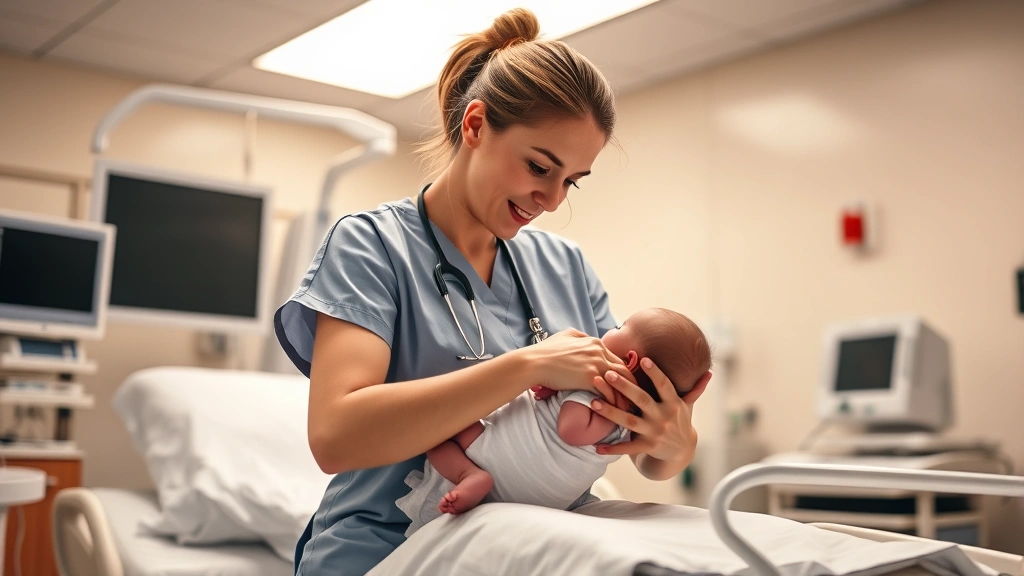
Learning how to become a labor and delivery nurse is a rewarding journey that combines rigorous education, hands-on clinical training, and genuine passion for supporting families during one of life’s most transformative moments. If you’re drawn to this specialty—where you’ll catch babies, comfort anxious parents, and make real differences in delivery rooms—this guide walks you through every step of the process.
Table of Contents
Education Requirements Matter
Before you step foot in a labor and delivery unit, you need a solid nursing foundation. Most hospitals require at least an Associate’s Degree in Nursing (ADN) or a Bachelor’s Degree in Science in Nursing (BSN). Here’s the real talk: while an ADN gets you licensed faster (typically 2 years), many hospitals increasingly prefer BSN graduates for specialty positions. A BSN takes 4 years but gives you stronger theoretical knowledge and better career flexibility.
Your nursing program covers anatomy, physiology, pharmacology, and fundamentals of patient care. You’ll spend classroom time learning obstetric principles, fetal development, and labor management. The clinical components are where education becomes real—you’ll rotate through medical-surgical units, pediatrics, and eventually obstetrics. This foundation is non-negotiable. No shortcuts exist here; accredited programs through NCSBN (National Council of State Boards of Nursing) ensure you get quality education.
Get Your Nursing License
After graduation, you’ll tackle the NCLEX-RN (National Council Licensure Examination for Registered Nurses). This computer-adaptive test evaluates whether you can safely practice nursing. It’s challenging—the exam adapts difficulty based on your answers—but thousands pass annually. Most states require you to pass before working as an RN anywhere, including labor and delivery units.
Preparation typically takes 4-8 weeks of focused study. Use review courses, practice questions, and study groups. The NCLEX covers all nursing specialties, so don’t expect obstetric-focused questions, but your nursing foundation will shine through. Once you pass, you’ll receive your RN license from your state’s nursing board. This credential is your ticket into professional nursing—guard it carefully.
Build Clinical Experience
Most hospitals won’t hire you directly into labor and delivery as a new graduate. Instead, expect to work in a general nursing role first—medical-surgical units are common starting points. This isn’t punishment; it’s smart career building. You’ll develop fundamental nursing skills: time management, patient communication, clinical judgment, and confidence under pressure. These skills transfer directly to obstetrics.
Aim for 1-2 years of general nursing experience before transitioning to labor and delivery. During this time, volunteer for obstetric-related tasks when possible. Shadow labor and delivery nurses during breaks. Express your specialty interest to managers. Many hospitals have internal transfer programs that prioritize experienced nurses moving into specialty areas. This pathway shows you’re serious and prepared, not just chasing a specific unit because you think it sounds appealing.
Earn Your Specialty Certification
Once you’re working in labor and delivery, pursue the Certified Nurse Midwife (CNM), Inpatient Obstetric Nursing (RNC-OB), or Electronic Fetal Monitoring (EFM) certification. The RNC-OB credential, offered through NCC (National Certification Corporation), demonstrates you’ve mastered obstetric nursing competencies. You’ll need at least 2 years of obstetric nursing experience and 2,000 hours of direct patient care before sitting for this exam.
Certification isn’t mandatory everywhere, but it’s increasingly expected. Hospitals value certified nurses because certification means you’ve met rigorous standards. The exam covers normal labor, high-risk pregnancies, fetal monitoring, pharmacology, and emergency situations. Passing certification boosts your credibility, earning potential, and job security. Many employers offer tuition reimbursement for certification exam fees—take advantage of this benefit.
Land Your First Position
When you’re ready to transition into labor and delivery, timing matters. Apply to hospitals with strong obstetric reputations and teaching programs. These facilities invest in nurse education and typically offer structured orientation programs for new specialty nurses. Your resume should highlight relevant clinical experiences: any obstetric rotations, high-risk patient care, emergency response situations, and your RN license status.
Network aggressively. Attend obstetric nursing conferences, join professional organizations like AWHONN (Association of Women’s Health, Obstetric and Neonatal Nurses), and connect with labor and delivery nurses on LinkedIn. Many positions fill through internal referrals before public posting. When interviewing, ask specific questions: What’s the patient-to-nurse ratio? How extensive is the new-hire orientation? What’s the cesarean section rate? These questions show you understand the specialty.
Commit to Lifelong Learning
Labor and delivery nursing evolves constantly. New fetal monitoring technologies, obstetric medications, and clinical protocols emerge regularly. Successful nurses embrace continuous education. Most states require continuing education hours for license renewal—typically 20-40 hours every 2-3 years. Obstetric-specific courses keep you current on best practices.
Beyond requirements, attend workshops on topics like maternal mental health, high-risk pregnancy management, or neonatal resuscitation. Many hospitals offer in-house training. Professional memberships often include access to journals and webinars. Reading current research isn’t optional—it’s how you stay excellent at your craft. The nurses who advance into leadership positions are those who never stop learning.
Essential Skills You’ll Need
Technical skills matter, but so do soft skills. You’ll need expertise in fetal heart rate monitoring, understanding contraction patterns, and recognizing complications. You’ll administer medications, manage IV lines, and assist with deliveries. But equally important: patience during 16-hour labors, empathy for nervous first-time parents, and calm during emergencies.
Communication skills are non-negotiable. You’ll explain medical information to families without medical backgrounds, collaborate with physicians and midwives, and document meticulously. Physical stamina is real—you’ll stand for hours, lift patients, and manage emotional intensity. Attention to detail saves lives; missing a subtle fetal monitoring change can have serious consequences. Develop these competencies intentionally during your clinical experience.
Career Outlook and Compensation
Labor and delivery nursing offers solid career prospects. The Bureau of Labor Statistics projects nursing positions will grow 6% through 2032, with specialty nurses like those in obstetrics seeing steady demand. Salary varies by location, hospital type, and experience. Entry-level labor and delivery nurses earn roughly $55,000-$65,000 annually, while experienced nurses with certification earn $75,000-$95,000 or more. Night shift premiums and shift differentials boost earnings.
Benefits typically include health insurance, retirement plans, continuing education support, and shift flexibility. Many hospitals offer tuition reimbursement for advanced degrees if you want to pursue a Master’s degree or become a Certified Nurse Midwife. The financial stability is real, and the non-monetary rewards—being present for births, supporting families—are priceless.
Frequently Asked Questions
How long does it take to become a labor and delivery nurse?
Typically 6-8 years total: 2-4 years for nursing education, 6 months to 1 year for NCLEX preparation and exam, 1-2 years of general nursing experience, and 1-2 years working in labor and delivery before full competency. Certification adds another 2-3 years of experience before exam eligibility.
Do I need a BSN or is an ADN sufficient?
An ADN gets you licensed faster, but many hospitals prefer BSN graduates for specialty positions. If you start with an ADN, consider pursuing a BSN through RN-to-BSN programs while working. This hybrid approach is common and practical.
What’s the difference between a labor and delivery nurse and a midwife?
Labor and delivery nurses provide patient care under physician or midwife supervision. Certified Nurse Midwives (CNMs) are advanced practice nurses who manage pregnancies, attend births, and provide gynecologic care independently in many states. Midwifery requires additional graduate education.
Is labor and delivery nursing physically demanding?
Yes. You’ll stand for extended periods, lift patients, and manage emotional intensity. It’s rewarding but physically taxing. Proper body mechanics, supportive footwear, and self-care practices are essential for longevity in this specialty.
Can I specialize further after becoming an L&D nurse?
Absolutely. Many nurses pursue CNM credentials, neonatal nursing certification, or maternal-fetal medicine specialization. Some transition into education, research, or management roles. The foundation you build as an L&D nurse opens multiple career paths.


