
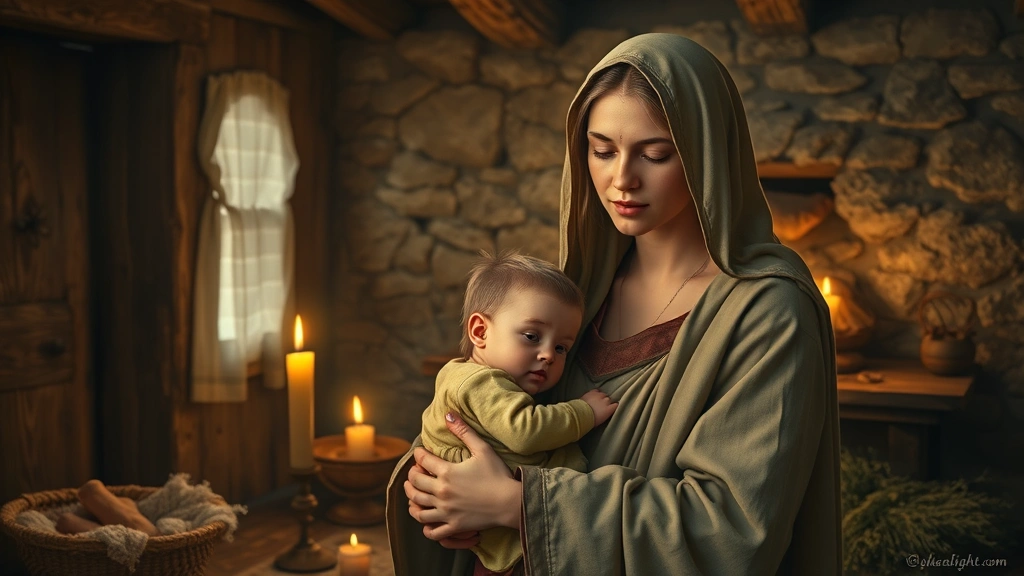
The question of how old was Mary when she gave birth to Jesus has fascinated scholars, theologians, and curious minds for nearly two thousand years. While the Bible doesn’t explicitly state Mary’s age at the time of Jesus’s birth, historical research, ancient texts, and theological analysis give us compelling clues about this pivotal moment in Christian history.
Table of Contents
What the Bible Actually Says
Here’s the straightforward truth: the New Testament never tells us Mary’s exact age. The Gospel accounts in Matthew and Luke, which provide the most detailed nativity narratives, mention Mary’s virginity and her role as Jesus’s mother but remain completely silent on her age. This silence has sparked centuries of theological debate and historical investigation.
The Gospels focus on the miraculous nature of Jesus’s birth rather than biographical details about Mary. Luke’s Gospel emphasizes Mary’s humble acceptance of God’s plan, while Matthew highlights the fulfillment of Old Testament prophecies. Neither account felt compelled to document how old Mary was when this extraordinary event occurred.
Historical Evidence and Records
While biblical texts remain silent, early Christian writings provide some guidance. The Protoevangelium of James, a second-century apocryphal text, suggests Mary was between twelve and fourteen years old when she became betrothed to Joseph. This document, though not considered canonical scripture, represents some of the earliest post-biblical traditions about Mary’s life.
Early Church Fathers like Clement of Alexandria and other patristic writers engaged with questions about Mary’s age, though they often disagreed with one another. Some suggested she was quite young—possibly in her early teens—while others proposed she was older, perhaps in her late teens or early twenties.
Jewish Marriage Customs
Understanding Jewish customs of the first century helps us piece together this puzzle. In ancient Jewish culture, betrothals typically occurred when girls were quite young by modern standards. The Talmud suggests that girls could be betrothed as early as age twelve, though actual marriage and cohabitation usually followed after a period of time.
Jewish law allowed marriage for girls at age twelve and a day, making this a significant threshold in Jewish society. Boys typically married somewhat later, usually in their late teens or early twenties. Joseph, described in the Gospels as a carpenter and presumably an established tradesman, was likely considerably older than Mary if they followed typical customs of their time.
The betrothal period—the time between formal agreement and actual marriage—could last anywhere from several months to over a year. During this time, the couple was considered legally bound, though they hadn’t yet begun living together as husband and wife.
What Scholars Believe
Modern biblical scholars and historians generally estimate that Mary was somewhere between twelve and sixteen years old when she gave birth to Jesus. This estimation combines several lines of evidence: Jewish marriage customs, the cultural context of first-century Palestine, and early Christian traditions.
The majority scholarly view suggests Mary was likely a young teenager—probably around thirteen to fifteen years old—when she became pregnant with Jesus. This age would have been entirely consistent with Jewish betrothal practices of the era, though it shocks modern sensibilities.
Scholars emphasize that we’re working with educated guesses based on cultural context rather than definitive historical records. The New Testament’s silence on this detail suggests it wasn’t considered particularly noteworthy to the original gospel writers, as young betrothals were simply normal in their society.
Cultural Context of First Century
To properly understand Mary’s age, we must shed our modern expectations and step into first-century Palestinian culture. In that time and place, girls reaching puberty were considered ready for marriage and motherhood. Life expectancy was significantly shorter, and people matured into adult responsibilities much earlier than in contemporary Western society.
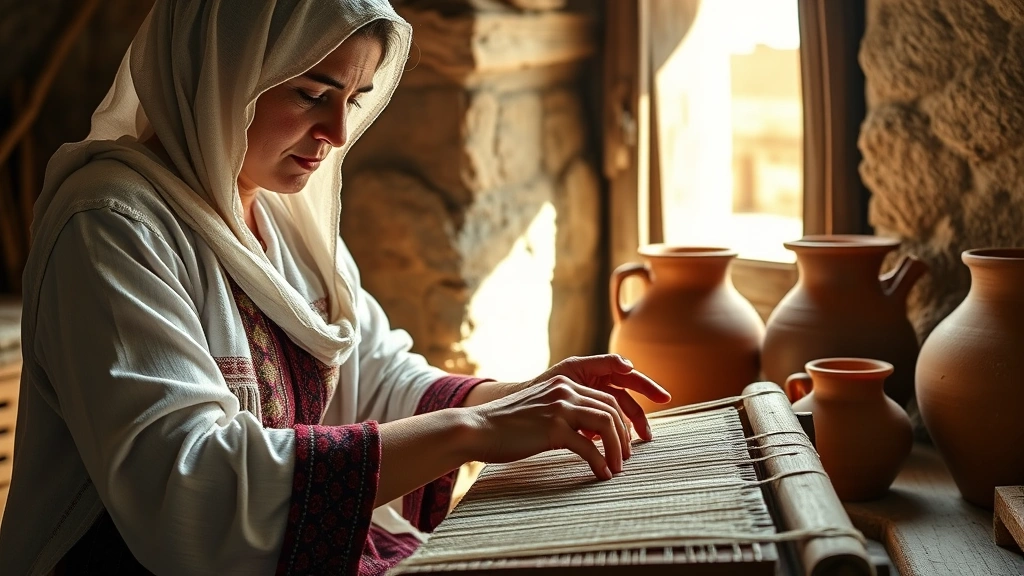
The average life expectancy in the Roman Empire was around thirty to forty years. People married younger, started families earlier, and took on adult roles as teenagers. Mary, as a young Jewish woman, would have been educated in household management, textile work, and the responsibilities of motherhood from childhood.
Nazareth was a small village in Galilee with perhaps a few hundred residents. Everyone knew everyone, and social structures were tightly knit. A young girl from a respectable family being betrothed to an older, established craftsman like Joseph would have been completely unremarkable in that context.
Ancient Non-Biblical Sources
Beyond the canonical Gospels and apocryphal texts, we have limited external sources about Mary. Roman historian Tacitus mentions Christians and their founder Jesus but provides no details about Mary. Jewish sources from the period are similarly sparse.
The Talmud contains hostile references to Jesus and his birth but doesn’t help us determine Mary’s age. Early rabbinic literature, while sometimes referencing Christian claims, doesn’t engage with biographical details about Mary.
This scarcity of external sources reinforces how localized and initially obscure the Jesus movement was. Mary wasn’t a public figure in Roman records. She was a Jewish woman from a small village whose story became significant only after her son’s ministry and resurrection transformed her into a central figure in Christian tradition.
Modern Interpretations
Contemporary scholars approach this question with nuance, recognizing both what we can reasonably infer and what remains genuinely unknowable. Some historians suggest Mary might have been slightly older than the minimum betrothal age—perhaps sixteen to eighteen—to account for the time between betrothal and actual pregnancy.
Others propose that the Protoevangelium of James, despite being non-canonical, preserves genuine early tradition. Still others argue we simply cannot know with certainty and should acknowledge the limits of historical evidence.
What’s clear is that Mary was young—much younger than modern mothers typically are. She faced the challenges of early pregnancy, childbirth, and single motherhood (from a legal standpoint, until her betrothal to Joseph was formalized into marriage) while still a teenager.
Common Misconceptions Debunked
Misconception 1: The Bible clearly states Mary’s age. False. The Gospels never mention her age. Any specific claim about Mary’s age comes from tradition, apocryphal texts, or scholarly inference—not from scripture itself.
Misconception 2: Mary was definitely in her thirties. This contradicts both historical evidence and cultural context. Early Christian tradition consistently suggests she was quite young, not middle-aged.
Misconception 3: Joseph was an old man. While some medieval artistic traditions depicted Joseph as elderly, historical evidence suggests he was probably a young adult, perhaps in his twenties or early thirties—older than Mary, but not ancient.
Misconception 4: Young betrothals prove immorality in ancient Judaism. While modern standards rightly protect children from early marriage, ancient Jewish culture had different norms. Betrothals didn’t necessarily involve immediate cohabitation, and the practice was legally and socially normalized.
Summary and Key Takeaways
The question of how old was Mary when she gave birth to Jesus doesn’t have a definitive answer from historical records. However, the evidence strongly suggests she was a young teenager—probably between twelve and sixteen years old, with most scholars favoring an estimate around thirteen to fifteen.
This conclusion rests on three pillars: Jewish betrothal customs that allowed marriage for girls at twelve, early Christian traditions preserved in apocryphal texts, and the cultural context of first-century Palestine where early marriage was normal and expected.
Understanding Mary’s probable youth adds poignancy to the nativity narrative. She was a girl facing extraordinary circumstances—an unexpected pregnancy, social scandal, and the challenges of motherhood while still in her teens. Her story, viewed through the lens of her historical context, reveals a young woman thrust into circumstances beyond her control, responding with faith and courage.
For Christians, Mary’s youth doesn’t diminish her significance; rather, it emphasizes the radical nature of God’s choice to work through ordinary people in extraordinary ways. For historians, it reminds us that we must interpret ancient texts through the lens of their cultural context, not our modern assumptions.
Frequently Asked Questions
Does the Bible give Mary’s exact age?
No. The New Testament never specifies Mary’s age at Jesus’s birth. All estimates come from historical inference, cultural context, and early Christian traditions, not from biblical text.
What’s the most common scholarly estimate?
Most modern scholars estimate Mary was between thirteen and fifteen years old, based on Jewish betrothal customs and early Christian traditions. Some suggest she might have been as old as sixteen or seventeen.
Is the Protoevangelium of James reliable?
The Protoevangelium of James is not considered canonical scripture, but it represents early Christian tradition from around the second century. Scholars debate its reliability, but it’s one of the oldest sources addressing Mary’s age specifically.
Why does Mary’s age matter?
Understanding Mary’s probable youth helps us appreciate the historical and cultural context of the nativity. It also reminds us that interpreting ancient texts requires understanding their original cultural setting, not applying modern standards anachronistically.
Was Joseph much older than Mary?
Likely, yes. Jewish customs typically involved older men marrying younger women. Joseph was probably in his twenties or early thirties, making him significantly older than Mary, though probably not elderly as some medieval traditions suggested.
How do we know about Jewish marriage customs?
Jewish marriage customs are documented in the Talmud, rabbinic literature, and historical sources from the Second Temple period. These sources help scholars understand what was normal and legal in first-century Jewish society.


