
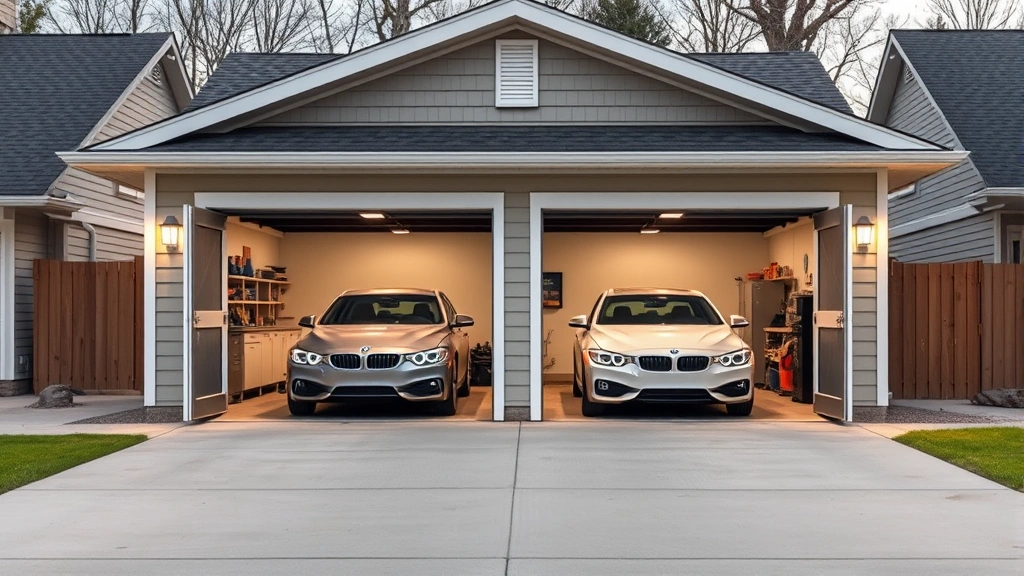
So you’re wondering how much to build a garage? Let me cut through the noise: you’re looking at anywhere from $3,000 for a basic DIY pole barn to $35,000+ for a finished, climate-controlled two-car structure. But here’s the thing—those numbers dance around based on what you actually want and where you live.
Table of Contents
- Garage Size and Base Costs
- Foundation Expenses Matter
- Framing and Labor Breakdown
- Roofing Material Prices
- Siding and Finishing Touches
- Electrical and Plumbing Systems
- Doors and Windows Costs
- Regional Price Variations
- DIY Versus Contractor Labor
- Hidden Costs to Budget
- Ways to Save Money
- Frequently Asked Questions
Garage Size and Base Costs
The first number that matters is size. A single-car garage (12×20 feet) runs cheapest—expect $2,500 to $7,000 for a basic structure. Two-car garages (20×20 feet) sit in the sweet spot for most homeowners, landing between $5,000 and $15,000. Three-car? You’re pushing $10,000 to $25,000. Four-car gets into serious territory at $15,000 to $35,000+.
These baseline figures assume a simple rectangular design with standard framing. Add any curves, angles, or architectural quirks, and costs climb fast. The math is straightforward: more square footage equals more materials and more labor hours.
Foundation Expenses Matter
Don’t sleep on the foundation—it’s often where hidden costs lurk. A concrete slab foundation runs $1,500 to $3,000 for a two-car garage, depending on soil conditions and local labor rates. That’s roughly $3 to $6 per square foot.
If your site has poor drainage or requires grading, add another $500 to $2,000. Some regions demand frost footings (digging below the frost line), which adds significant expense. A pole barn foundation costs less upfront but offers less flexibility if you want to finish the space later. Always get a soil test and consult local building codes—skipping this step leads to expensive repairs down the road.
Framing and Labor Breakdown
Framing is where your labor costs explode. A basic stick-frame garage typically runs $2,000 to $5,000 in lumber alone for a two-car structure. Labor for framing? That’s another $3,000 to $8,000 if you hire professionals, depending on local rates and complexity.
Pole barn framing is cheaper on materials ($1,200 to $2,500) but requires specialized knowledge. If you’re handy, tackling framing yourself saves serious cash. You’ll need a crew for roof trusses though—that’s one place where safety and skill matter most. Building permits and inspections typically cost $200 to $800 and are non-negotiable in most jurisdictions.
Roofing Material Prices
Your roof choice hits the wallet hard. Asphalt shingles (the budget option) cost $600 to $1,200 for a two-car garage, plus $400 to $800 in labor. Metal roofing runs $1,200 to $2,500 but lasts 40+ years versus 20 for shingles. Architectural shingles split the difference at $1,000 to $1,800.
Don’t forget the underlayment, flashing, and ventilation—another $200 to $400 you can’t skip. Roof pitch matters too. A steep pitch costs more in materials and labor but sheds water better. A shallow pitch saves money but demands better drainage planning.
Siding and Finishing Touches
Siding is where personality (and price) varies wildly. Vinyl siding runs $1,000 to $2,500 for a two-car garage and is easy to maintain. Wood siding looks better but demands upkeep—budget $1,500 to $3,500. Metal siding is durable and cheap at $800 to $1,500. How to install vinyl siding is a learnable skill if you want to DIY this section and save $500 to $1,000 in labor.
Paint or stain adds another $300 to $800. Trim, soffit, and fascia round out the exterior at $400 to $1,000. These finishing touches define curb appeal—don’t cheap out here if resale value matters to you.
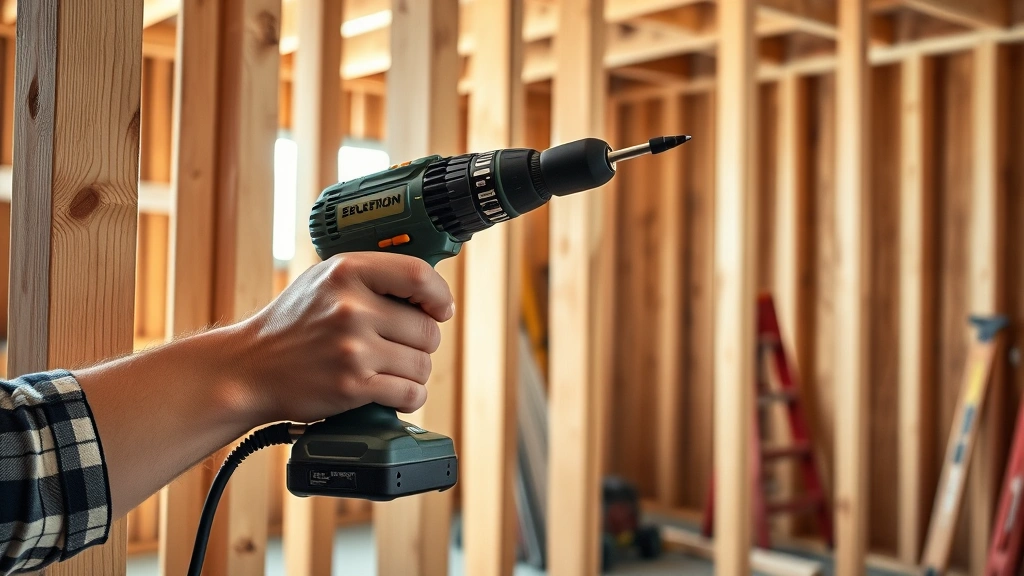
Electrical and Plumbing Systems
Basic electrical (lights, outlets, a couple circuits) costs $500 to $1,500 and requires a licensed electrician in most areas. Want 220V for a welder or compressor? Add $300 to $600. Dedicated circuits for tools? Another $200 to $400.
Plumbing is optional for most garages but useful if you’re planning a workshop. A simple compressed air line runs $100 to $300. Actual water supply and drain lines? That’s $1,000 to $3,000 and definitely needs a pro. HVAC (heating and cooling) starts at $2,000 and climbs fast—often not worth it for a garage unless you’re finishing it as living space.
Doors and Windows Costs
Garage doors are the biggest expense in this category. A basic single-car door runs $400 to $800. Two-car doors jump to $800 to $1,500. Add an opener (essential, really), and you’re spending another $200 to $500. How to program garage door opener is something you’ll want to handle right after installation.
Windows add charm and light but cost $150 to $400 each. How to measure windows accurately saves frustration and return trips. A couple small windows ($400 to $800 total) are worth it for visibility and ventilation. Overhead doors and side entry doors round out the hardware budget at $200 to $600.
Regional Price Variations
Geography matters—a lot. Rural areas with cheap labor and land might see two-car garages built for $8,000 to $12,000. Suburban markets run $12,000 to $20,000. Urban areas? You’re looking at $20,000 to $35,000+ for the same structure, plus higher permit costs and tighter building codes.
Material costs vary by region too. Coastal areas pay more for lumber due to shipping. Cold climates demand thicker insulation and deeper foundations. Warm climates skip insulation but might need better ventilation. Get three quotes from local contractors to understand your specific market.
DIY Versus Contractor Labor
Here’s where you make real money: labor. A contractor-built garage costs 40-60% more than materials alone. That two-car garage with $8,000 in materials? Add $6,000 to $12,000 in labor, and you’re at $14,000 to $20,000.
DIYing saves cash but demands time, skill, and patience. You can handle demolition, simple framing, interior finishing, and painting. Foundation work, roofing, electrical, and plumbing should stay professional—one mistake costs more than you saved. A smart hybrid approach: DIY the labor-intensive, low-skill tasks and hire pros for the technical stuff. This cuts total cost to $10,000 to $15,000 for a solid two-car garage.
Hidden Costs to Budget
Permits and inspections: $200 to $1,000. Site preparation (clearing, grading, removing obstacles): $500 to $2,000. Utility relocation (if power lines or gas lines are in the way): $1,000 to $5,000. Driveway extension or apron: $500 to $2,000. Landscaping and grading after construction: $300 to $1,500.
Weather delays happen. If you’re building in winter or rainy season, add 20-30% to your timeline. Unforeseen issues (bad soil, underground rocks, existing utilities) are real. Budget an extra 10-15% as a contingency fund. Most experienced builders recommend this as a safety net.

Ways to Save Money
Choose a simple rectangular design—no fancy angles or curves. Buy materials during off-season (late fall for winter projects). Reuse existing gravel or crushed stone for the base layer. Do demolition and cleanup yourself. Paint it yourself—that saves $500 to $1,000. Delay finishing interior spaces; you can insulate and drywall later. Install basic lighting instead of fancy fixtures. Use standard-size doors and windows rather than custom sizes.
Partner with other homeowners doing similar projects to negotiate bulk material discounts. Salvage materials from demolition sites or reclaimed building suppliers. Skip the fancy siding and go with simple metal panels or basic vinyl. These choices can shave $3,000 to $7,000 off your total bill without sacrificing function.
Frequently Asked Questions
What’s the cheapest garage I can build?
A 12×20 pole barn with a basic metal roof and siding runs $2,500 to $4,000 if you do most of the labor yourself. Add a concrete slab, and you’re at $4,500 to $6,000. This assumes no electricity, plumbing, or insulation—just a dry place to park or store stuff.
Can I build a garage myself?
Absolutely, if you have construction experience. Framing, siding, and roofing are learnable skills. Foundation work, electrical, and plumbing need licensed professionals in most jurisdictions. Many DIYers successfully build garages by handling the structural work themselves and hiring specialists for technical systems.
How long does it take to build a garage?
A basic two-car garage takes 4 to 8 weeks with a professional crew working full-time. DIY projects stretch to 3 to 6 months depending on your available time and skill level. Weather, permits, and material delays add weeks easily.
Do I need a permit to build a garage?
Yes, in virtually every jurisdiction. Permits ensure the structure meets building codes and safety standards. Skipping permits creates liability issues, fails inspections during home sales, and voids insurance coverage. Permit costs are $200 to $1,000—worth every penny for legal protection.
What’s the ROI on a new garage?
A finished, attached garage adds 50-80% of its cost to home value. A $15,000 garage might add $7,500 to $12,000 in resale value. Detached garages add less value but still improve marketability. A basic garage is more about functionality than investment—build it because you need the space, not purely for resale.
Should I insulate my garage?
If you’re using it as a workshop or want climate control, yes. Insulation costs $500 to $1,500 but keeps temperatures stable and reduces utility bills if you heat/cool the space. For basic storage, skip it and save the money.


