
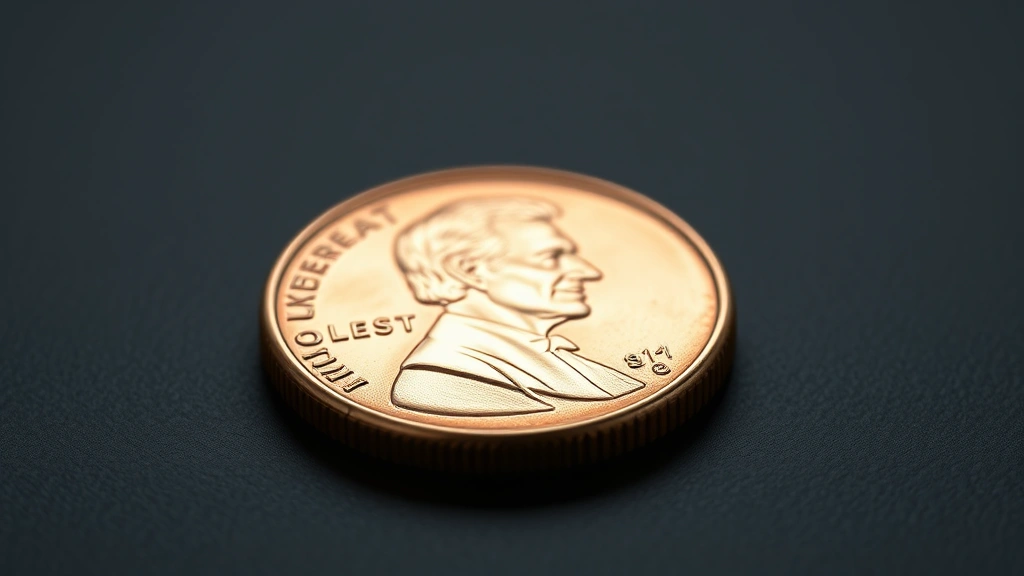
Here’s a question that’ll make you scratch your head: how much does it cost to make a penny? The answer is genuinely wild. For years, the U.S. Mint has been spending more money to produce a single penny than the coin is actually worth. We’re talking about a fundamental economic paradox that affects your wallet, government budgets, and the future of currency itself. Let me break down this bizarre situation and explain why the penny might be America’s most expensive mistake.
Table of Contents
The Real Production Costs
Let’s get straight to the shocking part: in recent years, it costs approximately 2.5 to 3.5 cents to manufacture a single penny. That means the U.S. Mint loses money on every penny produced. In 2022 alone, the Mint spent roughly $58 million to produce 7.75 billion pennies. Do the math—that’s a massive financial drain on taxpayers.
The production cost fluctuates based on raw material prices, labor expenses, and operational overhead. When copper and zinc prices spike, the cost to make a penny climbs even higher. This isn’t some theoretical problem; it’s a real, measurable loss that happens every single day at the U.S. Mint facilities.
What Goes Into Each Penny
Modern pennies (post-1982) are made from zinc with a thin copper coating. The material cost alone accounts for a significant portion of the total expense. A penny weighs 2.5 grams and contains about 2.4 grams of zinc and 0.06 grams of copper plating.
Here’s the breakdown of costs per penny:
- Raw materials (zinc, copper): 0.8–1.2 cents
- Labor: 0.5–0.8 cents
- Equipment and facility overhead: 0.8–1.3 cents
- Shipping and distribution: 0.3–0.5 cents
When you add these together, you’re looking at a total cost that consistently exceeds the penny’s face value. The Mint operates four facilities (Philadelphia, Denver, San Francisco, and West Point), and each one bears these same production expenses.
How Costs Changed Over Time
This problem hasn’t always existed. Back in the 1950s and 1960s, it cost less than half a cent to make a penny. The real trouble started in the early 2000s when commodity prices began climbing steadily. By 2008, the production cost had already reached 1.4 cents per penny.
The situation worsened dramatically after 2010. Zinc prices surged, and labor costs increased. By 2019, some reports indicated the cost had climbed to nearly 2 cents per penny. The pandemic disrupted supply chains, and material costs continued their upward trajectory through 2023 and 2024.
What’s particularly frustrating is that this trend shows no signs of reversing. As long as commodity prices remain elevated and operational costs continue rising, the Mint will keep losing money on every penny produced. It’s a financial treadmill with no exit strategy.
Why Keep Making Them Anyway
You’d think the government would stop making pennies, right? But it’s not that simple. Congress has repeatedly rejected proposals to eliminate penny production, largely due to lobbying efforts from the zinc industry, which profits enormously from penny manufacturing. The zinc industry supplies about 75% of the zinc used in U.S. pennies, so they have serious financial incentive to keep the status quo.
Additionally, many Americans have emotional attachments to the penny. There’s nostalgia involved—the penny is iconic, and some folks believe eliminating it would be un-American. Retailers also worry about rounding prices, though this concern is largely overblown (countries without pennies manage just fine).
The Mint continues production because Congress mandates it, and Congress continues mandating it because of political pressure and special interests. It’s a perfect example of how government inefficiency can persist even when everyone agrees it’s wasteful.
Environmental Cost Factor
Beyond the direct financial cost, there’s an environmental price tag. Mining zinc creates significant ecological damage. Zinc extraction requires energy-intensive processes and produces waste. When you factor in the environmental cost of mining, processing, and transporting materials for billions of pennies annually, the true cost becomes even more staggering.
The U.S. Mint produces roughly 7–8 billion pennies every year. That’s an enormous amount of mining activity, energy consumption, and environmental impact for coins that most people throw away or leave in jars. From a sustainability perspective, penny production is indefensible.
The Economic Argument Against Pennies
Economists have been making the case against penny production for decades. The argument is straightforward: if it costs more to make something than it’s worth, stop making it. It’s basic economics. The penny serves virtually no practical purpose in modern commerce—most transactions are digital anyway.
Studies show that the penny slows down transactions at retail checkouts. When customers need to count out exact change using pennies, checkout times increase. From a macroeconomic perspective, those small delays across millions of transactions add up to lost productivity worth far more than the penny’s face value.
Furthermore, the penny is inflationary. In 1950, a penny had the purchasing power of about 12 cents today. The penny has become so worthless that it costs more to handle, store, and distribute than its actual value. Keeping the penny in circulation is economically irrational.
What Other Countries Do
Most developed nations have already eliminated their lowest-denomination coins. Canada discontinued the penny in 2013, and retailers simply round transactions to the nearest nickel. Did the Canadian economy collapse? Nope. It actually improved efficiency in retail operations.
The European Union phased out 1 and 2 cent coins in many countries. Australia eliminated its 1 and 2 cent coins decades ago. New Zealand, Sweden, and numerous other countries have all ditched their lowest-value coins without experiencing negative consequences. In fact, studies show that eliminating low-value coins slightly improves economic efficiency.
The U.S. is essentially alone among developed nations in continuing to produce a coin that costs more to make than it’s worth. We’re the outlier, and not in a good way.
The Future of the Penny
Despite the overwhelming evidence against penny production, the future remains uncertain. Congress would need to pass legislation to stop penny production, and that’s politically difficult. The zinc lobby is powerful, and there’s enough nostalgia and resistance to change that meaningful reform keeps getting blocked.
Some experts predict that the penny will eventually disappear as digital payments become even more dominant. When cash transactions drop below a certain threshold, the economic argument for eliminating the penny becomes impossible to ignore. But that could still be years away.
In the meantime, the U.S. Mint will continue producing billions of pennies annually, losing money on each one. It’s a slow-motion financial disaster that everyone sees coming but nobody seems able to stop. The penny might be America’s most persistent economic inefficiency.
Frequently Asked Questions
How much does it cost to make a penny in 2024?
As of 2024, the U.S. Mint spends approximately 2.5 to 3.5 cents to produce a single penny, depending on material costs and operational expenses. This represents a significant loss compared to the penny’s one-cent face value.
Why is it so expensive to make a penny?
The cost includes raw materials (zinc and copper), labor, equipment depreciation, facility overhead, and shipping. When you divide total annual production costs by the number of pennies produced, the per-unit cost consistently exceeds one cent.
Has the U.S. ever tried to eliminate the penny?
Yes, multiple bills have been introduced in Congress to stop penny production, but none have passed. The zinc industry lobbies heavily against elimination, and there’s enough political resistance to maintain the status quo.
What would happen if we stopped making pennies?
Retailers would round prices to the nearest nickel, similar to Canada and other countries. Studies show this causes minimal disruption and actually improves checkout efficiency. The government would save millions of dollars annually.
Do other countries still make their lowest-value coins?
Most developed nations have eliminated their lowest-value coins. Canada, the EU, Australia, and New Zealand all phased theirs out without negative economic consequences. The U.S. is the exception.
Why do people still want to keep the penny?
Nostalgia, tradition, and emotional attachment play major roles. Some people also worry about rounding prices, though this concern isn’t supported by evidence from countries that eliminated low-value coins.


