

If you’ve ever wondered how many kilometers to a meter, you’re asking one of the most fundamental questions in the metric system—and the answer is both simple and essential for any DIYer, builder, or curious mind. The straightforward truth: one kilometer equals 1,000 meters. But understanding the relationship between these units goes way deeper than memorizing a number, especially when you’re measuring projects, calculating distances, or working with blueprints.
Table of Contents
Basic Conversion Explained
Let’s nail down the fundamentals right away. One kilometer (km) contains exactly 1,000 meters (m). This isn’t arbitrary—it’s the elegant beauty of the metric system. When you’re working in your workshop or on a construction site, this relationship becomes your baseline for understanding distance and scale.

To convert kilometers to meters, you multiply by 1,000. So 5 kilometers = 5 × 1,000 = 5,000 meters. Conversely, to convert meters to kilometers, you divide by 1,000. So 3,500 meters = 3,500 ÷ 1,000 = 3.5 kilometers. This reciprocal relationship is the foundation of metric conversions.

Why does this matter for DIY work? Because precision matters. Whether you’re measuring the distance for a driveway, calculating material quantities for a large project, or reading architectural plans, understanding these conversions prevents costly mistakes.

Metric System Foundation
The metric system is built on powers of 10, which makes conversions straightforward once you understand the hierarchy. The meter is the base unit of length, and everything branches from there using prefixes that represent multiples of 10.

Here’s the breakdown of common metric length units:
- Kilometer (km) = 1,000 meters
- Hectometer (hm) = 100 meters
- Decameter (dam) = 10 meters
- Meter (m) = 1 meter (the base unit)
- Decimeter (dm) = 0.1 meters
- Centimeter (cm) = 0.01 meters
- Millimeter (mm) = 0.001 meters
This hierarchical structure means you’re always moving by factors of 10. Once you internalize this pattern, converting between any metric units becomes intuitive. For serious DIY projects involving landscape design or large-scale construction, understanding this framework prevents the kind of errors that lead to wasted materials and rework.

Practical DIY Applications
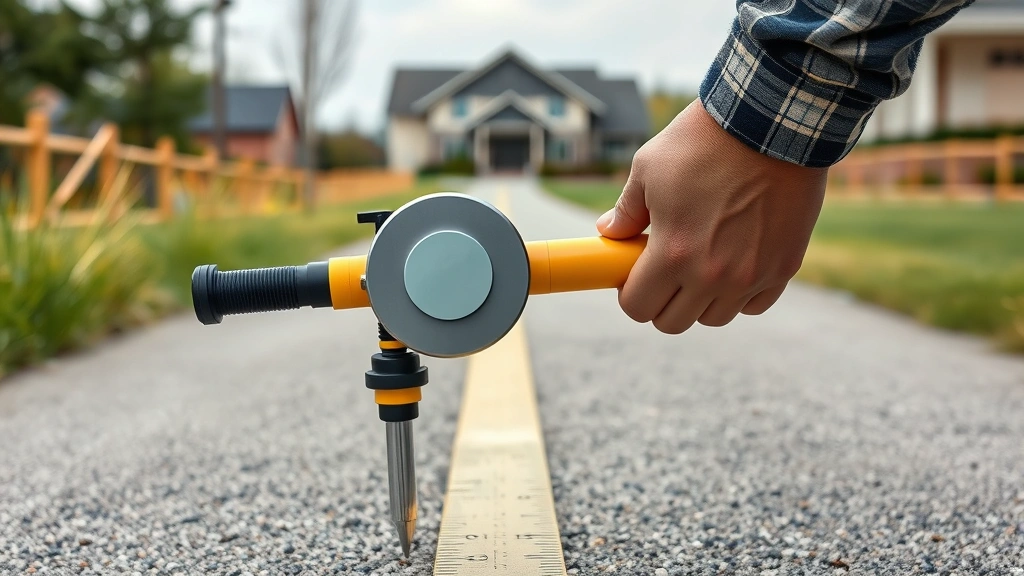
You might think kilometers are irrelevant to home improvement, but they show up more often than you’d expect. When you’re planning a driveway expansion, calculating the perimeter of a large property, or estimating materials for a fence line that stretches across your land, these conversions become practical tools.

For instance, if your property line is 0.25 kilometers long, you need to know that’s 250 meters to accurately calculate fencing materials, post spacing, or landscape planning. A contractor might quote you materials based on meters per linear foot, while a property survey uses kilometers for boundary descriptions.
Even in smaller projects, metric conversions matter. If you’re building a raised garden bed and the plans specify dimensions in different units, you’ll need to convert everything to a common measurement to avoid gaps, misalignment, or wasted materials. Family Handyman’s measurement guides often reference metric units in their international project plans.

Converting Larger Distances
When you’re working with large distances, kilometers become your natural unit. But you’ll frequently need to convert these to meters for detailed planning or material calculations.

Let’s work through some real scenarios:
- 0.5 km property = 500 meters of perimeter to fence
- 2.5 km driveway project = 2,500 meters of asphalt or gravel needed
- 10 km boundary survey = 10,000 meters for property documentation
The pattern is always consistent: multiply the kilometer value by 1,000 to get meters. This works because the metric system uses a decimal base, making these conversions far simpler than imperial unit conversions (which involve irregular numbers like 5,280 feet per mile).
For landscape architects and site planners, working in meters provides the precision needed for detailed calculations while staying manageable in scale. A kilometer is too broad for detailed planning, while centimeters would be unwieldy for large properties.

Converting Smaller Measurements
The reverse conversion—from meters to kilometers—is equally important when you’re summarizing or scaling up from detailed measurements. If you’ve measured out 4,750 meters of property line, converting to kilometers (4.75 km) makes the number easier to communicate and compare.

This becomes particularly useful when:
- Reading property surveys or legal documents
- Communicating with contractors about project scope
- Calculating material costs based on distance
- Planning multi-phase projects across large areas
The conversion is simple: divide meters by 1,000. So 750 meters = 0.75 kilometers. This fractional representation is standard in metric documentation and helps you understand scale at a glance.
Quick Mental Math Tricks
Want to convert these units in your head without a calculator? The metric system makes this surprisingly easy because you’re just moving the decimal point.

Kilometers to meters: Move the decimal point three places to the right. So 3.5 km becomes 3,500 m. If there’s no decimal, just add three zeros: 5 km = 5,000 m.

Meters to kilometers: Move the decimal point three places to the left. So 2,500 m becomes 2.5 km. For smaller numbers, you’ll get decimals: 750 m = 0.75 km.

This decimal-shifting approach works because kilometers and meters differ by a factor of 10³ (10 × 10 × 10 = 1,000). Once you practice this a few times on a job site, it becomes automatic. You’ll find yourself converting units without conscious thought, which speeds up problem-solving when you’re in the middle of a project.
Common Conversion Mistakes
Even experienced DIYers make conversion errors. Here are the most common pitfalls and how to avoid them:

Mistake 1: Multiplying instead of dividing. If you need to convert 5,000 meters to kilometers, divide by 1,000 to get 5 km, not multiply. A quick check: kilometers are larger units, so the number should get smaller when converting to them.

Mistake 2: Forgetting the decimal point. When converting 750 meters to kilometers, you get 0.75 km, not 75 km. That missing decimal represents a tenfold error in your calculations.
Mistake 3: Confusing kilometers with other units. Don’t mix up kilometers with kilograms (weight) or kilowatts (power). Context matters—if you’re measuring distance, you’re working with kilometers, not other kilo- units.
Mistake 4: Rounding too early. In construction and DIY projects, rounding 0.75 km to 1 km can waste significant materials. Keep decimals in your calculations until the final step.
Check your work by asking: Does this answer make sense? If you’re converting a small distance in meters to kilometers, you should get a decimal less than 1. If you’re converting a large distance in kilometers to meters, you should get a bigger number.
Real-World Project Examples
Let’s ground this in actual DIY scenarios where these conversions matter:
Scenario 1: Driveway Resurfacing Your driveway is 0.15 km long and 5 meters wide. To calculate the area needing asphalt, you convert 0.15 km to 150 meters. Then multiply: 150 m × 5 m = 750 square meters. Contractors quote asphalt by square meter, so this conversion is essential for accurate pricing.
Scenario 2: Fence Installation Your property perimeter is 1.2 kilometers. You need to know how many fence panels to order. Convert: 1.2 km = 1,200 meters. If each panel covers 2 meters, you need 600 panels. Without this conversion, you’d be ordering the wrong quantity.
Scenario 3: Landscape Grading A drainage project requires grading 0.5 km of slope. Equipment rental is quoted by meter of work. Convert: 0.5 km = 500 meters. This determines your equipment rental duration and costs.
This Old House’s construction guides frequently reference metric measurements for projects that span large properties or involve site work.
Digital Conversion Tools
While mental math is valuable, modern DIYers have tools at their fingertips. Google’s built-in converter works instantly—just search “5 km to meters” and get immediate results. Most smartphones have calculator apps with unit conversion functions.
For serious projects, spreadsheet software like Excel or Google Sheets lets you set up conversion formulas that you can reuse. This prevents repeated calculation errors and creates a record of your conversions for future reference.
However, understanding the math behind the conversion—not just relying on tools—makes you a better problem-solver. You’ll catch errors faster and understand why conversions matter. Bob Vila’s measurement standards emphasize this principle: tools support understanding, they don’t replace it.
Frequently Asked Questions
Is 1 kilometer always exactly 1,000 meters?
Yes, absolutely. In the metric system, this is a fixed, standardized conversion. One kilometer is defined as exactly 1,000 meters. There’s no variation or approximation—it’s a mathematical constant used worldwide.
Why do we use kilometers instead of just meters?
Kilometers make large distances easier to express and communicate. Saying “5 kilometers” is simpler than “5,000 meters.” The metric system uses different prefixes for different scales to keep numbers manageable and readable.
How do I convert kilometers to miles for DIY projects?
One kilometer equals approximately 0.621 miles. So multiply kilometers by 0.621 to get miles. However, for most DIY work, you’ll stay within the metric system or imperial system consistently, avoiding mixed conversions that increase error risk.
Can I use this conversion for other metric measurements?
The principle applies to all metric units. The prefix “kilo-” always means 1,000 of the base unit. So 1 kilogram = 1,000 grams, 1 kiloliter = 1,000 liters. Once you understand the pattern, conversions become intuitive across all metric measurements.
What’s the easiest way to remember kilometer-to-meter conversion?
Remember: kilo = 1,000. Whenever you see “kilo” as a prefix, multiply by 1,000 to get the base unit. Conversely, divide by 1,000 to go from the base unit to kilo. This one rule covers all metric conversions with the kilo- prefix.
Do professional builders use kilometers for residential projects?
For most residential work, builders use meters or centimeters. Kilometers appear in large-scale projects like commercial developments, road construction, or property surveys. However, understanding the relationship between all metric units helps you work with any scale of project.
Final Thoughts
Understanding how many kilometers to a meter—that simple 1:1,000 ratio—unlocks confidence in metric measurements for any DIY project. The metric system’s decimal-based logic makes conversions straightforward once you grasp the foundational relationship between units.
Whether you’re planning a small garden project or a large-scale landscape renovation, these conversions prevent costly errors and speed up your planning process. Practice the decimal-shifting mental math trick, bookmark a digital converter for quick reference, and you’ll handle metric measurements like a seasoned pro.
The beauty of the metric system is its consistency. Master this one conversion, understand the pattern, and you’ve got the keys to working confidently with any metric measurement. That’s the kind of practical knowledge that separates DIYers who guess from those who know exactly what they’re doing.


