
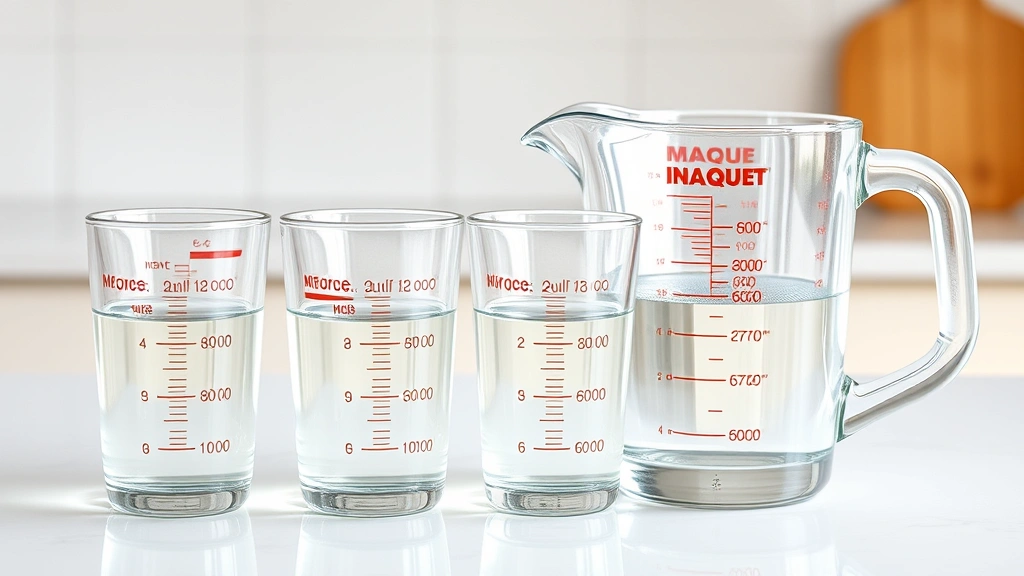
If you’ve ever stood in your kitchen staring at a recipe wondering how many cups to a quart, you’re not alone. This simple conversion is one of those kitchen fundamentals that saves you time, prevents cooking disasters, and keeps your measurements honest. Whether you’re scaling up a soup recipe, canning preserves, or just trying to figure out liquid volumes, knowing this conversion cold is a game-changer.
Table of Contents
The Quick Answer
Let’s cut straight to it: there are 4 cups in 1 quart. That’s your golden number. One quart equals four 8-ounce cups. If you need to go the other direction, divide the number of cups by 4 to get quarts. So 8 cups equals 2 quarts, 12 cups equals 3 quarts, and so on. This is the foundation for every cooking conversion you’ll need in the kitchen.

Understanding Cups and Quarts
The cup and quart are both US customary units of volume. A cup is the smaller unit—it holds 8 fluid ounces. A quart is larger and contains 32 fluid ounces, which breaks down neatly to 4 cups. This relationship is consistent whether you’re measuring water, milk, broth, or any other liquid ingredient.

Why does this matter? Because recipes are written in different units depending on the author’s preference or the ingredient type. Dry ingredients might be listed in cups, while broths and sauces often use quarts. Understanding the conversion means you can read any recipe with confidence and adjust portions without second-guessing yourself.
Handy Conversion Chart
Here’s a quick reference table you can bookmark or print and stick on your fridge:
| Quarts | Cups | Fluid Ounces |
|---|---|---|
| 0.25 | 1 | 8 |
| 0.5 | 2 | 16 |
| 0.75 | 3 | 24 |
| 1 | 4 | 32 |
| 1.5 | 6 | 48 |
| 2 | 8 | 64 |
| 2.5 | 10 | 80 |
| 3 | 12 | 96 |
| 4 | 16 | 128 |
Save this chart—it’s your kitchen cheat sheet. Notice how the pattern is consistent: multiply quarts by 4 to get cups, or divide cups by 4 to get quarts. Simple math, massive payoff.

Practical Kitchen Applications
Let’s talk real-world scenarios. You’re making a batch of gravy from turkey drippings and the recipe calls for 2 quarts of broth. You need to know that’s 8 cups so you can measure it out properly. Or you’re preparing garbanzo beans and need to soak them in water—knowing the quart-to-cup conversion helps you scale the liquid correctly.
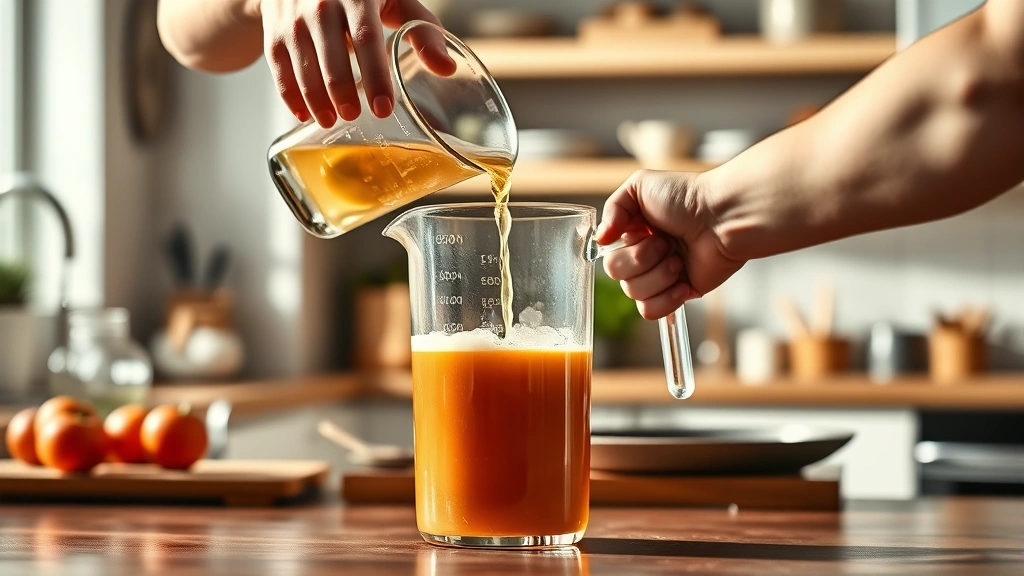
When you’re making arroz con pollo, the broth measurement is crucial. Get it wrong and you end up with mushy rice or dry rice. When a recipe says 1.5 quarts of broth, you instantly know that’s 6 cups. No guessing, no wasted ingredients, no ruined dinner.

Scaling Recipes Up and Down
One of the best uses for knowing cup-to-quart conversions is scaling recipes. Say you find a soup recipe that serves 4 people but you’re cooking for 8. If the original calls for 2 quarts of stock, you need 4 quarts—that’s 16 cups. See how the conversion makes mental math easier?

Going the opposite direction works too. If a recipe serves 12 and you only need to feed 4, you’re dividing by 3. A recipe calling for 3 quarts becomes 1 quart, or 4 cups. This is where kitchen math becomes practical and saves you from making massive batches you don’t need.
When you’re preparing au poivre sauce, precise measurements matter. The sauce depends on exact ratios of cream and broth. Knowing your conversions means you can scale confidently without worrying about texture or taste.
Metric Conversions Explained
If you’re working with metric measurements (common in professional kitchens or international recipes), here’s how it translates: 1 quart equals approximately 946 milliliters, or roughly 950 mL for practical purposes. One cup equals about 237 mL.

For quick mental math, remember that 1 quart is just under 1 liter. If a European recipe calls for 1 liter of liquid, you can use just over 1 quart without significantly affecting the dish. For precision baking, where measurements matter more, use the exact conversions: 1 quart = 946 mL and 1 cup = 237 mL.

Mistakes to Avoid
The biggest mistake people make is confusing fluid ounces with weight ounces. A cup of water is 8 fluid ounces, but a cup of flour weighs about 4.5 ounces. The conversion we’re discussing—4 cups per quart—applies only to volume, not weight. If a recipe lists ingredients by weight (grams or ounces), you need a kitchen scale, not volume conversions.
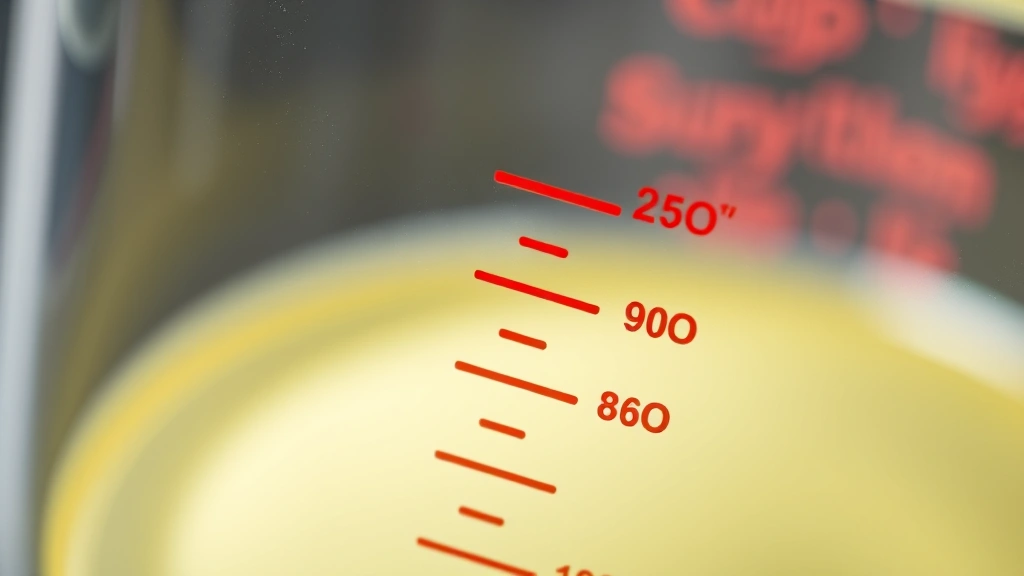
Another common error is assuming all cups are equal. A liquid measuring cup (which has a spout and is read at eye level) isn’t the same as a dry measuring cup (which you scoop and level). For accuracy, use the right tool for the job. Liquid measuring cups have graduations and are designed for pouring; dry measuring cups are designed for scooping.

Don’t eyeball measurements when precision matters. Baking is science—if a recipe calls for 2 cups of milk (0.5 quarts), measure it properly. Cooking is more forgiving, but you still want consistency.
Best Tools for Accurate Measuring
Invest in a good set of measuring cups—both liquid and dry. A 2-cup liquid measuring cup with clear markings is invaluable. You can measure 1 quart (4 cups) by filling it twice, or measure smaller amounts precisely. Dry measuring cups come in sets of 1/4 cup, 1/3 cup, 1/2 cup, and 1 cup sizes.

A kitchen scale is worth its weight in gold, especially for baking. While volume conversions are helpful, weight measurements are more accurate. If you’re serious about cooking and baking, a digital scale that measures in both ounces and grams is a game-changer.
Don’t rely on random glasses or bowls from your cabinet. Actual measuring cups are standardized. A coffee mug isn’t a cup—it’s usually 10-12 ounces, not 8. When recipes matter, use proper tools.

Related Volume Equivalents
Understanding quarts and cups is just the beginning. Here are other volume conversions that work together:
- 1 cup = 16 tablespoons (useful for smaller adjustments)
- 1 cup = 48 teaspoons (for tiny tweaks)
- 1 pint = 2 cups (another useful intermediate unit)
- 1 gallon = 4 quarts = 16 cups (for large-batch cooking)
- 1 fluid ounce = 2 tablespoons (for precise liquid measurements)
These relationships form a complete system. Once you understand how cups and quarts relate, you can navigate any recipe that uses US customary measurements. The whole system locks together logically.
Frequently Asked Questions
How many cups are in a quart exactly?
Exactly 4 cups equal 1 quart. This is a fixed conversion in the US customary system of measurement. One cup is 8 fluid ounces, and one quart is 32 fluid ounces, so 32 ÷ 8 = 4.
Is a quart the same as a liter?
Not quite. One quart is approximately 946 milliliters, which is slightly less than 1 liter (1,000 mL). For most cooking purposes, you can treat 1 quart as roughly equivalent to 1 liter, but for precision, the quart is about 5% smaller.
Can I use this conversion for dry ingredients?
The cup-to-quart conversion works for volume, not weight. For dry ingredients like flour or sugar, the weight varies depending on how densely you pack the ingredient. Always use a kitchen scale for weight-based measurements, or follow the recipe’s specific guidance on how to measure dry ingredients.
Why do some recipes use quarts and others use cups?
It’s partly tradition and partly practicality. Large-volume recipes (soups, stocks, sauces) often use quarts because it’s more convenient than saying “16 cups.” Smaller recipes or baked goods typically use cups for precision. Understanding both units makes you fluent in recipe language.
What’s the difference between a quart and a quarter?
A quart is a unit of volume (32 fluid ounces). A quarter is one-fourth of something. They’re completely unrelated, though the word “quart” actually comes from “quarter” because a quart is one-quarter of a gallon. Easy source of confusion!
How do I measure a quart if I only have a cup?
Fill your cup 4 times. Each cup holds 8 ounces, so 4 cups equals 32 ounces, which is 1 quart. This is tedious for large volumes, but it works in a pinch.
Final Thoughts
Knowing that there are 4 cups in a quart is foundational kitchen knowledge that pays dividends every time you cook. It’s simple enough to remember—4 cups, 1 quart—but powerful enough to unlock confident recipe scaling, accurate measurements, and fewer kitchen mistakes. Whether you’re doubling a recipe, adjusting portions, or just trying to understand what your cookbook is asking for, this conversion is your trusty sidekick. Print that chart, bookmark this page, and never second-guess your measurements again.


