
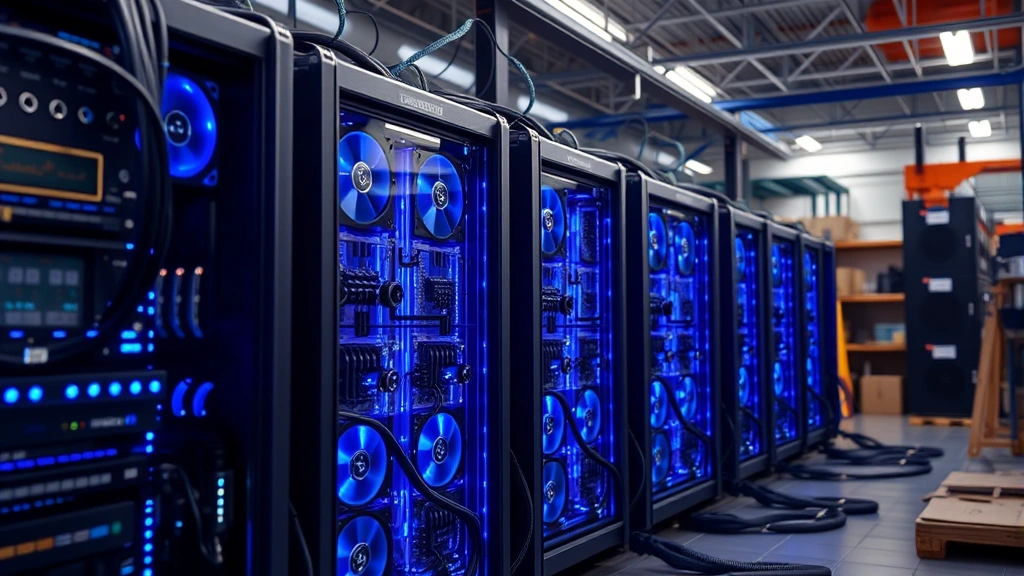
If you’re wondering how many bitcoins are left to mine, you’re asking one of the most fundamental questions in cryptocurrency today. As of 2024, approximately 1.3 million bitcoins remain unmined out of the 21 million total cap that will ever exist. This isn’t just trivia for crypto enthusiasts—it directly impacts mining profitability, network security, and the future of Bitcoin itself.
Table of Contents
Bitcoin’s Hard Supply Cap
Bitcoin operates on a principle that separates it from traditional currencies: a fixed, immutable supply cap of exactly 21 million coins. This wasn’t arbitrary. Satoshi Nakamoto, Bitcoin’s creator, designed the protocol with mathematical precision to ensure scarcity—the same principle that makes gold valuable. Unlike fiat currencies that governments can print endlessly, Bitcoin’s code literally prevents anyone from creating more than 21 million coins, no matter how much computing power they throw at the network.
This cap exists because of how Bitcoin’s mining reward system works. Every time a miner successfully validates a block of transactions, they receive newly created bitcoins plus transaction fees. The number of new bitcoins decreases over time through a process called halving, which cuts the reward in half approximately every four years. This mathematical certainty means we can calculate exactly when the last bitcoin will be mined: sometime around the year 2140.
Current Mining Status 2024
Right now, over 93% of all bitcoins have already been mined. We’re talking about 19.7 million coins already in circulation, with roughly 1.3 million remaining. That might sound like a lot, but at the current mining rate, we’re extracting about 900 bitcoins per day. The remaining supply represents less than five years of mining at current rates—though the actual timeline stretches much longer because rewards keep halving.
The 2024 halving event occurred in April, reducing block rewards from 6.25 bitcoins to 3.125 bitcoins per block. This means miners now earn half as much per block validated, which fundamentally changes the mining economics. For folks interested in understanding how computer systems handle intensive calculations like mining, understanding your CPU temperature becomes relevant since mining rigs generate serious heat.
Halving Events Explained
Halvings are the heartbeat of Bitcoin’s supply schedule. They occur every 210,000 blocks, which works out to roughly every four years. Here’s the progression:
- 2009-2012: 50 BTC per block
- 2012-2016: 25 BTC per block
- 2016-2020: 12.5 BTC per block
- 2020-2024: 6.25 BTC per block
- 2024-2028: 3.125 BTC per block
- 2028 onwards: Continues halving until reaching zero
Each halving event creates a supply shock in the market. Suddenly, miners earn half as much, which typically drives up Bitcoin’s price as the supply growth slows. The next halving will occur around 2028, cutting rewards to 1.5625 BTC per block. Eventually, the rewards become so small they round down to zero satoshis (Bitcoin’s smallest unit), and mining becomes purely transaction-fee driven.
Mining Difficulty Adjustments
Here’s where it gets interesting: Bitcoin doesn’t just sit back and let mining become easier or harder. The network automatically adjusts mining difficulty every 2,016 blocks (roughly two weeks) to maintain a consistent block time of approximately 10 minutes. This self-regulating mechanism is pure genius—when more miners join the network and computing power increases, difficulty ramps up. When miners drop off, difficulty decreases.
This adjustment system means the timeline to mine remaining bitcoins is more predictable than you might think. Even though we’re extracting bitcoins faster than ever in raw computational terms, the difficulty scaling ensures the supply schedule stays on track. If you’re running mining operations and need to monitor your hardware performance, checking your CPU temperature regularly prevents equipment failure that could cost thousands.
What Happens to Remaining Rewards
The remaining 1.3 million bitcoins won’t disappear overnight. They’ll be distributed gradually over the next 115+ years as miners continue solving blocks and earning rewards. But here’s the critical part: once the block reward reaches zero (estimated around 2140), miners won’t stop. They’ll still validate transactions because they’ll earn transaction fees.
This transition is crucial for Bitcoin’s security. Right now, block rewards dwarf transaction fees. A miner might earn 3.125 BTC in rewards plus 0.05 BTC in fees per block. As rewards shrink, transaction fees become proportionally more important. Eventually, when rewards hit zero, the fee market will sustain mining. If Bitcoin’s transaction volume and fees don’t grow enough, network security could theoretically suffer—though most analysts believe the fee market will adequately compensate miners by then.
Miner Economics Today
Mining profitability in 2024 hinges on three factors: hardware efficiency, electricity costs, and Bitcoin price. The 2024 halving cut rewards in half, which immediately squeezed margins for less efficient miners. Operations running older ASIC miners or paying high electricity rates became unprofitable overnight.
A modern Antminer S21 Pro consumes about 3,550 watts and produces roughly 0.0001 BTC per day at current difficulty levels. At $0.05 per kilowatt-hour electricity, that’s about $4.26 daily in power costs. With Bitcoin at $40,000+, the math still works, but barely. Miners in Iceland, El Salvador, or other low-cost energy regions thrive. Miners in expensive markets struggle.
This economic pressure naturally filters out inefficient operations, which actually helps the network. Only the most dedicated miners with access to cheap power or cutting-edge hardware remain. They secure the network while extracting the remaining bitcoins. If you’re setting up a mining operation and need to manage network connectivity, learning how to find WiFi passwords might help with network setup, though proper security protocols should always come first.
Timeline to Full Completion
Based on current mining rates and the halving schedule, here’s the realistic timeline:
- 2024: ~93% of bitcoins mined (19.7M out of 21M)
- 2028: ~95% mined after next halving
- 2032: ~97% mined
- 2050: ~99% mined
- 2140: Last bitcoin mined (theoretical)
The timeline stretches so long because each halving cuts the rate of new supply in half. Early on, 50 bitcoins per block meant rapid supply growth. Now, at 3.125 per block and falling, the remaining 1.3 million takes forever to extract. By 2050, only about 200,000 bitcoins will remain unmined—a rounding error in the grand scheme.
Network Security After Mining
The big question nobody asks enough: what happens to Bitcoin’s security when mining rewards disappear? The answer matters because Bitcoin’s security depends on miners having financial incentive to participate. Right now, that incentive comes from block rewards plus fees. In 2140, it’ll be purely fees.
For this transition to work, Bitcoin needs sufficient transaction volume and fee pressure. If Bitcoin becomes truly global money with millions of daily transactions, fees will naturally be substantial. If Bitcoin becomes a store-of-value asset used rarely, fees might be tiny. Most security analysts believe the fee market will evolve appropriately—that Bitcoin’s scarcity and proven security will drive enough demand to justify mining costs through fees alone.
Some miners might also participate for non-profit reasons—maintaining decentralization or supporting a system they believe in. This ideological motivation already exists today and could supplement fee-based incentives in the future.
Frequently Asked Questions
How many bitcoins are currently in circulation?
As of 2024, approximately 19.7 million bitcoins are in circulation, representing about 93% of the total 21 million supply cap. The exact number changes roughly every 10 minutes as new blocks are mined.
Can Bitcoin’s supply cap ever be changed?
Technically, Bitcoin’s code could be changed through a hard fork if the majority of the network agreed. However, this is extremely unlikely because changing the supply cap would destroy Bitcoin’s core value proposition—scarcity. Any attempt would likely split the network and create a competing cryptocurrency.
What happens to miners when all bitcoins are mined?
Miners will continue operating but will earn exclusively from transaction fees rather than block rewards. As long as people use Bitcoin for transactions, fees will exist. The network will adjust to ensure mining remains economically viable.
Why did Satoshi choose 21 million specifically?
The exact reason isn’t documented, but 21 million provides a convenient supply cap with nice halving mathematics. It also ensures enough divisibility—each bitcoin divides into 100 million satoshis—for microscopic transactions if needed.
Is mining still profitable in 2024?
Mining profitability depends heavily on electricity costs and hardware efficiency. Industrial-scale operations in low-cost energy regions remain profitable. Small home miners typically break even or lose money due to high electricity costs relative to rewards.
How does the halving affect Bitcoin’s price?
Historically, halvings have preceded price increases, though correlation isn’t causation. The reduced supply growth creates scarcity, which can drive prices up if demand remains constant. However, halvings also reduce miner revenue, which can trigger short-term market volatility.


