
Steaming asparagus is one of those cooking tasks that seems simple until you realize you’ve either turned it into mush or left it too crunchy. How long to steam asparagus really depends on thickness, your equipment, and what “perfect” means to you—but I’m going to walk you through the exact timing and techniques that actually work in a real kitchen, not a test lab.
Here’s the reality: overcooked asparagus tastes like wet cardboard. Undercooked asparagus snaps your teeth and tastes grassy. The sweet spot? Usually between 4 to 8 minutes, depending on spear thickness. Thin spears need 4–5 minutes. Medium spears need 5–7 minutes. Thick asparagus (the kind that feels like a small tree branch) needs 7–8 minutes. But there’s more to it than just time—there’s technique, prep, and knowing when to trust your instincts over a timer.
How Long to Steam Asparagus: The Quick Answer
Steam asparagus for 4–8 minutes depending on thickness. Thin spears: 4–5 minutes. Medium spears: 5–7 minutes. Thick spears: 7–8 minutes. The asparagus is done when a fork pierces the thickest part of the stalk with just a little resistance—you want tender, not limp.
That’s the headline. But if you want asparagus that tastes like you actually know what you’re doing, keep reading. The difference between “edible” and “restaurant-quality” comes down to three things: prep work, steam temperature, and knowing how to read the vegetable itself instead of blindly trusting a timer.
Think of steaming like building a fire—you need the right heat source, the right distance from the heat, and you need to watch for visual cues. A timer is just a starting point.
Choosing and Prepping Your Asparagus
Before you even think about steaming, you need to start with decent asparagus. Fresh asparagus should feel firm (not bendy or limp) and the tips should be tight and closed. If the tips are loose and feathery, the asparagus is old. Older asparagus needs slightly longer steaming times and won’t taste as clean.
The thickness of your spears matters a lot for steaming time. Thin asparagus (pencil-thin) steams fast. Medium asparagus (about the thickness of a marker) is the most common. Thick asparagus (the kind that feels like it could be a walking stick) takes longer and sometimes has a woody base that needs trimming anyway.
Trimming the Woody Base
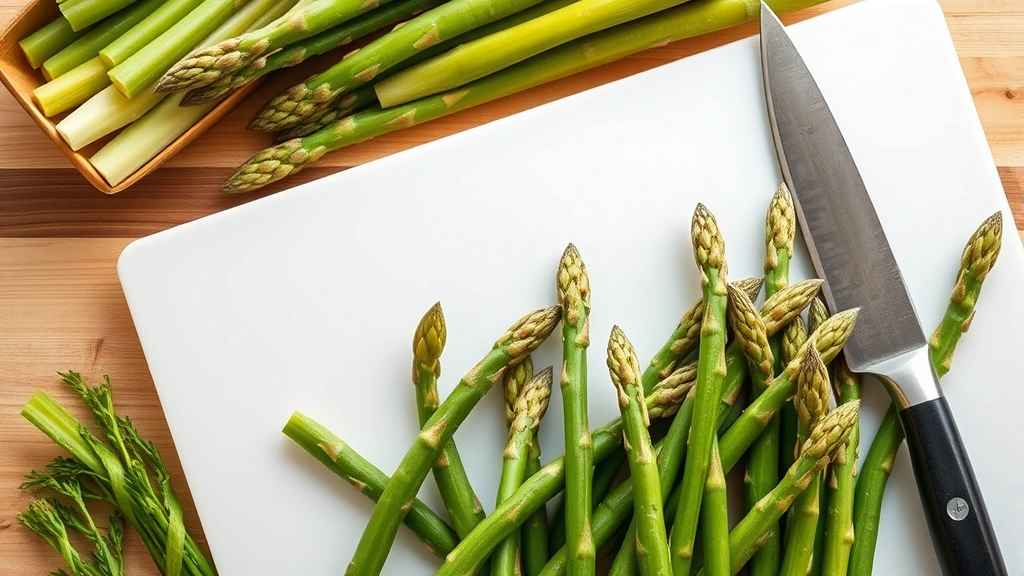
This is the step people skip, and it’s a mistake. The bottom 1–3 inches of asparagus is often woody and bitter. Here’s how to find the right spot:
- Hold a spear in both hands, one near the base and one near the middle.
- Gently bend it until it naturally snaps. The asparagus will break right where the tender part ends.
- Use that snap point as your guide and trim all the spears to roughly the same length.
- Alternatively, just line them up and cut off the bottom 1–2 inches with a knife. Not as precise, but faster.
After trimming, rinse your asparagus under cold water and pat it dry. Wet asparagus steams unevenly—the water on the surface can actually create steam pockets that cook parts faster than others.
Setting Up Your Steamer Properly
You have options here: a bamboo steamer, a metal steamer basket, a collapsible steamer insert, or even a pot with a colander balanced on top. All of them work, but the setup matters.
Water Level and Temperature
Fill your pot with about 1–2 inches of water. The water should be boiling before you add the asparagus. If you put cold asparagus into cold water and then turn up the heat, you’re not steaming—you’re boiling, and that’s how you end up with mushy, flavorless asparagus.
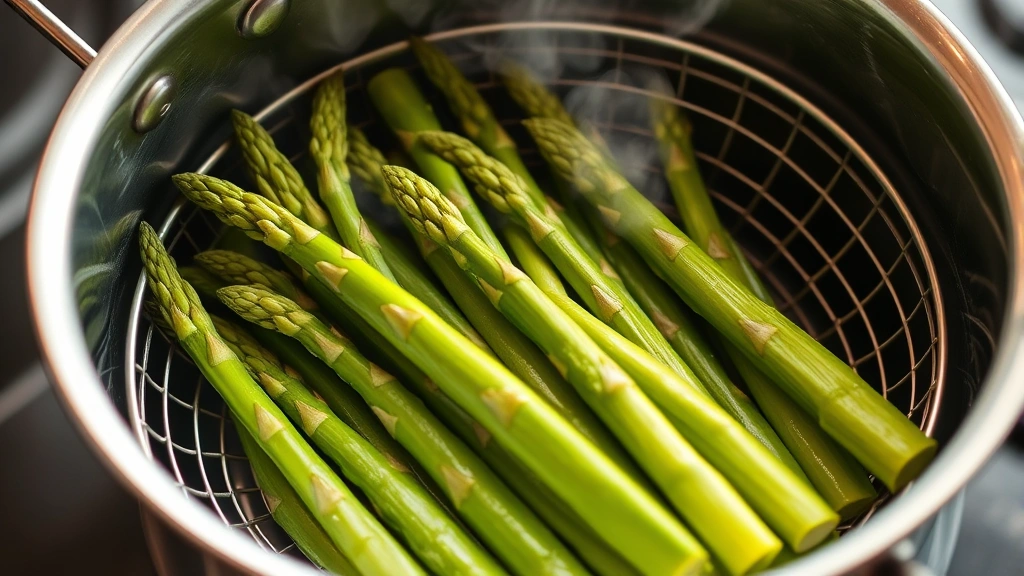
Bring the water to a rolling boil, then add your steamer basket or insert. Wait another 30 seconds for the steam to really get going, then add the asparagus.
Arrangement in the Steamer
Lay the asparagus spears in a single layer, tips pointing up. If you have to stack them or cram them in, use a second steamer basket or cook in batches. Crowded asparagus steams unevenly because steam can’t circulate properly. The bottom layer cooks faster than the top layer, and you end up with a mix of textures.
If you’re using a bamboo steamer (which is honestly my favorite for asparagus), line it with parchment paper or a damp cloth first. This prevents the spears from falling through the gaps and keeps the bamboo from absorbing asparagus flavor.
Steaming Times by Thickness
Here’s where how long to steam asparagus gets specific. Thickness is the main variable.
Thin Asparagus (Pencil-Thin, About 1/4 Inch Diameter)
Steaming time: 4–5 minutes. These spears are delicate. They cook fast and can go from perfect to overcooked in about 30 seconds. Start checking at the 3-minute mark by piercing the thickest part of a middle spear with a fork. If there’s still a lot of resistance, give it another minute.
Medium Asparagus (Marker-Thick, About 1/2 Inch Diameter)
Steaming time: 5–7 minutes. This is the most common size you’ll find at the grocery store. Set your timer for 5 minutes, then check every 30 seconds. The asparagus is done when the fork goes through with just a tiny bit of resistance—not soft, not crunchy.
Thick Asparagus (Thicker Than 3/4 Inch)
Steaming time: 7–8 minutes. These need the full time. The challenge is that the tip cooks faster than the base. If you want the tips to not turn to mush while the base finishes cooking, try standing the asparagus upright in the steamer (tips up) so the tips are further from the direct steam. This is annoying but it works.
Mixed Thickness
If you have a mix of thin and thick spears, either sort them and steam separately, or arrange them so the thick ones are on the bottom (closer to the steam source) and the thin ones are on top. Start with the timing for the thickest spears, then pull out the thin ones early if needed.
According to the Family Handyman cooking guides, precision in prep actually saves time during cooking because everything cooks evenly.
The Fork Test and Other Doneness Checks
Forget the timer. The timer is just a starting point. Real doneness checking is about feel and visual cues.
The Fork Test
This is the gold standard. At the 4-minute mark (for thin asparagus) or 5-minute mark (for medium), carefully pull out one spear from the middle of the bunch. Pierce the thickest part of the stalk with a fork. You’re looking for:
- Just right: The fork goes through with a tiny bit of resistance. The asparagus is tender but not mushy.
- Not done yet: The fork meets real resistance. The asparagus is still crunchy. Give it another minute.
- Overdone: The fork slides through with zero resistance, and the spear is starting to look translucent or falling apart. You’ve passed the window.
Visual Cues
The color changes as asparagus cooks. Fresh, raw asparagus is bright green. As it steams, it darkens slightly to a deeper, richer green. When it’s perfectly steamed, the color is vivid and the spears look glossy. When it’s overcooked, the color becomes dull and grayish-green, and the tips start to look shriveled.
The Bend Test
If you don’t want to sacrifice a spear for the fork test, try the bend test. Carefully remove the entire steamer basket and gently bend a middle spear. It should bend easily without snapping, but still have a little firmness. If it bends like a wet noodle, you’ve overcooked it.
Common Mistakes That Ruin Asparagus
I’ve made all of these mistakes. Multiple times. Here’s what not to do.
Mistake 1: Not Trimming the Woody Base
Woody asparagus tastes bitter and has a texture like eating string. Even if you steam it perfectly, it’s still going to be unpleasant. Always trim. The snap method is the most reliable.
Mistake 2: Steaming from Cold Water
If you put asparagus in cold water and then turn up the heat, the bottom of the asparagus cooks for several extra minutes while the water comes to a boil. By the time steam is actually happening, the bottom is already overcooked. Always boil first, then add asparagus.
Mistake 3: Overcrowding the Steamer
This is the #1 reason for uneven cooking. Steam needs to circulate. If you cram in too much asparagus, the bottom cooks faster and the top stays crunchy. Cook in batches or use a wider steamer.
Mistake 4: Leaving the Lid Off
Obviously, but it happens. An uncovered steamer basket loses heat and steam, and your asparagus takes twice as long to cook. Keep the lid on the whole time.
Mistake 5: Using Dirty Water
If your steaming water has mineral deposits or is cloudy, it affects the taste. Use fresh, clean water every time. This matters more than people think.
Mistake 6: Not Checking for Doneness
Just because the timer went off doesn’t mean the asparagus is done. Every steamer, every stove, every batch of asparagus is slightly different. Check at the minimum time, then every 30 seconds after that. This is the only way to guarantee consistent results.
Seasoning and Finishing Techniques
Steamed asparagus is mild and clean-tasting, which is great because it means the vegetable itself is the star. But you still need to finish it properly.
Salt and Pepper
This is the minimum. Salt right after steaming, while the asparagus is still hot. The salt sticks better and tastes better. Fresh-ground black pepper is non-negotiable—pre-ground tastes like dust.
Butter or Olive Oil
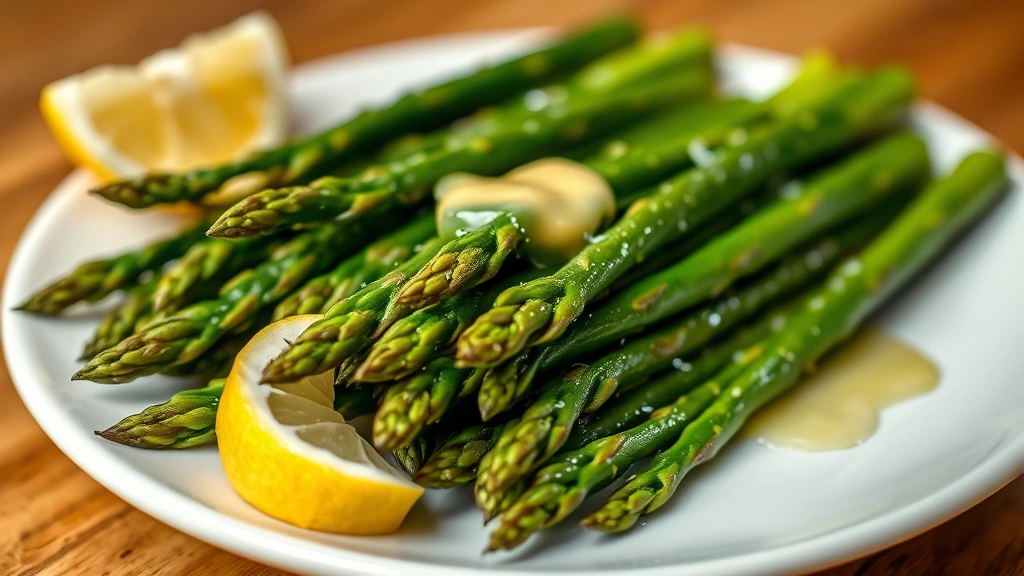
A little fat makes a huge difference. Either toss the hot asparagus with a knob of butter (about 1 tablespoon per pound of asparagus) or drizzle with good olive oil. The fat carries flavor and makes the asparagus taste richer.
Lemon or Garlic
A squeeze of fresh lemon juice brightens everything. Or mince a clove of raw garlic and toss it in while the asparagus is hot—the residual heat cooks the garlic slightly without making it bitter. Both are classic for a reason.
Parmesan Cheese
If you want to get fancy, grate fresh Parmesan over the hot asparagus. The heat slightly melts the cheese and it sticks to the spears. This is restaurant-quality but takes 30 seconds.
Hollandaise or Béarnaise
If you’re feeling ambitious, make hollandaise (or buy it pre-made, no judgment). Steamed asparagus with hollandaise is a classic for a reason. It’s rich, buttery, and makes the asparagus taste special without much effort.
According to This Old House’s cooking section, finishing techniques are often what separates home cooking from restaurant cooking.
Troubleshooting Your Steamed Asparagus
The Asparagus Is Mushy
You steamed it too long. Next time, start checking at the minimum time (4 minutes for thin, 5 for medium). The problem might also be that you started from cold water or overcrowded the steamer. Make sure you’re boiling first and using enough space.
The Asparagus Is Still Crunchy
Not enough time. Add 1–2 minutes and try again. If the asparagus is consistently crunchy, your steamer might not be getting hot enough—check that you’re using a rolling boil and that your lid fits snugly.
The Tips Are Mushy But the Base Is Still Hard
Uneven steaming. This usually means the asparagus is crowded or the steam isn’t circulating evenly. For next time, use less asparagus or stand it upright so the tips are further from the direct heat. You can also pull out thin spears early and leave the thick ones in longer.
The Asparagus Tastes Bitter
Either you didn’t trim enough of the woody base, or you steamed it too long (overcooking brings out bitter flavors). Make sure you’re trimming 1–2 inches minimum and checking for doneness carefully.
The Asparagus Tastes Bland
You didn’t salt it, or you salted it after it cooled down. Salt right after steaming while it’s hot. Also make sure you’re actually tasting it—sometimes steamed vegetables are mild by nature, and that’s fine. A squeeze of lemon fixes this instantly.
For more precision in timing and technique, Bob Vila’s home cooking guides offer detailed breakdowns of vegetable steaming methods.
Frequently Asked Questions
Can I steam asparagus in the microwave?
– Yes, but it’s tricky. Put trimmed asparagus in a microwave-safe dish with 2 tablespoons of water, cover with a damp paper towel, and microwave on high for 3–4 minutes depending on thickness. Check at 2 minutes. The problem is that microwaves heat unevenly, so you often end up with some spears mushy and some crunchy. A stovetop steamer is more reliable.
How long to steam asparagus if I’m cooking a large batch?
– Use two steamer baskets stacked on top of each other, or cook in batches. Don’t cram everything into one basket. If you absolutely have to cook a large batch at once, increase the steaming time by 1–2 minutes and stir halfway through to rotate the spears. But honestly, batches are easier and give better results.
Can I steam asparagus ahead of time and reheat it?
– Technically yes, but it’s not ideal. Steamed asparagus keeps in the fridge for 3–4 days. To reheat, either steam it again for 1–2 minutes, or warm it gently in a skillet with a little butter over medium heat. Don’t microwave it again—that’s how you get mushy asparagus. Fresh steamed asparagus is always better, but reheating works in a pinch.
What’s the difference between steaming and boiling asparagus?
– Steaming cooks with hot steam, boiling cooks with hot water. Steamed asparagus stays firmer and tastes cleaner because the asparagus doesn’t sit in water that leaches flavor and nutrients. Boiling is faster but the results are usually mushy and bland. Steaming is worth the extra 2 minutes of setup.
Do I need a special steamer basket, or can I use a colander?
– A colander works if you balance it over a pot of boiling water and cover it with foil or a lid. It’s not ideal because the seal isn’t tight and you lose steam, but it works. A proper steamer basket or bamboo steamer is better because they fit snugly and keep the steam concentrated. They’re also cheap—$10–15 for a decent one.
How long to steam asparagus if I’m freezing it?
– For freezing, steam it for just 2–3 minutes (slightly underdone). Cool it completely, pat it dry, spread it on a baking sheet, freeze it, then transfer to a freezer bag. When you cook it later, it’ll finish cooking. If you steam it fully before freezing, it’ll be mushy when you reheat it.
Can I add seasoning to the steaming water?
– You can add a pinch of salt to the water, but it won’t flavor the asparagus much. The asparagus doesn’t absorb much from the steam. It’s better to season after steaming when the asparagus is hot. You can add a bay leaf or garlic clove to the water if you want, but don’t expect a huge difference.
Is there a way to make steamed asparagus taste more interesting?
– Yes. After steaming, toss it with butter and fresh garlic, or olive oil and lemon, or Parmesan cheese, or a combination of all three. You can also serve it with hollandaise, béarnaise, or a simple vinaigrette. The steaming is just the first step—the finishing is what makes it taste restaurant-quality.
How long to steam asparagus compared to other vegetables?
– Asparagus is relatively quick. For comparison: broccoli takes 5–7 minutes (similar to asparagus), carrots take 8–10 minutes (denser), and green beans take 5–6 minutes. If you’re steaming multiple vegetables, start with the longest-cooking ones first and add faster-cooking ones partway through. If you’re interested in steaming broccoli specifically, check out our guide on how long to steam broccoli—the techniques are almost identical.
What if my asparagus spears are really thick?
– Thick asparagus needs 7–8 minutes, but the challenge is keeping the tips from overcooking while the base finishes. Try standing the asparagus upright in the steamer (tips pointing up) so the tips are further from the direct steam. Or, cut the thick spears in half lengthwise before steaming—this increases the surface area and they cook more evenly. It looks a little different, but it tastes just as good.
Do I need to add anything to the steaming water?
– No. Plain water is fine. Some people add a little salt, but it doesn’t make much difference. You can add a bay leaf or a slice of garlic if you want, but it’s optional. The asparagus itself is the star—don’t overcomplicate it.


