

Figuring out how long to smoke turkey breast is one of those skills that separates backyard pitmasters from folks just poking around with fire. Get the timing right, and you’ll pull off meat so tender and juicy your guests will wonder if you secretly hired a caterer. Get it wrong, and you’re looking at dry, rubbery disappointment. The good news? It’s not rocket science—just a few solid principles and some attention to detail.
Table of Contents
Timing Basics for Turkey Breast
Here’s the straightforward answer: plan on 30 to 40 minutes per pound at a steady 225°F to 250°F. A typical 4-pound turkey breast will take roughly 2 to 2.5 hours. A bigger 6-pounder? Bump that to 3 to 3.5 hours. These aren’t hard rules carved in stone—they’re starting points. Every smoker behaves differently. Your ambient temperature, wind, fuel type, and how often you peek at the meat all factor in.
The real key isn’t hitting a specific clock time; it’s hitting the right internal temperature. That’s your actual target. But we’ll get to that in a moment. For now, just know that if you’re planning a holiday meal, a 4-pound breast is a smart size—it cooks faster than a whole bird and still feeds a crowd.
Internal Temperature Guide
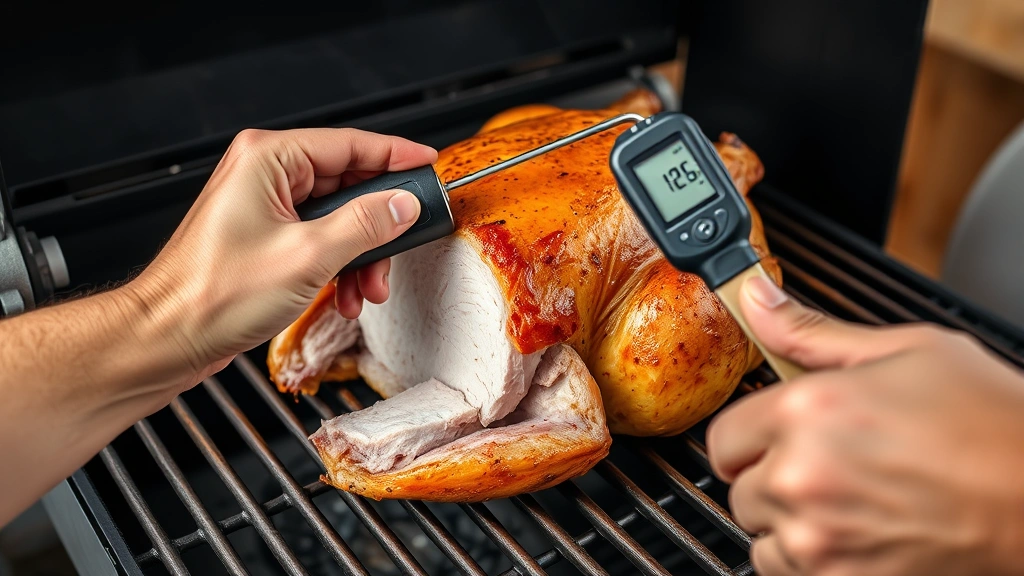
Forget the old “cook it until the juices run clear” advice. Grab a reliable meat thermometer and aim for 165°F internal temperature at the thickest part of the breast. That’s the USDA safe zone for poultry. The meat will be cooked through, safe to eat, and still retain moisture if you don’t push it higher.
Here’s a pro move: pull the breast off the smoker at 160°F. During the resting period (which we’ll cover), carryover cooking will push it those final 5 degrees. This actually helps keep the meat juicier because you’re not overcooking the outer layers while waiting for the center to catch up.
Use an instant-read thermometer, not one of those dial gauges. Digital thermometers are cheap, accurate, and take the guesswork out of doneness. Stick it in the thickest part without touching bone.
Prep Before You Smoke
The prep work sets up your success. Start by patting your turkey breast completely dry with paper towels. Moisture on the surface steams instead of smokes, and you want that nice smoke ring. If your breast has skin, score it lightly in a crosshatch pattern—this helps seasoning penetrate and fat render out.
Apply your dry rub generously the night before, or at least 2 hours before smoking. Kosher salt, cracked pepper, garlic powder, paprika, and a touch of brown sugar is a solid baseline. The salt draws out moisture initially, then gets reabsorbed, seasoning the meat deeply. Don’t skip this step.
Let the breast sit at room temperature for 30 to 45 minutes before it hits the smoker. Cold meat cooks unevenly. You want everything starting at roughly the same temperature so the heat penetrates evenly.
The Smoking Process
Get your smoker running at a steady 225°F to 250°F. Use a reliable thermometer to monitor the smoker’s internal temp—don’t trust the built-in gauge. Hickory, apple, and cherry wood all pair beautifully with turkey. Oak works too, but go lighter on it; it can overpower poultry. Soak your wood chips for 30 minutes if you’re using a gas or electric smoker; skip soaking for offset firebox smokers.
Place the turkey breast skin-side up on the grates. If you’re using a water pan (which helps regulate temperature and adds humidity), fill it with hot water at the start. Position the breast away from direct heat if your smoker has hot spots.
For the first hour, let the smoke do its work without opening the door. Every time you peek, you’re dropping the internal temperature and extending cook time. After the first hour, you can check progress every 30 minutes or so. If the skin is browning too fast, tent it loosely with foil.
Many pitmasters apply a glaze or sauce during the last 30 minutes of cooking. A simple BBQ sauce recipe adds a nice finishing layer. Brush it on, let it caramelize slightly, and you’ve got restaurant-quality results.
Resting Period Matters
This is where amateurs slip up. Once your breast hits 160°F, pull it off the smoker and tent it loosely with foil. Rest it for 15 to 20 minutes. During this time, the juices redistribute throughout the meat instead of running out onto your cutting board when you slice.
That carryover cooking we mentioned? It happens during rest. The internal temperature will climb another 5 degrees, bringing you right to that safe 165°F zone. Resting also makes the meat easier to slice cleanly because the fibers relax.
Don’t skip this step to save time. Those 15 minutes are non-negotiable if you want juicy results. While the breast rests, you can prep your sides or whip up a quick gravy from drippings using the pan juices.
Common Smoking Problems
Your breast is cooking too fast? Your smoker might be running hotter than you think. Check with an independent thermometer. If it’s genuinely running hot, adjust vents or move the meat to a cooler zone. Cooking too slow? Make sure your fuel is adequate and your vents aren’t clogged with ash.
Skin not browning? Increase your smoker temperature slightly during the last 30 minutes, or finish the breast under a hot broiler for 2 to 3 minutes. Meat turning out dry? You’re either cooking too hot, cooking too long, or not resting properly. Dial in your temperature control and pull the breast at 160°F, not 165°F.
Uneven cooking? Rotate the breast halfway through if your smoker has hot spots. Some folks also wrap the breast in butcher paper during the last hour to speed things up and protect the exterior—this is called the “Texas crutch.” It works, but you’ll lose some smoke penetration.
Wood and Flavor Combos
Wood choice dramatically changes the final flavor profile. Hickory gives you a bold, bacon-like smoke that pairs perfectly with poultry. Apple wood is milder and slightly sweet—great if you’re serving folks who prefer subtle smoke. Cherry wood splits the difference, offering medium smoke with a hint of sweetness.
Mix woods for complexity. Try a 70/30 blend of hickory and apple, or cherry and oak. Avoid softwoods like pine or cedar—they impart bitter, resinous flavors. Mesquite is too aggressive for turkey; save it for beef.
If you’re looking to add complementary flavors, consider a Cajun Alfredo sauce on the side for a bold contrast, or keep things classic with simple pan drippings.
Finishing Touches and Serving
Once your breast has rested, transfer it to a cutting board. Use a sharp carving knife to slice against the grain—this shortens muscle fibers and makes each bite more tender. Slice about ¼-inch thick for serving.
Arrange slices on a platter and drizzle with the pan juices. If you want to get fancy, brush the slices lightly with melted butter infused with fresh herbs. Garnish with fresh thyme or rosemary for visual appeal.
Turkey breast pairs well with the same sides you’d serve with any smoked poultry. Think about timing your other dishes so everything finishes around the same time. Unlike grilling burgers (which takes just minutes), smoking is a slow, leisurely process—perfect for entertaining because you’re not rushing around at the last second.

Frequently Asked Questions
Can I smoke a turkey breast faster at higher temperature?
You can bump the temperature to 300°F and cut cooking time to roughly 15 to 20 minutes per pound, but you’ll sacrifice smoke penetration and the meat may dry out faster. Stick with 225°F to 250°F for the best balance of flavor and texture. Low and slow is the way.
Should I brine my turkey breast before smoking?
Brining helps the meat retain moisture, especially if you’re worried about dryness. A basic brine of salt, sugar, and spices for 8 to 12 hours works wonders. If you’re short on time, even 4 hours helps. Pat the breast dry before applying your rub.
What if my smoker temperature fluctuates?
Some fluctuation is normal—aim for ±25°F variance. If it’s swinging wildly, check for air leaks around the door and vents. Make sure your fuel source is consistent. Offset firebox smokers naturally fluctuate more than vertical or bullet smokers. Adjust your cook time estimates if you’re seeing big swings.
Can I smoke a frozen turkey breast?
Not recommended. Thaw it completely in the refrigerator—allow 24 hours for every 4 to 5 pounds. Smoking from frozen means the outside cooks before the inside reaches safe temperature, creating a food safety risk. Plan ahead.
How do I store leftover smoked turkey breast?
Slice and refrigerate in an airtight container for up to 4 days. It makes killer sandwiches. You can also freeze sliced breast for up to 3 months. Reheat gently in a low oven with a splash of broth to keep it moist.
What’s the difference between smoking and grilling turkey?
Smoking uses indirect heat and smoke over hours, creating a tender, deeply flavored result. If you’re curious about faster cooking methods, check out our guide on how long to cook burgers on grill for comparison. Grilling is hotter, faster, and better for pieces. Smoking is the move for whole breasts.
Do I need to flip the turkey breast during smoking?
Nope. Skin-side up the whole time. The skin protects the meat underneath and renders fat that bastes the breast. Flipping disrupts this process and extends cook time. Set it and forget it (mostly).
What wood pairs best with turkey?
Hickory, apple, and cherry are the holy trinity for poultry. Oak works in a pinch. Avoid mesquite, which overpowers delicate turkey meat. Fruitwoods like pecan are also excellent if you have access.
Final Thoughts
Smoking a turkey breast isn’t complicated once you understand the fundamentals. Aim for 30 to 40 minutes per pound at 225°F to 250°F, pull it at 160°F internal temperature, and rest it for 15 to 20 minutes. Use a reliable thermometer, don’t peek constantly, and you’ll nail it every time.
The beauty of smoking is that it’s forgiving—within reason. A breast that cooks 20 minutes longer than expected will still be good; it just might be a touch drier. But if you follow these guidelines and pay attention to temperature rather than time, you’ll produce smoked turkey breast that rivals what you’d get from a professional smoker or catering company.
Start with a 4-pound breast, dial in your technique, and next time you’ll be the one people ask for advice. That’s how you become the backyard pitmaster everyone wants at their gathering.


