
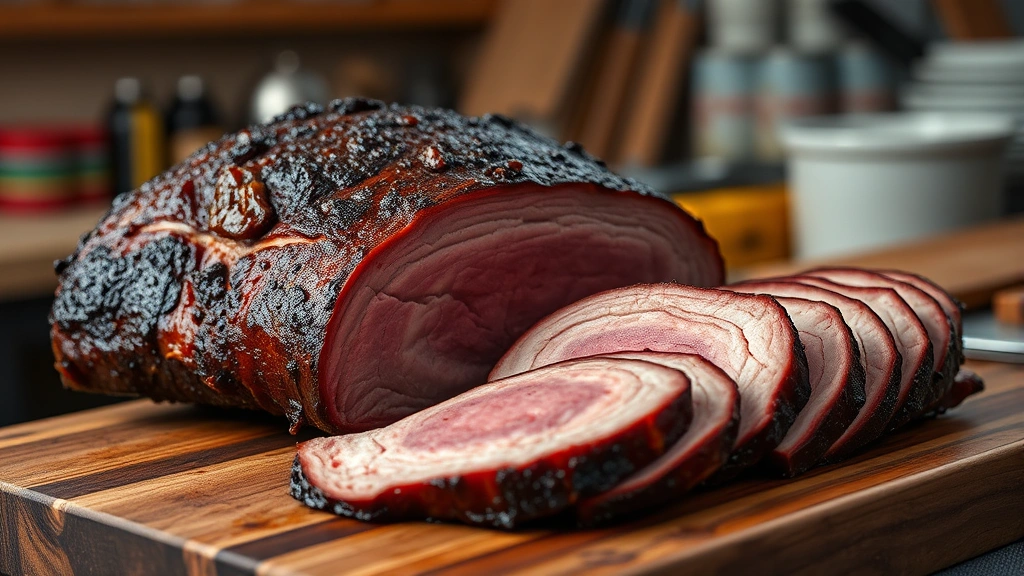
Figuring out how long to smoke brisket at 225 degrees is one of those questions that separates the backyard pit masters from the rookies. The short answer? Plan on 1 to 1.5 hours per pound, but there’s a whole lot more to nail down if you want that perfect bark and tender, juicy meat that’ll have your neighbors knocking on your door.
Table of Contents
Smoking Basics at 225
Two hundred twenty-five degrees is the sweet spot for smoking brisket. It’s hot enough to render fat and build that gorgeous smoke ring without cooking too fast and drying everything out. At this temperature, you’re looking at a slow, steady cook that gives smoke time to penetrate the meat while collagen breaks down into gelatin, creating that tender texture everyone craves.
The beauty of 225 degrees is consistency. Your smoker stays stable, the temperature fluctuations are minimal, and you’ve got time to actually enjoy the process instead of babysitting the thing every five minutes. Most pit masters agree this is the Goldilocks zone—not too hot, not too cool, just right.
Time Calculation Formula
Here’s the real deal: expect 1 to 1.5 hours per pound when smoking brisket at 225 degrees. A 12-pound brisket? You’re looking at 12 to 18 hours. A 16-pounder? Plan for 16 to 24 hours. But here’s the catch—this is just a starting point, not gospel.
The meat itself has the final say. Marbling, moisture content, how tightly the muscle fibers are bound, and even the breed of cattle all affect cooking time. That’s why experienced smokers don’t rely solely on the clock. They use the probe test, which we’ll get into shortly. Think of the time estimate as your roadmap, but the meat’s internal temperature is your destination.
Understanding the Stall
Around 150 to 165 degrees internal temperature, your brisket will hit what’s called the stall. The temperature plateaus, sometimes for hours, and it feels like nothing’s happening. Don’t panic—this is totally normal. It’s actually evaporative cooling at work. Moisture on the meat’s surface is evaporating, which cools the meat faster than your smoker can heat it.
This stall is where most people lose patience and crank up the heat or wrap the brisket. Wrapping actually helps push through the stall faster by trapping heat and moisture. Some folks use the Texas crutch—wrapping in butcher paper or foil—around the 165-degree mark. Others push through unwrapped for maximum bark development. Both work; it’s about your priorities and timeline.
Temperature Probing Technique
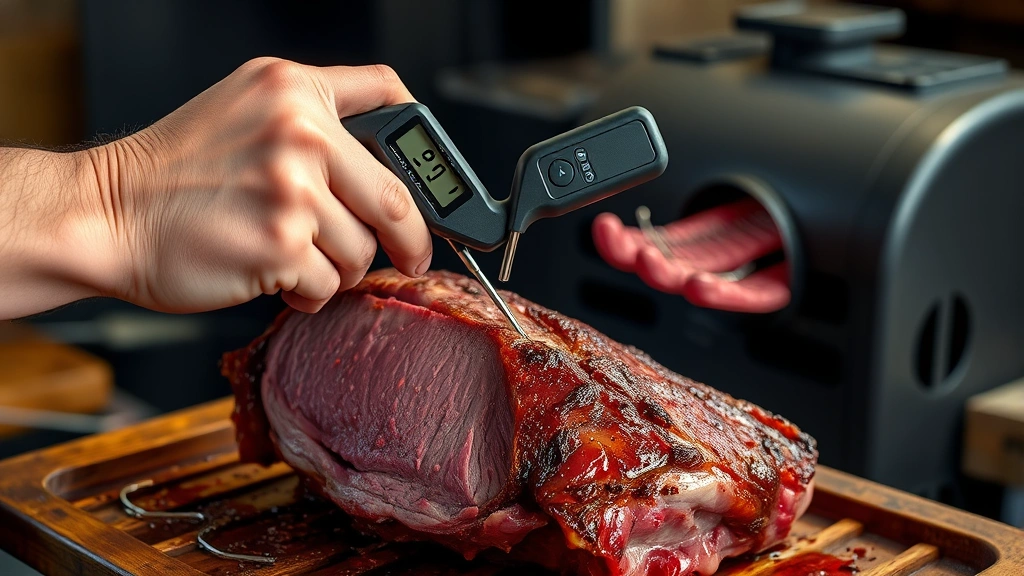
Forget the clock after the first few hours. The real test is the probe. You’re aiming for 203 to 205 degrees internal temperature in the thickest part of the meat, specifically in the flat muscle where it’s thickest. Insert your meat thermometer horizontally into the flat, not from the top down.
But here’s the pro move: the probe test. When your brisket hits around 190 degrees, take a thin metal probe (or a toothpick) and poke it into the thickest part. It should slide in with minimal resistance, like poking into warm butter. No resistance? You’re done. Still feels firm? Give it more time. This tactile feedback is more reliable than temperature alone because it tells you about meat tenderness, not just internal heat.
Trimming and Prep Work
Before you even light your smoker, proper trimming makes a huge difference. You want a quarter-inch of fat cap on top—enough to protect the meat and render into flavor, not so much that it stays chewy. Trim the hard fat from the sides and bottom, but leave that top cap intact.
Your rub is personal, but keep it simple: salt, pepper, garlic powder, and paprika do the job. Apply it generously the night before if possible, letting it cure slightly. Some folks inject beef broth mixed with butter and Worcestershire sauce a few hours before smoking. This adds moisture and flavor deep in the meat, especially helpful for leaner cuts. Let your brisket sit at room temperature for about an hour before it hits the smoker.
Wood Selection Matters
Your choice of smoking wood influences flavor and cook time slightly. Oak is a classic choice—it’s strong but not overpowering. Hickory gives a heavier, almost bacon-like flavor. Mesquite is intense and best mixed with milder woods. Fruitwoods like apple or cherry add sweetness without overwhelming the beef.
Use chunks rather than chips at 225 degrees; chips burn too fast and create acrid smoke. Soak your wood for 30 minutes before adding it to the firebox. You want thin, blue smoke, not thick white billows. Thick smoke tastes bitter and actually slows the cooking process by insulating the meat.
Wrapping Method Decisions
This is where pit masters get opinionated. The unwrapped method gives you the thickest, crunchiest bark—that caramelized exterior that’s absolutely worth the extra time. Plan for the full 1.5 hours per pound if you’re going unwrapped the entire time.
Wrapping in butcher paper around 165 degrees (the Texas crutch) cuts about 30% off your total time while preserving decent bark. Foil wrapping is faster but softens the bark. If you wrap, leave it on until the probe test passes. Some folks wrap for the last 2-3 hours only, unwrapping at the end to re-crisp the bark. Experiment and find your style.
Resting and Slicing
Your brisket doesn’t stop cooking when it comes off the smoker. Carryover cooking will raise the internal temperature another 5 degrees. Rest it for at least 30 minutes, wrapped in foil and towels in a cooler. One hour is even better for large briskets. This resting period allows juices to redistribute throughout the meat instead of running all over your cutting board.
Slice against the grain, which changes direction between the flat and point muscles. The flat’s grain runs one way, the point another. A sharp brisket knife or long serrated blade works best. Slice about a quarter-inch thick—thick enough to hold together, thin enough to be tender. If you’re slicing a point, you can go thicker since it’s naturally more forgiving.
Common Troubleshooting
Your brisket finished in 10 hours but you expected 16? It’s probably smaller than you thought or your smoker runs hot. Check with an independent thermometer; many built-in gauges are off by 25 degrees. Finished in 24 hours and still tough? Your smoker might be running cool, or the meat was particularly dense. Increase temperature by 25 degrees next time.
Dry brisket means it overcooked. Next time, pull it at 203 degrees, not 210. Bark too soft? Go unwrapped longer, or wrap later in the cook. No smoke ring? Make sure you’re using fresh wood and your smoker’s actually producing smoke for the first 4-5 hours. A smoke ring forms early; you can’t develop it late in the cook.
Frequently Asked Questions
Can I smoke brisket at a higher temperature to speed things up?
You can smoke at 250-275 degrees and cut the time to 45 minutes to an hour per pound, but you sacrifice some tenderness and bark development. 225 degrees really is the optimal temperature for the best results. If you’re in a time crunch, wrapping at 165 degrees helps significantly.
What if my brisket stalls and won’t push past 165 degrees?
This is the stall, and it’s normal. Wrap it in butcher paper, which usually pushes through in 1-2 hours. If it’s still stuck after wrapping, increase your smoker temperature by 10-15 degrees temporarily. The stall will break eventually—patience is key.
Should I spritz my brisket while smoking?
Spritzing with apple juice or cider every hour after the first 4 hours helps maintain moisture and can help push through the stall. Some pit masters skip it entirely. It’s optional but can help, especially if your smoker runs dry.
Can I smoke brisket overnight?
Absolutely. Many pit masters start at night, set their smoker, and let it ride. Use a reliable temperature controller or alarm to wake you if something goes wrong. A 16-pound brisket started at 10 PM will likely finish around 10 AM the next day at 225 degrees.
What’s the difference between brisket flat and brisket point?
The flat is leaner and more uniform, taking longer to cook evenly. The point is fattier and more forgiving, often finishing faster. A whole packer brisket includes both; they cook together but the flat usually needs slightly longer to reach tenderness.
How do I know if my brisket is done without a thermometer?
Use the probe test—a thin metal skewer or toothpick should slide through the thickest part with barely any resistance, like poking warm butter. You can also use the bend test; pick up the brisket with tongs; if it bends and nearly folds in half, it’s done.
Pro tip: Keep detailed notes on your cooks—smoker temperature, wood type, weather conditions, and actual cooking times. After a few briskets, you’ll develop an intuition for your specific setup that no guide can teach you. Your smoker has its own personality, and you’ll learn to work with it.
Planning a full backyard feast? Don’t forget the sides. Check out our guide on how long to steam green beans to time your vegetables perfectly with your brisket. And if you want to round out the meal, we’ve got a killer fried cornbread recipe that pairs beautifully with smoked meat.
If you’re looking to prep your outdoor cooking space, you might need some finishing work. Learn about how long caulk takes to dry if you’re sealing up your smoker area or outdoor kitchen.
For beverages, try making your own apple cider to serve alongside your brisket, or whip up some gin drink recipes for your guests. And for dessert after all that meat, our crescent roll dessert recipes are simple crowd-pleasers that don’t require a smoker.


