
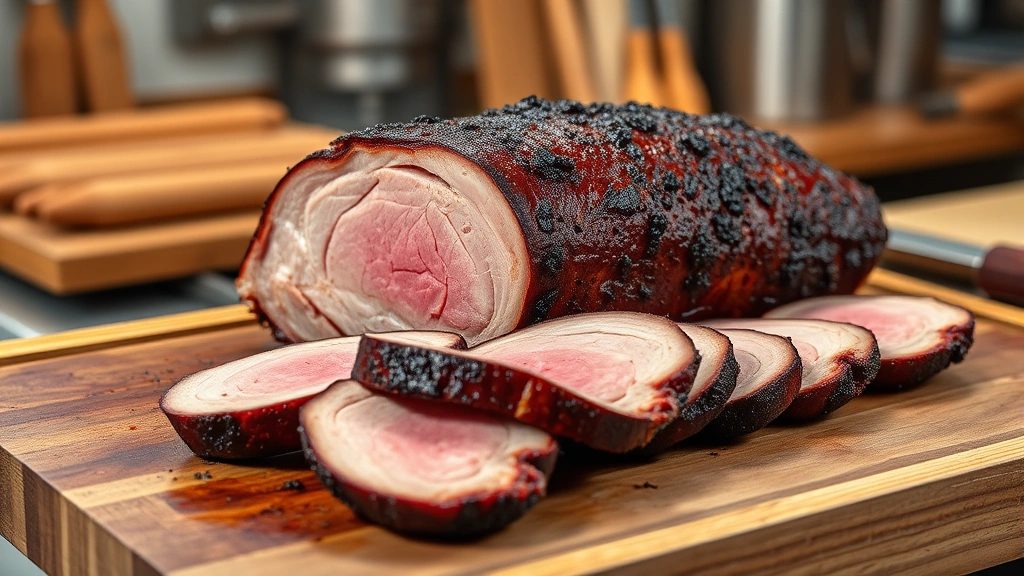
Figuring out how long to smoke a pork loin is one of those skills that separates backyard grillers from true pit masters. The short answer? About 20-30 minutes per pound at 225-250°F, but there’s way more to it than just time and temperature. I’ve spent countless hours tending smokers, and I’m here to walk you through everything you need to nail this every single time.
Table of Contents
Smoking Time Guide
Let’s get practical. A 3-pound pork loin will take roughly 90 minutes to 2 hours at 225°F. A 5-pounder? Plan on 2.5 to 3 hours. The magic number is that 20-30 minute per pound range, but honestly, I always tell folks to trust the meat thermometer more than the clock. Every smoker runs different. Your neighbor’s offset barrel might run 50 degrees hotter than your vertical cabinet smoker, so timing varies.
The real target is an internal temperature of 145°F at the thickest part of the loin. That’s where you stop. Not 160°F like some old recipes say—pork loin is safe at 145°F according to the USDA, and cooking it hotter just dries it out. I’ve learned this the hard way, trust me.
Temperature Matters Most
Here’s where most people mess up. They set their smoker to 225°F and assume it stays there. Nope. Wind, outside temperature, fuel type—all of it affects your actual cooking temperature. I use a reliable meat thermometer with a probe that stays in the meat, plus a separate smoker thermometer. The probe thermometer is non-negotiable. Get a good one like a ThermoPro or similar; it’ll cost $30-50 and save you from ruined dinners.
The sweet spot for pork loin is 225-250°F. Lower temps (225°F) give you more smoke flavor and a better bark, but take longer. Higher temps (250°F) speed things up without sacrificing quality. Pick your poison based on how much time you’ve got. I usually go 240°F as a compromise—fast enough for a weekend cook, slow enough to really absorb that smoke.
Prep Your Loin Right
Don’t skip this step. Pat your pork loin completely dry with paper towels. Moisture is the enemy of smoke absorption and bark development. Then apply your rub generously—I’m talking a quarter-inch coating. Let it sit for at least 30 minutes before smoking, or overnight in the fridge is even better. The salt in your rub starts breaking down the muscle fibers, making everything more tender.
For a basic rub, I mix brown sugar, paprika, garlic powder, onion powder, black pepper, and a touch of cayenne. Nothing fancy, but it works. You can also check out Carne Asada Seasoning Recipe for inspiration on layering flavors—same principles apply to pork.
Wood Selection Strategy
Not all smoke is created equal. For pork loin, I avoid heavy woods like hickory or oak. Those are better for brisket or pork butt (if you’re curious about longer cooks, check out How Long Does It Take to Smoke a Pork Butt). For loin, go lighter. Apple, cherry, or pecan give you that sweet, delicate smoke that complements pork without overpowering it.
Use chunks, not chips. Chips burn too fast and create acrid smoke. Soak your chunks for 30 minutes before adding them to your firebox. A pork loin only needs about 1-2 hours of active smoke—after that, you’re just cooking. Add your first chunk right at the start, then one more at the 45-minute mark. That’s it.
Monitoring Progress
Here’s my workflow: Set your smoker, insert your probe thermometer into the thickest part of the loin (not touching bone, not touching the grates), and then leave it alone for the first hour. Seriously. Opening the smoker every 15 minutes is a rookie move. Every time you crack that door, you lose 50+ degrees of heat and let out all your smoke.
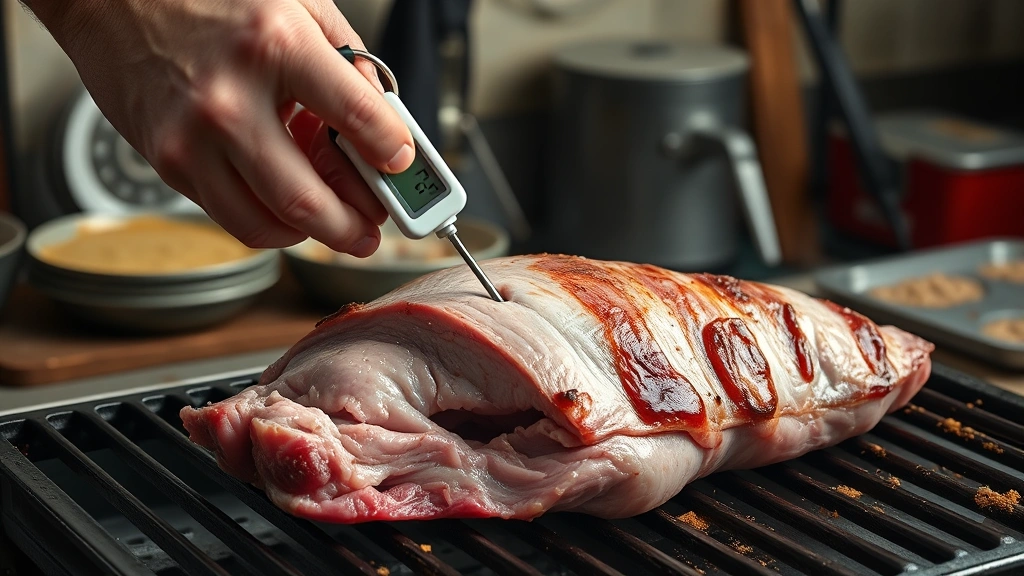
After the first hour, check every 30 minutes. Look for a nice mahogany color forming on the outside. If it’s getting too dark too fast, lower your temperature slightly. If it’s pale, bump up the heat or move it closer to the heat source. The probe will tell you exactly when you’re done—no guessing, no cutting into it to check.
The Stall Explained
Around 150°F internal temperature, your pork loin might plateau. The temperature stops rising for 30-45 minutes. This is the stall, and it’s totally normal. Evaporative cooling is happening inside the meat. Some folks wrap their loin in foil at this point (the Texas Crutch method) to power through it faster. I usually don’t bother with pork loin because the stall is shorter than with bigger cuts. Just be patient.
If you’re in a real time crunch, wrap it in foil or butcher paper and bump your temperature up to 250°F. You’ll lose some bark, but you’ll finish faster. It’s a trade-off.
Resting Is Critical
This is where people fail. You pull your loin at 145°F, and you’re tempted to slice right into it. Don’t. Rest it for 10-15 minutes, tented loosely with foil. During this rest, the juices redistribute throughout the meat. Cut too early and all those juices run out onto your cutting board instead of staying in your loin.
The temperature will actually rise another 3-5 degrees during resting (carryover cooking), so you’ll end up around 148-150°F. Perfect. Juicy. Tender. Worth the wait.
Troubleshooting Issues
Your loin finished too fast? Your smoker was probably running hotter than you thought. Use an independent thermometer to verify next time. Your loin is dry? You either cooked it past 145°F or didn’t rest it long enough. Your bark is pale? Not enough smoke or smoke wasn’t getting good circulation. Make sure your smoker vents aren’t clogged.
Uneven cooking (one end done, other end raw)? Move your loin to a different spot mid-cook. Hot spots exist in every smoker. Some people rotate their meat 180 degrees halfway through. I usually just move it to a cooler zone if I notice it’s cooking too fast on one side.
If you want to explore other cooking methods for pork, Crockpot Recipes offer a completely different approach for when you’re short on time. And for inspiration on what to do with your smoked loin, Best Fall Recipes has some great serving ideas.
Frequently Asked Questions
What’s the difference between pork loin and pork tenderloin?
Pork loin is larger (2-5 pounds typically) and comes from the back of the pig. Pork tenderloin is smaller (1-2 pounds), more tender, and cooks faster (15-20 minutes per pound). Don’t confuse them—tenderloin will be done in 45 minutes to an hour.
Can I smoke a pork loin at higher temperatures?
Yes, you can go up to 275°F if you’re in a hurry, but you’ll sacrifice bark and smoke penetration. I’d stick with 225-250°F for best results. The slower cook is worth the extra hour.
Should I wrap my pork loin?
Not necessary for loin like you would for brisket or butt. The loin is lean and relatively small, so wrapping doesn’t add much benefit. If you’re dealing with the stall and pressed for time, wrap it, but it’s optional.
What if my smoker temperature keeps fluctuating?
Check for air leaks around the door or vents. Make sure your vents are open enough to let smoke flow through but not so open that you lose heat. If your smoker is old or damaged, you might need to seal gaps with high-temp caulk or foil.
Can I smoke a frozen pork loin?
Technically yes, but thaw it first. Frozen meat cooks unevenly and takes significantly longer. Plan 24 hours in the fridge for thawing. Your results will be way better.
How do I know when it’s really done?
Meat thermometer inserted into the thickest part reads 145°F. That’s it. Don’t rely on color, texture, or time. The thermometer is your only honest tool.
What wood pairs best with pork loin?
Apple, cherry, or pecan are ideal. Avoid heavy woods like hickory or oak. If you want something different, try a mix—half apple, half cherry works great. Authentic Jambalaya Recipe shows how different flavor profiles work with pork, which might inspire your seasoning choices.
Final Thoughts
Smoking a pork loin isn’t rocket science, but it does require attention to detail. Invest in a good meat thermometer, trust the temperature over the clock, and don’t skip the rest. Most importantly, keep notes on your cooks—write down your smoker temp, ambient temp, wood type, and how long it actually took. After a couple of runs, you’ll know exactly how your specific smoker behaves, and you’ll nail it every time. That’s when smoking stops being stressful and becomes pure enjoyment.


