
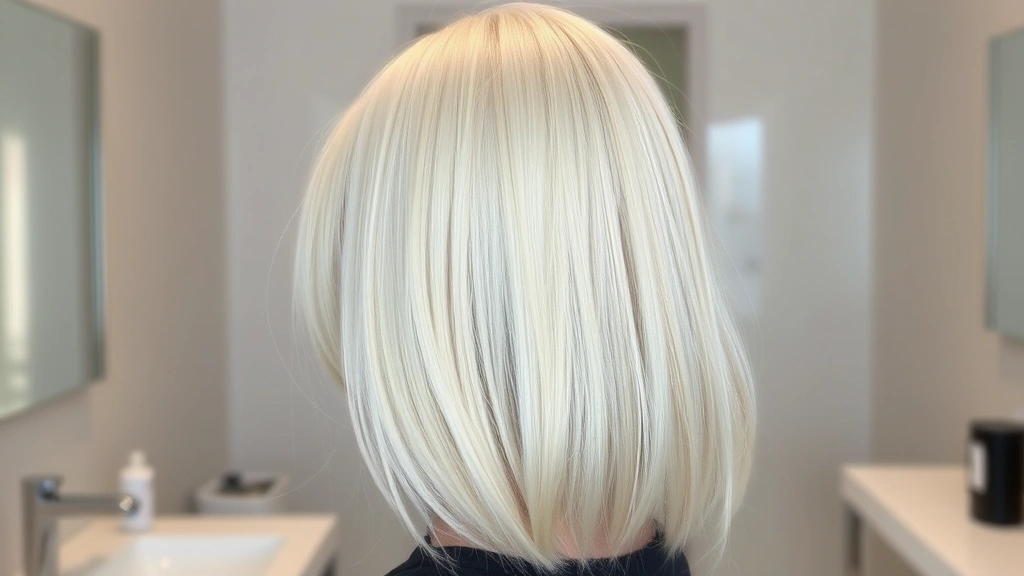
Figuring out how long to leave bleach in hair is one of those make-or-break decisions that separates a salon-quality result from a fried, damaged mess. I’ve seen too many folks grab a box of bleach powder, slap it on, and hope for the best—only to end up with straw-like texture and uneven color. The truth? Timing depends on your hair type, current color, desired lightness level, and the specific bleach product you’re using. In this guide, I’ll walk you through everything you need to know to get professional results without destroying your hair in the process.
Table of Contents
Timing Basics: The Foundation
Let’s get straight to it: most bleach products work best between 20 to 45 minutes on virgin (never-colored) hair. But here’s the catch—that’s a starting point, not a guarantee. The manufacturer’s instructions on your bleach box aren’t one-size-fits-all recommendations; they’re educated guesses based on average conditions.
The science behind bleaching is straightforward: bleach molecules open your hair’s cuticle layer and break down melanin (the pigment giving your hair its natural color). This chemical process happens progressively. At 15 minutes, you might see minimal lightening. By 30 minutes, you’ll notice significant change. Push past 45 minutes, and you’re entering risky territory where hair structure starts breaking down.
I always tell people to think of bleach processing like cooking meat—you can’t just guess and hope it turns out right. You need a plan, a timer, and the willingness to check your work.
Hair Type Matters Most
Your hair’s texture, density, and porosity are the real MVPs here. Fine, thin hair processes faster—sometimes 15 to 25 minutes is enough. Coarse, thick hair might need the full 45 minutes or even a bit longer. Porous hair (previously damaged, color-treated, or naturally dry) bleaches quickly because it’s already compromised. Resistant, virgin hair takes longer because the cuticle is tightly sealed.
Before you even open that bleach bottle, run this quick test: take a small section from underneath your hair where it won’t show. Apply bleach, set your timer, and check every 5 minutes starting at minute 10. This tells you exactly how your specific hair reacts. It’s like a dress rehearsal before opening night.
Asian and coarse-textured hair often requires longer processing times—sometimes 50 to 60 minutes—because the hair structure is denser. Mediterranean and thick European hair typically needs 35 to 45 minutes. Fine, light hair can lighten in as little as 20 to 30 minutes.
Processing Time Chart
Here’s a practical breakdown based on hair type and desired lightness:
Fine/Thin Hair: 15-25 minutes for light blonde, 20-30 minutes for pale blonde, 25-35 minutes for platinum
Medium/Normal Hair: 25-35 minutes for light blonde, 30-40 minutes for pale blonde, 35-45 minutes for platinum
Thick/Coarse Hair: 35-45 minutes for light blonde, 40-50 minutes for pale blonde, 50-60 minutes for platinum
Previously Colored/Porous Hair: 15-25 minutes (watch closely—it processes fast)
Remember, these are guidelines, not laws. Your specific situation might differ. That’s why strand testing isn’t optional—it’s mandatory if you care about your hair.
Monitoring Progress Correctly
This is where most DIYers mess up. They apply bleach, set a timer, and walk away. Then they come back at 45 minutes expecting perfect results. That’s backwards.
Start checking at the 10-minute mark by wiping away a small section with a damp cloth. Look at the color development. Every 5 minutes after that, do another check. You’re looking for that sweet spot where the hair has lightened to your target shade without looking fried or brassy.
The color should look relatively uniform across the section you tested. If the roots are much darker than the ends, you’ve got uneven processing—common when you applied bleach unevenly or didn’t saturate properly.
Pro tip: keep a color chart handy (most bleach boxes include one) so you can compare your hair’s current shade to what you’re aiming for. Phone lighting is terrible for this—use natural window light or a bright bathroom light.
Root vs. Lengths Strategy
Here’s a technique that separates amateur from competent: apply bleach to your hair in stages. This is crucial because roots process faster than lengths—they’re closer to your scalp’s heat, which accelerates the chemical reaction.
For regrowth touch-ups on previously bleached hair, apply bleach to roots only for the first 20 minutes. Then, in the last 10-15 minutes, pull the bleach through to the ends to even everything out. This prevents over-processing the already-damaged lengths.
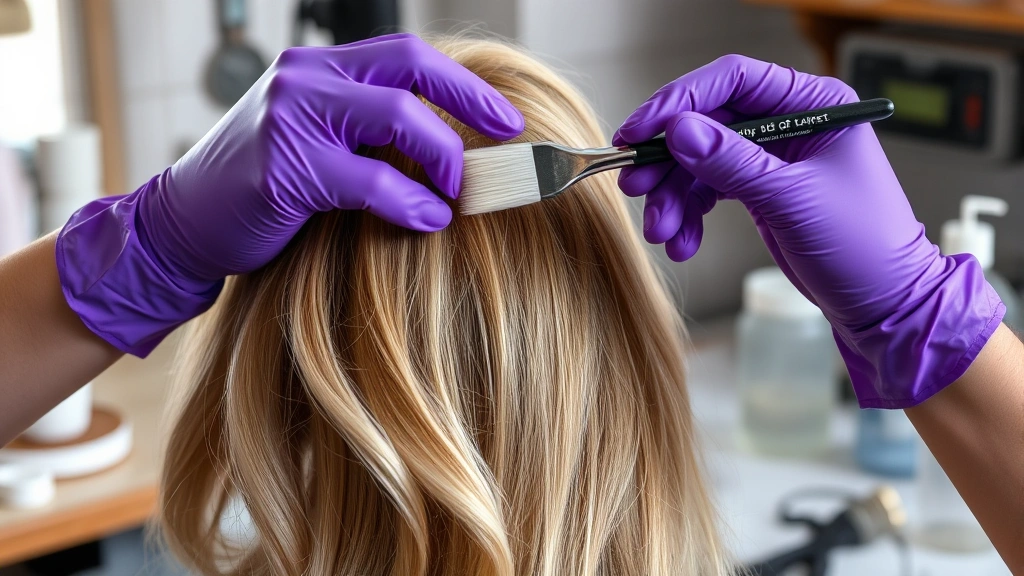
For virgin hair, apply bleach to the mid-lengths and ends first (avoiding the scalp by about half an inch). After 15 minutes, apply to the roots. This way, everything finishes around the same time despite the heat difference.
This staggered approach is why salon colorists take longer than you’d expect—they’re being strategic, not slow.
Safety Limits Explained
Never, and I mean never, leave bleach on your hair longer than 60 minutes. At that point, you’re not lightening hair anymore—you’re dissolving it. Hair is made of protein (keratin), and bleach breaks down protein structure. Push past 60 minutes and you risk chemical cuts, where your hair literally snaps off.
The maximum safe time depends on your hair’s condition. Virgin hair can handle closer to 60 minutes. Previously damaged hair should stay under 45 minutes. If your hair is already compromised from heat styling or previous color treatments, cap it at 30 to 35 minutes.
If you haven’t reached your desired lightness by the 45-minute mark on virgin hair, stop. Rinse, condition, and let your hair recover for at least a week before attempting another bleach session. Multiple sessions with proper recovery time beats one marathon session every time.
Damage Prevention Tactics
Preventing damage starts before you even mix the bleach. Deep condition your hair for 3 to 5 days leading up to bleaching. This fills the hair shaft with moisture and creates a protective barrier.
Use a quality bleach powder mixed with a good developer (20 or 30 volume for most applications—40 volume only if you have resistant, coarse hair and are experienced). Cheap bleach and developer combinations are false economy; they process unevenly and damage more.
Apply a thin layer of petroleum jelly along your hairline, ears, and neck. This protects skin from bleach staining. Use old towels you don’t mind ruining—bleach will discolor them.
Mix bleach fresh right before use. Don’t let it sit in the bowl for more than a few minutes. Pre-mixed bleach loses potency and develops ammonia, which smells terrible and works less effectively.
Wear gloves—always. Bleach burns skin and stains nails yellow. If you want professional results, treat the process professionally, which means protecting yourself.
Consider using a bond-building treatment (like Olaplex or similar products) mixed into your bleach. These help protect hair’s internal structure during processing. They cost more but dramatically reduce damage on compromised hair.
Common Mistakes to Avoid
The biggest mistake? Not doing a strand test. You think you know how your hair will react, but you don’t. Test it. Period.
Second mistake: applying bleach unevenly. Some sections get saturated, others barely get touched. Result: patchy, uneven lightening. Section your hair into 4 to 6 quadrants before you start. Apply methodically to each section.
Third mistake: leaving bleach on too long because you’re impatient. “Just five more minutes” has ruined more hair than any other single decision. Use a timer. Respect it.
Fourth mistake: bleaching hair that’s already fried. If your hair is breaking, snapping, or feeling like straw, you need a break from bleach. Do deep conditioning treatments for 2 to 4 weeks before attempting another bleach session. Your hair needs time to rebuild its protein structure.
Fifth mistake: using hot water to rinse. This opens the cuticle further and can cause additional damage. Use lukewarm or cool water when rinsing out bleach.
Sixth mistake: not using a good toner after bleaching. Bleached hair is porous and will grab any pigment floating around. If you don’t tone it, you’ll end up with brassy, orange, or yellow hair. Use a toner appropriate for your desired shade.
Aftercare Protocol
The work doesn’t stop when you rinse out the bleach. In fact, the next week is critical for hair recovery.
Immediately after rinsing, use a deep conditioning treatment. Leave it on for at least 10 to 15 minutes (or follow package instructions). This replenishes moisture and starts repairing the damage bleach caused.
For the next 5 to 7 days, avoid heat styling. Your hair is weakened and vulnerable. Let it air dry. If you must blow dry, use a heat protectant spray and keep the heat on low.
Wash your hair only with sulfate-free shampoo and lukewarm water. Sulfates strip moisture, and hot water opens the cuticle. Both are bad news for freshly bleached hair.
Deep condition 2 to 3 times per week for the first month. This isn’t optional if you want to keep your hair healthy.
Avoid chlorine, saltwater, and excessive sun exposure for at least a week. Bleached hair is porous and absorbs everything—chlorine will turn it green, saltwater will dry it out, and UV exposure will fade your color and cause additional damage.
Get a trim 2 to 3 weeks after bleaching. Even if your hair looks fine, the ends are compromised. A trim removes the most damaged bits and prevents split ends from traveling up the hair shaft.
Frequently Asked Questions
Can I leave bleach on my hair overnight?
Absolutely not. Leaving bleach on for more than 60 minutes—let alone overnight—will cause severe damage, breakage, and potentially scalp burns. Your hair will become weak, brittle, and likely break off. If you want dramatic lightening, do multiple sessions spaced a week or two apart instead of one marathon session.
What if I leave bleach on too long by accident?
Rinse it out immediately with cool water. Don’t panic—a few extra minutes won’t cause catastrophic damage, but it will compromise your hair’s condition. Follow up with a deep conditioning treatment and plan to do intensive moisture treatments for the next 2 to 3 weeks. Avoid heat styling and be gentle with your hair.
Does 20 volume developer work faster than 10 volume?
Yes. Higher volume developers process faster and lift more color, but they’re also more damaging. For virgin hair, 20 volume is standard. For previously bleached or damaged hair, 10 volume is gentler. Don’t use 40 volume unless you have very resistant, coarse hair and know what you’re doing. Higher volume doesn’t equal better results—it equals more damage.
Why does my hair feel sticky after bleaching?
That’s likely residual bleach or developer. Rinse more thoroughly with cool water until the water runs completely clear. If it still feels sticky after thorough rinsing, it might be product buildup from your toner or conditioning treatment. Use a clarifying shampoo (but not immediately after bleaching—wait a few days).
Can I bleach my hair twice in one day?
Not recommended. Your hair needs time to recover between bleaching sessions. If you bleach it twice in one day, you’re compounding the damage exponentially. Wait at least 1 to 2 weeks between sessions, and do intensive conditioning treatments in between. Your hair’s integrity depends on respecting recovery time.
What’s the difference between powder bleach and cream bleach?
Powder bleach is stronger and processes faster—good for resistant hair but harsher overall. Cream bleach is thicker, easier to apply, and gentler because it’s mixed with conditioning agents. For DIY applications, cream bleach is usually the safer choice. For experienced users with very resistant hair, powder bleach gives more control and lift.
Should I use a plastic or metal bowl for mixing?
Always use a plastic or glass bowl—never metal. Bleach reacts with metal and creates toxic fumes. A non-reactive plastic bowl is best. Use a plastic or wooden applicator brush, never metal.
Final Thoughts
Getting how long to leave bleach in hair right comes down to three things: knowing your hair type, doing a strand test, and respecting the timer. There’s no magic formula that works for everyone, but there is a process that works: test, monitor, adjust.
The difference between a great bleach job and a damaged disaster is often just 5 to 10 minutes and paying attention. That’s it. You’ve got this, but only if you treat bleaching with the respect it deserves. Your hair will thank you for the careful approach, and you’ll get the professional-quality results you’re after.
For more detailed information on hair health and professional techniques, check out resources from Family Handyman and This Old House for general DIY guidance. If you’re dealing with specific hair damage concerns, Bob Vila has solid maintenance tips applicable to hair care as well.


