
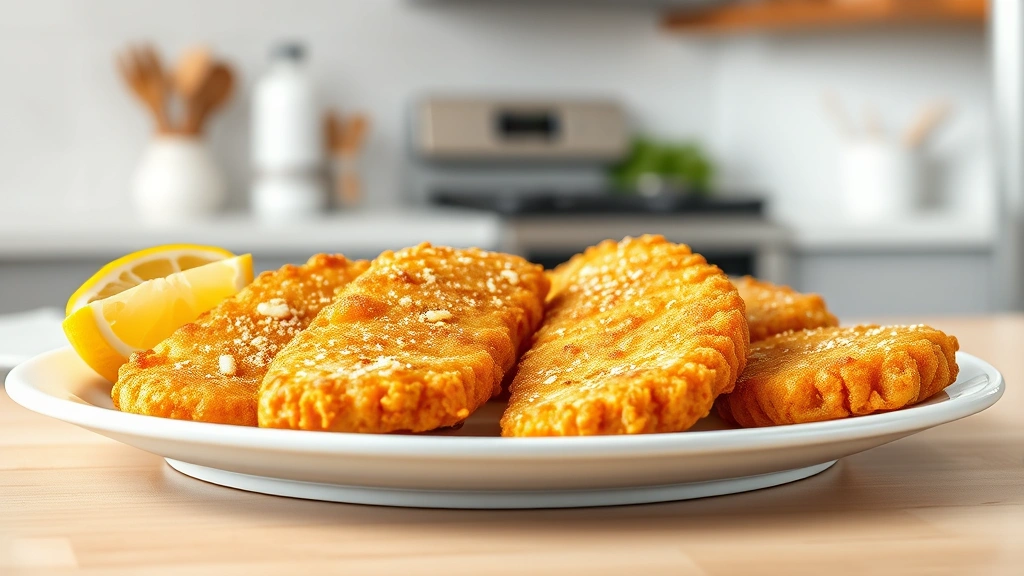
Knowing how long to fry fish is the difference between golden, crispy perfection and a soggy, greasy mess. I’ve spent years in the kitchen perfecting this technique, and I’m going to walk you through exactly what you need to know to nail it every single time.
Table of Contents
Frying Time Basics
The golden rule: most fish fillets fry in 3 to 5 minutes total, depending on thickness. That’s it. Sounds simple, but the devil’s in the details. I always tell people that frying fish is less about slavishly watching a clock and more about understanding the science happening in your pan. When you drop that fish into hot oil, the exterior instantly seals while the interior cooks through gentle heat transfer. Too short and it’s raw inside; too long and you’re eating cardboard.
For thinner fillets—think flounder or sole—aim for the 3-minute mark. Thicker cuts like halibut or cod need closer to 4 to 5 minutes. Split the difference for medium-thickness fillets like tilapia or catfish, and you’re looking at about 4 minutes. The key is that your oil temperature stays consistent, which we’ll dive into next.
Oil Temperature Critical
This is non-negotiable: your oil needs to be between 350°F and 375°F. Use a thermometer—not guesswork. I’ve seen too many people lose entire batches because they eyeballed it. At 350°F, you’ll get a slower cook with a thicker, crispier crust. At 375°F, things move faster and the exterior browns more aggressively. Both work; pick your preference and stick with it.
Cold oil means greasy fish. Oil that’s too hot burns the outside before the inside cooks. When you slide that fish in, it should sizzle immediately but not violently. If it’s popping and crackling like fireworks, your oil’s too hot—let it cool a minute or two. The temperature will drop when you add the cold fish anyway, so factor that in. I always bring my oil back to temperature between batches.
Fish Thickness Matters
This is where precision pays off. Measure your fillets at their thickest point—most should be between ½ inch and 1 inch thick for ideal frying. Anything thinner than ½ inch cooks in 2 to 3 minutes and risks drying out. Anything thicker than 1 inch needs 5 to 7 minutes and might burn before the center cooks through.
Pro tip: if you’ve got a thick fillet, butterfly it or pound it to even thickness. I use the flat side of a meat mallet, working gently from the center outward. This creates uniform cooking and prevents those annoying spots where part of the fish is done and part isn’t. Consistency in thickness is honestly more important than the exact time on the timer.
Prepping Your Fish
Start with dry fish. Seriously, pat those fillets completely dry with paper towels. Any moisture on the surface creates steam, which prevents that crispy crust you’re after. I usually prep my fish 10 to 15 minutes before frying, letting them sit uncovered on a plate so any residual moisture evaporates.
Season generously just before coating—salt draws out moisture if you do it too early. Use kosher salt and freshly ground black pepper, at minimum. Some folks add cayenne, paprika, or garlic powder to the seasoning mix. That’s where you get creative. But don’t oversalt; you can always add more at the table, but you can’t take it out. If you’re making something like a crab roll recipe, you’ll want to balance flavors across the whole dish.
Coating Techniques
Your coating is your armor. The standard breading setup is flour, egg wash, then breadcrumbs—in that order. But here’s what most people mess up: they don’t let the coating stick. After you bread the fish, let it sit on a plate for 5 minutes. This helps the coating adhere so it doesn’t just slide off in the oil.
For the flour step, I use a 50/50 mix of all-purpose flour and cornstarch. The cornstarch adds extra crispiness. Dredge both sides thoroughly, then shake off the excess. The egg wash should be just one beaten egg mixed with a splash of water—thin enough to coat evenly but thick enough to hold the breadcrumbs. Use panko breadcrumbs if you want maximum crunch, or regular breadcrumbs for a finer texture. Some people add a tablespoon of the flour mixture to their breadcrumbs for even better adhesion.

Testing for Doneness
The visual test: the fish should be golden brown on both sides. But here’s the real test—flake it with a fork at the thickest point. If it flakes easily and the flesh is opaque white (not translucent), you’re done. For most fish, you’ll see this happen right around that 4-minute mark for medium fillets.
If you’re nervous, use a meat thermometer. Fish is safely cooked at 145°F internal temperature. I’ll be honest though—by the time you’re checking temperature, you’ve probably already nailed the timing visually. The flake test is faster and just as reliable if you know what you’re looking for.
Common Frying Mistakes
Crowding the pan is the number one killer. When you drop too much fish in at once, the oil temperature plummets and you end up steaming instead of frying. Fry in batches. Give each piece space—about 2 inches between fillets minimum. Your patience here pays dividends in texture.
Flipping too early or too often is mistake number two. Flip once, halfway through cooking. If you keep flipping, the coating breaks apart and you lose that crispy exterior. Let the first side do its thing for about 2 minutes, then flip and finish. Don’t poke it, don’t move it around—just let it be.
Using old, dirty oil is mistake number three. Oil picks up moisture and particles from each batch. After 3 to 4 uses, it starts breaking down and imparts off-flavors. If your oil looks dark or smells off, replace it. Your fish will taste noticeably better.
Best Fish Varieties
Not all fish fry equally. Firm, white fish works best: cod, halibut, tilapia, catfish, and pollock are all excellent choices. These hold their shape and have mild, pleasant flavors that let your technique shine. Flounder and sole are delicate and fry beautifully if you’re gentle with them.
Avoid soft, oily fish like mackerel or salmon for traditional deep frying—they’re better pan-fried or baked. If you’re making something like a side dish pairing with your fried fish, choose something light that won’t compete. Steamed vegetables work perfectly.
Oil Reuse & Storage
You can reuse frying oil 3 to 4 times if you strain it properly. After frying, let the oil cool completely, then pour it through a fine-mesh strainer lined with cheesecloth to catch all the breading particles. Store it in a sealed container in a cool, dark place—not the cabinet above your stove where heat accelerates degradation.
Signs your oil is done: it’s dark brown, smells rancid, or smokes at a lower temperature than it used to. When that happens, dispose of it responsibly. Don’t pour it down the drain—it clogs pipes. Many municipalities have recycling programs for used cooking oil, or you can let it solidify and throw it in the trash.
Frequently Asked Questions
How long does fish take to fry at 350 degrees?
At 350°F, most medium-thickness fillets take 4 to 5 minutes total frying time. The lower temperature means a slower cook, which gives you a thicker, crispier crust. Thinner pieces might be done in 3 to 4 minutes, so watch closely.
Can I fry frozen fish?
You can, but I don’t recommend it. Frozen fish releases more moisture as it thaws in the hot oil, which creates steam and prevents crisping. Thaw it in the refrigerator overnight, pat it completely dry, and then fry. The results are noticeably better.
Why is my fried fish soggy?
Three likely culprits: your oil wasn’t hot enough, you crowded the pan, or you didn’t pat the fish dry before coating. Check all three. Also make sure your coating is completely dry before frying—wet breading won’t crisp up. If you’re making a sauce to serve alongside, don’t pour it on immediately—let the fish rest on a paper towel for a minute first.
Should I flip the fish while frying?
Yes, exactly once. Flip halfway through cooking to ensure both sides cook evenly and brown properly. Flipping multiple times breaks apart your coating and defeats the purpose of that careful breading work you did.
What’s the difference between deep frying and pan frying fish?
Deep frying uses enough oil to completely submerge the fish (usually 2 to 3 inches), while pan frying uses just ¼ to ½ inch of oil. Deep frying typically gives crispier results because the fish cooks from all sides at once. Timing is nearly identical though—3 to 5 minutes for most fillets in either method.
How do I know when fried fish is done?
The flesh should be opaque and flake easily with a fork at the thickest point. The coating should be golden brown. If you want to be absolutely certain, use a meat thermometer—fish is done at 145°F internal temperature.
Wrapping It Up
Mastering how long to fry fish comes down to three things: consistent oil temperature between 350°F and 375°F, proper preparation and patting dry, and respecting the timing for your specific fillet thickness. Most fish cooks in 3 to 5 minutes. Start checking at the 3-minute mark for thinner pieces, and don’t panic if you need the full 5 minutes for thicker cuts. Your eyes and a fork are your best tools—more reliable than any timer.
The technique is straightforward once you understand the principles. Oil temperature controls crispiness and cook speed. Thickness determines total time. Dryness and proper coating ensure that golden exterior. Get these three elements right, and you’ll consistently produce restaurant-quality fried fish at home. If you’re pairing this with sides, consider complementary recipes like apple sauce for certain preparations or simple steamed vegetables for others.
Practice a few batches and you’ll develop an intuition for it. You’ll know by the sound of the sizzle, the color of the crust, and the way it flakes whether you’ve nailed it. That’s when frying fish stops being a guessing game and becomes something you do confidently, every single time.


