
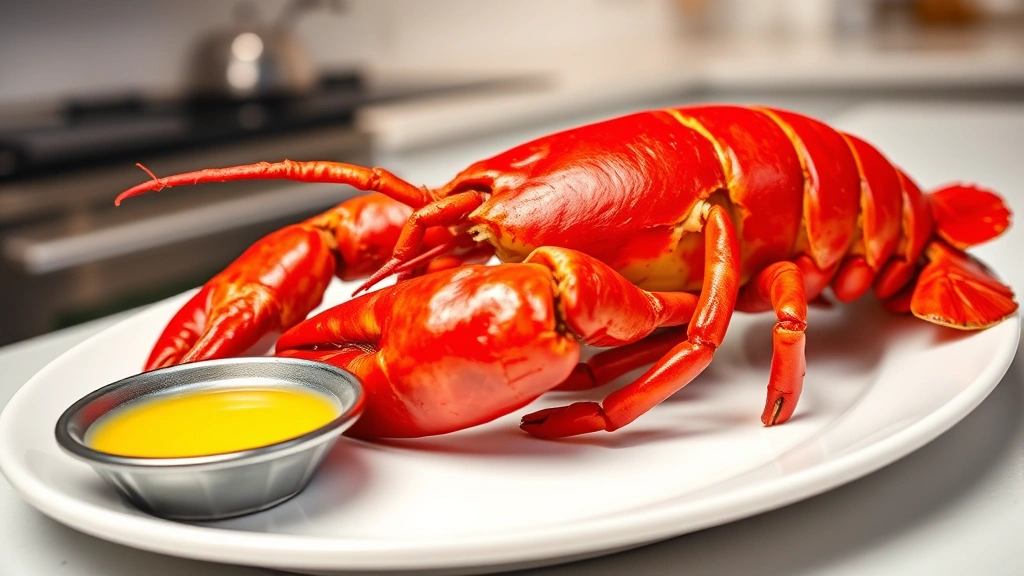
Knowing how long to boil lobster is the difference between tender, succulent meat and rubbery disappointment. Whether you’re a seasoned cook or tackling your first lobster dinner, timing is everything—and honestly, it’s way simpler than you’d think. I’ve boiled enough lobsters to know the tricks, and I’m going to walk you through the exact process so you nail it every single time.
Table of Contents
Timing by Weight
Here’s the golden rule: boil lobster for 12-15 minutes per pound. That’s your baseline. A 1.5-pound lobster takes roughly 18-22 minutes. A 2-pounder needs about 24-30 minutes. The math is straightforward, but let me break down the specifics because size actually matters here.
For smaller lobsters (1 to 1.5 pounds), aim for the lower end—12-15 minutes. These little guys cook faster and can turn rubbery quick if you overdo it. Medium lobsters (1.5 to 2.5 pounds) do best at 15-18 minutes per pound. The larger specimens (3+ pounds) need the full 15-20 minutes per pound because the heat takes longer to penetrate that thick shell and meat.
Start timing the moment the water returns to a rolling boil after you’ve dropped in the lobster. That’s your clock. Don’t count the time it takes for the water to heat back up—that’s a rookie mistake that’ll throw off your entire calculation.
Prep Your Pot Right
You can’t just throw a lobster in any old pot of water. You need serious volume here. Use a pot that’s at least 6-8 quarts for a single 1.5-pound lobster. Adding more lobsters? Add another 3-4 quarts per additional lobster. The water needs room to circulate, and crowding them creates temperature drops that mess with your cooking time.
Fill that pot with salted water—and I mean salted. Use about 1/4 cup of salt per gallon of water. This mimics the ocean environment and actually seasons the meat as it cooks. It’s not optional; it’s essential. Bring the water to a hard, rolling boil before the lobster even touches it. This is non-negotiable if you want consistent results.
Pro tip: Some folks add a splash of vinegar or lemon juice to the water. It won’t hurt, and it can help with the color, but it’s not required. What is required is that boil—a full, aggressive boil, not a gentle simmer.
The Boiling Process
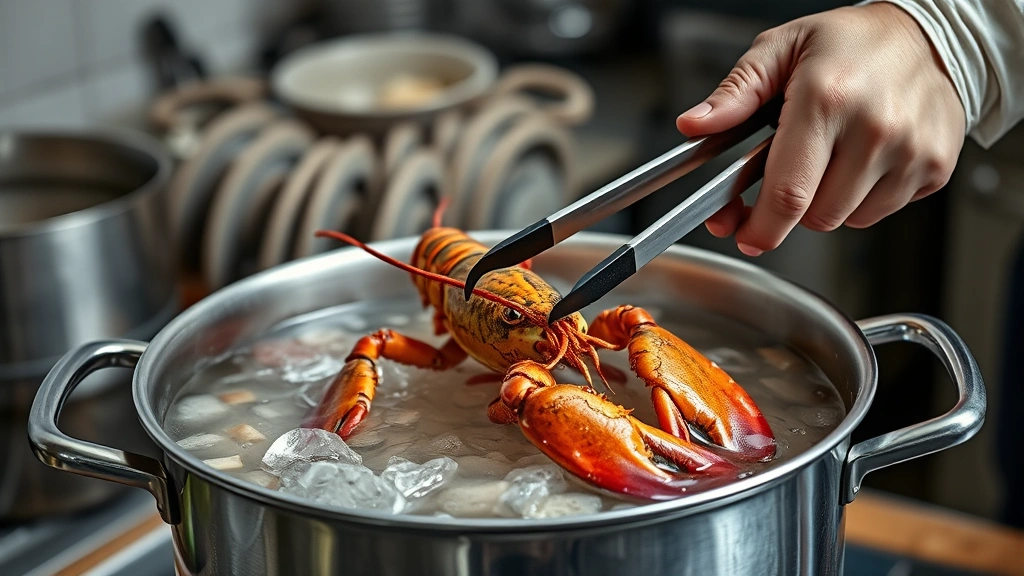
When you’re ready to cook, grab your lobster firmly by the body (not the tail—they thrash), and place it head-first into the boiling water. Yeah, it’s going to move around. That’s normal. Keep the water at a rolling boil the entire time. If the temperature drops too much, your timing gets thrown off and you’ll end up with uneven cooking.
Don’t cover the pot. You want steam to escape, and you want to monitor what’s happening. Keep the heat on high or medium-high to maintain that boil. Some people add ice cubes if the temperature drops, but honestly, if your burner is strong enough, you won’t need to.
This is the time to start your timer. From the moment it goes in until the moment you pull it out, you’re counting those 12-20 minutes depending on size. Don’t walk away completely—keep an eye on it to make sure the boil stays consistent.
Signs of Doneness
The shell should turn a bright, vibrant red when fully cooked. That’s your visual cue. But here’s the thing—the shell color isn’t perfectly reliable because some lobsters start out darker. The real test is the meat. When you crack open a claw, the meat should be opaque white throughout, with no translucent or grayish areas. If you see any gray, it needs more time.
The tail meat is another indicator. Gently pull the tail away from the body. If it separates easily and the meat is white and firm, you’re golden. If it’s still somewhat translucent or rubbery, give it another 2-3 minutes and check again.
Temperature-wise, the internal meat should reach 145°F (63°C) at the thickest part. Use an instant-read thermometer in the thickest part of the tail meat. This is the most reliable method if you want zero guesswork.
Temperature Matters
Water temperature is your invisible hand controlling everything. Starting with a true rolling boil ensures even cooking from the moment the lobster enters the pot. If your water is only simmering, you’re looking at adding 5-10 extra minutes, and that inconsistency is where things go wrong.
High altitude? You’ll need to add time because water boils at a lower temperature. Add about 1 minute per 1,000 feet of elevation above sea level. So if you’re at 5,000 feet, add roughly 5 minutes to your cooking time.
The water temperature should stay between 212°F (100°C) at sea level. Don’t let it drop below 200°F, or you’re essentially simmering, and that changes everything about your timing.
Cooling and Handling
The moment your lobster hits that perfect doneness point, pull it out with tongs and place it on a cutting board or in a colander. Don’t leave it in the hot water—carryover cooking will continue for a minute or two, and you don’t want it overdone. Let it cool for 2-3 minutes before handling.
If you’re serving it whole, let it cool enough that you can handle it comfortably. If you’re cracking it for a boiling crab recipe or similar dish, wait until it’s completely cool before you start breaking it apart. The meat will separate better, and you won’t burn your fingers.
For storage, refrigerate cooked lobster within 2 hours. It’ll keep for 3-4 days in an airtight container. You can also freeze it for up to 4 months, though the texture degrades slightly.
Common Mistakes
The biggest error I see? People start timing before the water comes back to a boil. You drop the lobster in, the temperature plummets, and then they start their timer. That’s wrong. Wait for the water to return to a rolling boil, then start counting. This alone will save you from rubbery lobster.
Second mistake: overcrowding the pot. When you cram multiple lobsters into one pot, the water temperature drops significantly, and they cook unevenly. The ones on the bottom cook faster than the ones floating on top. Use a bigger pot or cook in batches.
Third: assuming all lobsters are the same. A 1.5-pound lobster and a 2-pound lobster aren’t just 7 minutes apart in cooking time. The density changes, the shell thickness changes. Weigh your lobsters and calculate accordingly.
Fourth: using cold water or lukewarm water as your starting point. This adds 5-10 minutes of unpredictable cooking time. Always start with a hard boil.
Serving Tips
Serve your boiled lobster with melted butter—it’s the classic for a reason. You can also pair it with hot sauce recipes if you want something with more kick, or go traditional with lemon and drawn butter.
If you’re making a healthy lunch recipes meal prep situation, chop the meat and refrigerate it. Cold lobster meat is fantastic in salads, on crackers, or in wraps. It stays fresh for 3-4 days.
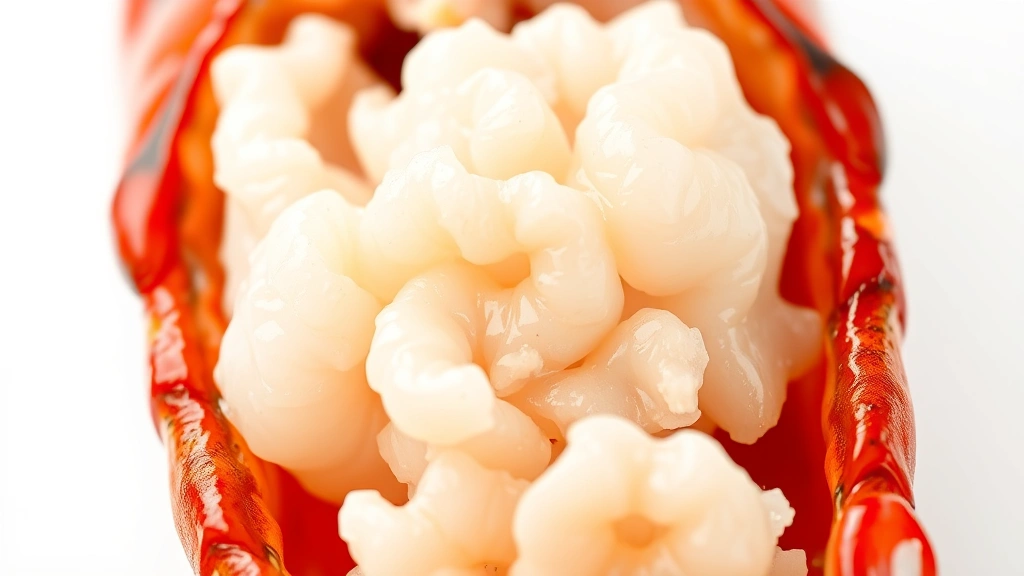
For presentation, you can serve it whole with the meat still in the shell, or crack it beforehand and arrange it on a platter. Either way, make sure your guests know how to extract the meat from the claws and tail. It’s not intuitive for everyone.
Frequently Asked Questions
Can I boil lobster ahead of time?
Absolutely. Boil it, cool it completely, and refrigerate it. It’ll keep for 3-4 days. You can serve it cold with cocktail sauce or reheat it gently (don’t boil it again—that’ll make it tough). To reheat, place it in a 350°F oven for about 5 minutes, or steam it for 3-4 minutes.
What if my lobster is frozen?
Thaw it in the refrigerator for 24 hours before boiling. If you’re in a rush, submerge it in cold water for 1-2 hours. Never use hot water—that’ll cook the outside while the inside stays frozen. Once thawed, follow the standard timing rules.
How do I know if my lobster is dead before boiling?
A live lobster should move its legs and tail. If it’s completely limp and unresponsive, it might be dead. Dead lobster can be unsafe to eat, so stick with live ones from reputable sources. Some people humanely chill the lobster in the freezer for 15 minutes before boiling to minimize suffering.
Can I use a pressure cooker or instant pot?
Yes, but the timing changes. In a pressure cooker, boil lobster for 5-8 minutes at high pressure, depending on size. Release the pressure naturally for 5 minutes, then quick-release. This method is faster but requires careful attention to avoid overcooking.
Why is my lobster meat rubbery?
Overcooking. You went beyond your target time. Even 2-3 extra minutes can turn tender meat into rubber. Stick to your calculated time and use the visual cues (white meat, firm texture) to confirm doneness. If you’re consistently getting rubbery results, you might be starting your timer too early or not bringing the water to a true boil.
Is there a difference between male and female lobsters?
Cooking time is the same, but females have softer shells and slightly more tender meat. Females also have roe (coral), which some people consider a delicacy. Neither cooks faster or slower than the other—size and weight are what matter.
Final Thoughts
Boiling lobster is genuinely one of the easiest proteins to cook once you understand the timing. Twelve to fifteen minutes per pound, starting from a rolling boil, and you’re done. The shell turns red, the meat turns white, and you’ve got restaurant-quality lobster at home.
The key is consistency: same pot size, same water salinity, same boil intensity, and accurate timing. Mess with any of those variables and you’re gambling. Stick to the formula, trust the process, and you’ll have perfect lobster every single time.
Whether you’re making a simple boiled protein meal or something fancier, start here. Master the basics, and everything else is just seasoning and presentation.


