

So you’re wondering how far is Miami Florida to Fort Lauderdale? The straight answer: about 30 miles separates these two South Florida powerhouses, but the real story depends on where you’re starting and which route you take. Whether you’re planning a weekend getaway, a business trip, or just curious about the distance, understanding your options makes all the difference.
Table of Contents
Distance Breakdown
The distance between Miami and Fort Lauderdale sits at roughly 30 miles when you measure from downtown Miami to downtown Fort Lauderdale. However, this number shifts depending on your exact starting and ending points. If you’re measuring from Miami International Airport (MIA) to Fort Lauderdale-Hollywood International Airport (FLL), you’re looking at about 28 miles. From Miami Beach to Fort Lauderdale Beach, the distance stretches closer to 35 miles. Understanding these variations helps you plan more accurately.
Most travelers use I-95 North as their primary reference point for calculating distance. This interstate corridor is the backbone of South Florida transportation, connecting the two cities with relative straightforwardness. The actual road distance typically ranges from 28 to 35 miles depending on your specific origin and destination within each metropolitan area.
Driving Times Explained
Here’s where things get real: driving time isn’t just about distance. In light traffic conditions, you can make the trip in 35-45 minutes. During rush hour (roughly 7-9 AM and 4-7 PM weekdays), expect 60-90 minutes or longer. Weekend traffic is generally lighter, so you might shave 10-15 minutes off your commute.
I-95 North is the most direct route, but it’s also the most congested during peak hours. The Turnpike (Florida’s Turnpike) offers an alternative that sometimes moves faster, though you’ll pay a toll. Local roads like US-1 provide scenic options if you’re not in a hurry and want to avoid highway stress.
Route Options Available
You’ve got three main routes to choose from, each with distinct advantages. The I-95 North corridor is the fastest in ideal conditions and requires no tolls, making it the default choice for most travelers. It’s straightforward—just head north and follow the signs. During off-peak hours, this is your winner.
The Florida’s Turnpike (toll road) runs parallel to I-95 and often provides smoother traffic flow, especially during rush hours. Yes, you’ll pay tolls (typically $2-4 depending on your exact route), but the time savings might justify the cost if you’re in a hurry. Use your Sunpass or pay at toll booths.
US-1 hugs the coast and takes you through local communities. It’s the slowest option but offers character, local restaurants, and scenic views. This route works great if you’re making a leisurely trip or want to explore neighborhoods along the way. You’ll pass through areas like Deerfield Beach and Pompano Beach, each with their own charm.
Public Transportation Choices
Not everyone drives, and South Florida’s public transit system offers viable alternatives. The Broward County Transit (BCT) operates buses connecting Miami and Fort Lauderdale. Routes like the 3 and 11 can get you there, though expect 90 minutes to 2 hours depending on stops and traffic. It’s affordable (around $2.50 per ride) but requires patience.
The Tri-Rail commuter train is another solid option if you’re near the stations. It connects downtown Miami with Fort Lauderdale and takes about 45 minutes. The train runs regularly during weekdays and weekends, though less frequently in the evening. This option works well if you want to avoid driving stress entirely.
Ride-sharing services like Uber and Lyft offer convenience with door-to-door service. Expect to pay $25-50 depending on surge pricing and exact locations. During rush hours or special events, prices spike significantly. It’s pricier than public transit but faster and more flexible.
Traffic Patterns Matter
Understanding when to travel makes a huge difference in your journey. Weekday mornings (7-9 AM) see northbound traffic heading toward Fort Lauderdale and beyond, while southbound traffic flows toward Miami. Afternoon rush (4-7 PM) reverses this pattern. If you’re flexible, traveling between 10 AM and 3 PM offers the smoothest sailing.
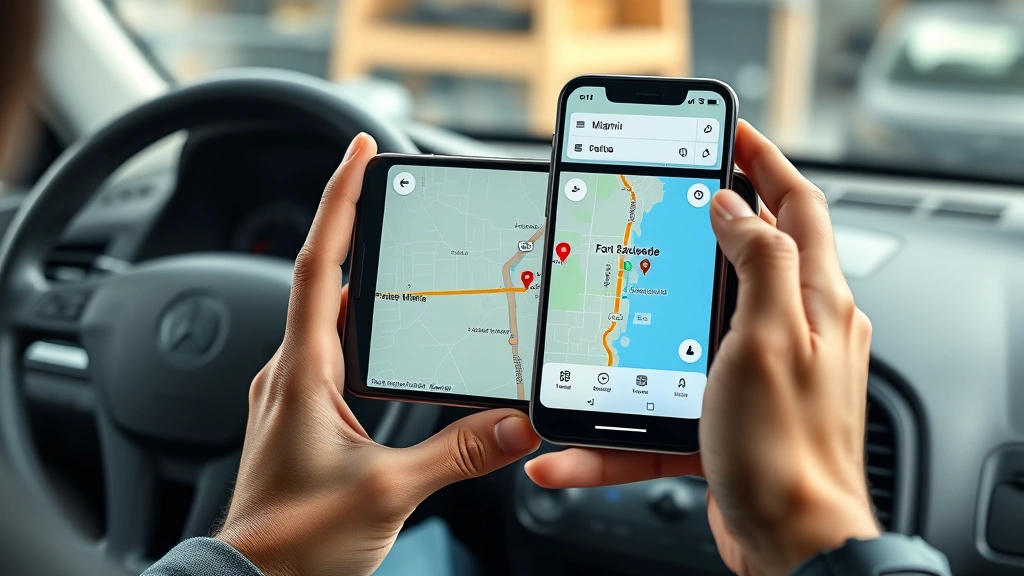
Weekends, particularly Saturday and Sunday mornings, provide lighter traffic overall. However, Friday afternoons and Sunday evenings bring increased congestion as people head to and from weekend destinations. Special events at venues like Hard Rock Stadium or Miami’s entertainment districts can spike traffic unpredictably.
Weather impacts traffic too. During hurricane season (June-November), unexpected storms can paralyze I-95. Summer afternoon thunderstorms often cause slowdowns. Winter brings seasonal residents and tourists, increasing overall volume. Checking traffic apps like Google Maps or Waze before departing gives you real-time conditions and alternate route suggestions.
Alternative Transportation Methods
If you want to skip the driving entirely, consider flying. Both cities have major airports (MIA and FLL), and short regional flights operate between them. However, with security lines, boarding, and flight time, the total journey often exceeds driving. This option makes sense only if you’re continuing to another destination.
Cycling is viable for the adventurous. South Florida’s relatively flat terrain and growing bike infrastructure make it possible, though 30 miles is a serious ride. You’d need 2-3 hours of solid cycling and some familiarity with local roads. The Miami-Dade Greenways and Broward County bike paths offer dedicated routes.
Scooters and e-bikes have become popular for shorter distances within each city. Several companies operate dockless scooter systems, though they won’t help with the 30-mile gap between cities. They’re perfect for the last-mile problem once you arrive at your destination.
Best Time to Travel
Timing your trip strategically can cut your travel time in half. Tuesday through Thursday mornings (10 AM-2 PM) offer the sweet spot—light traffic, pleasant weather usually, and minimal delays. Avoid Friday afternoons like the plague; everyone’s heading to weekend destinations simultaneously.
Summer months (June-September) mean fewer tourists but more afternoon thunderstorms. Winter (December-March) brings peak season crowds and snowbirds. Spring (April-May) and fall (October-November) offer moderate traffic with pleasant weather. If you’re flexible on dates, these shoulder seasons work beautifully.
Special event schedules matter too. Check if there’s a concert at Hard Rock Stadium, a Heat game at FTX Arena, or a major event at the Convention Center. These draw crowds and create unpredictable traffic spikes. Planning around these events saves frustration.
Cost Comparison Guide
Driving your own vehicle costs roughly $0.60-0.70 per mile in fuel and wear-and-tear (based on AAA estimates). For a 30-mile trip, that’s about $18-21. If you take the Turnpike, add $2-4 in tolls. Total cost: $20-25 for a solo driver.
Ride-sharing runs $25-50 depending on surge pricing, time of day, and exact pickup/dropoff locations. It’s more expensive per mile but eliminates stress and parking hassles. Split between two people, the cost becomes more competitive with driving.
Public transit costs just $2.50 per ride on buses or $3 on Tri-Rail. For a round trip, you’re looking at $5-6 total. It’s the cheapest option but trades time and convenience for savings. The Tri-Rail offers monthly passes around $50 if you’re making regular trips.
For how early should you get to the airport if flying between the cities, budget an extra hour for airport procedures, though honestly, driving usually beats flying for this distance.
Frequently Asked Questions
What’s the fastest way to get from Miami to Fort Lauderdale?
I-95 North during off-peak hours (10 AM-3 PM) typically offers the fastest route, taking 35-45 minutes. The Turnpike can be faster during rush hours if you don’t mind paying tolls. Ride-sharing eliminates driving stress but isn’t necessarily faster.
Can you take a train from Miami to Fort Lauderdale?
Yes, the Tri-Rail commuter train connects downtown Miami with Fort Lauderdale, taking about 45 minutes. It’s reliable, affordable (around $3 per ride), and a great option if you want to avoid driving. Service runs regularly during weekdays and weekends, though with reduced evening schedules.
How much does it cost to drive between these cities?
Expect to spend $18-25 in fuel and vehicle wear-and-tear for a one-way trip (about 30 miles). If you use the Turnpike, add $2-4 in tolls. Ride-sharing costs $25-50 depending on demand. Public transit runs only $2.50 per ride.
What’s the best route to avoid traffic?
Travel during off-peak hours (10 AM-3 PM weekdays or early morning weekends). Use I-95 North during these times for the fastest route. If you must travel during rush hour, the Turnpike often moves faster than I-95, though it costs extra. Check Waze or Google Maps for real-time traffic conditions before departing.
Is there a scenic route between Miami and Fort Lauderdale?
US-1 hugs the coast and passes through charming beach communities. It’s slower than I-95 (60-90 minutes) but offers restaurants, shops, and ocean views. Perfect for a leisurely drive when you’re not in a hurry. You’ll pass through Deerfield Beach, Pompano Beach, and other local gems.
How far is Miami to Fort Lauderdale airport specifically?
From downtown Miami to Fort Lauderdale-Hollywood International Airport (FLL), the distance is approximately 28 miles. Driving typically takes 40-60 minutes depending on traffic. If you’re flying out of FLL instead of MIA, this distance might save you time compared to Miami’s airport.
Final Thoughts
The distance between Miami and Fort Lauderdale—roughly 30 miles—is deceptively simple. What matters is understanding your options and choosing based on your priorities: speed, cost, convenience, or experience. During light traffic, you’re 35-45 minutes away by car. During rush hour, budget 90 minutes. Public transit offers affordable alternatives if you’ve got time. Ride-sharing provides stress-free convenience at a premium price.
For how to find scale factor if you’re plotting this on a map, remember that real-world travel involves more than just miles—traffic, tolls, time of day, and your preferred travel method all factor in. Plan accordingly, check traffic conditions before you leave, and you’ll navigate this South Florida corridor like a local.
Whether you’re commuting regularly or making a one-time trip, you now understand the full picture of traveling between these two vibrant Florida cities. The journey’s easier when you know what to expect.


