
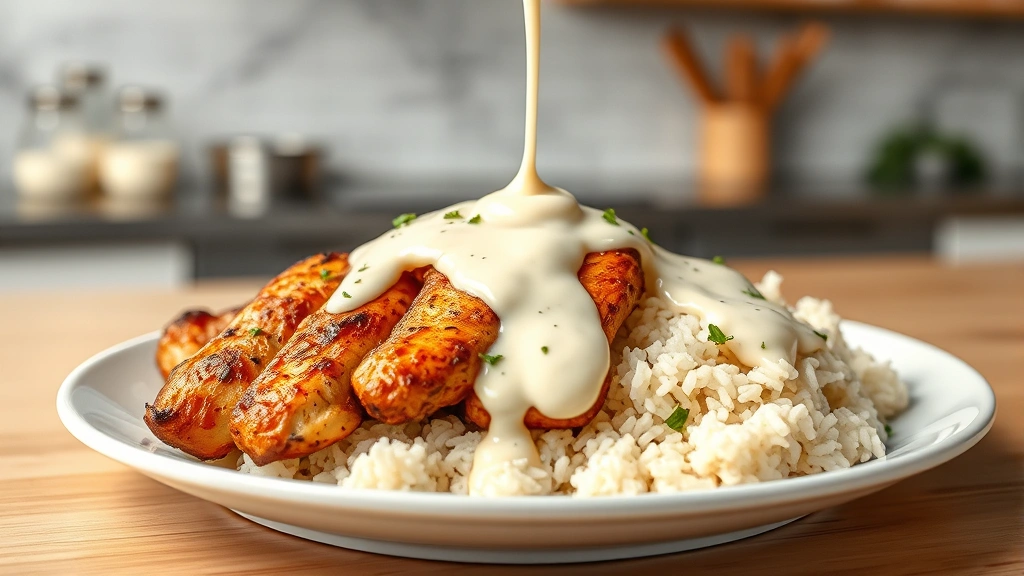
A halal white sauce recipe is the secret weapon behind those incredible street cart platters you crave at 2 AM. This creamy, garlicky condiment transforms simple grilled meat and rice into something genuinely craveable—and honestly, it’s easier to make at home than you’d think.
Table of Contents
What Is Halal White Sauce?
If you’ve hit up a halal cart in any major city, you know the drill: chicken over rice, drizzled generously with white sauce. This isn’t some fancy French béchamel—it’s a straightforward mayo-based sauce with garlic that punches way above its weight. Street vendors guard their recipes like they’re Fort Knox, but the basic formula is surprisingly simple: mayo, garlic, lemon juice, and a splash of water to loosen it up.
The magic happens when you get the proportions right. Too much garlic and it becomes a vampire repellent. Too little and you’re just eating expensive mayonnaise. The sauce should be creamy, pourable, and bold enough to stand up to seasoned meat and rice without apologizing.
Ingredients You Need
Here’s what goes into an authentic halal white sauce recipe that actually tastes like the real deal:
- Mayonnaise: 1 cup (use quality mayo—this is the foundation)
- Garlic: 6-8 cloves, minced fine or pressed
- Lemon juice: 2-3 tablespoons fresh squeezed
- Water: 2-4 tablespoons (adjust for consistency)
- Salt: 1/2 teaspoon (start here, adjust to taste)
- White pepper: 1/4 teaspoon (optional but recommended)
That’s it. No weird additives, no food coloring, no mystery ingredients. The quality of your mayonnaise matters here—don’t cheap out on the base.
Step-by-Step Process
Making this sauce takes about five minutes, which is honestly faster than waiting in the cart line. Here’s the exact method:
Step 1: Grab a medium mixing bowl and add your cup of mayonnaise. Room temperature mayo mixes easier than cold mayo straight from the fridge, so let it sit for a couple minutes if you’re in a hurry.
Step 2: Mince your garlic as fine as you can get it. A garlic press is your best friend here—it breaks down the garlic into tiny particles that distribute evenly rather than creating chunky pockets. If you’re using a knife, mince it to nearly a paste consistency.
Step 3: Add the minced garlic to the mayo and stir thoroughly. You’re looking to break up any clumps and get the garlic distributed evenly throughout. This takes about one minute of solid stirring.
Step 4: Squeeze fresh lemon juice into the bowl. Don’t use bottled lemon juice—fresh makes a noticeable difference in brightness. Stir it in completely.
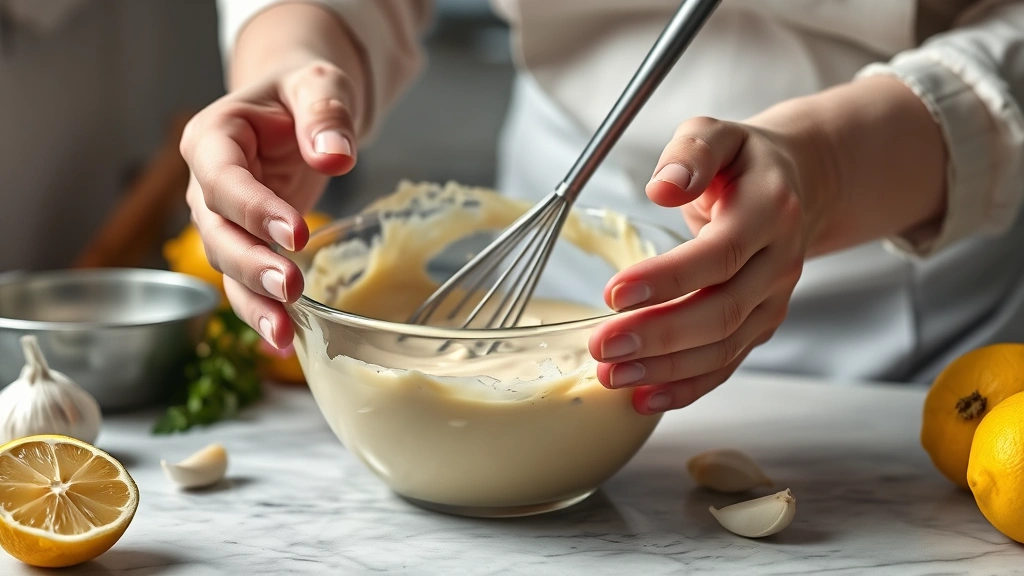
Step 5: Add water one tablespoon at a time, stirring between additions. This is where you dial in the consistency. Street cart sauce is pourable but still thick enough to coat—think heavy cream rather than milk.
Step 6: Season with salt and white pepper. Taste as you go. The sauce should make your mouth water with that garlicky punch, not make you wince.
Nailing the Texture
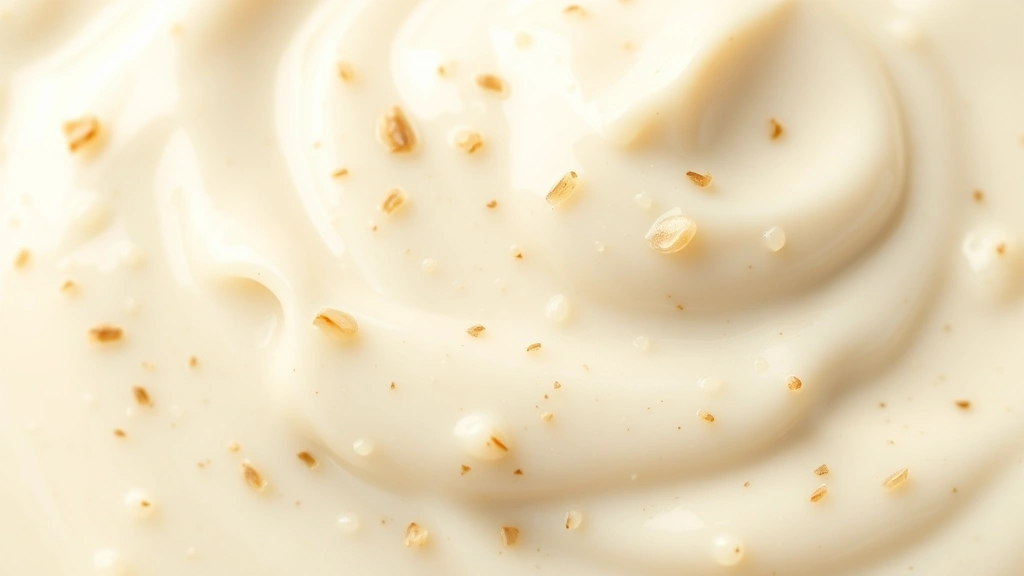
The consistency is where most home attempts fail. Too thick and it sits on your food like a blob. Too thin and it just runs off. The target is somewhere between Greek yogurt and heavy cream—thick enough to coat a spoon but still flowing smoothly.
Start with 2 tablespoons of water and add more gradually. You can always add more water, but you can’t take it out. Some people add a tiny bit of garlic powder at the end to intensify the flavor without adding more liquid, which is a solid move if your sauce is already at the right consistency but tastes weak.
Temperature matters too. If your mayo was cold, the sauce will thicken slightly as it cools. Keep this in mind when adjusting water content.
Flavor Adjustments
This is where you make the recipe your own. The basic formula is a foundation, not gospel.
More garlic punch: Add another clove or two, or a quarter teaspoon of garlic powder. Some carts go heavy on the garlic—if that’s your jam, lean into it.
More brightness: Extra lemon juice or a teaspoon of vinegar adds tang. This cuts through rich meats beautifully.
Heat: A pinch of cayenne pepper or a tiny bit of hot sauce works if you want a white sauce with attitude. Keep it minimal—you’re not trying to make sriracha mayo.
Herbs: Fresh parsley or cilantro are unconventional but not unwelcome. Chop them fine and fold them in at the end.
Storage Tips
Made a big batch? Smart move. This sauce keeps well in the fridge for about one week in an airtight container. The garlic flavor actually intensifies over a day or two, so day-two sauce might be even better than day-one.
Don’t freeze it. Mayo-based sauces separate when frozen and never fully recover their texture. Stick to the fridge.
If your sauce separates slightly over time, just give it a good stir before using. If it’s separated badly, you can whisk in a tablespoon of water and it usually comes back together.
Common Mistakes
People mess this up in predictable ways. Here’s what to avoid:
Using pre-minced garlic: The jarred stuff is already oxidized and tastes tinny. Fresh garlic only.
Skipping the lemon juice: This is what makes the sauce taste bright instead of flat. Don’t skip it.
Bottled lemon juice works in a pinch, but fresh is noticeably better. If you’re making this sauce regularly, keep fresh lemons on hand. They’re cheap insurance.
Not tasting as you go: Everyone’s salt tolerance is different, and your garlic might be stronger or milder depending on freshness. Taste at each stage and adjust.
Mixing in cold mayo straight from the fridge: Cold mayo is thick and stubborn. Let it warm up for a few minutes first, and your mixing will be way easier.
Serving Suggestions
Obviously, this sauce lives on halal platters—chicken, rice, salad, and sauce. But it’s way more versatile than that. Drizzle it on grilled lamb over rice. Use it as a dip for warm pita bread. Slather it on a gyro or shawarma sandwich. Mix it into a grain bowl with roasted vegetables.
It’s also incredible on simple grilled fish. A piece of halibut or salmon with this sauce and some lemon is restaurant-quality food made at home. For vegetable applications, try it on roasted potatoes or as a dipping sauce for fried vegetables—think steamed broccoli alternatives that you’ve given a quick pan-sear for crispness.
The sauce pairs well with Mediterranean flavors generally. If you’re building a mezze board or serving Middle Eastern food, this sauce ties everything together. It’s forgiving, adaptable, and makes everything taste better.
Frequently Asked Questions
Can I make this sauce without mayo?
Technically yes, but it won’t taste like authentic halal white sauce. You could use Greek yogurt as a base, but the flavor and texture will be different. Mayo is the traditional foundation for a reason—it’s neutral, creamy, and takes garlic flavor beautifully.
How long does homemade halal white sauce last?
About one week in the refrigerator in an airtight container. The flavor actually improves on day two as the garlic flavors meld. Don’t freeze it—mayo-based sauces separate when frozen.
Is this sauce actually halal?
The sauce itself contains no haram ingredients. However, traditional halal certification depends on the mayo brand you use. Check your mayo’s certification if this matters for your dietary needs. Most major mayo brands are halal-certified.
What’s the difference between white sauce and garlic sauce?
They’re basically the same thing. Street carts call it white sauce because of its color. The garlic is the star ingredient, but mayo is what makes it creamy and pourable. Some recipes add a bit of vinegar or yogurt, but the mayo-garlic base is standard.
Can I make this with fresh garlic paste?
Yes. If you have access to fresh garlic paste, use about a tablespoon per cup of mayo. Adjust to taste. Fresh paste is actually more convenient than mincing if you make this sauce regularly.
Why does cart sauce taste different than mine?
Usually because they’re using more garlic than you think, or they’re using a specific mayo brand. Some carts also add a tiny bit of white vinegar or use slightly more lemon. The other factor is freshness—they make it multiple times daily, so you’re getting sauce at its peak. Make a fresh batch right before serving for best results.


