
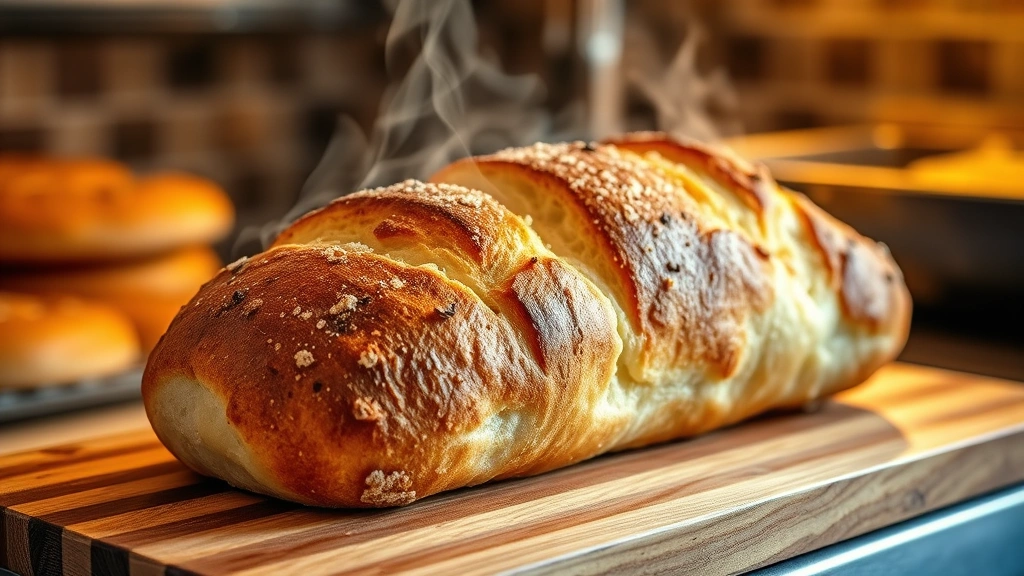
Making a crusty italian bread recipe at home is easier than you think, and the results will blow store-bought bread out of the water. I’m talking about that golden, crackling crust that shatters when you bite into it, with a soft, airy crumb inside. You don’t need fancy equipment or years of baking experience—just time, patience, and the right technique.
Table of Contents
What Makes Crusty Italian Bread
The magic behind a proper crusty italian bread recipe comes down to three things: high hydration dough, long fermentation, and steam during baking. High hydration means more water in your dough, which creates those beautiful irregular holes and a lighter crumb structure. Long fermentation develops flavor and allows gluten to develop naturally without aggressive mixing. Steam in the oven gelatinizes the starches on the surface, creating that signature shatter-crust you’re after.
Italian bakers have been perfecting this for centuries. They understand that good bread isn’t rushed. It’s about respecting the fermentation process and letting time do the heavy lifting. Your job is to follow the process, not fight it.
Gather Your Simple Ingredients
Here’s what you’ll need for an authentic crusty italian bread recipe:
- 500g (about 4 cups) bread flour or all-purpose flour
- 350ml (about 1.5 cups) water at room temperature
- 10g (about 2 teaspoons) salt
- 5g (about 1 teaspoon) instant yeast or 1/4 teaspoon if using active dry
That’s it. No sugar, no oil, no dough conditioners. Pure, simple, honest bread. The beauty of this crusty italian bread recipe is in its simplicity. Quality flour matters here—use bread flour if you can find it, but all-purpose works fine too.
Mix Your Dough Right
Start by combining your flour and water in a large bowl. Yes, just those two. Mix them until all the flour is hydrated—you’re looking for a shaggy, rough mass. Let this sit for 30 minutes. This is called autolyse, and it’s a game-changer. The flour fully absorbs the water, gluten begins developing on its own, and you’ll need less mixing.
After the autolyse rest, sprinkle your salt and yeast over the dough. Mix it in thoroughly. You can do this by hand—pinch and fold the dough over itself repeatedly for about 5-10 minutes until everything is incorporated. The dough will feel wet and sticky. Don’t panic. This is exactly what you want for a crusty italian bread recipe. The high hydration is what creates those open crumbs.
If you’re using a stand mixer, use the dough hook on medium speed for about 8 minutes. The dough should come together but still be slightly sticky.
Bulk Fermentation Magic
Transfer your dough to a lightly oiled bowl and cover it loosely with plastic wrap or a damp towel. This is where patience becomes your best tool. Your dough will ferment at room temperature for 4-6 hours. During this time, you’re not doing nothing—you’re performing stretch and folds.
Every 30 minutes for the first 2 hours, perform a stretch and fold. Wet your hand, grab one side of the dough, stretch it up and fold it over the center. Rotate the bowl 90 degrees and repeat. Do this 4 times total per session. This builds strength without aggressive kneading and incorporates air naturally.
By hour 4, your dough should have increased by about 50% in volume and show visible bubbles on the surface. It should feel airy and alive. This is the sweet spot for shaping. If your kitchen is cool, it might take 6 hours. If it’s warm, it could be ready in 4. Temperature matters, so adjust accordingly.
Shaping Technique Matters
Dust your work surface lightly with flour. Turn your dough out gently—you want to preserve those bubbles you’ve worked so hard to develop. For a classic Italian loaf, you’ll create a round or oval shape.
For a round boule: Gently pull the edges toward the center, rotating as you go, creating surface tension. Flip it seam-side down and let it rest for 10 minutes before the final proof.
For an oval batard: Gently flatten the dough into a rectangle. Fold the top third down, press gently, then fold the bottom third up and seal. Roll it toward you, sealing with the heel of your hand as you go. This creates the tension needed for good oven spring.
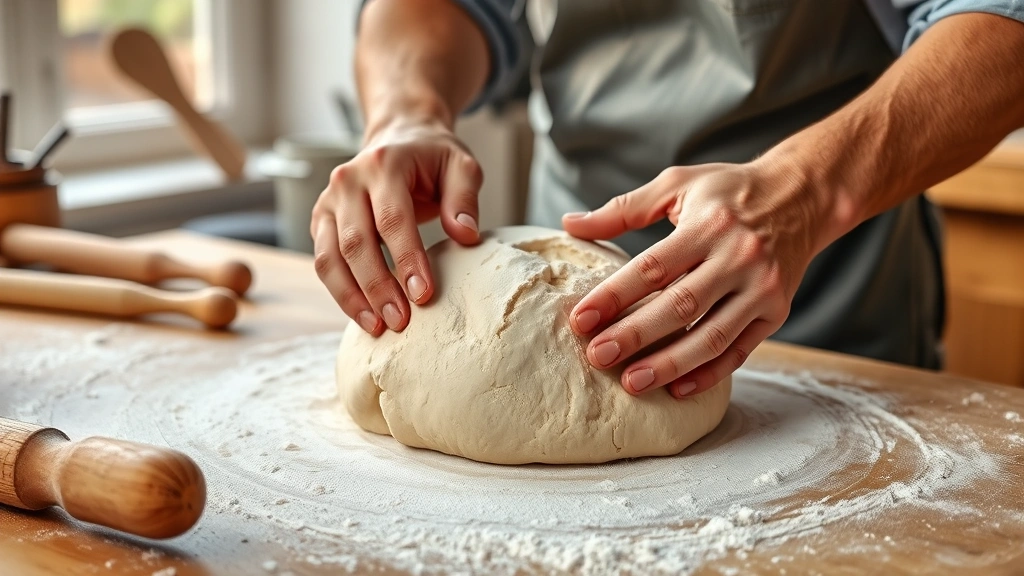
The key in any crusty italian bread recipe is gentle handling. You’re not trying to squeeze air out—you’re creating structure while respecting the fermentation work you’ve already done.
Final Proof and Scoring
Place your shaped dough seam-side up in a floured banneton basket or a bowl lined with a well-floured kitchen towel. Cover it and let it proof for 2-4 hours at room temperature, or overnight in the refrigerator.
The cold overnight proof is honestly the best option. It slows fermentation, develops more flavor, and makes scoring easier because the dough is firmer. Plus, you can bake fresh bread for breakfast. If you go the overnight route, pull it from the fridge 30 minutes before baking to take the chill off slightly.
Before baking, preheat your oven to 475°F (245°C) with a Dutch oven inside for at least 45 minutes. The Dutch oven traps steam, which is essential for your crusty italian bread recipe to develop that shatter-crust.
Turn your dough onto parchment paper and score the top with a sharp knife or bread lame. A single long slash at a 45-degree angle, or a cross pattern—whatever you prefer. Score decisively and confidently. Hesitant scoring won’t give you the ear you’re after.
Baking with Steam
Carefully remove your preheated Dutch oven from the oven. Transfer your dough (on parchment) into it, cover with the lid, and bake for 20 minutes. The trapped steam is creating that crust right now.
After 20 minutes, remove the lid and bake for another 25-30 minutes until the bread is deeply golden brown. You’re looking for a rich, caramel-colored crust. If it’s still pale, give it more time. A proper crusty italian bread recipe needs that color for flavor and structure.
The internal temperature should hit 205-210°F (96-99°C) when you stick a thermometer in the center. This ensures the crumb is fully set.
Cooling and Storage Tips
Remove the bread from the Dutch oven and place it on a cooling rack. This is the hardest part—waiting. But don’t skip it. The crumb continues to set as it cools. If you slice into warm bread, it’ll be gummy. Wait at least 1 hour before cutting. I know it smells incredible. Be strong.
Once fully cooled, store your crusty italian bread recipe in a paper bag at room temperature for up to 2 days. Paper allows the crust to stay crispy. Plastic wrap will soften it. If you need to store it longer, wrap it well and freeze it. Thaw at room temperature before serving.
Common Troubleshooting
Dense crumb instead of open: Your fermentation was too short or your dough was overworked. Next time, extend bulk fermentation and be gentler during shaping. Also check that your yeast is fresh.
Pale crust: Your oven wasn’t hot enough or you didn’t bake long enough. Make sure your Dutch oven is truly preheated for 45 minutes minimum. Don’t rush the final bake.
Bread didn’t rise in the oven: Your dough was overproofed before baking. The dough should spring up immediately when it hits the heat. If it just sits there, it’s already used up its yeast energy. Shorten your final proof next time.

Crust too thick and chewy: You might have too much steam or the oven temperature dropped. Keep that lid on for exactly 20 minutes—not longer. And ensure your oven is fully preheated.
Frequently Asked Questions
Can I use whole wheat flour in this crusty italian bread recipe?
You can substitute up to 20% whole wheat flour without major changes. Beyond that, you’ll need to increase hydration slightly and expect a denser crumb. Whole wheat ferments faster, so watch your timing closely.
What if I don’t have a Dutch oven?
You can place a baking stone on the bottom rack and a cast iron skillet underneath it. Preheat both. When you put the bread in, carefully pour boiling water into the skillet to create steam. It’s not quite as effective as a Dutch oven, but it works. Alternatively, invest in a Dutch oven—it’s worth it for bread and so much more.
How long can I refrigerate the dough before baking?
Cold fermentation in the fridge can go 24-48 hours. Beyond that, the yeast starts to struggle and you might get less oven spring. Also, the dough will develop a sour flavor, which some people love but isn’t traditional Italian style.
Can I make this crusty italian bread recipe without a banneton basket?
Absolutely. Use a bowl lined with a well-floured kitchen towel. Make sure it’s generously floured so the dough doesn’t stick. A banneton just makes it easier and looks nice, but it’s not essential.
Why is my bread gummy inside even after cooling?
Either your oven temperature is too low, you’re not baking long enough, or your hydration is too high for your flour. Try baking 5 minutes longer and ensure your oven is accurate with a thermometer. Also, use bread flour if possible—it handles high hydration better than all-purpose.
Can I use instant yeast and active dry yeast interchangeably?
Mostly yes, but instant yeast ferments slightly faster. If you swap active dry for instant, reduce the amount by about 25% or add 15 minutes to your fermentation time. They’re very similar, just different particle sizes.
Final Thoughts
A proper crusty italian bread recipe is a lesson in patience and respect for ingredients. You’re not fighting the dough—you’re working with it. The fermentation, the steam, the scoring, the cooling—every step matters and builds on the last.
Your first loaf might not be perfect. That’s okay. Your second will be better. By your fifth, you’ll have a feel for the dough and understand what it needs. That’s when the magic really happens.
Once you master this basic crusty italian bread recipe, you’ll have the foundation to explore variations. Try pairing your fresh bread with adobo sauce for a unique twist, or serve it alongside your favorite pasta dishes. You might even want to make chipotle lime rice to accompany it for dinner.
The best part? Your kitchen will smell like an Italian bakery, and you’ll have fresh, crusty bread that costs a fraction of what you’d pay at a fancy bakery. That’s the real victory here.


