
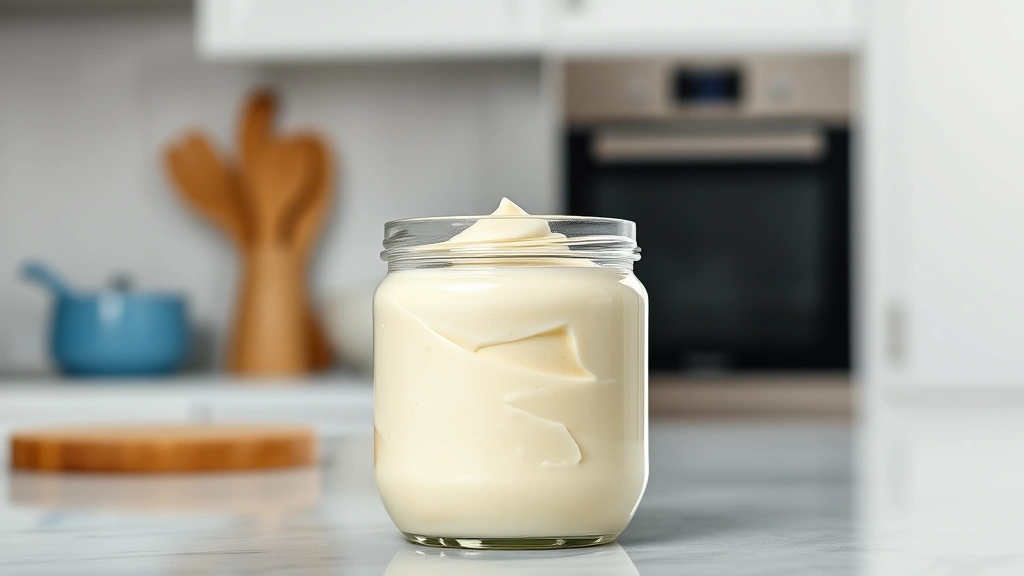
Making a creme fraiche recipe at home is honestly one of the easiest kitchen wins you’ll ever pull off. I’m talking five minutes of actual work, zero fancy equipment, and ingredients you probably already have sitting in your fridge right now. This isn’t some pretentious French cooking move—it’s a practical skill that’ll save you money and taste infinitely better than store-bought versions. Let me walk you through exactly how to make it.
Table of Contents
What Is Crème Fraîche Anyway?
Crème fraîche is basically cultured heavy cream—think of it as the sophisticated cousin of sour cream. It’s got that tangy flavor and rich, velvety texture, but it’s less acidic than sour cream and won’t curdle when you heat it. The magic happens when you introduce live cultures (usually from buttermilk or a starter) to heavy cream, and they ferment it into something special. The result is a creamy, slightly sour condiment that works as a topping, a sauce base, or a baking ingredient. It’s the kind of thing that makes simple dishes taste restaurant-quality without any real effort on your part.
Ingredients You Need
Here’s the beautiful part: you need exactly two ingredients. That’s it. No secret additives, no weird stabilizers, no mystery chemicals. Just:
- Heavy cream (the good stuff, not ultra-pasteurized if you can find it)
- Buttermilk (regular cultured buttermilk from the dairy section)
Some people use sour cream instead of buttermilk, or even plain yogurt. The cultures in any of these will do the job. I prefer buttermilk because it gives you the most neutral flavor and works most reliably. You’re looking at about a 1:1 ratio, though I’ll give you exact measurements below.
Basic Recipe Method
The technique here is so simple it almost feels like cheating. You’re combining cream and buttermilk, letting beneficial bacteria do their thing, and waiting. That’s genuinely the whole process. The bacteria naturally present in buttermilk will consume the lactose in the cream and produce lactic acid, which thickens everything and creates that tangy flavor you’re after. No heating, no special equipment, no stress. This is the kind of kitchen project where you can literally walk away and come back to success.
Step-by-Step Process
What You’ll Need: A clean glass jar (mason jars work great), a spoon, and a kitchen thermometer (optional but helpful).
The Method:
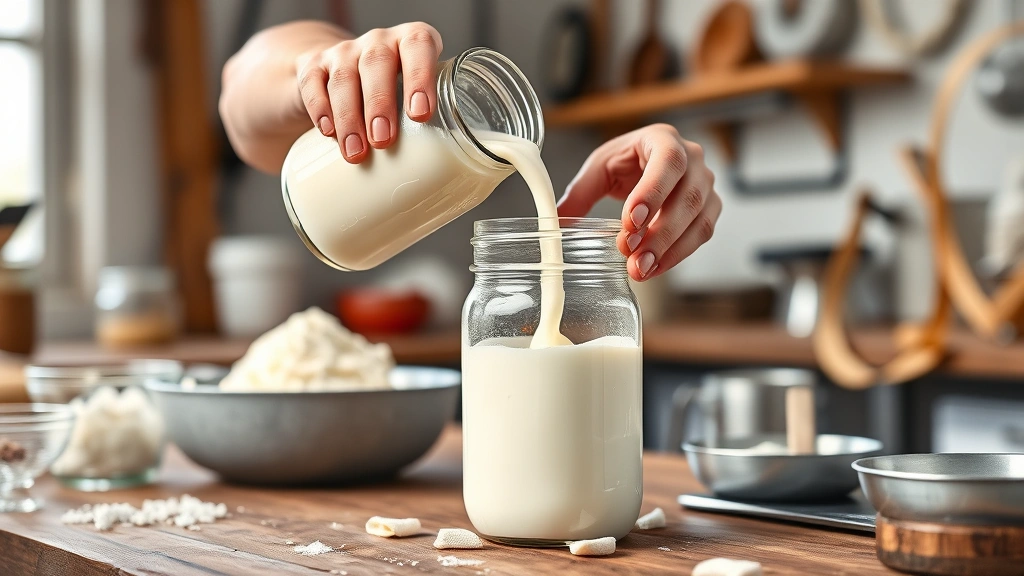
Start by pouring one cup of heavy cream into your jar. Room temperature is ideal—if your cream is cold, let it sit out for 15-20 minutes. Add one-quarter cup of buttermilk to the cream and stir it together really well. Make sure you get the buttermilk fully incorporated; you want an even distribution of cultures throughout. This takes about 30 seconds of stirring.
Now here’s where patience comes in. Cover your jar loosely—don’t seal it tight—and let it sit on your counter at room temperature (around 68-72°F is perfect). You’re looking at 8-24 hours depending on how warm your kitchen is and how thick you want it. Start checking it around the 8-hour mark. When it reaches the consistency you like (it should be noticeably thicker and have a slight tang to it), you’re done. Stir it once, cover it properly, and move it to the fridge.
That’s the whole thing. I’m not exaggerating when I say this is easier than most recipes you’ll ever make. If you want to learn more about kitchen fundamentals, check out documentation best practices for keeping detailed recipe notes.
Troubleshooting Common Issues
It’s Not Getting Thick: Your kitchen might be too cold. Move the jar to a warmer spot—the top of the fridge, near a sunny window, or even in an oven with just the light on. Cold slows fermentation dramatically. Also, make sure your buttermilk is actually cultured (check the label) and that it’s not expired.
It Smells Bad: There’s a difference between tangy and rotten. Good crème fraîche smells pleasantly sour, like yogurt. If it smells genuinely off—like something died in there—toss it and start over. This usually means contamination from something other than the buttermilk cultures, which is rare but possible.
It’s Too Thin: Give it more time. If it’s been 24 hours and still runny, your cultures might not be active. Try again with fresh buttermilk. Ultra-pasteurized cream also struggles sometimes; if you can find regular pasteurized cream, switch to that.
It Separated or Got Grainy: This usually happens if it got too warm or sat too long. Next time, ferment at a consistent 68-72°F and start checking at 8 hours. If it happens, you can sometimes save it by whisking in a tablespoon of fresh cream and chilling it.
Storage and Shelf Life
Once it’s done fermenting, seal that jar and stick it in the fridge. Homemade crème fraîche keeps for about two weeks, sometimes longer. The cold stops the fermentation process, so it stays at the thickness and tang level you achieved. As it sits in the fridge, it might get slightly thicker—that’s normal and actually kind of nice. If you want to learn more about organizing your kitchen workflow, consider documenting your best practices for future reference.
Don’t freeze it if you can help it. The texture gets weird when it thaws. But if you absolutely have to, it’ll still work for cooking applications—just not for dolloping on desserts where texture matters.
Flavor Variations to Try
Once you’ve nailed the basic version, start experimenting. Add a tablespoon of honey and a pinch of vanilla extract for a slightly sweet version that’s killer on fruit and desserts. Mix in fresh herbs—dill, chives, or tarragon work beautifully—for a savory version that’s perfect with roasted vegetables or fish. A tiny pinch of smoked paprika and some garlic powder creates something amazing for baked potatoes or tacos.
The point is: once you understand the basic technique, you can make this recipe your own. Start with the plain version, master that, then play around. You’ll develop your own signature flavors that match how you actually cook and eat.
Using Homemade Crème Fraîche
This is where homemade really shines. Use it as a topping for baked potatoes, soups, or fresh berries. Stir it into sauces—it won’t break like sour cream when you heat it, so you can add it to pan sauces without worry. Dollop it on tacos, nachos, or baked goods. Swirl it into borscht or other Eastern European soups. Use it as a base for salad dressings. The applications are genuinely endless, and homemade always tastes better than store-bought because you’re not getting any weird additives or gums.
Why Homemade Beats Store-Bought
Store-bought crème fraîche is fine, but it’s often loaded with stabilizers and gums to keep it shelf-stable for months. Homemade? It’s just cream and buttermilk. That’s it. The flavor is cleaner, the texture is silkier, and you know exactly what you’re eating. Plus, it costs about a third of what you’d pay at the store. A cup of good heavy cream and a splash of buttermilk costs maybe two bucks. A store-bought container is five or six. Do the math across a few batches and you’re looking at real savings. And honestly, the taste difference is noticeable enough that once you go homemade, store-bought starts tasting kind of thin and chemical-y.
For more information on quality ingredients and food preparation, check out Family Handyman’s kitchen gadget recommendations. You can also explore This Old House’s kitchen tool reviews and Bob Vila’s guide to kitchen knives for equipment that’ll make food prep easier overall.
Frequently Asked Questions
Can I use milk instead of buttermilk?
Not really. Regular milk doesn’t have the cultures you need to ferment the cream. You could theoretically add a probiotic capsule or use plain yogurt, but buttermilk is cheap and reliable. Stick with it.
What if my kitchen is really cold?
Fermentation slows way down in cold temperatures. Try wrapping your jar in a kitchen towel and placing it in an insulated cooler, or use an oven with just the light on as a warm spot. Some people use a yogurt maker, which works great if you already have one.
Is homemade crème fraîche safe?
Absolutely. The fermentation process creates an acidic environment that prevents bad bacteria from growing. The buttermilk cultures are the same ones used in commercial production. You’re actually making something safer than some store-bought versions because you control the ingredients.
Can I make this with non-dairy cream?
Technically, you can try, but results are unpredictable. Non-dairy creams don’t ferment the same way because they lack the lactose that cultures feed on. Stick with real dairy cream for reliable results.
How do I know when it’s done?
It should be noticeably thicker than when you started—think yogurt consistency—and smell pleasantly tangy. Do the tilt test: tip the jar. If it moves slowly and coats the sides, it’s ready. If it pours like cream, give it more time.
Why did mine separate?
Usually temperature fluctuation or too much fermentation time. Keep it in a consistent spot and start checking at 8 hours. If it happens, you can sometimes rescue it by whisking in fresh cream.
Can I use sour cream instead of buttermilk?
Yes, it works, but the flavor will be more sour. Use the same ratio and follow the same process. Some people prefer this version—it’s really a matter of taste.
Final Thoughts
Making a creme fraiche recipe is genuinely one of the easiest kitchen projects you can tackle, and the results are noticeably better than anything you’ll buy. Five minutes of prep, a day of waiting, and you’ve got something that’ll elevate everything from soup to dessert. Once you realize how simple this is, you’ll wonder why you ever bought it at the store. Start with a basic batch, nail the technique, then experiment with flavors. This is the kind of skill that pays dividends every single time you cook.


