
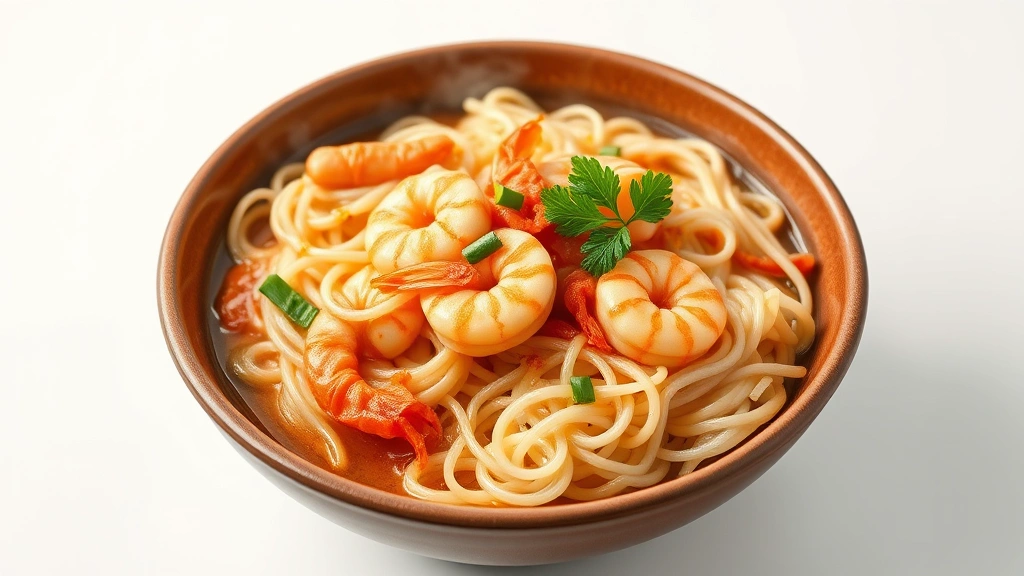
A chow fun recipe is your ticket to restaurant-quality stir-fried noodles that’ll make your kitchen smell like your favorite Chinese takeout spot. If you’ve ever wondered how to nail those silky, slightly charred noodles with that perfect wok hei flavor at home, you’re in the right place. This isn’t some fancy culinary secret—it’s about understanding your ingredients, having the right heat, and moving fast. Let me walk you through everything you need to know to become a chow fun master in your own kitchen.
Table of Contents
What is Chow Fun?
Chow fun is a Cantonese stir-fry dish made with wide, flat rice noodles. Unlike chow mein, which uses thinner, crinkly noodles, chow fun noodles are soft and chewy with a delicate texture that soaks up sauce beautifully. The name literally means “stir-fried rice noodles,” and it’s been a staple in Cantonese cuisine for generations. What makes a chow fun recipe special is how those noodles develop slightly crispy, caramelized edges when they hit a properly heated wok—that’s the prized wok hei everyone talks about.
The beauty of this dish is its simplicity. You’re working with just a handful of components: fresh rice noodles, protein, vegetables, and a simple sauce. The magic happens in the technique and timing, not in complicated ingredient lists.
Essential Ingredients You Need
Let’s talk about what actually goes into a proper chow fun recipe. First up, you need fresh rice noodles—and this is non-negotiable. Look for them in the refrigerated section of Asian markets, usually labeled as “chow fun noodles” or “wide rice noodles.” They come in a block or package and should be soft and pliable. If you can only find dried rice noodles, they’ll work in a pinch, but fresh ones deliver that authentic texture every time.
For protein, you can use shrimp, chicken, beef, or go vegetarian. I typically use about half a pound for a family-sized portion. Bean sprouts and Chinese chives (or green onions in a pinch) are your vegetable anchors. Some recipes call for onions or bell peppers, and those work too—it’s your kitchen, so adjust based on what you’ve got.
The sauce is where things get interesting. You’ll need soy sauce (about 2-3 tablespoons), oyster sauce (2 tablespoons), a touch of sesame oil (1 teaspoon), and white pepper. Some cooks add a splash of chicken broth to loosen things up. This combination creates that savory, slightly sweet depth that makes chow fun recipe versions sing.
Don’t forget garlic—three or four cloves, minced. And oil for the wok. Use something with a high smoke point like vegetable oil or peanut oil. You’ll need about 3 tablespoons total.
Prep Work Matters Most
Here’s where most home cooks slip up: they don’t prep properly. In professional kitchens, they call this mise en place—everything in its place. Before you turn on the heat, have every single ingredient prepped and ready to go.
Separate your rice noodle block into individual strands gently—they’ll break apart as you work, and that’s fine. Don’t mash them. Set them aside on a plate. Mince your garlic and have it in a small bowl. Slice your protein into bite-sized pieces. If you’re using shrimp, pat them dry with paper towels so they brown properly instead of steaming. Trim your bean sprouts and chop your chives into 2-inch pieces.
Mix your sauce ingredients in a small bowl—soy sauce, oyster sauce, sesame oil, white pepper, and broth if using. Stir it together so you’re not fumbling with multiple bottles once the wok gets hot. This step is crucial because once you start cooking, you won’t have time to measure anything.
Have a spatula or wok turner ready. A regular spatula works, but a curved wok spatula is ideal because it follows the curve of the wok and gives you better control. Trust me on this one.
Wok Technique Basics
The wok is your best friend for this chow fun recipe, but you need to respect it. Get your wok screaming hot before you add anything. I mean hot—you should see wisps of smoke coming off the surface. This high heat is what creates those caramelized edges on the noodles and keeps everything moving fast so nothing gets soggy.
If you don’t have a wok, a large skillet works, but it won’t distribute heat quite as evenly. A 14-inch wok is ideal, but 12-inch will do fine for home cooking.
When you add oil to a hot wok, it should shimmer and move freely within seconds. Don’t let it smoke excessively—that’s past the point of useful heat. You’re looking for that sweet spot where oil is ready to cook but not burning.
The key technique is constant motion. You’re not stirring in circles like you might in a regular pan. You’re using a scooping motion, pushing ingredients up the sides of the wok and pulling them back down. This keeps everything cooking evenly and prevents sticking. If you’re not moving, you’re burning—it’s that simple.
Step-by-Step Cooking Process
Alright, let’s cook. Heat your wok over high heat for about 2 minutes. You want it genuinely hot. Add 1 tablespoon of oil and swirl it around to coat the bottom and sides.
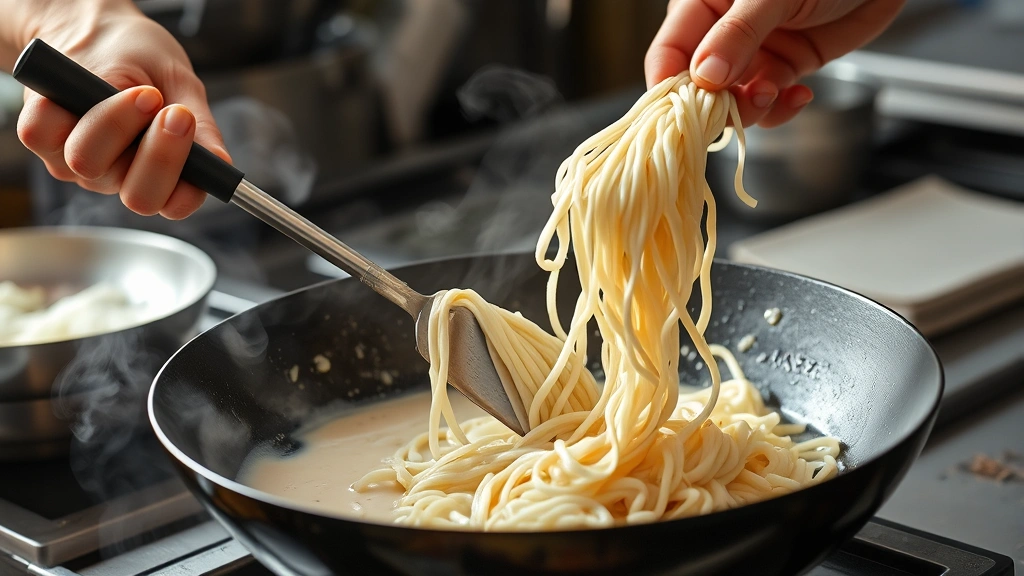
Add your protein first. If using shrimp, cook until they’re just starting to turn pink—about 2 minutes. If using chicken or beef, cook until it’s mostly done but still slightly undercooked in the center—about 3-4 minutes. You’re not trying to fully cook it here because it’ll continue cooking as you add other ingredients. Remove the protein to a clean plate.
Add another tablespoon of oil to the wok. Immediately add your minced garlic and stir-fry for about 15 seconds until fragrant. Don’t let it burn—garlic burns fast and tastes bitter.
Now add your rice noodles. This is the critical moment. Break them up gently with your spatula as you toss them. The noodles will start to soften and separate. Keep moving them around the wok for about 2-3 minutes. You want some of them to develop light brown, crispy bits—that’s the good stuff.
Add your sauce mixture. It’ll sizzle and steam. Keep tossing and mixing so the sauce coats everything evenly. The noodles will absorb the liquid and become glossy. This takes about 1-2 minutes.
Return your protein to the wok along with your bean sprouts and chives. Toss everything together for another minute until the bean sprouts are just barely warmed through but still crisp. They should have a slight bite to them, not be completely soft.
Taste it. Adjust seasoning if needed—a bit more soy sauce if it needs saltiness, a touch more sesame oil if it needs richness. Transfer to a serving plate and serve immediately while it’s hot.
Protein Variations
The basic chow fun recipe framework works beautifully with different proteins. Shrimp is classic—it cooks quickly and absorbs flavors well. Use medium to large shrimp, and don’t overcook them or they’ll be rubbery.
Chicken works great too. Use boneless, skinless chicken breast cut into thin bite-sized pieces. It’s lean and takes on the sauce flavors nicely. Some people prefer chicken thigh for more flavor and juiciness.
Beef is fantastic if you use the right cut. Flank steak or sirloin, sliced very thin against the grain, works perfectly. The high heat of the wok cooks thin beef slices in seconds, keeping them tender.
For a vegetarian version, skip the meat and add more vegetables—mushrooms, broccoli, snap peas, carrots. You might want to increase the sauce slightly to compensate for the liquid the vegetables release.
Some people do a combination—shrimp and chicken, or beef and shrimp. Just make sure your total protein amount stays around half a pound so the ratio stays balanced with the noodles.
Common Mistakes to Avoid
The biggest mistake I see is using cold noodles or noodles that haven’t been separated. They’ll clump together and won’t cook evenly. Make sure they’re at room temperature and gently separated before they hit the wok.
Second mistake: not having your wok hot enough. If your wok isn’t screaming hot, the noodles will absorb too much moisture and become mushy instead of developing those crispy edges. Low and slow is great for braising—not for chow fun.
Third: overcrowding the wok. If you’re cooking for more than 2-3 people, do it in batches. A crowded wok means steaming instead of stir-frying, and you lose that wok hei magic.
Fourth: adding the sauce too early. Wait until the noodles have had a chance to warm and slightly brown before adding liquid. If you add sauce when the noodles are still cold, they’ll absorb it all and become gummy.
Fifth: not moving the food constantly. Stir-frying means constant motion. If you put the noodles in and walk away, they’ll stick and burn in spots while staying raw in others.
Storage and Leftovers
Chow fun is best eaten fresh and hot, straight from the wok. But life happens, and sometimes you have leftovers. Store them in an airtight container in the refrigerator for up to 3 days.
To reheat, don’t use a microwave if you can help it—it’ll turn the noodles into a mushy mess. Instead, heat a wok or skillet over medium-high heat, add a tablespoon of oil, and warm the noodles through while tossing gently. Add a splash of water if they seem dry. This takes about 3-4 minutes and restores some of that texture.
If you want to make chow fun ahead of time, prep all your ingredients the day before and store them separately. Keep the noodles, vegetables, and sauce in separate containers. This way, you can do the actual cooking fresh whenever you’re ready to eat.
Frequently Asked Questions
Can I use dried rice noodles instead of fresh?
Yes, but soak them in hot water first until they’re pliable but still slightly firm—about 10-15 minutes. They won’t have quite the same tender texture as fresh noodles, but they’ll work. The timing might be slightly different since dried noodles release more starch, so watch carefully and adjust your sauce amount accordingly.
What if I don’t have a wok?
A large skillet or even a Dutch oven can work, though the heat distribution won’t be quite as even. The key is still high heat and constant motion. Just know that the results might not be quite as dramatic as with a proper wok, but the flavors will still be delicious.
How do I get that smoky wok hei flavor?
That comes from high heat and the Maillard reaction—essentially browning from intense heat. You need a properly hot wok and the confidence to let the noodles sit for a few seconds without stirring so they can develop those crispy, caramelized bits. It’s not burning; it’s controlled browning.
Can I prep the noodles hours ahead of time?
Separated noodles will start to stick together and dry out if left sitting for hours. It’s better to separate them closer to cooking time—maybe 30 minutes before is fine, but not much longer than that. If they do stick together, gently separate them again just before cooking.
What’s the difference between chow fun and chow mein?
Chow mein uses thinner, crinkly noodles that are often crispy on the outside. Chow fun uses wide, flat rice noodles that are soft and chewy. They’re different dishes with different textures and cooking techniques, though the basic stir-fry method is similar.
How spicy can I make this?
Add chili sauce, sriracha, or fresh sliced chilies to taste. Start with a teaspoon of chili sauce mixed into your sauce base and adjust from there. You can also add chili flakes or a dash of hot sauce at the end. Some people like a touch of white pepper for heat without overwhelming the other flavors.
Final Thoughts
Mastering a chow fun recipe is about understanding the fundamentals: proper heat, good ingredients, thorough prep, and constant motion. It’s not complicated, but it does require attention and a bit of practice. Your first attempt might not be perfect, and that’s okay. Even slightly imperfect homemade chow fun beats takeout because you know exactly what went into it.
The beauty of this dish is that once you nail the technique, you can play with variations. Try different proteins, add vegetables you love, adjust the sauce to your taste preferences. This is a foundational recipe that becomes your jumping-off point for endless variations.
For more cooking fundamentals, you might find it helpful to understand how many grams to a quarter pound when scaling recipes up or down. And if you’re prepping ingredients ahead of time, knowing how to keep apples from turning brown can help with general food prep strategies.
Get yourself a good wok, keep your heat high, and practice this technique. Within a few tries, you’ll be making chow fun that rivals your favorite restaurant. And honestly, there’s something deeply satisfying about recreating restaurant dishes in your own kitchen. You’ve got this.


