

A candied carrots recipe is the kind of dish that transforms a humble vegetable into something people actually get excited about at the dinner table. If you’ve been making the same boring roasted carrots year after year, it’s time to switch things up with this easy, three-step holiday side that tastes like you spent hours in the kitchen when you really didn’t.
Table of Contents
Why Candied Carrots Win
Look, I get it. Vegetables aren’t always the star of the show at holiday meals. But candied carrots are different. The magic happens when you caramelize butter and brown sugar together, creating a glossy coating that makes carrots taste more like dessert than a side dish. Your guests will be asking for seconds, and you’ll be standing there grinning because you know how ridiculously simple this was to pull off.
The beauty of this approach is that it doesn’t require any fancy techniques or hard-to-find ingredients. You’re working with pantry staples and fresh carrots. That’s it. The transformation comes from understanding how heat, sugar, and butter work together to create something genuinely delicious.
Ingredients You’ll Need
Here’s what goes into making a batch that serves 6-8 people:
- 2 pounds fresh carrots (medium-sized work best)
- 4 tablespoons unsalted butter
- ½ cup packed brown sugar
- ¼ teaspoon salt
- ⅛ teaspoon ground black pepper
- ¼ teaspoon ground cinnamon (optional but recommended)
- Pinch of nutmeg (optional)
- ½ teaspoon vanilla extract
The brown sugar is your secret weapon here. It dissolves into the butter and creates that sticky, caramelized coating that makes people forget they’re eating vegetables. If you only have white sugar on hand, you can use it, but brown sugar has molasses in it that adds depth and prevents the dish from tasting one-dimensional.
Prep Work Matters
Start by washing your carrots under cold running water and scrubbing them with a vegetable brush to remove any dirt. You can peel them with a vegetable peeler if you prefer a more refined look, but honestly, leaving the skin on adds nutrients and texture. If you do peel them, do it before cutting.
Cut your carrots on the bias—that’s at an angle—into roughly ¼-inch thick slices. This shape isn’t just for show. The angled cuts increase surface area, which means more contact with the butter and sugar mixture. Aim for uniform thickness so everything cooks at the same rate. If you have some thicker pieces, just halve them lengthwise first.
If you’re short on time, you can buy pre-cut carrots from the grocery store. They won’t be as fresh as what you cut yourself, but they’ll still work fine. Just drain any excess moisture before cooking.
The Three-Step Process
Step One: Melt and Mix
Place a large skillet over medium heat and add your butter. Let it melt completely, then add the brown sugar, salt, pepper, and any spices you’re using. Stir everything together until the sugar starts to dissolve and you’ve got a smooth, caramel-colored mixture. This should take about 2-3 minutes. You’re not looking for a hard caramel here—just a syrupy blend of butter and sugar.
Step Two: Add the Carrots
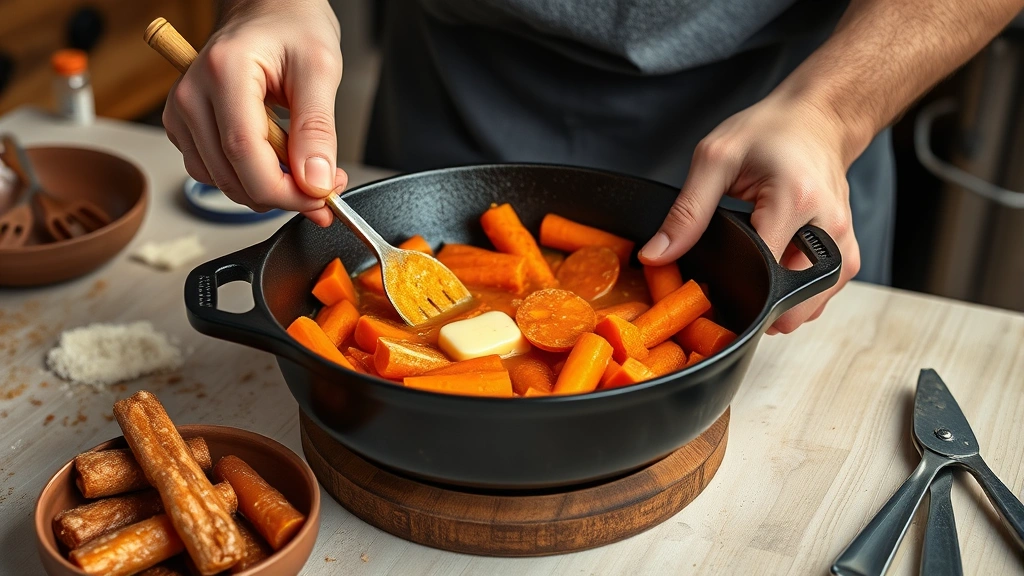
Once your butter-sugar mixture is ready, add all your carrot slices to the skillet. Stir them around so every piece gets coated with that buttery goodness. The carrots will look a bit dry at first, but don’t worry. They’re going to release moisture as they cook, which will help create the sauce.
Step Three: Cook Low and Slow
Reduce your heat to medium-low and cover the skillet with a lid. Let everything cook undisturbed for about 20-25 minutes. The carrots will soften and the liquid will reduce into a thick glaze. About halfway through, give everything a stir to make sure nothing’s sticking to the bottom. If the mixture looks too dry, add a splash of water—just a couple tablespoons—to keep things moist.
When the carrots are fork-tender and the sauce has thickened, remove the skillet from heat and stir in the vanilla extract. This adds a subtle sweetness that rounds out the flavor profile without being obvious.
Cooking Time & Temperature
The entire cooking process takes about 30 minutes from start to finish, with most of that time being hands-off. If you’re using a slow cooker or preparing this ahead of time, you can cook candied carrots on low for 4-5 hours, which is perfect if you’re juggling multiple dishes in the oven during the holidays.
For oven cooking, you can also transfer the skillet to a 350°F oven after step two and bake covered for 30-35 minutes. This method is great if you need your stovetop space for other things. Just check them halfway through and stir if needed.
Flavor Variations to Try
Once you’ve mastered the basic recipe, you can experiment with different flavor profiles. Try adding a tablespoon of maple syrup along with the brown sugar for a deeper, more autumnal taste. Or go the savory route by reducing the sugar to ¼ cup and adding a tablespoon of Dijon mustard and a teaspoon of fresh thyme.
For a spiced version inspired by recipes like authentic jambalaya, bump up the cinnamon to ½ teaspoon and add a pinch of cayenne pepper. If you want to make candied carrots that pair well with caramel popcorn style sweetness, add a teaspoon of orange zest and a splash of orange juice instead of vanilla.
You can also incorporate other vegetables. Parsnips work beautifully mixed with carrots, as do sweet potato slices. Just adjust cooking time based on what you’re using—denser vegetables might need an extra 5-10 minutes.
Storage and Reheating
Candied carrots keep well in the refrigerator for up to four days in an airtight container. The sauce will thicken as it cools, which is exactly what you want. To reheat, simply place them in a skillet over medium-low heat with a splash of water, stirring occasionally until warmed through. You can also reheat them covered in a 350°F oven for about 15 minutes.
If you want to make them a day or two ahead, that’s actually ideal. The flavors meld together and deepen overnight. Just store them in the same container they cooked in if you can—less cleanup and the sauce stays with the carrots.
Pairing Suggestions
Candied carrots are a natural fit for holiday meals, but they’re versatile enough for weeknight dinners too. They pair beautifully with roasted chicken, glazed ham, or turkey. The sweetness complements rich meats perfectly. If you’re serving a vegetarian meal, they work alongside roasted root vegetables and grains.

Looking for other side dish inspiration? Check out our beet greens recipe for another earthy vegetable option, or try bean sprouts recipe for something with a different texture. For dessert, you might want something like banana bread recipe to round out your meal.
Frequently Asked Questions
Can I make candied carrots ahead of time?
Absolutely. You can prepare them up to two days in advance and store them in the refrigerator. They actually taste better the next day once the flavors have had time to meld. Just reheat gently before serving.
What if my carrots are still too firm?
Add another 5-10 minutes of cooking time. If the liquid has evaporated, add a couple tablespoons of water to the skillet. Carrot thickness varies, so cooking time can fluctuate by a few minutes depending on how you cut them.
Can I use baby carrots instead of regular carrots?
Yes, but they’ll cook faster—about 15-18 minutes instead of 25. Keep an eye on them and start checking for tenderness around the 12-minute mark.
Is there a dairy-free version?
You can substitute coconut oil or vegan butter for the regular butter. The flavor will be slightly different but still delicious. Use the same amount and follow the same process.
Why is my glaze too thin?
If your sauce isn’t thickening properly, it’s usually because there’s too much liquid. Uncover the skillet for the last 5 minutes of cooking to let some moisture evaporate. The sauce should coat a spoon when it’s ready.
Can I freeze candied carrots?
Yes, they freeze well for up to three months. Let them cool completely, then transfer to a freezer-safe container. Thaw in the refrigerator overnight and reheat gently on the stovetop.
Final Thoughts
Making a candied carrots recipe doesn’t require culinary school or expensive equipment. It’s a straightforward dish that delivers impressive results every single time. The three-step process is foolproof, and the ingredient list is short enough that you probably have everything at home right now.
What makes this recipe special is that it transforms something ordinary into something memorable. Your family will remember these candied carrots long after the holiday meal is over. Start with the basic version, master it, then play around with the flavor variations once you’re comfortable with the technique.
The best part? You’ll have more time to spend with people you care about instead of being stuck in the kitchen. That’s what real cooking is about.


