
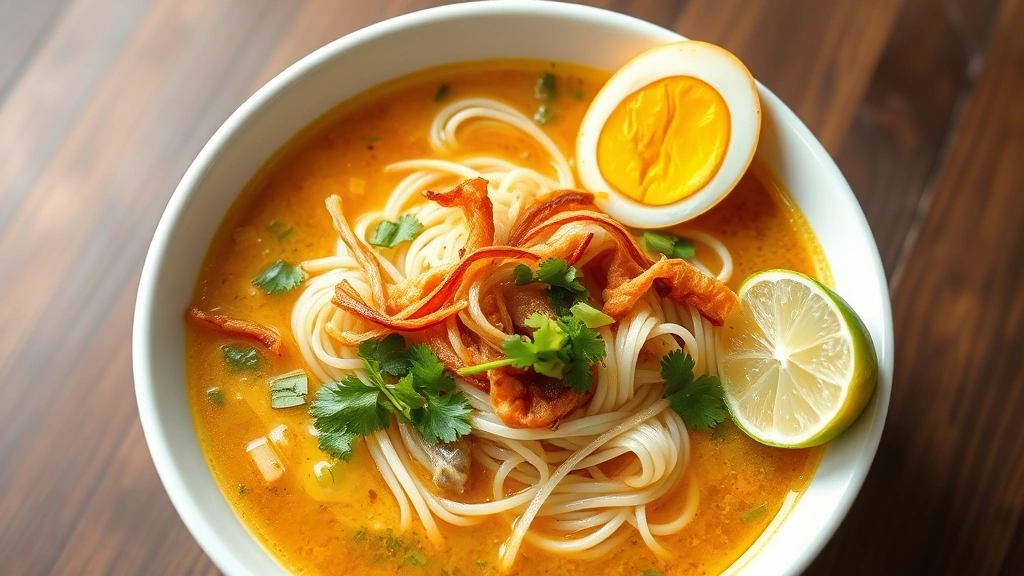
Learning to make a burmese food mohinga recipe at home transforms your kitchen into a Southeast Asian street-food stall. This iconic fish noodle soup, beloved across Myanmar, combines aromatic spices, tender noodles, and a rich broth that’ll have you wondering why you haven’t made it before. Whether you’re a seasoned home cook or tackling Burmese cuisine for the first time, I’ll walk you through every step to nail this classic dish.
Table of Contents
What Is Mohinga Exactly?
Mohinga is Myanmar’s national dish—a soul-warming fish noodle soup that hits breakfast tables, street carts, and family dinners year-round. Think of it as the Burmese equivalent to pho or ramen, but with its own distinct personality. The broth comes from fish stock infused with turmeric, garlic, ginger, and aromatic spices. Thin rice noodles swim in this golden, slightly spicy liquid, topped with crispy fried onions, boiled eggs, and fresh herbs.
What makes mohinga special isn’t just one ingredient—it’s the layering of flavors and textures. You get warmth from the broth, chew from the noodles, crunch from fried elements, and brightness from lime and cilantro. It’s comfort food that tastes like it took hours, but you’ll have it on the table in under an hour once you know the moves.
Gather Your Ingredients
Before you start cooking, round up everything. This prevents mid-recipe scrambling and keeps your workflow smooth. Here’s what you need:
For the Broth:
- 1.5 lbs firm white fish (catfish, snapper, or cod work great)
- 8 cups water
- 4 medium onions, halved
- 4 cloves garlic, minced
- 2 tablespoons fresh ginger, minced
- 2 teaspoons turmeric powder
- 1 teaspoon shrimp paste (optional but authentic)
- 2 tablespoons fish sauce
- 1 teaspoon chili powder
- Salt and pepper to taste
- 2 tablespoons oil
For Assembly:
- 1 lb thin rice noodles
- 3-4 hard-boiled eggs, halved
- Oil for frying onions
- 2 large onions, thinly sliced (for crispy fried onions)
- Fresh cilantro and green onions
- Lime wedges
- Crispy chickpea fritters (optional)
Quality matters here. Fresh fish makes a difference, and authentic fish sauce (not the cheap stuff) elevates everything. Check your local Asian market for these ingredients—you’ll find better quality and better prices than the grocery store.
Prep Work Matters
Mise en place—French chefs swear by it, and so should you. Chop your garlic, mince your ginger, slice your onions, and measure your spices into little bowls. This takes 10 minutes and saves you from scrambling later.
For the fish, pat it dry with paper towels. Moisture is the enemy of good flavor development. If your fish comes in a large fillet, cut it into 2-3 inch chunks so it cooks evenly and breaks apart easily for the broth.
Hard-boil your eggs ahead of time if you want. Cover them with cold water, bring to a boil, remove from heat, let sit 10 minutes, then shock in ice water. This prevents that gray-green ring and makes peeling easier.
Build the Broth Base
This is where the magic happens. Heat 2 tablespoons of oil in a large pot over medium-high heat. When it shimmers, add your minced garlic and ginger. Cook for about 2 minutes—you want fragrant, not burnt. The aroma should fill your kitchen.
Next, add your turmeric and chili powder. Stir constantly for 30 seconds to bloom the spices. This wakes them up and prevents raw-spice taste. If you’re using shrimp paste, add it now and stir for another minute.
Add your fish chunks directly to the pot. Let them sit undisturbed for 3-4 minutes to develop a light crust, then stir and cook another 3-4 minutes until the outside is opaque. Pour in your 8 cups of water and add the halved onions. Bring everything to a rolling boil.
Once boiling, reduce heat to medium and let it simmer for 20 minutes. The fish will break apart and flavor the broth deeply. Skim any gray foam that rises—this keeps the broth clear and clean-tasting. After 20 minutes, add your fish sauce and taste. Adjust seasoning with salt, pepper, and more fish sauce if needed.
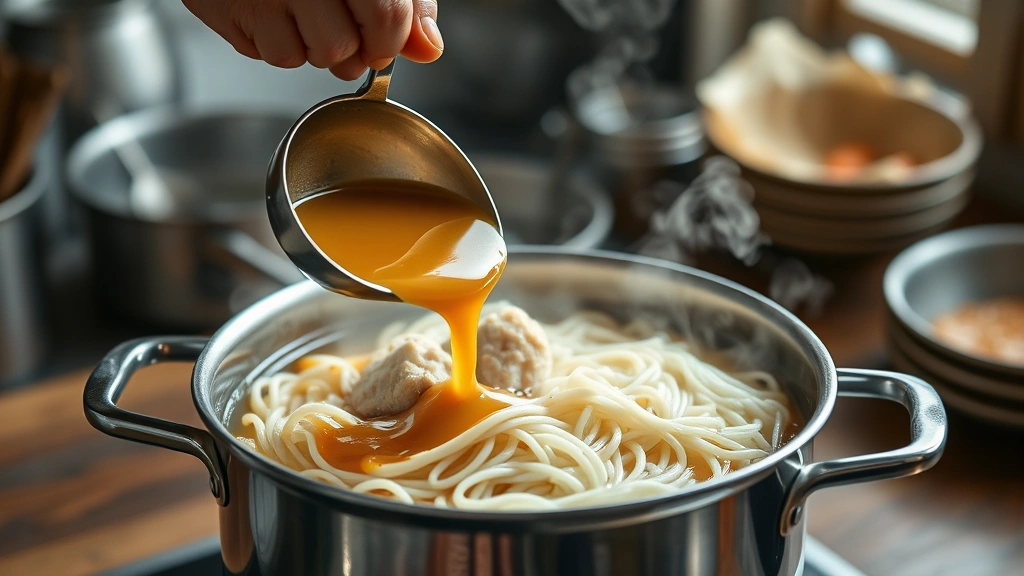
Strain the broth through a fine-mesh sieve, pressing gently on solids to extract every bit of flavor. Discard the solids. You should have about 6-7 cups of golden, aromatic broth. This is your foundation. For complementary Asian recipes and techniques, check out our broader collection of authentic methods.
Cook Noodles Properly
Rice noodles are delicate. Boil a separate pot of water and add your noodles. Follow package instructions, but start checking at 3-4 minutes. You want them tender but with a slight bite—mushy noodles ruin the whole bowl. Most thin rice noodles cook in 4-6 minutes.
Drain them immediately and rinse under cool water to stop cooking. Toss with a tiny bit of oil to prevent sticking. Set aside.
While the noodles cook, make your crispy fried onions. Slice 2 large onions thinly and heat about 1/2 cup of oil in a skillet over medium heat. Add the onions and cook low and slow, stirring often, for 15-20 minutes. They should turn golden brown and crispy. This is the textural element that makes mohinga sing. Drain on paper towels and season lightly with salt.
Assemble and Serve
Here’s where you bring it all together. Reheat your broth until steaming. Place a portion of cooked noodles in a deep bowl. Ladle hot broth over the noodles—about 1.5 to 2 cups per serving. Top with a halved hard-boiled egg, a generous handful of crispy fried onions, and fresh cilantro and green onion slices.
Serve immediately with lime wedges on the side. Diners squeeze lime juice into their bowl to brighten the flavors. Add a drizzle of chili oil if you like heat. Some people add a dollop of chickpea flour paste (made by mixing chickpea flour with water and frying until golden), which adds earthiness and body.
The key to great mohinga is serving it hot and fresh. Cold broth is nobody’s friend. If you’re making this for a crowd, keep your broth hot in a separate pot and assemble bowls to order.
Troubleshooting Tips
Broth tastes fishy or off: You likely used low-quality fish or old fish sauce. Upgrade your ingredients. Also, don’t let the broth boil aggressively for too long—this can make it taste overly strong.
Broth is cloudy: You probably didn’t skim the foam properly or stirred too vigorously. Next time, skim regularly and keep heat at a gentle simmer after the initial boil.
Noodles are mushy: Rice noodles cook fast. Start checking at 3 minutes. Drain and rinse immediately when done. If you’re making this ahead, keep noodles separate and add fresh to each bowl.
Not enough depth of flavor: Taste before serving. You might need more fish sauce, a pinch more turmeric, or a squeeze of lime. These adjustments happen at the end and make all the difference.
Fried onions aren’t crispy: Oil temperature matters. Too hot and they burn; too cool and they get greasy. Aim for medium heat and be patient. They crisp up more as they cool.
Storage and Leftovers
The broth keeps in the fridge for 3-4 days and freezes beautifully for up to 2 months. Store it in airtight containers. Don’t store noodles in the broth—they get soggy. Keep them separate and reheat fresh noodles when you’re ready to serve.
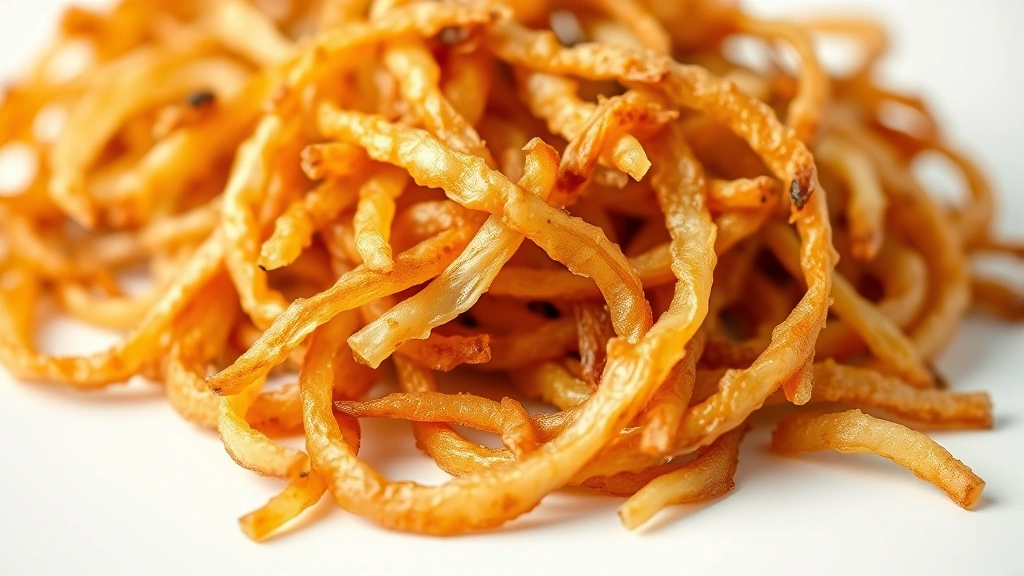
Crispy fried onions are best made fresh, but you can store them in an airtight container for a day. They’ll soften slightly but still add texture. For a quick weeknight dinner, make the broth on the weekend and assemble bowls in minutes.
If you’re looking for side dishes, steamed green beans pair nicely, or try adding blackened seasoning to proteins for variety. You can also experiment with boom boom sauce as a condiment on the side. For heartier meals, bread recipe no yeast options work as a side.
Frequently Asked Questions
Can I make mohinga without fish?
You can substitute chicken or shrimp, but it won’t be authentic mohinga. The fish is essential to the dish’s character. If you have a seafood allergy, make a chicken version and call it something else—it’ll still be delicious, just not mohinga.
What type of fish is best?
Catfish is traditional in Myanmar. In the US, catfish, snapper, cod, or halibut work well. Avoid oily fish like salmon or mackerel—they overpower the spices. You want mild, flaky white fish.
Is shrimp paste necessary?
It adds authentic depth, but it’s optional. If you skip it, increase fish sauce by half a teaspoon to compensate. Shrimp paste is pungent raw but mellows beautifully in the broth.
Can I make the broth ahead?
Absolutely. Make it a day or two before. Store in the fridge, covered. Reheat gently before serving. The flavors actually deepen overnight.
What’s the best rice noodle thickness?
Thin noodles (about 1/16 inch) are traditional. They cook fast and absorb broth beautifully. Avoid thick ones—they’re chewy and don’t work as well.
How spicy should it be?
Authentic mohinga has mild heat. Start with 1 teaspoon chili powder and adjust up. Serve with chili oil or fresh chilies on the side so people customize their own heat level.
Why is my broth greasy?
Fish releases fat. After straining, let the broth cool slightly, then skim fat from the surface with a spoon. Or refrigerate overnight and lift off the solidified fat layer. Some richness is good—just not a slick on top.
Final Thoughts
Making a burmese food mohinga recipe from scratch is easier than it sounds. You’re really just making a flavored fish stock, cooking noodles, and assembling with toppings. The technique is straightforward; the ingredients do the heavy lifting. Your first bowl might not be perfect, but it’ll be delicious. Your second batch will be better. By the third time, you’ll be making it like you learned it in Yangon.
The beauty of mohinga is that it welcomes tweaks. Add more ginger if you like heat, squeeze extra lime for brightness, pile on more fried onions for crunch. Make it yours while respecting the foundation. That’s how home cooking works—you learn the rules, then you break them thoughtfully.
Grab some fish, fire up the stove, and get cooking. Your kitchen is about to smell incredible.


