

A buffalo cauliflower recipe is your ticket to game day snacks that actually taste incredible without the meat guilt. We’re talking crispy, saucy, addictive bites that’ll disappear faster than you can say “pass the ranch.” The best part? You can nail this in 30 minutes flat, whether you’re using an oven, air fryer, or even a skillet. No fancy equipment needed—just real ingredients and a straightforward method that works every single time.
Table of Contents
Ingredient Breakdown
Let’s start with what actually goes into this thing. You need one medium head of cauliflower (about 1.5 pounds), cut into florets roughly the size of your thumb. Don’t go too small or they’ll dry out; don’t go too big or the inside stays raw.
For the coating, grab 1 cup all-purpose flour, 1 cup water, 1 teaspoon garlic powder, 1 teaspoon paprika, and half a teaspoon of salt. This creates a batter that clings like it’s supposed to. Some folks use cornstarch mixed in for extra crunch—totally optional, but it does help.
The sauce is where the magic happens: 1 cup buffalo wing sauce (Frank’s RedHot is the standard), 4 tablespoons melted butter, and 2 tablespoons honey. That honey rounds out the heat with a subtle sweetness that makes people stop mid-bite and ask what you did differently.
You’ll also want neutral oil for cooking—vegetable or canola work fine. If you’re air frying, you can skip the oil entirely.
Prep Work Matters
This is where most people rush and regret it. Cut your cauliflower into uniform florets. Seriously. The ones that are twice as big as others will either be raw inside or burnt outside. Pat them completely dry with paper towels—moisture is the enemy of crispiness.
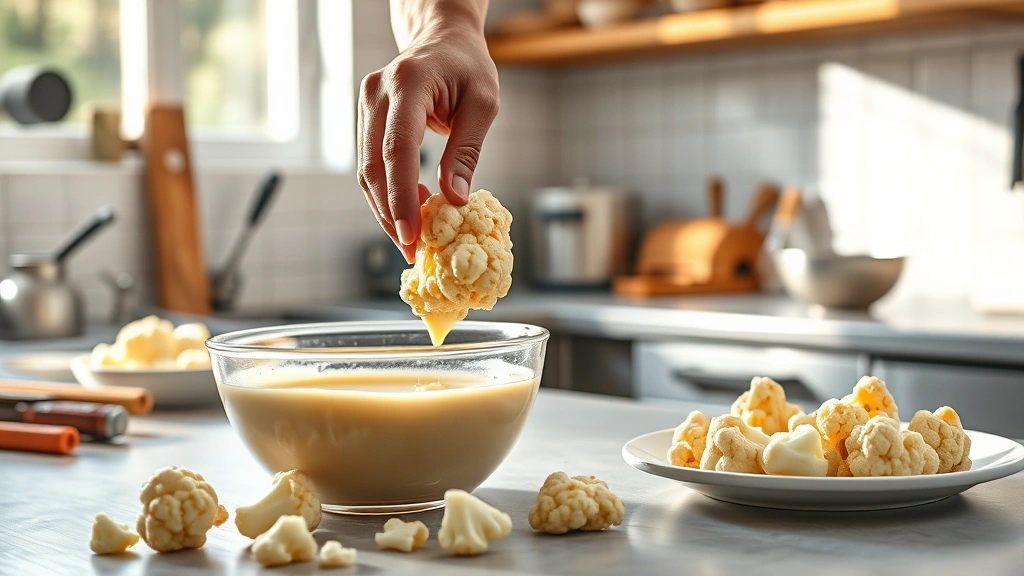
Mix your dry ingredients in a bowl: flour, garlic powder, paprika, salt. In another bowl, whisk together water until smooth. You’re not looking for pancake batter thickness; it should coat a floret and drip slightly. If it’s too thick, add water a tablespoon at a time.
Set up your workspace: batter bowl, a plate for coated florets, and your cooking vessel ready to go. This assembly-line approach keeps you moving and prevents the batter from drying on your florets while you’re fumbling around.
Crispy Coating Technique
Dip each floret into the batter, making sure it’s fully coated but not dripping excessively. The batter should look like wet concrete on the cauliflower. Place it on a plate as you go—don’t stack them or they’ll stick together.
Here’s the pro move: let the coated florets sit for 5 minutes before cooking. This allows the batter to set slightly, which creates a better crust. It’s a small step that separates “pretty good” from “why does this taste like a restaurant?”
If you want extra crunch, you can double-dip: coat it once, let it dry for 2 minutes, then dip again. The second layer creates an almost breaded texture. It’s not necessary, but it’s worth trying once.
Cooking Methods Compared
Air Fryer (Best for Lazy Cooks): Spray your air fryer basket with cooking spray. Arrange florets in a single layer without touching. Cook at 400°F for 15 minutes, shaking the basket halfway through. Zero oil needed, minimal mess, and results that rival deep frying.
Oven (Best for Batch Cooking): Preheat to 450°F. Lightly oil a baking sheet and arrange florets in a single layer. Bake for 20-25 minutes, stirring halfway through. The edges get crispy, the insides stay tender. You can fit way more than an air fryer, making this ideal for feeding a crowd. Check out our air fryer vegetable recipes for more cooking technique inspiration.
Skillet (Best for Control): Heat a quarter-inch of oil in a large skillet over medium-high heat until it shimmers. Working in batches, carefully place florets in the oil. Cook 3-4 minutes per side until golden brown. You get immediate feedback and can adjust heat on the fly. This method requires more attention but delivers restaurant-quality results.
Deep Fryer (Best for Texture): Heat oil to 350°F. Fry florets in batches for 4-5 minutes until deep golden. Drain on paper towels. This is the most indulgent option and creates the crispiest exterior, but it’s also the messiest and uses the most oil.
Sauce and Toss
While your cauliflower is cooking, combine buffalo sauce, melted butter, and honey in a small saucepan over low heat. Stir until it’s smooth and the honey dissolves completely. Taste it—this is your chance to adjust heat or sweetness before it hits the cauliflower.
Once your florets are cooked and still hot, transfer them to a large bowl. Pour the sauce over the top and toss gently but thoroughly. You want every piece coated, but you don’t want to break apart the florets. A silicone spatula or wooden spoon works better than tongs here.
Pro tip: if you’re making this ahead, keep the sauce separate and toss just before serving. This prevents sogginess and keeps the coating crispy for hours.
Serving and Storage
Serve immediately with ranch dip, blue cheese dressing, or our Alabama white sauce recipe for a twist. The cooling contrast between the hot, spicy cauliflower and cold dip is part of the appeal.
Leftovers keep in an airtight container in the fridge for up to 3 days. Reheat in a 375°F oven for 8-10 minutes to restore crispiness. The microwave will make them soggy—avoid it unless you’re desperate.
You can also freeze cooked buffalo cauliflower for up to 2 months. Let them cool completely, spread on a baking sheet to freeze individually, then transfer to a freezer bag. Reheat directly from frozen at 400°F for 12-15 minutes.
Troubleshooting Tips
Soggy Coating: Your oil or oven wasn’t hot enough, or you overcooked them. Crank the heat and reduce cooking time by 2-3 minutes next time. Also make sure your florets are completely dry before coating.
Raw Inside, Burnt Outside: Your florets are too big or your heat is too high. Cut smaller pieces and lower the temperature by 25 degrees.
Batter Falls Off: Not enough batter or you’re handling them too roughly. Make sure your batter coats completely and let it set for 5 minutes before cooking. Use gentle movements when tossing.
Not Crispy Enough: Increase cooking time by 3-5 minutes or bump the temperature up 25 degrees. Air fryer and oven users can also try a second coat of batter for ultra-crunch.
Too Spicy: Add more honey to the sauce or mix in sour cream to create a milder dip. You can also thin the sauce with a bit of melted butter.
Flavor Variations
Once you master the basic recipe, play around. Try Asian-style with sriracha, soy sauce, and a touch of sesame oil. Go BBQ with a mix of buffalo sauce and your favorite barbecue sauce. Make a garlic parmesan version by tossing with melted butter, minced garlic, grated parmesan, and fresh parsley.
Swap the batter entirely—panko breadcrumbs mixed with egg creates a different texture. Cornmeal gives you a Southern cornbread vibe. Even crushed pork rinds work if you’re going low-carb.
For dipping sauces, move beyond ranch. Blue cheese is classic. Try mixing Greek yogurt with dill and lemon. Sriracha mayo. Honey mustard. Each sauce transforms the experience without changing the base recipe.
Frequently Asked Questions
Can I make buffalo cauliflower without frying?
Absolutely. Oven and air fryer methods work great and deliver crispy results without the oil. Both reach that golden, crunchy exterior that makes this dish addictive. The air fryer is fastest at 15 minutes; the oven takes 20-25 but handles larger batches.
How do I keep buffalo cauliflower crispy?
Store the coated cauliflower and sauce separately until serving. Reheat in an oven or air fryer rather than a microwave. The key is avoiding moisture—paper towels under stored pieces help absorb condensation, and reheating with dry heat restores crispiness better than steam.
Is buffalo cauliflower actually healthy?
It’s healthier than buffalo wings because you’re eating vegetables instead of fried chicken skin. The batter and sauce add calories, but a reasonable serving fits into most diets. Air frying or baking instead of deep frying cuts fat significantly. Use it as an appetizer rather than a main course and you’re in solid territory.
Can I prep this ahead?
Yes. Coat the florets up to 4 hours ahead and store on a parchment-lined plate in the fridge. Cook them fresh when guests arrive. You can also make the sauce ahead and reheat gently before tossing. Fully cooked leftovers keep 3 days refrigerated.
What’s the difference between buffalo and hot sauce?
Buffalo sauce is specifically a blend of hot sauce, butter, and spices—Frank’s RedHot is the traditional base. Regular hot sauce is just peppers and vinegar. Buffalo sauce is creamier and more balanced; hot sauce is sharper and more acidic. For this recipe, use actual buffalo sauce for the intended flavor.
Can I use frozen cauliflower?
You can, but fresh is better. Frozen cauliflower releases water as it cooks, making crispiness harder to achieve. If you must use frozen, thaw it completely and pat it very dry before coating. Add 5 extra minutes to cooking time.
Wrap-Up
A solid buffalo cauliflower recipe is one of those kitchen skills that pays dividends forever. Once you nail the technique—proper drying, good batter consistency, hot cooking temperature, immediate sauce tossing—you can crank these out for game day, parties, or just a Tuesday night snack run. The 30-minute timeline holds up whether you’re air frying, baking, or skillet-cooking. Pick your method, grab your ingredients, and get moving. Your guests won’t believe these are vegetables.


