

A bhindi masala recipe is one of those dishes that separates the home cooks from the restaurant-quality chefs, and honestly, it’s not as intimidating as it seems. This Indian classic—crispy, golden okra coated in a fragrant spice blend—requires just a few smart techniques and the right approach to transform what could be a slimy disaster into something genuinely craveable. I’m going to walk you through exactly how to nail it every single time, just like they do in your favorite Indian kitchen.
Table of Contents
Choosing and Prepping Okra
The foundation of any solid bhindi masala recipe starts with quality okra—and this matters more than you’d think. You want okra that’s bright green, firm to the touch, and smaller rather than larger. The bigger ones tend to be woody and fibrous, which means they’ll never get that satisfying crispy texture you’re after. Aim for okra that’s about 3-4 inches long; these are tender and cook evenly.
Here’s the trick most home cooks miss: wash your okra thoroughly, then dry it completely. And I mean completely. Pat it down with paper towels or let it air-dry for 15 minutes. The moisture is your enemy in this dish. Once it’s dry, trim just the tips and the stem ends—don’t cut them open, because that’s where the sliminess escapes. Keep the okra whole or slice it lengthwise if you prefer, but whole pieces stay firmer.
Essential Spices and Aromatics
Your bhindi masala recipe lives or dies by the spices you choose. This isn’t a dish where you can just dump everything in and hope for the best. You need:
- Cumin seeds (jeera)
- Coriander seeds (dhania)
- Dried red chilies
- Turmeric powder
- Amchur (dried mango powder)
- Asafoetida (hing)
- Ginger-garlic paste
- Onions
The amchur is non-negotiable here—it adds a subtle tanginess that makes the whole dish pop without needing tomatoes. If you’re exploring other Indian recipes, check out our Asian Recipes collection to expand your spice cabinet knowledge.
Dry Roasting Your Spices
This is where the magic happens. Take your cumin seeds, coriander seeds, and dried red chilies and throw them in a dry pan over medium heat for 2-3 minutes. You’re not cooking them; you’re awakening them. Toast until fragrant—you’ll smell the difference immediately. The oils in these spices release and become exponentially more flavorful.
Once toasted, let them cool slightly, then grind them in a spice grinder or mortar and pestle into a coarse powder. Don’t make it too fine; you want some texture. This whole-spice approach beats buying pre-ground spices every single time because the flavors are fresher and more vibrant. Store this blend in an airtight container until you’re ready to cook.
The Cooking Technique That Works
Heat about 3 tablespoons of oil in a large, heavy-bottomed pan over medium-high heat. Once it’s shimmering, add your cumin seeds and let them crackle for about 30 seconds. Then add your finely diced onions and cook until they’re golden brown—this takes about 5-7 minutes. Don’t rush this step; the caramelization builds the base flavor for everything else.
Add your ginger-garlic paste and cook for another minute until the raw smell disappears. Now add your ground spice blend and cook for about 30 seconds, stirring constantly so nothing burns. This is when your kitchen starts smelling like a proper Indian restaurant.
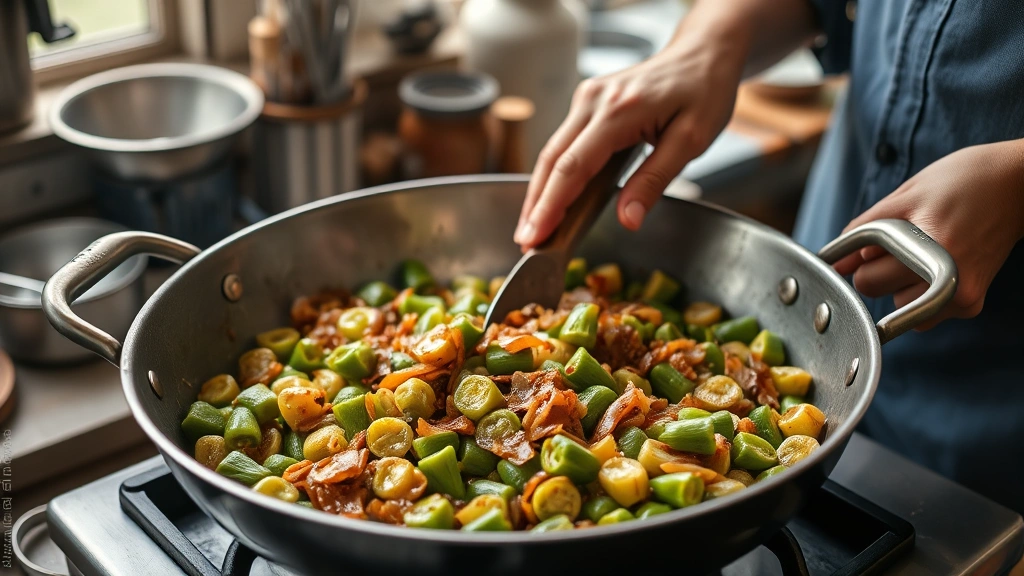
Add the okra and toss everything together for about 2 minutes, coating each piece in the spiced oil. Then reduce your heat to medium and let it cook, stirring occasionally, for about 12-15 minutes. The okra will start releasing moisture—this is normal. Keep cooking until it reabsorbs and the okra becomes tender and slightly crispy at the edges.
Moisture Control Is Everything
This is the single biggest reason bhindi masala fails at home. Okra is naturally mucilaginous—it releases a slimy substance when cooked. The secret is high heat and patience. By cooking it uncovered over medium to medium-high heat, you allow the moisture to evaporate rather than steam the okra. If your pan is too crowded, the okra steams instead of fries, and you end up with that gummy texture nobody wants.
Cook in a single layer if possible, or at least don’t overcrowd the pan. If you’re making a larger batch, work in two batches. It takes longer, but the results are worth it. The okra should look slightly shriveled and golden, not plump and soft.
Building Layers of Flavor
Once your okra is cooked through and crispy, taste it. This is when you adjust the seasoning. Add salt to taste, but remember you’ve already got amchur providing tanginess. If it needs more depth, add a pinch more of your ground spice blend. Some cooks like to add a squeeze of lemon juice at the very end for brightness, but amchur usually handles that.
The final touch is a sprinkle of fresh cilantro if you have it, though it’s optional. The dish should taste complex—you should taste the cumin, the coriander, the warmth of the chilies, and that subtle mango tang all at once. If it tastes one-dimensional, you probably need more of your spice blend.
Common Mistakes to Avoid
First mistake: washing the okra and then cooking it immediately while it’s still wet. Moisture is your enemy. Second mistake: cutting the okra into rounds before cooking. This releases all the slime at once and you’ll end up with mush. Third mistake: using low heat thinking it’ll cook more gently. It won’t—it’ll just steam the okra and make it slimy.
Fourth mistake: not toasting your whole spices. Pre-ground spices from the supermarket shelf have been sitting there for months losing potency. Fifth mistake: crowding the pan. Cook in batches if you need to. And finally, sixth mistake: adding tomatoes or water. This isn’t a curry; it’s a dry preparation. If you want to explore other dry vegetable preparations, our guide on how long to steam broccoli covers moisture management in vegetable cooking.
Serving and Storage Tips
Bhindi masala is best served hot, right after cooking, alongside roti, rice, or naan. It pairs beautifully with dal, a simple raita, or even alongside other curries if you’re building a larger meal. The crispy okra contrasts nicely with creamy or wet dishes.
If you need to store leftovers, keep them in an airtight container in the refrigerator for up to 3 days. Reheat gently in a pan over medium heat with a splash of oil to restore some crispness. It won’t be quite as good as fresh, but it’s still solid. Honestly, this dish is so quick to make that I usually just cook it fresh when I want it.
Expanding Your Repertoire
Once you’ve mastered bhindi masala, you’ve got the fundamentals down for dozens of Indian vegetable dishes. The technique of dry-roasting spices, building flavor with aromatics, and controlling moisture applies across the board. If you want to branch out into other cuisines, our authentic Bolognese recipe teaches similar layering techniques, and our Al Pastor recipe shows how spice blends transform proteins. The fundamentals of good cooking transcend cuisine.

Frequently Asked Questions
Why is my bhindi masala slimy?
You’re either cooking it with too much moisture (steam instead of fry), not using high enough heat, or overcrowding the pan. Okra releases slime when steamed. Cook uncovered, over medium-high heat, in a single layer, and let the moisture evaporate. The okra should look slightly shriveled when done, not plump.
Can I use frozen okra?
Fresh is always better, but frozen okra works in a pinch. Thaw it completely and dry it very thoroughly before cooking. You might lose some of that crispy texture, but the flavor will still be good. Just extend the cooking time slightly since frozen okra tends to release more moisture.
What if I don’t have amchur?
A squeeze of fresh lemon juice or a pinch of citric acid at the end works as a substitute. It won’t be quite the same—amchur has a subtle, slightly fruity tang that lemon juice doesn’t replicate exactly—but it’ll get you close. Some cooks use a tiny pinch of pomegranate powder as an alternative.
Can I make this ahead of time?
Not really. Bhindi masala is best served immediately after cooking while the okra is still crispy. If you need to make it ahead, prep everything—wash and dry the okra, grind your spices, mince your aromatics—and then cook it fresh when you’re ready to eat. The whole cooking process only takes about 20 minutes.
How much oil should I use?
About 3 tablespoons for 1 pound of okra. Some regional variations use more, some use less. You want enough to coat everything and help the okra crisp up, but you’re not deep-frying here. Start with 3 tablespoons and adjust based on how your okra looks as it cooks.
What’s the difference between bhindi masala and other okra dishes?
Bhindi masala is specifically the dry, spiced preparation with whole or lengthwise-sliced okra. Other regional variations might include tomatoes, more onions, or different spice blends. The key characteristic of bhindi masala is that it’s dry, crispy, and heavily spiced with toasted whole spices.
Bottom line: A proper bhindi masala recipe isn’t complicated—it’s just about respecting the ingredient, using quality spices, and understanding that moisture control is everything. Once you get it right once, you’ll have it locked in forever. It’s one of those dishes that tastes like you spent hours in the kitchen when you actually spent 20 minutes. And that’s the kind of cooking win I live for.


