
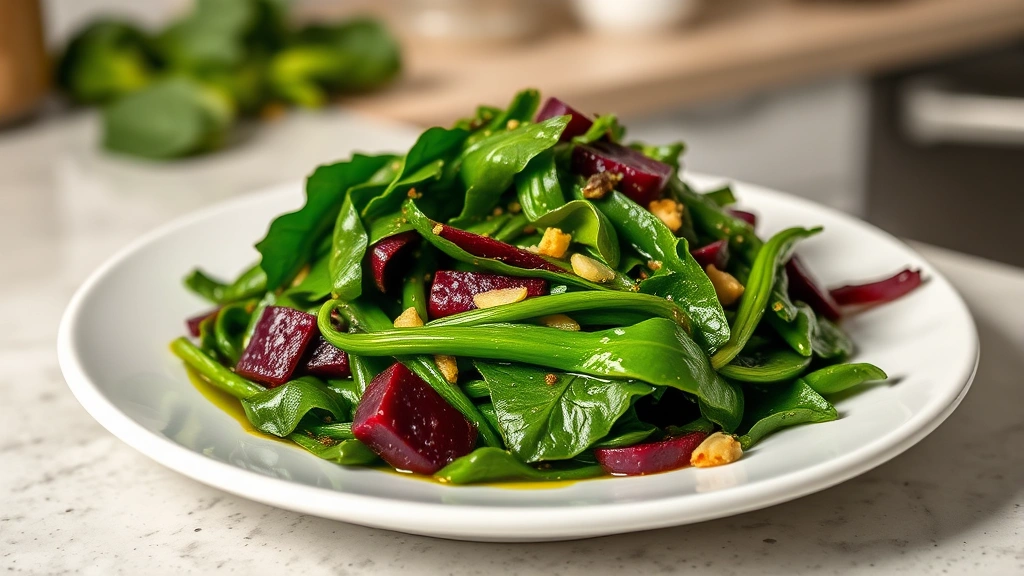
A solid beet greens recipe transforms those leafy tops you’ve been tossing into one of the easiest, most nutritious side dishes in your kitchen. If you’ve only ever eaten the beet root itself, you’re missing out on some seriously delicious greens that pack more nutrients than kale and cook faster than spinach. Let me walk you through five dead-simple methods that’ll have you cooking these greens like a pro.
Table of Contents
Why Cook Beet Greens?
Here’s the thing: beet greens aren’t some trendy superfood fad. They’re legitimately packed with calcium, iron, and vitamins A and K. The earthy flavor works in soups, pasta dishes, grain bowls, or just as a side. Plus, when you buy beets with the greens attached, you’re getting two vegetables for the price of one. That’s just smart cooking.
The greens have a slightly bitter edge that mellows beautifully when cooked. Think of it like the difference between raw and cooked kale—the heat transforms them into something genuinely delicious rather than something you’re forcing down for health reasons.
Prep Work Matters
Don’t skip this step. Separate the greens from the beet roots (save those roots for roasting or pickling). Rinse the greens thoroughly under cold water—beet greens trap soil between their wrinkled leaves. Fill a bowl with water, submerge the greens, swish them around, and repeat until the water runs clear. No grit in your dinner, thank you very much.
Once they’re clean, roughly chop them. You don’t need to be precious about it. Thick stems can stay; the greens will cook down significantly. If you’ve got massive stems, you can separate them and give them a 2-minute head start before adding the leaves, but honestly, it’s not necessary.
Sauté Method (Fastest)
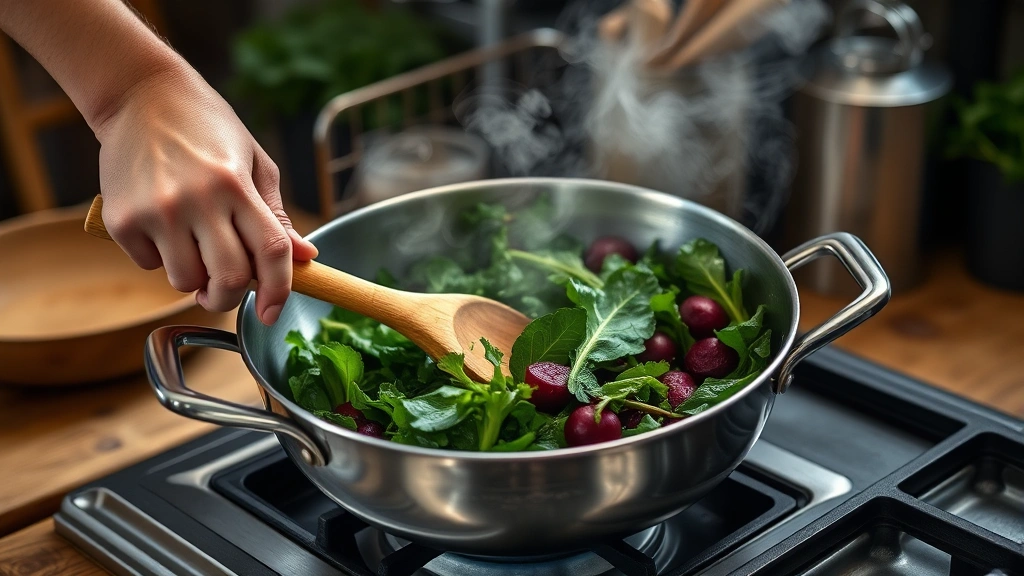
This is my go-to on weeknights. Heat 2 tablespoons of olive oil in a large skillet over medium-high heat. Once it shimmers, add minced garlic (2-3 cloves) and let it bloom for 30 seconds. Dump in your chopped beet greens—yeah, it looks like a mountain of greens, but trust me.
Stir constantly for about 3-4 minutes. The greens will wilt down dramatically. Season with salt, pepper, and a squeeze of lemon juice. Done. Total time from cold pan to plated: 8 minutes. This method works beautifully with our Aglio Olio Recipe technique—just use the same garlic-and-oil base and you’ve got a cohesive dinner.
Steam and Finish
If you want to preserve maximum nutrients and have a lighter result, steaming is your move. Bring water to a boil in a pot with a steamer basket. Add your cleaned, chopped greens and steam for 4-5 minutes until they’re tender. Transfer to a colander and let excess water drain.
Here’s the key: don’t serve them plain. Toss with good olive oil, garlic, salt, and whatever finishing ingredient speaks to you—lemon zest, red pepper flakes, toasted nuts, or even a drizzle of Avocado Crema Recipe for richness. Steaming gives you a blank canvas to work with.
Air Fryer Approach
This method creates crispy, almost chip-like greens that work as a snack or salad topper. Toss clean, dry beet greens with a light coating of olive oil, salt, and pepper. Spread them in a single layer in your air fryer basket (don’t overcrowd). Air fry at 350°F for 8-10 minutes, shaking the basket halfway through.
Watch them carefully—they go from perfectly crispy to burnt quickly. You’ll know they’re done when they’re dark and papery. This technique pairs perfectly with our Air Fryer Vegetable Recipes collection if you’re building an entire air-fried meal. The greens add textural contrast to heavier proteins.
Garlic Oil Technique
This is the method that’ll make people ask for your recipe. It’s basically the foundation of aglio e olio applied to beet greens. Heat ¼ cup of quality olive oil in a large pan over low heat. Slice 4-5 garlic cloves thin and add them to the oil. Let them infuse gently for 2-3 minutes—don’t let them brown or they’ll turn bitter.
Add your beet greens and increase heat to medium. Toss constantly for 4-5 minutes. The slow infusion means the garlic flavor penetrates every leaf. Finish with red pepper flakes, salt, and fresh lemon juice. This method requires patience but delivers restaurant-quality results. It’s the same principle we use in our Aglio Olio Recipe guide.
Blanch and Blend
For soups, sauces, or smoothies, blanching is your setup. Bring a large pot of salted water to a rolling boil. Add your beet greens and cook for 2-3 minutes. Drain and immediately plunge into ice water to stop the cooking—this preserves the bright color and prevents that muddy, overcooked green taste.
Squeeze out excess water and you’ve got a blank slate. Blend into soups, mix into pasta sauces, fold into grain bowls, or even add to smoothies if you’re feeling adventurous. Blanched greens freeze beautifully too—portion them into ice cube trays for easy future use.
Storage Tips
Raw beet greens last about 3-4 days in the fridge when stored in a sealed container or bag with a paper towel to absorb moisture. Cooked greens keep for 4-5 days in an airtight container. Frozen blanched greens last 3-4 months and work in any cooked application—soups, sautés, pasta, you name it.
Here’s a pro tip: if your beet greens are looking slightly wilted, don’t toss them. A quick ice bath revives them. Submerge them in ice water for 5 minutes and they’ll perk right back up, good as new.
Frequently Asked Questions
Can you eat beet greens raw?
Yes, absolutely. Young, tender beet greens work beautifully in salads. They have a slightly earthy, mineral flavor that pairs well with citrus vinaigrettes. Older, larger greens can be tough and bitter raw, so stick with the younger leaves if you’re going that route. Massage them lightly with oil and salt to soften the texture.
Do beet greens taste like beets?
Not really. Beet greens have an earthy, slightly bitter flavor that’s more similar to chard or kale than to the sweet, earthy beet root. Some people detect a faint mineral or metallic note, but cooking mellows this significantly. The flavor is milder than most dark leafy greens, which is why they’re so versatile.
Are beet greens healthier than spinach?
They’re roughly equivalent nutritionally, just with different micronutrient profiles. Beet greens have more calcium and iron per ounce, while spinach has more folate. Both are nutritional powerhouses. Cook whichever you prefer—the best vegetable is the one you’ll actually eat.
Can you cook beet stems?
Absolutely. The stems are edible and have a pleasant texture somewhere between chard stems and asparagus. They take slightly longer to cook than the leaves, so give them a 2-3 minute head start in your pan. Some people find them too tough and prefer to discard them, but I think they’re worth keeping.
What pairs well with beet greens?
Garlic, lemon, olive oil, red pepper flakes, nuts (especially walnuts and pine nuts), cheese (feta, goat, parmesan), and acidic elements like vinegar all complement beet greens beautifully. They work in pasta dishes, grain bowls, soups, and as simple sides. Try them with our Best Mac and Cheese Recipe for a nutrient boost, or fold them into our Authentic Bolognese Recipe for added vegetables.
How do you remove bitterness from beet greens?
Cook them. Heat mellows the bitterness significantly. If you’re eating them raw and they’re too bitter, massage them with a little salt and oil, or blanch them first and then use in salads. Younger greens are naturally less bitter than mature ones, so choose smaller bunches when possible.
Wrapping It Up
A solid beet greens recipe doesn’t need to be complicated. Whether you’re sautéing with garlic, air-frying for crunch, or blanching for soups, the fundamentals stay the same: start with clean greens, use good technique, and finish with bold flavors. These five methods cover everything from quick weeknight sides to meal-prep friendly batches. Stop throwing away those greens—they’re some of the easiest, most nutritious additions to your dinner rotation. Pick your method, grab some beets with the tops still attached, and get cooking.


