
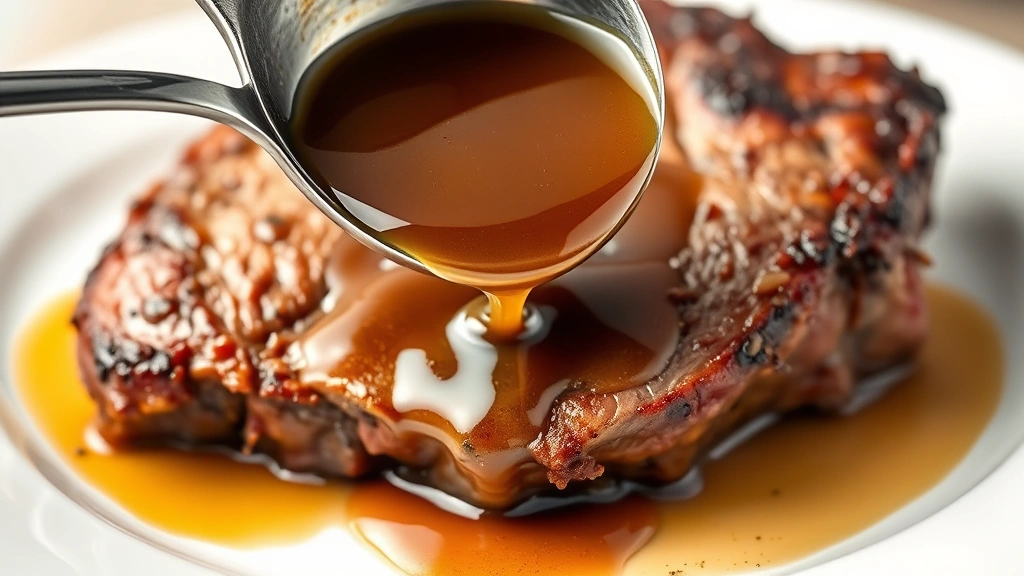
Au jus recipes are the secret weapon that transforms a simple roast into a restaurant-quality dinner that’ll make your guests think you’ve been secretly attending culinary school. This French term literally means “with juice,” and it refers to a savory sauce made from meat drippings, broth, and seasonings—the kind of sauce that makes you want to lick your plate (we won’t judge).
Table of Contents
Classic Beef Au Jus
The foundation of all great au jus recipes starts with what you’ve already got—those browned bits stuck to the bottom of your pan after you’ve seared a beautiful cut of beef. Don’t wash that pan! Those crusty, caramelized drippings are liquid gold for sauce makers.
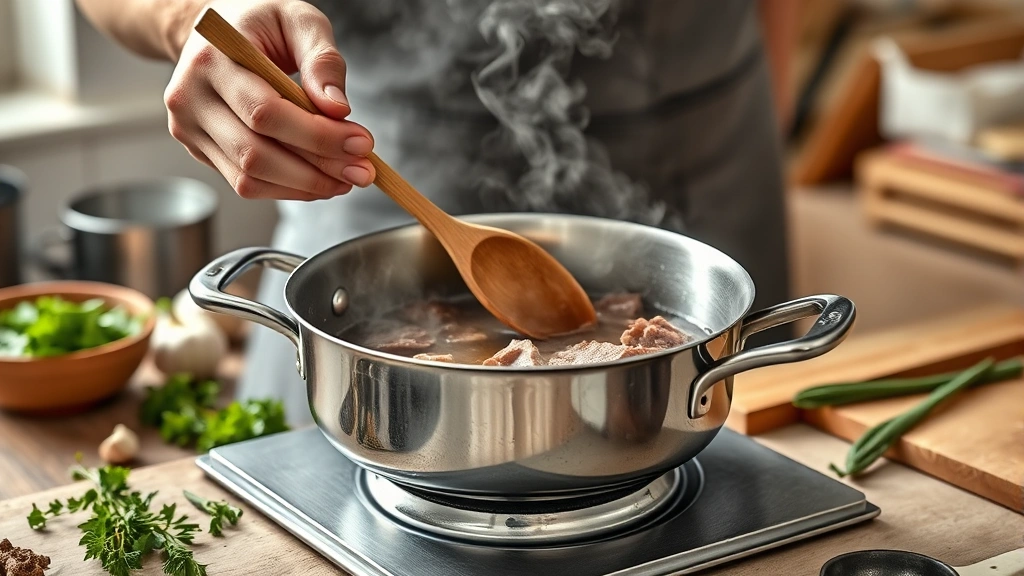
Here’s the straightforward approach: After removing your roast from the pan, pour off most of the fat (leaving about a tablespoon), then add 2 cups of beef broth directly to the hot pan. Use a wooden spoon to scrape up all those flavorful bits—this is called deglazing, and it’s where the magic happens. Add a splash of Worcestershire sauce, a pinch of salt, pepper, and fresh thyme. Let it simmer for 5-10 minutes until it reduces slightly and concentrates in flavor. Strain through a fine mesh sieve if you want it silky smooth, or leave the bits in for a more rustic texture.
Quick Stovetop Method
When you’re short on time but still want impressive au jus recipes, this method delivers in under 15 minutes. Start with a heavy-bottomed saucepan over medium-high heat. Add a tablespoon of butter and sauté minced garlic and finely diced onion until they’re soft and fragrant—about 3 minutes.
Pour in 3 cups of beef broth and bring it to a rolling boil. Add 2 teaspoons of Dijon mustard, 1 teaspoon of soy sauce, and a bay leaf. Let it bubble away for 8-10 minutes, reducing by about a third. The broth will darken and deepen in flavor as it concentrates. Finish with fresh cracked black pepper and a squeeze of lemon juice. This version works beautifully with sandwiches, especially when you’re dipping crusty bread into it.
Slow Cooker Version
If you’re already using a slow cooker for your roast, you’re halfway to perfect au jus recipes without any extra effort. When your meat is done cooking, carefully pour the liquid from the slow cooker into a gravy separator (that nifty pitcher that lets you pour off the fat from the bottom). You’ll get about 2-3 cups of rich, meaty liquid.
Transfer this to a saucepan and bring it to a simmer over medium heat. Add fresh herbs like rosemary and thyme, a splash of red wine vinegar, and let it reduce for 10-15 minutes. The slow cooker method gives you an incredibly deep, developed flavor because the meat has been cooking low and slow for hours, extracting maximum collagen and gelatin into the liquid. This is the lazy person’s way to fancy sauce.
Red Wine Variation
For special occasions when you want to elevate your game, red wine transforms basic au jus recipes into something genuinely sophisticated. After deglazing your pan with beef broth, add 1 cup of dry red wine (something you’d actually drink—don’t use cooking wine) before adding the broth.
Let the wine reduce by half first, which burns off the alcohol and concentrates the wine’s flavor. Then add your beef broth and continue as normal. The wine adds a subtle complexity and slight acidity that balances the richness of the beef. Finish with a knob of cold butter whisked in at the end—this is called mounting, and it creates a silky, luxurious mouthfeel. Add fresh thyme and cracked black pepper, and you’ve got something that tastes like it came from a high-end steakhouse.
Mushroom & Garlic Blend
This variation is perfect when you want to add umami depth to your au jus recipes. Sauté finely chopped mushrooms (cremini or portobello work great) in butter until they release their moisture and start to brown—this takes about 8 minutes. Add minced garlic and cook for another minute until fragrant.
Pour in your beef broth and add the pan drippings from your roast. Include a teaspoon of tomato paste, which adds another layer of savory depth. Let everything simmer together for 15 minutes so the flavors marry and develop. The mushrooms break down and create a naturally thickened sauce without any flour or cornstarch. This version pairs exceptionally well with prime rib, beef tenderloin, or even pork.
Thickening Techniques
Sometimes you want your au jus recipes to have more body than a thin pan sauce. The traditional method is a beurre manié—equal parts butter and flour worked together into a paste. Whisk small pieces of this paste into your simmering sauce until it reaches your desired thickness. It dissolves smoothly without lumps if you do it right.
Alternatively, mix cornstarch with cold water (1 tablespoon cornstarch to 2 tablespoons water) and whisk it into your simmering sauce. This works faster than flour and creates a glossier finish. For a more elegant approach, reduce your sauce longer over medium heat—evaporation naturally concentrates and thickens it. This takes patience but gives you the best flavor because nothing’s diluting the meat essence. Some folks use a slurry of arrowroot powder, which is more neutral-tasting than cornstarch.
Storage & Reheating
The beauty of making au jus recipes ahead is that they actually improve after a day or two as flavors continue to develop. Store your sauce in an airtight container in the refrigerator for up to 4 days, or freeze it for up to 3 months in ice cube trays for convenient portions.
When you reheat, do it gently over low to medium heat, stirring occasionally. If it’s been frozen, thaw it in the refrigerator overnight first. Add a splash of broth if it’s thickened too much during storage. Never let it boil rapidly when reheating, as this can break an emulsified sauce and make it separate. A slow, gentle warm-up preserves all that work you put into developing the flavor.
Pairing Suggestions
Au jus recipes aren’t just for beef—though that’s their traditional home. They’re spectacular with prime rib, beef tenderloin, and ribeye steaks. But don’t stop there. Pork roasts benefit tremendously from a good au jus, especially when you add a touch of apple cider vinegar. Lamb pairs beautifully with au jus that includes fresh mint and a hint of garlic.
French dip sandwiches are the classic pairing—thinly sliced roast beef on a crusty roll, dunked into warm au jus. But also consider serving it alongside roasted vegetables, over mashed potatoes, or as a dipping sauce for Yorkshire puddings. The sauce works anywhere you want to add savory richness. Some adventurous cooks even use au jus as a base for other sauces—like when making a complementary side sauce to go alongside your main dish.
Frequently Asked Questions
What’s the difference between au jus and gravy?
Au jus is thinner and more refined, made from meat drippings and broth without flour or cream. Gravy is typically thickened with flour and often includes cream. Au jus is the French steakhouse approach; gravy is more comfort food. Both are delicious—it’s just a matter of what you’re serving.
Can I make au jus without pan drippings?
Absolutely. Use quality beef broth as your base and build flavor with sautéed aromatics, tomato paste, Worcestershire sauce, and fresh herbs. It won’t have quite the same depth as sauce made from actual roast drippings, but it’ll still be tasty. This is where adding mushrooms really helps, as they provide that umami richness you’d normally get from meat.
How do I fix au jus that’s too salty?
Add more unsalted broth or water to dilute it, then simmer to reduce back to your desired consistency. You can also add a pinch of sugar to balance the salt, though go easy—you want balance, not sweetness. This is why tasting as you go is crucial with au jus recipes.
Should I strain my au jus?
That’s purely preference. Straining through a fine mesh sieve gives you a silky, elegant sauce perfect for formal dinners. Leaving the bits in creates a more rustic, homestyle version. Both are completely valid approaches.
Can I make au jus in advance?
Yes, and it’s actually better when made a day ahead. The flavors develop and deepen overnight. Make it, cool it completely, then refrigerate. Reheat gently before serving. This also makes entertaining easier since you can tackle this component ahead of time.
Final Thoughts
Au jus recipes are genuinely one of the easiest ways to elevate your cooking from home-kitchen to restaurant-quality. You’re not doing anything complicated—you’re just extracting maximum flavor from what you already have and treating it with respect. The key is starting with good ingredients (quality broth, fresh herbs, proper seasoning) and giving the sauce time to develop through gentle simmering and reduction.
Whether you go with the classic beef version, experiment with red wine, or add mushrooms for depth, you’re working with a framework that’s been refined over centuries of French cooking. That’s the real secret—you’re not inventing anything new, you’re just following proven techniques that work. Next time you roast something, don’t waste those pan drippings. Make au jus, and watch your dinner guests wonder what your secret is. For more recipe inspiration, check out our other cooking guides or explore complementary sauces and sides.


