
Learning how to clean vomit from carpet quickly and effectively can save your carpet from permanent damage and get your home back to normal fast. Whether it’s a sick kid, a pet accident, or an unexpected mess, vomit cleanup doesn’t have to be a nightmare if you know the right steps and materials to use.
Table of Contents
Act Immediately: First Steps
The golden rule of carpet cleanup is speed. The longer vomit sits on your carpet fibers, the deeper it penetrates and the harder it becomes to remove. Fresh vomit is actually easier to clean than dried material, so don’t put this off.
Your first action should be to open windows and get air moving through the room. Vomit smell compounds settle quickly into carpet fibers and the padding underneath. Fresh air circulation helps prevent odors from becoming embedded. If you have a ceiling fan or portable fan, turn it on immediately—this is one of the most underrated first steps.
Next, keep people and pets away from the affected area. You don’t want anyone tracking the mess around or sitting on contaminated carpet. Cordon off the section if needed, especially if you have young kids or pets who might wander back over.
Gather Your Cleaning Supplies
Before you start scrubbing, assemble everything you’ll need. Running back and forth to find supplies wastes time and lets the mess set deeper into fibers. Here’s what you’ll need:
- Paper towels or old towels (disposable is better)
- Rubber or latex gloves—don’t skip this
- Enzymatic carpet cleaner (this is critical)
- White vinegar
- Baking soda
- Spray bottle filled with water
- Wet/dry vacuum (if you have one)
- Old spoon or plastic scraper
- Plastic bags for disposal
The enzymatic cleaner is non-negotiable. Unlike regular cleaners, enzymes actually break down the organic proteins in vomit, which is why they work so much better than standard carpet shampoo. Brands like Nature’s Miracle or Rocco & Roxie are specifically designed for this type of organic mess.
Remove Solids First
Put on your gloves—seriously, don’t skip this step. Using an old spoon or plastic scraper, gently remove as much of the solid material as possible. Work from the edges toward the center to avoid spreading the mess outward.
Place everything you remove directly into a plastic bag and seal it immediately. Don’t let it sit in an open trash can where smell will escape. If you have a wet/dry vacuum, this is the perfect time to use it on the solids—it’ll pick up material that a regular vacuum can’t handle.
The goal here isn’t perfection; you’re just removing the bulk of the material so you can focus on cleaning the liquid and residue that’s soaked into the fibers.
Blotting vs. Rubbing
This is where most people make mistakes. Never rub or scrub vomit into carpet—you’ll push it deeper into the fibers and the backing underneath. Instead, use a blotting technique that lifts material upward and out.
Take clean paper towels or a cloth and press down firmly on the affected area, holding for 3-5 seconds. Lift straight up. Repeat with fresh towels until you’re no longer pulling up visible material. You’ll be surprised how much liquid you can remove this way before you even start with cleaners.
Work from the outside edges inward to contain the mess. This prevents you from spreading contamination to clean carpet areas. Change your blotting cloth frequently—a dirty cloth just redistributes the problem.
Enzymatic Cleaners Work Best
Now that you’ve removed solids and blotted up liquid, it’s time for the enzymatic cleaner. This is where the real cleaning happens. Enzymatic cleaners contain bacteria and enzymes that literally consume the organic matter in vomit—the proteins, stomach acid residue, and other compounds that cause staining and odor.
Follow the product instructions carefully. Most enzymatic cleaners require you to saturate the area, not just spray it lightly. Pour or spray generously until the carpet is wet but not soaking. The enzymes need moisture to work effectively.
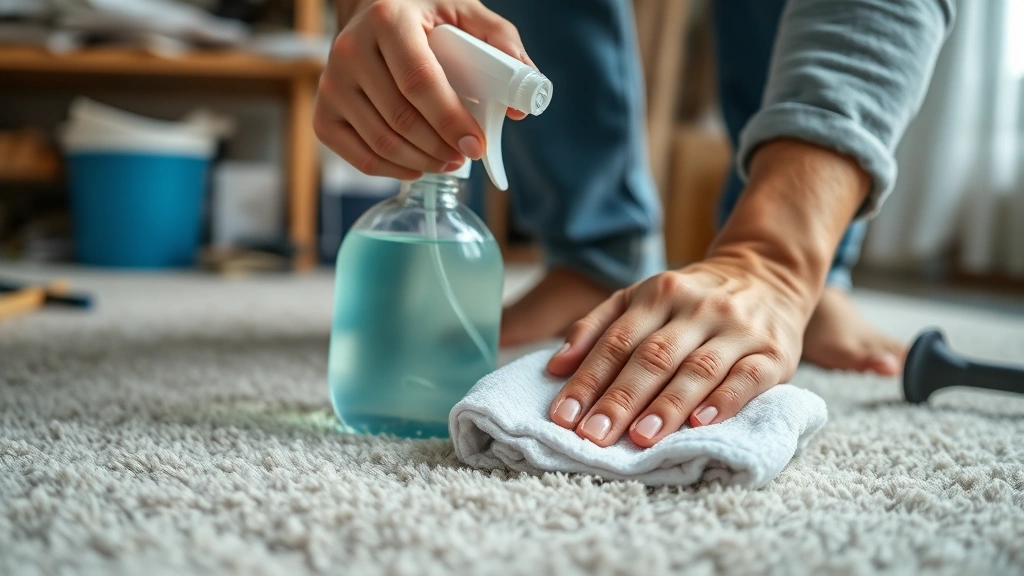
Let the cleaner sit for the recommended time—usually 10-30 minutes. This is when the magic happens. Don’t rush this step. The enzymes are breaking down the vomit at a molecular level, which is why this method works so much better than vinegar or baking soda alone.
Deep Cleaning Method
After the enzymatic cleaner has done its work, blot the area again with fresh towels, pressing firmly to pull up the cleaner and dissolved vomit material. You should see the towels coming away much cleaner than before.
Next, spray the area with clean water to rinse out remaining cleaner residue. Blot again. Repeat the rinse-and-blot process 2-3 times until the water coming up is mostly clear. Cleaner residue left in the carpet will attract dirt and cause resoiling.
If you have access to a wet/dry vacuum or carpet cleaning machine, now is the time to use it. A machine will extract much more moisture than hand blotting, which speeds up drying and prevents mildew growth in the carpet padding.
For stubborn stains, mix equal parts white vinegar and water in a spray bottle and apply to the area. Let it sit for 5 minutes, then blot. The vinegar helps neutralize remaining odor compounds and can lift residual discoloration. This is particularly helpful when dealing with particularly acidic vomit stains.
Proper Drying Process
Moisture left in carpet leads to mildew, mold, and persistent odors. Drying properly is just as important as cleaning. Here’s how to do it right:
- Keep the room well-ventilated with windows open and fans running
- Use a portable dehumidifier if you have one—this dramatically speeds drying
- Place towels over the cleaned area to absorb remaining surface moisture
- Change the towels every 30 minutes until they stop absorbing water
- Keep foot traffic off the area until completely dry
Drying typically takes 24-48 hours depending on humidity, carpet thickness, and ventilation. Don’t rush to close windows and turn off fans. Incomplete drying is one of the main reasons people end up with persistent odors and mildew problems after vomit cleanup.
Eliminate Lingering Odors
Even after thorough cleaning, vomit odor can linger. This is because smell compounds soak into carpet padding and even the concrete or wood subfloor underneath. Once the area is completely dry, sprinkle baking soda liberally over the cleaned section.
Let the baking soda sit for 24 hours. It will absorb residual odor compounds. Then vacuum thoroughly. You can also add a few drops of essential oil (like lavender or lemon) to the baking soda before sprinkling for a fresher scent.
If odor persists after baking soda treatment, consider using an odor-eliminating spray like Febreze or an enzymatic odor remover specifically designed for pet accidents. These products work similarly to enzymatic cleaners—they break down odor-causing compounds rather than just masking smells.
For severe odor problems that won’t go away, you may need to treat the carpet padding or subfloor. This sometimes requires professional carpet cleaning equipment or, in extreme cases, padding replacement. Most situations resolve with the methods above, but it’s worth knowing this option exists.
Prevention Tips
Once you’ve dealt with a vomit mess, you’ll want to prevent it from happening again. While you can’t always stop accidents, you can minimize damage:
- Keep carpet cleaner and enzymatic supplies on hand if you have young kids or pets prone to illness
- Use washable area rugs over carpet in high-risk zones (kids’ rooms, pet areas)
- Keep paper towels and plastic bags easily accessible in bathrooms and bedrooms
- Train kids to get to a bathroom or hard flooring if they feel sick
- For pets, consider using hard flooring like LVP in areas where accidents are likely—much easier to clean than carpet
If you have pets prone to vomiting, talk to your vet about underlying causes. Frequent vomiting often indicates a health issue that should be addressed. From a flooring perspective, hard surfaces are genuinely easier to maintain than carpet if you have a pet with chronic issues.
Frequently Asked Questions
Can I use bleach to clean vomit from carpet?
No. Bleach will damage or discolor most carpets and doesn’t effectively break down the organic material in vomit. Enzymatic cleaners are specifically formulated for this type of mess and work far better. Bleach also creates toxic fumes if mixed with other cleaners, so stick with enzymatic products.
How long does it take to clean vomit from carpet?
The actual cleaning process takes 30-60 minutes from start to finish, but drying takes 24-48 hours. Don’t try to speed up drying by using heat—this can set stains. Patience with the drying process prevents odor and mildew problems.
What if the stain won’t come out?
Old or dried vomit stains are much harder to remove. If enzymatic cleaner and vinegar don’t work, your options are: rent a professional carpet cleaning machine, hire a professional carpet cleaner, or replace that section of carpet. Sometimes the damage is just too deep for DIY methods.
Is vomit stain permanent?
Not if you act quickly. Fresh vomit can almost always be removed with enzymatic cleaners. The longer it sits, the more likely it is to permanently stain or damage carpet fibers. This is why speed matters so much.
Can I use regular carpet cleaner instead?
Regular carpet shampoo won’t work as well because it doesn’t break down the organic proteins in vomit. Enzymatic cleaners are specifically designed for organic messes—pet accidents, blood, food, etc. They’re worth the extra cost and effort.
Should I call a professional?
For fresh vomit, DIY methods work fine. Call a professional if: the stain is old and set in, you have health concerns about handling the mess, the smell won’t go away after treatment, or you want guaranteed results. Professional carpet cleaners have industrial equipment and experience that DIY methods can’t match.
Will the smell come back?
Not if you dry the carpet completely and use enzymatic cleaners properly. Smell returns when moisture remains in padding or subfloor, allowing mold and mildew to grow. Thorough drying is your best insurance against recurring odors.
What about carpet padding—does it need replacing?
Most of the time, no. If you clean and dry quickly, the padding stays protected. However, if vomit soaked through and sat for hours or days, the padding may need replacement. Signs include persistent odor, soft spots, or visible mold. This is a job for professionals with proper equipment.
Wrapping Up
Cleaning vomit from carpet isn’t pleasant, but it’s completely manageable if you act fast and use the right approach. The key steps are: remove solids, blot (don’t rub), use enzymatic cleaner, rinse thoroughly, dry completely, and treat odor with baking soda or odor eliminators.
Speed is your biggest advantage. The faster you act, the easier the cleanup and the better your results. Keep enzymatic cleaners on hand if you have young kids or pets—you’ll be glad you did when an accident happens.
For other household cleaning challenges, check out our guides on how to clean gold items and how to clean an ice maker. And if you’re dealing with hard floors instead, our how to clean headlights guide covers general surface cleaning principles that apply across many materials.
Remember: don’t panic, act quickly, and use enzymatic cleaners. You’ve got this.


