

Learning how to clean outdoor cushions is one of those skills that saves you hundreds of dollars and keeps your patio looking sharp year-round. Whether you’ve got lounge chairs, bench cushions, or throw pillows getting hammered by sun, rain, and the occasional bird dropping, this guide walks you through the exact process I’ve used for years to bring grimy cushions back to life.
Table of Contents
Assess Your Cushion Damage
Before you start spraying anything, take a hard look at what you’re dealing with. Are we talking surface dust and pollen, or has mold started growing in the seams? Grab a cushion and give it a good shake over a trash can—you’d be surprised how much debris comes loose. Check the fabric for any visible stains, discoloration, or soft spots that might indicate moisture damage. If your cushions smell musty or feel damp, they need immediate attention to prevent mold from taking over completely. This assessment determines whether you’ll use the quick dry method or go full wet cleaning.
Gather Your Cleaning Supplies
You don’t need fancy commercial products to get professional results. Here’s what actually works: a soft-bristle brush, white vinegar, mild dish soap, water, and clean towels. For tougher jobs, grab some baking soda and a spray bottle. If your cushions have canvas or performance fabric, you might want specialized outdoor fabric cleaner from a trusted source like Family Handyman’s recommended products. A shop vacuum with an upholstery attachment speeds up the dry cleaning phase significantly. Don’t use bleach on colored cushions—it’ll fade them faster than summer sun. Gather everything before you start; it keeps you from running around mid-project.
The Dry Cleaning Method
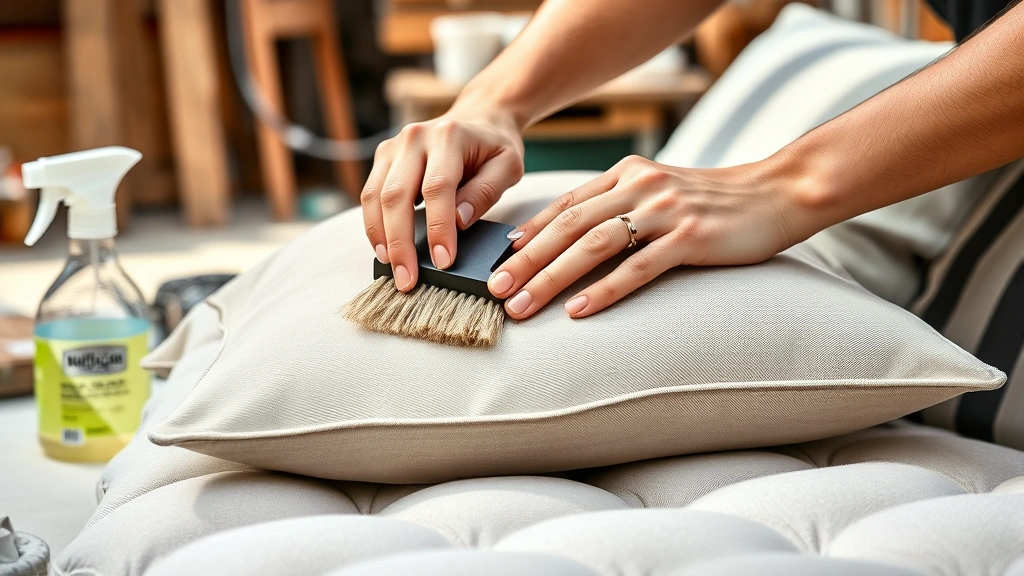
Start here every single time, even if you plan to wet clean later. This removes loose dirt, pollen, and debris that would turn into mud if you added water. Lay cushions flat on a clean surface or hang them over a railing. Use your soft-bristle brush in firm, directional strokes—don’t scrub in circles, which can push dirt deeper into fibers. Pay special attention to seams and piping where grime loves to hide. If you’ve got a vacuum with an upholstery attachment, run it over both sides after brushing. This preliminary step prevents you from just moving dirt around when you wet clean. For lightly soiled cushions, this might be all you need.
Wet Cleaning Process
Mix your cleaning solution: one tablespoon of mild dish soap with one gallon of warm water. Add a quarter cup of white vinegar to cut through stubborn grime and kill odor-causing bacteria. Fill a spray bottle and test your solution on a hidden corner first—better safe than sorry. Spray the cushion generously but don’t soak it; you’re not trying to waterlog the foam underneath. Let the solution sit for 5-10 minutes to break down dirt. Use a soft brush with gentle circular motions to work the cleaner in. Rinse thoroughly with clean water from a hose or spray bottle, working in the same direction to prevent water from pooling. Squeeze out excess water gently—never wring cushions like you’re wringing out a mop. This damages the foam and fabric structure.
Spot Treat Stubborn Stains
For bird droppings, tree sap, or mystery stains that won’t budge, make a paste with baking soda and water. Apply it directly to the stain and let it sit for 15-20 minutes while it works its magic. Use a soft brush to gently agitate the paste, then rinse thoroughly. For organic stains like mildew or algae, spray undiluted white vinegar directly on the affected area and let it sit for 10 minutes before scrubbing lightly and rinsing. Rust stains require a different approach—if you’ve got metal furniture leaving marks on cushions, check out our guide on how to clean a rusty cast iron skillet for rust removal techniques that work on multiple surfaces. Never use abrasive scrubbers that tear fabric; patience with gentle methods beats aggression every time.
Drying and Storage Tips
This is where most people mess up. Cushions need proper air drying to prevent mold and mildew. Lay them flat on a clean, dry surface in direct sunlight if possible—UV rays naturally kill bacteria and help cushions dry faster. Prop them at an angle so water drains away from the fabric. In humid climates, use fans to increase air circulation around the cushions. Never stack wet cushions; they’ll stay damp and develop that nasty musty smell. Give them at least 24-48 hours of drying time before storing or using them. When you’re ready to store cushions for winter, make sure they’re completely dry first. Store them in a cool, dry place in breathable storage bags, not plastic, which traps moisture. Check our resource at This Old House for seasonal storage best practices.
Prevent Future Damage
An ounce of prevention beats a pound of cure. Use cushion covers when you’re not actively using furniture—even lightweight ones block UV damage and keep dust off. Position cushions under an awning or umbrella when heavy rain is forecast. Wipe up spills immediately before they set into the fabric. Keep tree branches trimmed back from seating areas to reduce falling debris. If you live near the coast, rinse cushions with fresh water monthly to prevent salt buildup that accelerates fabric degradation. Store cushions indoors during extreme weather or off-season. These small habits add years to your outdoor furniture’s lifespan and keep cleaning sessions quick and easy.
Seasonal Maintenance Schedule
Spring: Deep clean all cushions after winter storage. Check for mold, mildew, or moisture damage before putting them back in use. Summer: Light cleaning every 4-6 weeks, focusing on high-use seating. Wipe spills immediately. Fall: Another deep clean before storing for winter. Remove any debris and ensure cushions are completely dry. Winter: Check stored cushions monthly for any signs of moisture or pests. Wipe down covers if storing outdoors. This rhythm keeps your cushions in top shape without requiring constant attention. Most people find that establishing this schedule actually saves time because problems never get bad enough to require serious intervention.
Frequently Asked Questions
Can I use a pressure washer on outdoor cushions?
No—pressure washers are too aggressive and will damage fabric fibers, compromise seams, and force water deep into the foam where it can cause mold. Stick with gentle hand washing or a regular garden hose on low pressure.
What’s the best way to remove mold from cushions?
Spray undiluted white vinegar directly on moldy areas and let it sit for 15 minutes. Scrub gently with a soft brush, rinse thoroughly, and dry completely in sunlight. For severe mold, you might need to replace the cushions—mold deep in the foam is hard to fully eliminate.
How often should I clean outdoor cushions?
Light cleaning every 4-6 weeks during active use keeps them looking fresh. Deep cleaning twice yearly (spring and fall) prevents buildup. More frequent cleaning is needed in areas with high pollen, near trees, or in humid climates.
Are there cushion fabrics easier to clean than others?
Performance fabrics and solution-dyed acrylic resist staining better than natural fibers. Canvas requires more frequent cleaning but handles moisture better than some synthetics. Check your manufacturer’s recommendations for your specific fabric type.
Can I machine wash removable cushion covers?
Check the care label first. Most outdoor cushion covers can be machine washed on gentle cycle with cold water, but some require hand washing. Never use hot water or bleach on colored fabrics. Dry on low heat or air dry to prevent shrinkage.
What should I do if cushions smell musty?
This indicates moisture and bacterial growth. Spray with vinegar solution, scrub lightly, and dry completely in direct sunlight for several days. If the smell persists after thorough drying, the foam may be compromised and replacement is your best option.
Is it safe to use bleach on outdoor cushions?
Avoid bleach on colored cushions—it causes permanent fading and can weaken fabric fibers. For white cushions, dilute bleach heavily (1 part bleach to 10 parts water) and test on a hidden area first. Always rinse thoroughly afterward.
How do I protect cushions from UV damage?
Use cushion covers when not in use, position furniture in shaded areas when possible, and store cushions indoors during off-season. Apply UV-protective fabric spray annually for extra protection, following product instructions carefully.
Learning how to clean outdoor cushions properly extends their life and keeps your patio inviting. The five-step process—assess, gather supplies, dry clean, wet clean, and dry thoroughly—works for virtually any cushion type. Start with the dry method, progress to gentle wet cleaning only when needed, and always prioritize proper drying. With seasonal maintenance and preventive care, your outdoor cushions will look fresh and feel comfortable for years. Get out there and reclaim your patio furniture from the elements. Your future self will thank you when you’re lounging on clean, well-maintained cushions instead of replacing them every couple of years. For more detailed guidance on similar cleaning challenges, check Bob Vila’s comprehensive home maintenance resources.


