

Learning how to clean suede boots is one of those skills that saves you money and keeps your favorite footwear looking sharp for years. Suede is a delicate material that demands respect—treat it wrong and you’ll end up with stains, matted nap, or permanent damage. But here’s the good news: with the right approach and a few basic tools, you can handle most suede cleaning jobs yourself without sending boots to a professional cleaner.
Table of Contents
Why Suede Needs Special Care
Suede is the fuzzy underside of animal hide—that soft nap is what makes it look and feel luxurious, but it’s also what makes it vulnerable. Unlike leather’s smooth surface, suede’s texture traps dirt particles and absorbs moisture like a sponge. Water, salt, mud, and oils can all penetrate the fibers and cause permanent discoloration or matting. That’s why regular maintenance beats emergency rescue missions every time.
The key difference between suede and regular leather cleaning is gentleness. You can’t scrub suede the way you’d clean a canvas sneaker. Instead, you’re working with the grain, using specialized brushes, and relying on chemical treatments designed specifically for this material. Think of it like grooming a fine wool coat—you’re restoring the texture, not forcing it.
Gather Your Cleaning Tools
Before you touch your boots, assemble the right equipment. You’ll need a suede brush (the brass or rubber-bristled kind, not a stiff wire brush), a clean white cloth or towel, and a suede eraser. These three items handle 90% of cleaning jobs. For tougher situations, grab white vinegar, rubbing alcohol, and a suede protectant spray.
A suede brush is your workhorse. The bristles are designed to lift dirt without cutting the nap fibers. Brass brushes work well for regular maintenance, while rubber-bristled brushes grip stubborn stains better. The white cloth matters too—colored fabric can transfer dye onto your boots. If you’re treating stains, having a spray bottle for water and a small bowl for mixing solutions will make the job cleaner and more controlled.
You can find all these items at shoe stores, hardware shops, or online retailers. Many people keep a suede cleaning kit similar to what you’d use for cleaning a rug since both materials need gentle handling.
Brush Away Surface Dirt
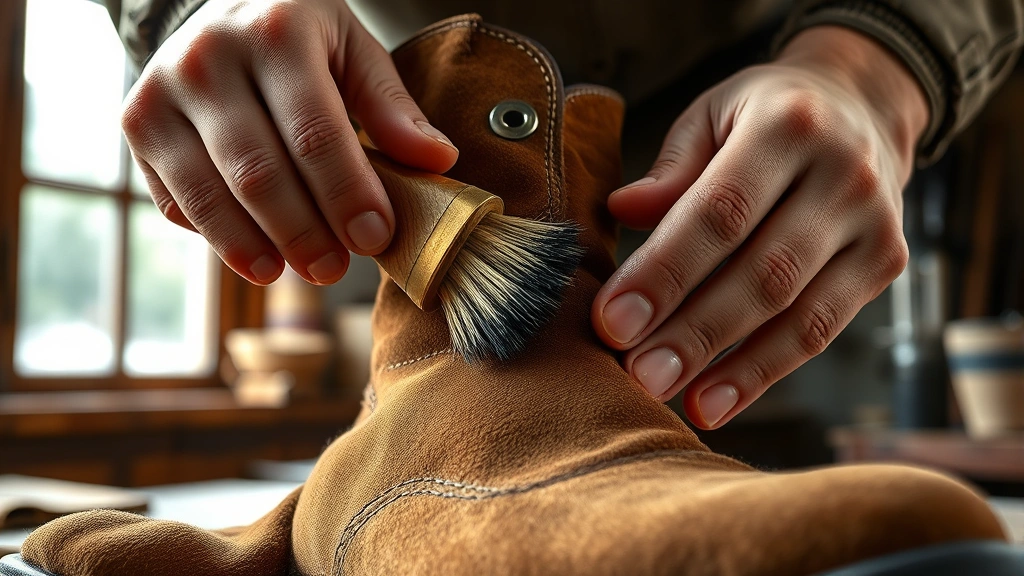
Start every cleaning session with dry brushing—this removes loose dirt before it gets ground in. Hold the boot in one hand and brush in one direction using short, firm strokes. Work from the toe toward the heel, following the natural grain of the suede. Don’t scrub back and forth; that matts the nap and pushes dirt deeper.
Pay special attention to seams, creases, and the heel area where dirt accumulates. For the sole and heel, you can use a stiffer brush or old toothbrush since that material isn’t as delicate. After brushing, wipe the boot with a dry cloth to catch any loosened particles. This single step prevents most stains from setting permanently.
Do this every time you wear your boots—make it a habit like wiping your feet at the door. Five minutes of preventive brushing saves hours of intensive cleaning later.
Treat Wet Stains First
Water stains and salt marks are suede’s worst enemy. If your boots get wet or splashed with slush, act immediately. First, blot excess moisture with a clean white cloth—don’t rub. Press gently to absorb water without pushing it deeper into the fibers.
Once you’ve removed surface moisture, let the boots air dry completely at room temperature. Never use heat—a hair dryer, radiator, or direct sunlight will shrink the material and set stains permanently. Stuff the boots loosely with newspaper to help them hold their shape and absorb interior moisture. Replace the newspaper every few hours.
Once dry, brush the nap to restore texture. If water stains remain, use a white cloth slightly dampened with distilled water and a tiny drop of white vinegar. Dab the stain gently, working from the outside edges inward to prevent spreading. The vinegar helps dissolve mineral deposits from salt and hard water.
Handle Stubborn Marks
Scuffs, pen marks, and ground-in dirt require more aggressive treatment. A suede eraser works like a pencil eraser—rub it gently over the problem area using light pressure. The friction breaks down the stain without damaging fibers underneath. Test it on an inconspicuous area first if you’re nervous.
For oil-based stains (like shoe polish or grease), sprinkle cornstarch or baking soda on the spot and let it sit overnight. These powders absorb oils without adding moisture. Brush away the powder the next day. If the stain persists, mix a small amount of rubbing alcohol with water (50/50 ratio) and dab with a cloth. Work slowly and let each application dry before assessing results.
Never soak suede boots or submerge them in water. Even a gentle wash can cause permanent damage. Spot treatment is always the answer—small, controlled applications beat full-scale washing every time.
Restore the Nap Texture
After cleaning, your suede boots might look a bit flat or matted. This is normal and fixable. Use a soft suede brush in gentle, directional strokes to lift the nap back to life. Brush in one direction consistently, following the natural grain. You’ll see the texture come back almost immediately.
For heavily matted areas, try a rubber-bristled brush with slightly more pressure. The rubber grips the fibers and pulls them upright better than softer bristles. Work in small sections and check your progress frequently—it’s easy to overdo it.
Some people use a steamer to restore nap, but this requires care. Hold the boot 6-8 inches from the steam source for just a few seconds, then brush immediately. The heat opens the fibers temporarily, making them easier to reset. But excess steam causes water stains, so this method is best left for professionals unless you’re very confident.
Protect Your Boots Long-Term
After cleaning, apply a suede protectant spray to create a water-resistant barrier. These products don’t change the boot’s appearance but make stains easier to remove later. Spray evenly from 6 inches away and let dry completely before wearing. Reapply every few months or after heavy use.
Store boots in a cool, dry place away from direct sunlight. Stuff them with newspaper to maintain shape and absorb any ambient moisture. A breathable cloth bag (not plastic) protects from dust while allowing air circulation. Keep them away from heat sources and humidity—basements and attics are usually poor storage spots.
Regular brushing remains your best defense. Make it part of your routine and your suede boots will stay looking almost new for years. This preventive approach is similar to how you’d maintain other delicate fabrics—consistent care beats emergency intervention.
Common Mistakes to Avoid
Don’t use a regular wire brush or stiff scrubbing brush on suede. These tools cut the delicate nap fibers and create permanent bald spots. Stick with brass or rubber-bristled suede brushes designed for the job.
Never machine wash suede boots or submerge them in water. The agitation and moisture cause shrinkage, color bleeding, and permanent staining. Even “gentle” cycles damage suede.
Avoid heat drying. Hair dryers, ovens, radiators, and direct sunlight all cause shrinkage and set stains. Air drying at room temperature is the only safe method.
Don’t ignore small stains. They spread and deepen over time. Treat marks immediately while they’re still on the surface. Waiting weeks makes removal much harder.

Finally, don’t use colored cloths or paper towels. Dyes transfer onto suede and create new stains. Always use white, undyed materials for cleaning.
Frequently Asked Questions
Can you use water to clean suede boots?
You can use small amounts of distilled water for spot treatment, but never soak or submerge suede boots. Water causes shrinkage, staining, and matting. Always use a damp cloth rather than spraying water directly on the boot. Let any moisture dry completely at room temperature.
What’s the best way to remove salt stains?
Mix equal parts white vinegar and water in a spray bottle. Lightly mist the stained area and dab with a white cloth. The vinegar dissolves mineral deposits from road salt. Work from the outside edges inward to prevent spreading. Let dry completely and brush to restore texture.
How often should you brush suede boots?
Brush after every wear if possible. This takes just 2-3 minutes and prevents dirt from setting. Even weekly brushing maintains the nap and catches problems early. Daily brushing is ideal if you wear the boots frequently.
Can professional cleaners fix suede damage?
Professional suede cleaners can handle stains that resist home treatment, but they can’t fix physical damage like cuts, burns, or severe matting. Prevention and prompt treatment are your best defenses. For stubborn stains, professional help is worth the cost.
Is suede protectant spray necessary?
It’s not absolutely necessary, but it significantly extends the life of your boots. Protectant spray creates a water-resistant barrier that makes stains easier to remove. Reapply every few months for best results. It’s cheap insurance against expensive damage.
What should you do if suede boots get soaked?
Blot excess water immediately with a cloth. Stuff the boots loosely with newspaper and replace it every 2-3 hours as it absorbs moisture. Never apply heat. Let them air dry for 24-48 hours at room temperature. Once dry, brush gently to restore the nap. Water stains may remain, but the boots will be wearable.
Final Thoughts
Knowing how to clean suede boots puts you in control of your wardrobe maintenance. These five proven steps—dry brushing, treating stains promptly, using the right tools, restoring texture, and protecting with spray—work together to keep your boots looking sharp. The investment in a basic suede cleaning kit pays for itself after just one professional cleaning you avoid.
Suede boots are worth the extra care. They’re comfortable, stylish, and built to last if you treat them right. Start with dry brushing as a habit, address stains immediately, and your boots will reward you with years of reliable wear. For more detailed care tips on other materials, check out maintenance guides that emphasize systematic care like we do here.
The workshop-tested approach here is straightforward: prevention beats cure, gentle treatment beats aggression, and consistency beats emergency fixes. Apply these principles and your suede boots will stay looking almost new. Now get out there and keep those boots looking sharp.


