

Learning how to clean copper is one of those skills that saves you money and keeps your home looking sharp. Whether you’re dealing with tarnished copper pots, corroded fixtures, or decorative pieces, I’ve got five proven methods that actually work fast—no fancy chemicals or hours of scrubbing required.
Table of Contents
Why Copper Tarnishes Over Time
Before diving into the cleaning methods, let’s talk about what actually happens to copper. When copper sits around, it reacts with oxygen in the air and creates a dark layer called oxidation. This tarnish isn’t rust—it’s a chemical reaction that forms a protective layer, but it makes your copper look dull and dirty. The good news? It’s purely cosmetic and super easy to remove with the right approach.
Humidity and exposure to sulfur compounds speed up tarnishing, which is why your copper cookware might look worse in the kitchen than elsewhere. Understanding this helps you pick the best cleaning method for your specific situation.
Method 1: Vinegar and Salt Paste
This is my go-to method because it’s cheap, effective, and uses stuff you probably have in your kitchen right now. The acid in vinegar dissolves tarnish while salt acts as a gentle abrasive.
What you need:
- White vinegar (or apple cider vinegar)
- Table salt or sea salt
- Soft cloth or sponge
- Bowl for mixing
Steps:
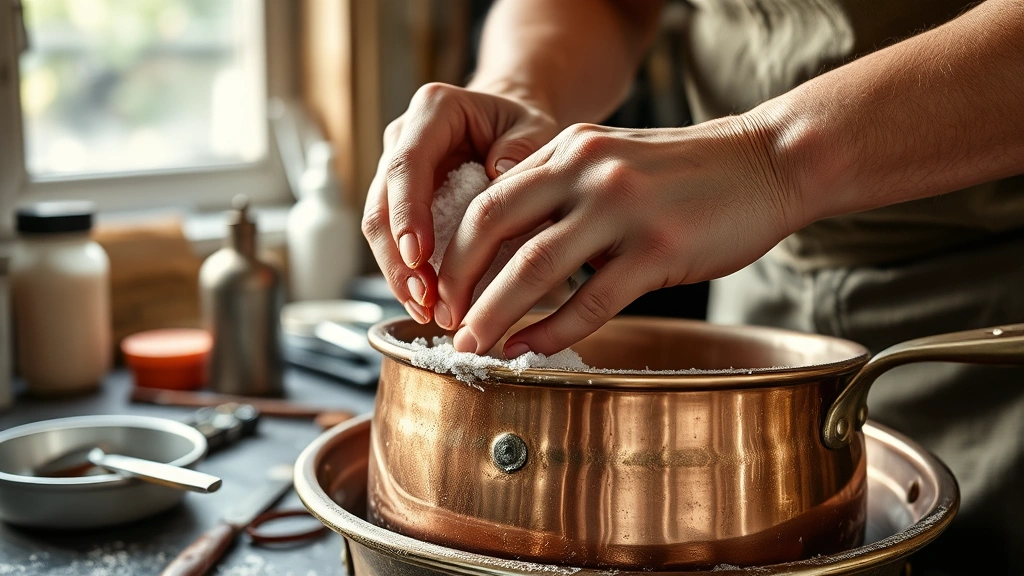
- Mix equal parts vinegar and salt in a bowl until you get a paste consistency
- Apply the paste directly to tarnished areas using a soft cloth
- Rub gently in circular motions for 2-3 minutes
- Rinse thoroughly with warm water
- Dry immediately with a clean cloth to prevent water spots
For stubborn tarnish, let the paste sit for 5-10 minutes before rubbing. This method works particularly well on copper cookware and smaller decorative items. If you’re cleaning larger surfaces like countertops or similar surfaces, you might want to batch your work.
Method 2: Lemon and Baking Soda
This method is gentler than vinegar and salt, making it perfect for delicate copper pieces or items you want to preserve. Lemon juice provides the acid, and baking soda is a mild abrasive that won’t scratch.
What you need:
- Fresh lemon (cut in half)
- Baking soda
- Soft-bristled brush or cloth
- Water
Steps:
- Cut a lemon in half and dip the cut side directly into baking soda
- Rub the lemon directly on the copper surface
- For detailed areas, make a paste by mixing lemon juice with baking soda
- Let sit for 5-15 minutes depending on tarnish severity
- Scrub gently with a soft brush or cloth
- Rinse with cool water and dry completely
The natural citric acid is powerful enough to tackle tarnish without being harsh. This works beautifully on copper jewelry and antique pieces that need a lighter touch.
Method 3: The Ketchup Trick
Yeah, you read that right. Ketchup actually contains acetic acid and other compounds that clean copper effectively. It sounds weird, but it works, and your kids might find it entertaining to help.
What you need:
- Regular ketchup (tomato-based)
- Soft cloth
- Paper towels
Steps:
- Apply ketchup directly to tarnished copper
- Let it sit for 5-10 minutes
- Rub gently with a soft cloth using circular motions
- Rinse thoroughly with water
- Dry immediately with paper towels
This method is fantastic for copper coins, small fixtures, and decorative items. It’s safe enough that you don’t need to worry about damaging anything, and the results are surprisingly good. Just make sure you rinse completely—you don’t want ketchup residue sitting on your copper.
Method 4: Cream of Tartar Solution
This is a professional-grade method that produces exceptional results. Cream of tartar is a mild acid that works slowly but thoroughly, which means less aggressive scrubbing needed.
What you need:
- Cream of tartar (found in baking aisle)
- Lemon juice or vinegar
- Soft cloth
- Small bowl
Steps:
- Mix cream of tartar with lemon juice to form a thick paste
- Apply to copper and let sit for 10-15 minutes
- Gently rub with a soft cloth
- Rinse with warm water
- Buff dry with a clean cloth
This method leaves a beautiful finish and is ideal when you want professional results without commercial chemicals. The slower action means you’re less likely to over-scrub and damage the copper’s surface.
Method 5: Commercial Copper Polish
When you need industrial-strength cleaning or you’re short on time, quality commercial copper polish gets the job done. Products like Bar Keeper’s Friend or dedicated copper polishes are formulated specifically for this job.
What you need:
- Commercial copper polish (follow brand instructions)
- Soft cloth or applicator pad
- Warm water
- Rubber gloves (recommended)
Steps:
- Read the product instructions carefully
- Apply according to directions (usually small amounts rubbed on)
- Let sit for the recommended time
- Buff with a soft cloth
- Rinse if instructed and dry completely
Commercial polishes are your best bet for heavily tarnished items or when you’re working on a large scale. They’re also convenient for regular maintenance. Just ensure good ventilation and follow safety guidelines on the product label.
Keeping Copper Shiny Long-Term
Once you’ve cleaned your copper, you’ll want to keep it looking good. Prevention is way easier than deep cleaning. Store copper items in dry places away from humidity. For items you use regularly, like delicate collectibles that need careful handling, consider keeping them in breathable storage containers.
Apply a thin coat of clear lacquer or wax to protect copper from oxidation. This creates a barrier between the copper and oxygen, significantly slowing tarnish formation. You can also use specialized copper protectant sprays available at hardware stores.
For daily-use items like copper cookware, hand wash and dry immediately after use. Never leave copper wet or in the dishwasher, as prolonged moisture speeds up tarnishing. A quick polish every few months maintains that shine without needing heavy-duty cleaning sessions.
Safety Tips When Cleaning
Most of these methods are safe, but a few precautions make sense. Always work in a well-ventilated area, especially with commercial polishes. Wear rubber gloves if you have sensitive skin—vinegar and salt can be drying. Never mix cleaning products together, as some combinations create toxic fumes.
When working with acidic solutions, avoid getting them in your eyes or on your skin. If you do get any on your skin, rinse immediately with plenty of water. Keep cleaning solutions away from children and pets. Store commercial polishes according to product instructions, usually in a cool, dry place away from heat sources.
For antique or valuable copper pieces, test any cleaning method on an inconspicuous area first. Some patina on antiques actually adds value, so clean gently and conservatively.
Frequently Asked Questions
Can I use steel wool to clean copper?
I’d recommend against it. Steel wool can scratch copper and leave steel fibers behind that rust and discolor the surface. Stick with soft cloths, soft-bristled brushes, or non-abrasive scrubbing pads. You want to clean the tarnish, not damage the underlying metal.
How often should I clean my copper items?
It depends on usage and environment. Daily-use items like cookware might need monthly cleaning, while decorative pieces could go 6-12 months. If you apply protective lacquer or wax, you’ll clean less frequently. Just clean when you notice tarnish building up—there’s no strict schedule.
Is tarnish on copper toxic?
No, copper tarnish (copper oxide) isn’t toxic. It’s safe to eat from tarnished copper cookware, though it looks unappealing. That said, you should clean your cooking vessels regularly for appearance and because food tastes better when served from clean cookware.
Can I clean copper with baking soda alone?
Baking soda alone is too mild without an acid component. Combine it with lemon juice, vinegar, or use it as part of a paste with these acidic ingredients. The acid does the heavy lifting while baking soda provides gentle abrasion.
What’s the difference between patina and tarnish?
Patina is a controlled, intentional oxidation layer that develops over years and gives copper character. Tarnish is unwanted oxidation that makes copper look dull and dirty. Some people prefer patina on decorative pieces—it’s a matter of preference. If you want to preserve patina, avoid aggressive cleaning.
Will vinegar damage my copper?
No, vinegar won’t damage copper. The acetic acid in vinegar is specifically what cleans tarnish away. Just make sure you rinse thoroughly and dry completely afterward. Leaving vinegar sitting on copper for extended periods isn’t necessary and won’t improve results.
Final Thoughts
Learning how to clean copper doesn’t require special skills or expensive products. These five methods cover everything from quick touch-ups to deep cleaning, using ingredients you probably have at home or can grab cheaply. The vinegar-and-salt method is my personal favorite for speed and effectiveness, while cream of tartar gives the most professional finish if you’ve got time.
The key is choosing the right method for your situation. Delicate antiques? Go with lemon and baking soda. Everyday cookware? Vinegar and salt works great. Heavy tarnish? Commercial polish saves the day. Once you’ve got your copper gleaming, a little preventive care keeps it looking sharp without constant effort.
Whether you’re restoring family heirlooms or just keeping your kitchen cookware presentable, these proven methods deliver results. Start with whichever sounds easiest, and you’ll be amazed at how quickly copper transforms from dull to dazzling. Your future self will thank you for maintaining these items properly—and your guests will definitely notice the difference.


