
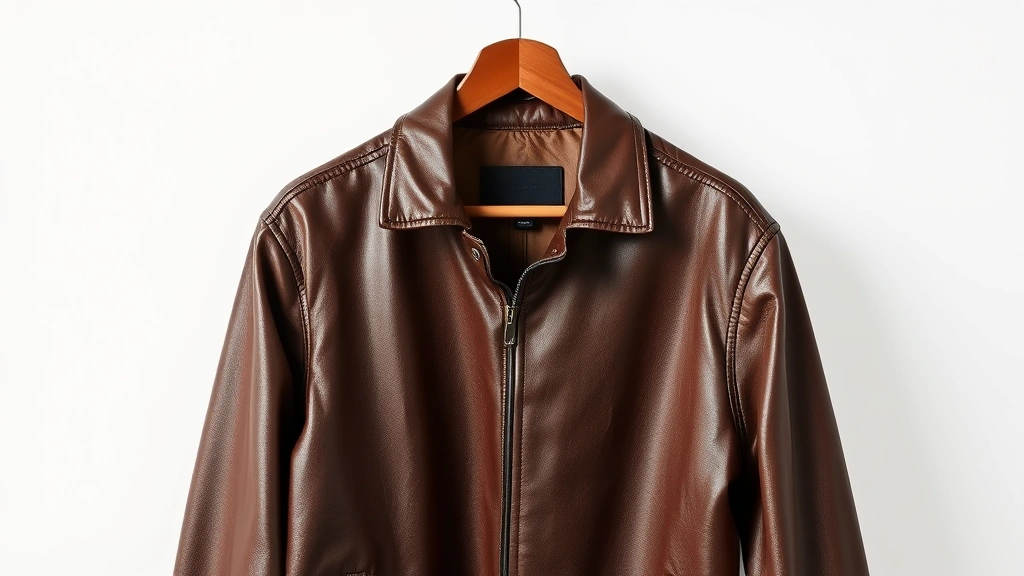
Learning how to clean a leather jacket is one of those skills that separates people who wear leather well from people who just own leather. Your jacket isn’t just fabric—it’s an investment, a statement piece, and honestly, probably something you spent real money on. So let’s treat it right.
Table of Contents
Why Leather Needs Care
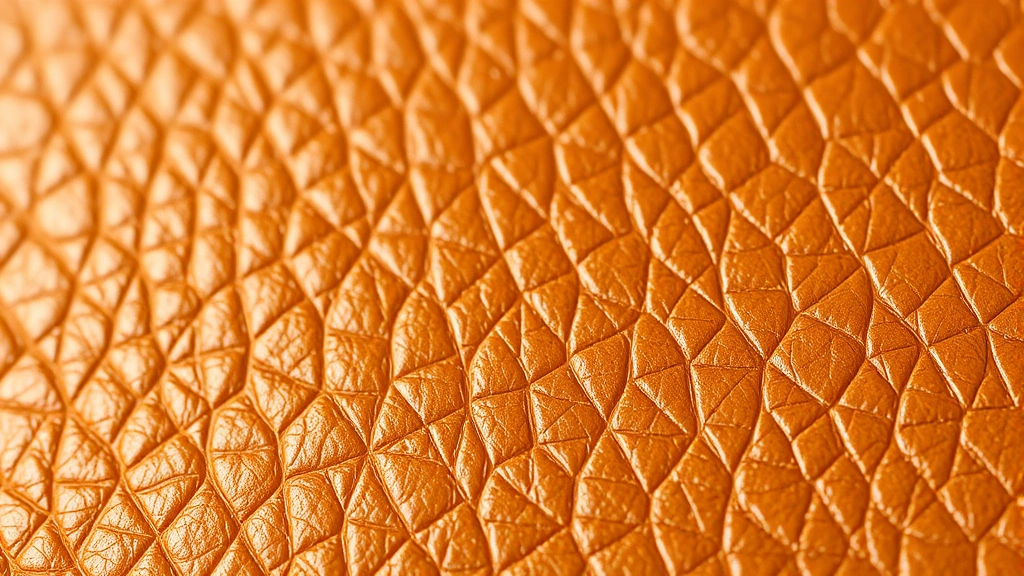
Leather is skin. Think about it—you moisturize your own skin, right? Same principle applies here. Leather is a porous, natural material that absorbs dirt, oils, moisture, and UV damage over time. Without proper care, your jacket becomes stiff, cracked, and discolored. The good news? Regular maintenance takes maybe 30 minutes and keeps your jacket looking sharp for decades.
Here’s what happens when you neglect leather: dust settles into the grain, body oils accumulate, and the leather’s natural oils dry out. Eventually, you’ve got a jacket that looks tired and feels like cardboard. Prevention is way easier than restoration.
Gather Your Supplies
Before you start, assemble everything you need. This isn’t complicated, but you need the right tools. Here’s what works:
- Soft microfiber cloths (not paper towels—they’re too rough)
- Leather cleaner (pH-balanced, specifically for leather)
- Leather conditioner (essential for hydration)
- Distilled water (tap water has minerals that leave spots)
- Soft-bristle brush (optional, for textured leather)
- Leather protectant spray (adds water resistance)
Skip the furniture polish, saddle soap, and anything with silicone. You want products designed specifically for garment leather, not furniture. Check the label—it should say “safe for leather clothing” or similar.
Dust and Surface Clean
Start simple. Hang your jacket on a sturdy hanger in good light. Use a dry microfiber cloth and gently wipe the entire surface, paying attention to seams, collar, and cuffs where dust accumulates. You’re not scrubbing—you’re brushing away surface debris.
For textured leather or suede-like finishes, a soft-bristle brush works better. Brush in one direction, following the grain of the leather. This removes dust without pushing it deeper into the pores.
This step alone handles 80% of basic maintenance. Do this monthly and your jacket stays fresher longer. It takes five minutes and costs nothing.
Spot Clean Stains
Got a coffee splash or mysterious smudge? Address it immediately. Dried stains are harder to remove than fresh ones.
For light stains: Mix a small amount of leather cleaner with distilled water on your cloth. Test on an inconspicuous spot first (inside seam, under collar). Gently dab the stain—don’t rub aggressively. Let it air dry completely before wearing.
For greasy stains: Sprinkle a tiny bit of cornstarch or talc powder on the spot. Let it sit for 2-3 hours to absorb the oil. Brush it off gently. If residue remains, use the leather cleaner method above.
For ink or pen marks: This is trickier. Use a leather-specific ink remover or rubbing alcohol on a cloth. Test first. Dab gently—never scrub in circles.
The key principle: leather is forgiving if you’re gentle, but aggressive scrubbing damages the finish. Patience beats force every time.
Deep Clean Method
Once or twice a year, give your jacket a thorough cleaning. This is when you really restore that leather quality.
Step 1: Fill a bowl with distilled water and add a few drops of leather cleaner. Mix gently.
Step 2: Wring out a microfiber cloth so it’s damp, not soaking. Leather hates excess moisture.
Step 3: Work section by section. Wipe the front, then back, then sleeves. Use gentle circular motions, working with the grain when possible.
Step 4: Use a dry cloth to remove excess moisture immediately. Don’t let water sit on the leather.
Step 5: Hang the jacket in a well-ventilated area and let it air dry completely. This takes 24 hours. Never use heat—no hair dryers, no radiators, no direct sunlight.
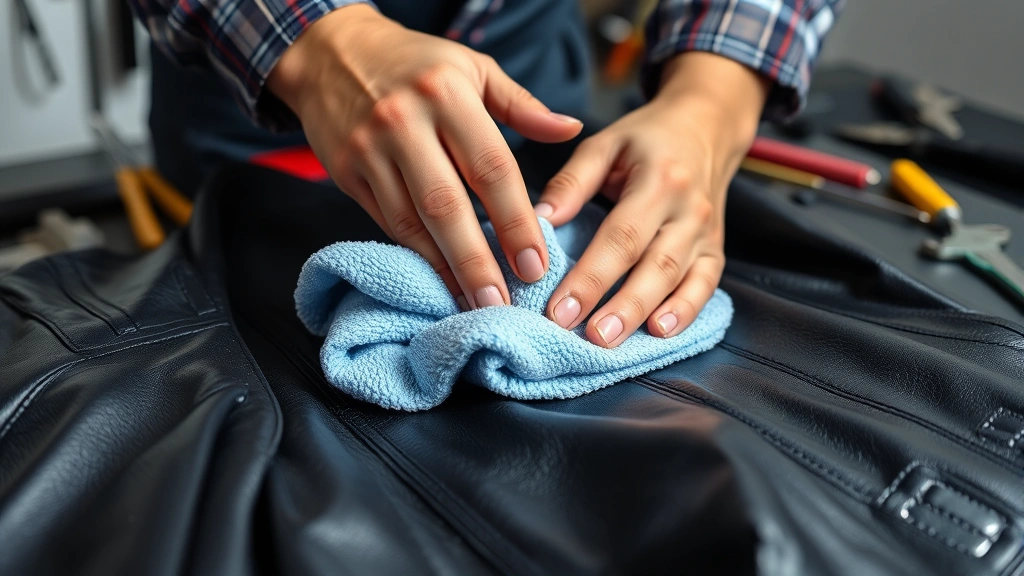
This process removes accumulated grime, body oils, and environmental pollutants. Your jacket will feel softer and smell fresher.
Condition and Protect
After cleaning, conditioning is non-negotiable. Leather conditioner replenishes the natural oils that cleaning removed and keeps the material supple.
Application: Apply conditioner with a soft cloth using light, circular motions. Use less product than you think you need—a little goes far. Focus on areas that flex most: shoulders, elbows, waist seams.
Wait time: Let the conditioner absorb for 15-20 minutes. Wipe away any excess with a clean cloth. Over-conditioning leaves a greasy residue, so don’t go overboard.
Frequency: Condition after deep cleaning, or 2-3 times yearly depending on climate and wear. If you live in a dry climate, condition more often.
After conditioning, consider applying a leather protectant spray. This creates a water-resistant barrier without changing the jacket’s appearance or feel. Reapply every 6-12 months.
Dry Properly
This deserves its own section because improper drying ruins leather. If your jacket gets wet—from rain, spills, whatever—here’s the right way to dry it:
Never: Use direct heat. No hair dryers, ovens, or radiators. Heat causes leather to shrink, crack, and become brittle.
Do this instead: Gently pat excess moisture with a soft cloth. Hang the jacket on a padded hanger in a warm, well-ventilated room away from direct sunlight. Open windows if possible. Stuff the sleeves loosely with clean, dry cloth to help them hold shape as they dry.
Drying takes 24-48 hours depending on humidity and how wet the jacket is. Be patient. Rushing with heat is how people destroy their favorite jackets.
Storage Tips
How you store your jacket matters as much as how you clean it. Poor storage leads to creasing, mildew, and stiffness.
Use a padded hanger: Plastic or wooden hangers create creases. Invest in a quality padded hanger that supports the weight without digging into shoulders.
Hang in a closet: Not folded in a drawer. Folding creates permanent creases that are hard to remove.
Climate control: Store in a cool, dry place. Basements are risky—humidity causes mildew. Attics get too hot. A bedroom closet is ideal.
Breathable cover: Use a breathable garment bag, not plastic. Plastic traps moisture. A cotton or linen bag allows air circulation.
Avoid mothballs: They damage leather and smell terrible. If you’re worried about moths, cedar blocks work better and smell nicer.
Store your jacket away from direct sunlight, heat sources, and areas prone to temperature swings. Consistency is key.
Common Mistakes to Avoid
I’ve seen people ruin good leather jackets through simple mistakes. Don’t be that person.
Using the wrong cleaner: Furniture polish, harsh soaps, and all-purpose cleaners strip leather’s natural oils and leave residue. Stick with products labeled for leather clothing.
Over-wetting: Leather doesn’t like excess water. A damp cloth is right. A soaking cloth is wrong. Water causes staining, shrinkage, and mold.
Aggressive scrubbing: Leather’s finish is protective but delicate. Scrubbing hard damages it. Gentle, patient work always wins.
Skipping conditioning: People clean their jackets but skip conditioning. Then they wonder why the leather feels stiff. Conditioning is mandatory, not optional.
Heat drying: I’ll say it again because it’s that important. Heat destroys leather. Air dry, always.
Storing damp: Never put a wet or damp jacket away. It will develop mildew and smell like a swamp. Dry completely first.
Frequently Asked Questions
Can I wash my leather jacket in a washing machine?
Absolutely not. Washing machines use agitation and excess water—the two things leather hates most. Machine washing will shrink your jacket, damage the finish, and potentially ruin it permanently. Hand cleaning only.
What’s the difference between leather cleaner and conditioner?
Cleaner removes dirt, oils, and grime. Conditioner replenishes moisture and natural oils. You need both. Cleaner without conditioner leaves leather dry and stiff. Conditioner without cleaner leaves dirt trapped underneath.
How often should I clean my leather jacket?
Light dusting monthly keeps it fresh. Deep cleaning once or twice a year handles accumulated grime. More frequent cleaning isn’t necessary unless your jacket gets heavy use or exposure to dirt.
Can I use vinegar or baking soda on leather?
Not recommended. Vinegar is acidic and can damage leather’s finish. Baking soda is abrasive and can scratch the surface. Stick with products formulated specifically for leather. They cost a few dollars and work way better.
What do I do if my jacket smells bad?
Fresh air is your first solution. Hang it outside on a breezy day—sunlight and air naturally freshen leather. If odor persists, sprinkle baking soda inside overnight, then brush it out. For stubborn smells, use a leather-specific odor eliminator. Never spray perfume or cologne directly on leather—it can stain and damage the finish.
Is leather conditioner safe for all leather types?
Most quality leather conditioners work on standard leather, suede, and nubuck. Check the label to be sure. Some products are universal; others are specialized. When in doubt, test on an inconspicuous area first.
Can I repair a crack in my leather jacket myself?
Minor surface cracks sometimes improve with conditioning—the leather absorbs moisture and becomes more flexible. Deep cracks or splits need professional repair. A leather specialist can patch or re-stitch damaged areas. DIY repair attempts usually make things worse.
Final Thoughts
Learning how to clean a leather jacket isn’t rocket science, but it does require patience and the right approach. The process boils down to: dust regularly, spot-clean immediately, deep-clean seasonally, condition always, and dry gently. Follow these steps and your jacket will look sharp and feel great for years.
Think of it like maintaining a car. Regular maintenance takes 30 minutes and costs almost nothing. Neglect it, and you’re looking at expensive repairs or replacement. Your leather jacket is the same deal. Spend a little time now, and you’ll have a piece that gets better with age instead of falling apart.
For more detailed guidance on maintaining your wardrobe, check out our guide on how to apply cologne to keep your whole look fresh. And if you’re interested in other household maintenance tasks, we have resources like how to clean baseboards that use similar gentle cleaning principles.
For professional leather care advice, the Leather Factory offers excellent resources on leather maintenance. For additional DIY wisdom, Family Handyman has detailed guides on caring for quality garments. And This Old House’s maintenance section covers protecting your investments, including clothing and accessories.


